





ADVERTISEMENT
Janhvi Kapoor on ambition, identity, and living a full life
The actor has a healthy appetite for contradiction, a soft spot for history, and little patience for the rules of celebrity. Our digital cover star gets candid about the films she believes in and the many things that make a life.

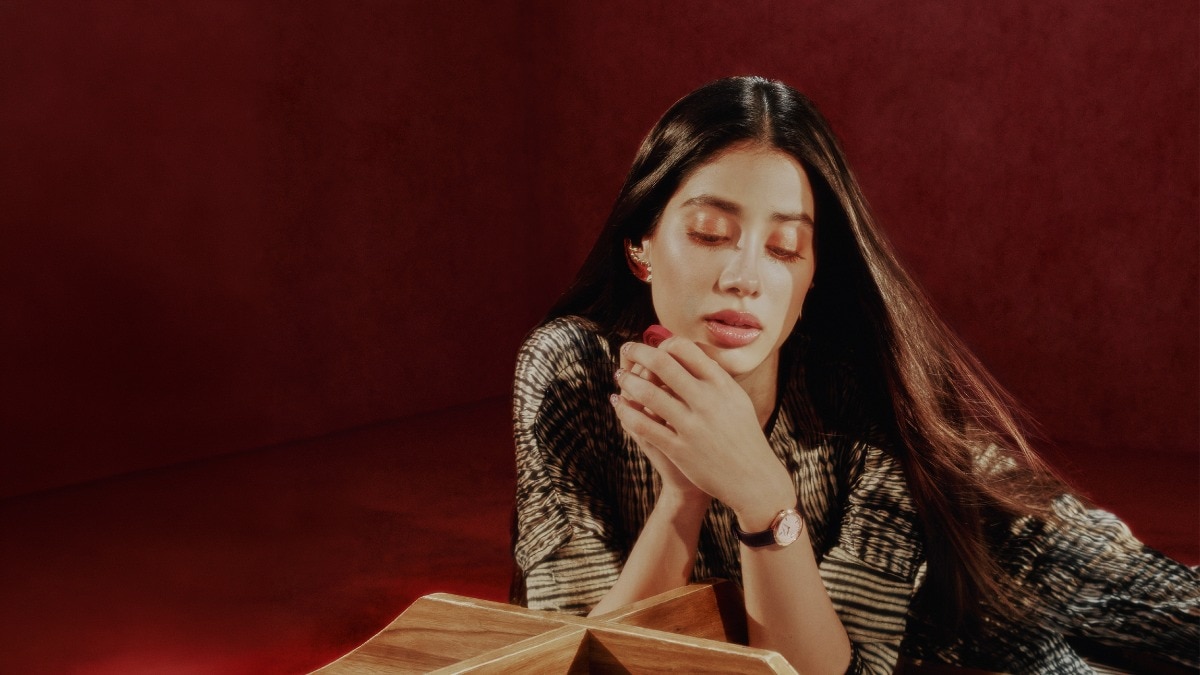
Being millennial meant having embarrassing photographs buried in family albums; being Gen Z means watching your most awkward moments acquire a life of their own on the internet. Actor Janhvi Kapoor has grown up somewhere in the middle of this cultural crossfire, navigating an industry where a Friday box-office release can invite as much scrutiny as a three-second clip from airport arrival or red-carpet. She also belongs to a generation that has made a language out of oversharing, self-deprecating humour, and the occasional delulu moment, where ambition and anxiety often occupy the same Instagram story.
But Kapoor’s relationship with the public gaze is hardly a straightforward story of occupational hazard. As the daughter of Sridevi, she entered the film industry carrying a legacy that precedes her, one that inevitably shapes how audiences receive her work. “I’ve always been aware of the privilege that comes with who I am and the family that I come from,” she confesses. But rather than take the opportunities that come with her surname for granted, she sees them as a reason to work harder. “I need to give every opportunity ten times more than an average person would,” she adds.
There is the weight of that inheritance, the business of building a filmography, and the far more personal question of what she wants her life and career to look like. Kapoor, at least, is clear about what she doesn't want: the pressure to perform a particular version of herself for public consumption. “Any pressure to seem a certain way is just annoying and makes you incredibly false,” she tells me. “I really do whatever the hell I want, basically.”
Eight years after her debut, the 29-year old seems increasingly interested in what she can do with the attention rather than what it makes of her. The roles have grown more demanding, the performances more assured. From the unadorned rawness of Thangam in Devara (2024) to the layered socio-realism of Sudha Bharti in Homebound (2025), which carried her to the world stage at Cannes, she is actively uncoupling her public identity from industry archetypes. Her approach to work is less about chasing the next big box-office number than finding stories she believes in. “I’d rather chase making a good, honest film and then whatever comes of it, comes of it,” she says.
Away from the demands of a film career, Kapoor's interests extend to history, art, travel, and the socio-political forces that shape how people live. The actor is drawn to the idea that there is no single way of understanding the world, and that a life well lived leaves room for perspectives beyond her own. Love, too, anchors that pursuit, though she separates it from pure romance, borrowing an aphorism from Richard Linklater’s Before Sunrise to sum it up: “Everything you do in life is really a way to be loved a little more.”
In conversation with Bazaar India, Kapoor opens up about the privileges and responsibilities of her surname, the stories she wants to tell as an actor, and her curiosity about the world beyond cinema.
Harper's Bazaar: You've spoken about being a director's actor. How much of your process involves preparation, and how much comes from being willing to let go?
Janhvi Kapoor: What I enjoy most about my job is that I look at each journey as a completely different way to approach my craft. And that's what's exciting about it. I keep saying this, that a film is like a lifetime of experience. And I want to have as many different and versatile experiences as possible, even if they're contradictory. I've always been that actor who's down for anything, and even as a person. Of course, you have your own moral guidelines and you teach yourself how to toe that line. But for the most part, I like going on that journey where directors look at me as their medium of communication and their vessel. So I like inhabiting different processes and learning new things. I'm completely a director's actor.
HB: You've had to negotiate the privilege that comes with your surname alongside the expectations attached to it. How has that shaped your approach to work?
JK: I've always been aware of the privilege that comes with who I am and the family that I come from. But I think that has always motivated me to not take things for granted because, contrary to popular belief, I haven't been someone who's been completely cocooned in my bubble of privilege. My parents and my upbringing have instilled in me a sense of curiosity and a sense of gratitude for every little thing that I've been able to enjoy or have in my life, and to realise that most people don't get some of these things as easily as I have been fortunate to. And so, just out of duty and respect to myself and towards whatever it's worth, I need to give every opportunity ten times more than an average person would. Most people wouldn't look at it this way, but it's motivated me to work, objectively speaking, as hard as humanly possible at any and every given opportunity.
HB: In Homebound, you inhabit a life very different from your own. What did the experience teach you about privilege and the society you live in?
JK: Curiosity has always been a big part of who I am as a person and as an artiste. One person who's had a huge hand in encouraging me to seek experiences outside of myself has been Neeraj Ghaywan. We've known each other for a little bit, and I always wanted to work with him. Privilege has been such a huge theme in my life, but he really opened my eyes to the fact that there are so many different kinds of privilege that exist in this world, in our society. The themes of this film are something that I feel very strongly about and would like to champion. That hunger and curiosity about what this film is trying to say is what drove my entire process. I'm a history geek and, as I've come to realise, I'm incredibly interested in social politics. It's an experience I'll cherish my entire life.
HB: Indian cinema has become increasingly preoccupied with box-office numbers, pan-India releases, and formulas for success. How do you navigate those expectations?
JK: We went through a pandemic, and then after that, we started hearing all of these new terms, formulas, and theories. I think a good film is a good film. If you have something to say that's unique, individual, and original, and you're saying it with the right intentions—whether that's to reach an audience, entertain people, or tell a story that means something personally to you—it will reach its people. It finds the love that it deserves, even if it doesn't find the monetary validation immediately. That's never guaranteed in any case. Everyone wants that Rs 1,000 crore film, everyone wants pan-India box-office success. But I don't think people who actually get it start out with the intention of making a film because they want to make a thousand crore. If that's your approach, you've sort of lost on day one.
HB: Today's actors are expected to be both aspirational and relatable on social media. Do you feel the pressure to present a particular version of yourself?
JK: Any pressure to seem a certain way is just annoying and makes you incredibly false. That's something that's always been a repellent for me. So I don't think I'm ever preoccupied with trying to seem a certain way. Of course, there's an attempt to try to not be misunderstood, but I think that's not my job. Creating that impression is a by-product of my job.
HB: Outside cinema, family legacy and public perception, what are the things that make you you?
JK: The people in my life, everyone that I love, my family. The biggest thing that makes me me is my fondness for the arts, cinema, history, reading, writing, and travelling. I've come to the conclusion, or am evolving into a place where I know what matters most to me is that I live a very full life. I'm so fortunate because the profession that I'm in really lends itself to propelling me on that journey. I'm a curious person, and I know that there's no real singular truth to life. To accumulate as many different perspectives on how things are, how one should live, and how people have lived and will live is something that I find a lot of joy and peace in.
HB: Your relationship with fashion has evolved over the years. Whose influence has stayed with you the most?
JK: A lot of it is very instinctive. Another aspect of my personality that I take a lot of pride in is that I evolve and adapt really quickly. I'm a fast learner. I worked with Rhea [Kapoor] didi once for Cannes and several times after. Literally, that's all it took. That one experience completely altered the way I look at fashion, culture and art, and the kind of art that you can wear. She got me incredibly hooked on vintage clothes and finds. You end up feeling like you own a bit of history and pop culture. Just the romanticism of that, I'm obsessed with it. My mom, of course, everything I know about aesthetics and beauty and fashion and how a Bollywood heroine should dress comes from her. And Manish [Malhotra] has been my first window into that world ever since I was a little kid. These three people have definitely shaped me the most.
HB: What place does love occupy in the life you want to build beyond your career?
JK: It is at the centre of it. And I don't think this means romantic love in particular, although that's a big part of it. Everything you do in life is just to find a way to be loved a little more. I think that's central to everything.
HB: What does the next chapter look like for you?
JK: Work, work, work, work, work. I'm obsessed with my work, and I pray to God every day that I am on a film set every day of my life because that's when I'm the happiest, especially when the film sets are for movies and stories that I feel passionately about, that challenge me, that I can grow from. Working with people who invigorate me, encourage me, who challenge me artistically, and who I can grow with and learn from. That's really my hope and wish for myself. I understand the importance of box-office validation. It makes your life and lives of those who you want to work with easier. But there's renewed clarity that this cannot be your driving intent, because then you'll be guided towards making decisions that aren't true to you as an artiste. I have an artistic perspective on the kind of films I like to watch and want to be a part of. I just want to hear that voice a little more and let that guide me in my decisions.
Editor: Rasna Bhasin (@rasnabhasin)
Interview: Kriti Shukla (@kritiis_)
Photographer: Nishanth Radhakrishnan (@nishanth.radhakrishnan)
Stylist: Gopalika Virmani (@gopalikavirmani)
Cover Design: Mandeep Singh Khokhar (@mandy_khokhar19)
Makeup Artist: Savleen Kaur Manchanda (@savleenmanchanda)
Hair Artist: Nikita Menon (@nikitamenon1)
Editorial Coordinator: Shalini Kanojia (@shalinikanojia)
Set Design: Nikita Rao (@nikita_315)
Line Producer: Salim Memon (@lineproducer)
Assistant Stylist: Trushieta Naringrekar (@trushieta.naringrekar)
Partner Agency: Bottom Line Media (@bottomlinemedia)
Janhvi is wearing an outfit by Tarun Tahiliani and a Riviera 10868 diamond-set watch by Baume & Mercier.
Also read: Lisa Haydon on motherhood, ambition, and finding her own path
Also read: Dream on: In conversation with Shanaya Kapoor on finding her rhythm as an actor
ADVERTISEMENT
Must Read



ADVERTISEMENT