




ADVERTISEMENT
How India continues to inspire Christian Louboutin’s designs
Christian Louboutin on his eternal love for India, being inspired by cross-cultural references across the globe, and revisiting the eternal appeal of Pigalle.

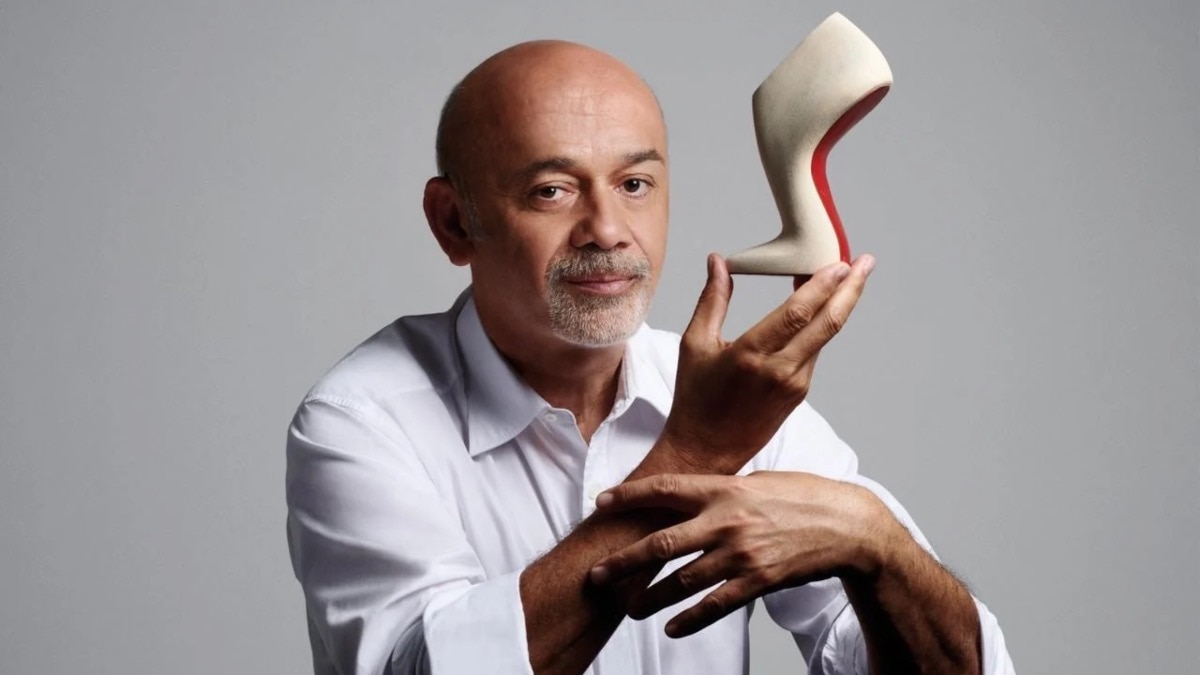
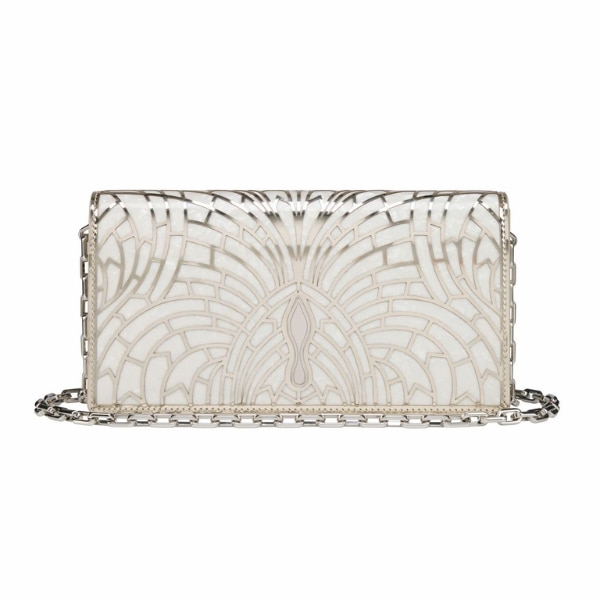
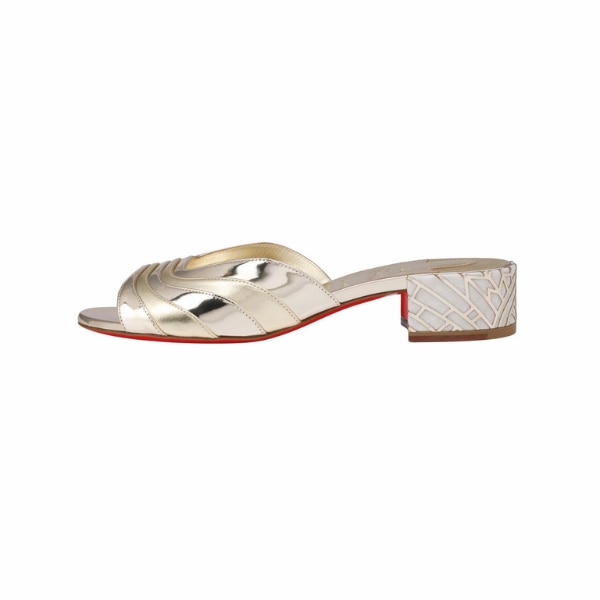
There is something about the Indian mentality...something isn’t possible, it will never be a ‘no’ at first,” Christian Louboutin tells me as we convene over Zoom to discuss Rayon de Lumière, the India limited-edition capsule, and rechristening the iconic Pigalle as La Pigalle with recalibrated design for the modern times. The French designer’s relationship with India spanning over four decades is one for the books. From being inspired by our traditions, craft techniques, colours, textiles, gemstones, art, to travelling to different parts of the country and collaborating with our designers and artisans, Christian’s annual homage to India in the form of a limited-edition capsule is a love letter to the country. Translating to ‘ray of light’ in French, Rayon de Lumière explores the legacy of Art Deco dialogue between Paris and Mumbai: two cities resonating shared architectural language of light, geometry, and modernity. Shaped by lines and contours through the two central colours—black and gold—the capsule features a curated selection of five shoes for women, three shoes for men, and two exquisite handbags. Each creation bears the iconic Christian Louboutin logo along with an édition limitée stamp, signifying its limited release.
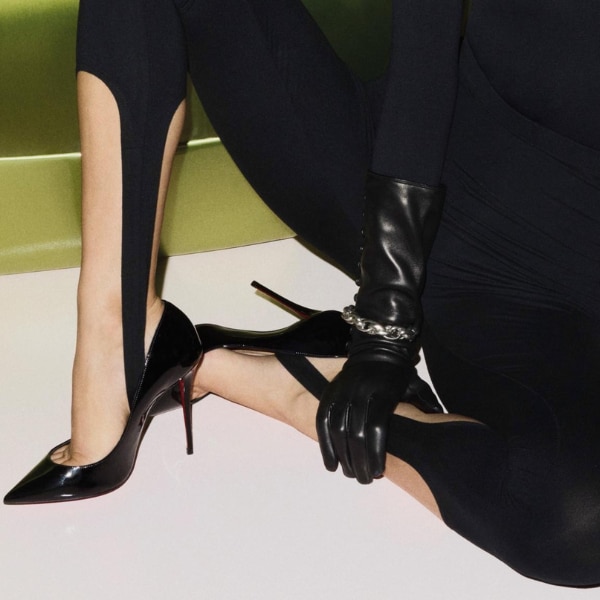
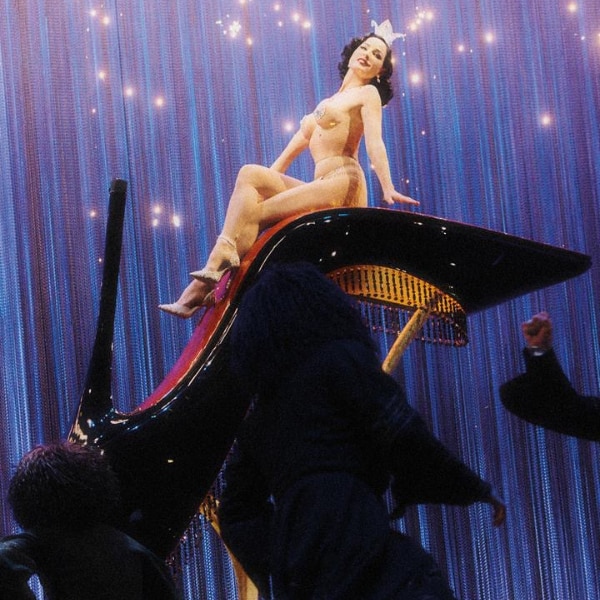
The emblematic red sole bearing Pigalle pumps, created two decades ago, is one of the most recognisable silhouettes from the French luxury brand. Named after the Parisian district nestled at the foot of Montmartre, and home of cabaret, the iconic le Moulin Rouge, Pigalle traces its origin from Christian’s childhood memories of the locality and the dancers of les Folies Bergère. The renewed version, La Pigalle, retains the neo-classic design while adapting to the modern life and iterations of femininity. On the inside, a softer silicone-padded construction foregrounds comfort. The signature red sole is updated with the new Everlasting Red Sole, to preserve the iconicity of the red bottoms. “A high heel will never feel like a pair of flip-flops, let’s face it. It’s a different world. But in the world of heels, it should be maximum pleasure and minimum pain,” Christian emphasises.
Ahead, the designer talks about coexisting cultural references across geographical borders, the science of light and reflections, and the making and retaining of an ‘icon’.
Harper’s Bazaar: Every India capsule has drawn from a different facet of the country’s cultural identity. What made the Art Deco conversation between Paris and Mumbai feel particularly compelling right now?
Christian Louboutin: There is this discussion that people have all around the world about cultural appropriation. But I’ve always been interested in different cultures. And so in my work, there is an
amalgamation of different cultures. If you travel, you realise that every country has taken from others. Take, for instance, Art Deco: it originated in France, but you will see many Art Deco buildings in India. Sometimes Indian maharajas or families commissioned palaces, and the architects were Austrian, French, or German, for instance. When you have a strong DNA of your own culture, something from outside your culture gets evaluated differently, and it’s fantastic. It’s not the same as copying; that’s a different problem, but being inspired by something from outside your world is totally natural. Similarly, I once came across two antique cabinets made of silver and rose stones being sold in Paris. I could tell the design was completely Indian-influenced, mixed with Art Deco geometry, and it was so beautiful. It turned out to be commissioned by the royal family of Indore and coincided with Art Deco’s origins in 1925. The transformation from one culture to another is always mesmerising in my opinion.
HB: The collection explores light as both a visual and emotional language.
CL: It’s funny how much light differs from one place to another, much like fragrances. Sometimes a floral fragrance might smell completely different in India than in Europe. It’s all connected to the heat; the same fragrance, if you go somewhere colder, would be way too strong and give you a headache. The same goes for Rayon de Lumière, or the ray of light. Leather and fabrics also behave differently in terms of structure and light. I don’t have the same relationship with the same piece of fabric. It’s the same with light. When I think of India, the light is so different than Europe—it is more northern, more silvery. I call the Diwali capsule the ray of light because India can bring out colours so strongly. In the collection, the fabric, details, and shine reference India, because France can’t adapt the same thing so beautifully; we don’t have the right light for that. For instance, in France, people don’t like icons—Greek or Russian paintings made of metal—because they look too flashy. But I always love icons. You have to understand that these icons were made for churches, where candlelight provided the light. Put an icon with a candle, and you will understand its beauty. So light connects to fabric, oil, paintings, a surface; it all works together. And somehow, people forget to put things together. A really beautiful pink with the light of India will be very, very different from the same pink arriving in northern Paris.

HB: When designing specifically for India, how do you avoid clichés while still honouring the country’s visual richness?
CL: I don’t know if I avoid clichés. That’s the thing; I may not. But I think a cliché also has a kind of innocence. It’s also interesting to see what becomes a cliché and why. For instance, we have the incredibly popular series Emily in Paris: it is the most cliché, almost unbearably ridiculous watch, but there is something sweet and endearing about it.
“When I think of India, the light is so different than Europe—it is more northern, more silvery. I call the Diwali capsule the ray of light because India can bring out colours so strongly.”
When you’re not coming from one place, cliché arrives first, and then you need a better understanding to remove it. But somehow, it’s charming. So, trying to avoid cliché, you may fall into another cliché by doing something you don’t really understand. You gradually refine your understanding of the new place, its people, and culture. Your attempts might backfire sometimes, and then you start to understand why it’s considered a cliché. It’s still a good way to learn.
HB: Was there a particular building, neighbourhood, artwork, or experience in Mumbai that became an unexpected source of inspiration for this collection?
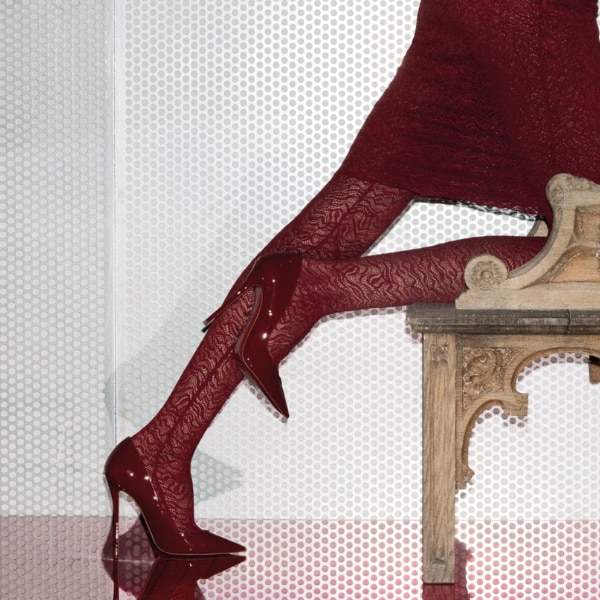
CL: It started with one specific piece of furniture from an antique dealer I had known from his Chor Bazaar days in Mumbai. I love Chor Bazaar, though sadly much of it has been removed now. This antique dealer used to have a shop in Chor Bazaar and now sells out of a place in a modern building. He had something amazing, which I bought. It resembled an armoire commode—big doors, beautifully carved wooden columns, upholstered in snake skin print textile, and handles made of plastic, similar to French Bakelite. The dealer told me it came from either Jhansi or Gwalior. So I bought that piece, brought it to Portugal, and I put it in the studio where I sketch. I always had this in my vision, in front of me.
HB: Pigalle has become one of fashion’s most recognisable silhouettes. What makes a design transcend trends and become an icon?
CL: First of all, I think most people aren’t designing with the idea that one of their designs might become iconic. It’s like some designs have a life of their own at one point. I’ve been asked many times if I was thinking of creating a trademark by doing the red sole; I had to say no. It just happened that the red sole became the brand’s DNA. The starting point was just designing. When a design is becoming iconic, it doesn’t come from the designer. It comes from the synthesis of a design, which, for different reasons, can become iconic.
HB: What led you to revisit the rich and storied history of Pigalle and rechristen it as La Pigalle?
CL: Pigalle has existed for 20 years. So at one point, the construction of Pigalle was somehow really stiff. But when you’re designing, and the way I do, there is a collection, and then there’s another one. So it’s kind of difficult sometimes to stop and to take a little bit of distance from your work and say, okay, this needs to be fixed. And so during the Covid-19 pandemic, I immediately left the city and stayed six months by the sea in Portugal. It was a good time to rework and rebuild some important foundations. One thing was to build a scratch-proof red sole. And again, it’s a lot of study. And then I thought Pigalle is really loved by a lot of people, but people keep joking that it’s not the most comfortable pump, which is, somehow, a reality. And I knew it; we all knew it. But to really do something about it, you need time to try, stop, and retry. When you change the structure of a shoe, it’s not only the leather; it’s not only the lace; it’s also the glue, the reinforcement. I mean, a lot of technical things go into a small structure: a shoe.
HB: The Everlasting Red Sole is both a technical and symbolic evolution. What does it represent for the Maison’s future?
CL: Well, there is an adage, ‘one has to suffer to be beautiful’. So it kind of goes against that direction, because somehow I think when you look at people who are suffering to look beautiful, there’s no smile on their faces. And I am all about bringing smiles to faces. As a designer, nothing makes me happier than seeing people smile with contentment, holding something they love from you. You know, this is the biggest compliment a designer can get.
HB: In an era increasingly driven by speed and digital culture, what role do craftsmanship and patience play in defining true luxury?
CL: With AI and everything going on, I think that there is a culture and a counterculture. And the counterculture comes from rebellion. Everything is almost possible and accessible to everyone. And I don’t say that is a bad thing. But let’s say accessibility to anything has become so widespread; it’s almost the opposite of luxury. Part of global culture is coming from fake imagery and fake stories. What remains of the human adage is craftsmanship. As long as craftsmanship remains, there will be hope for our world. People want to see how things are made, who makes them, and the value of all of that. The counterculture comes from manpower—with your hands, your mind, and your heart—and that’s the future directive. That’s why I take craftsmanship so seriously.
Images: Courtesy the brand
This article originally appeared in Harper's Bazaar India's October 2026 print issue.
Also read: The rise of the micro celebrity: Why influence is no longer about millions of followers
Also read: Anavila’s first home collection is a tribute to the village that shaped her
ADVERTISEMENT
Must Read






ADVERTISEMENT