




ADVERTISEMENT
Qbik's 'Pose' explores the art of statement dressing
From intricate detailing to unexpected material combinations, Vrinda Sachdev, co-founder, offers a closer look at the label’s creative vision.

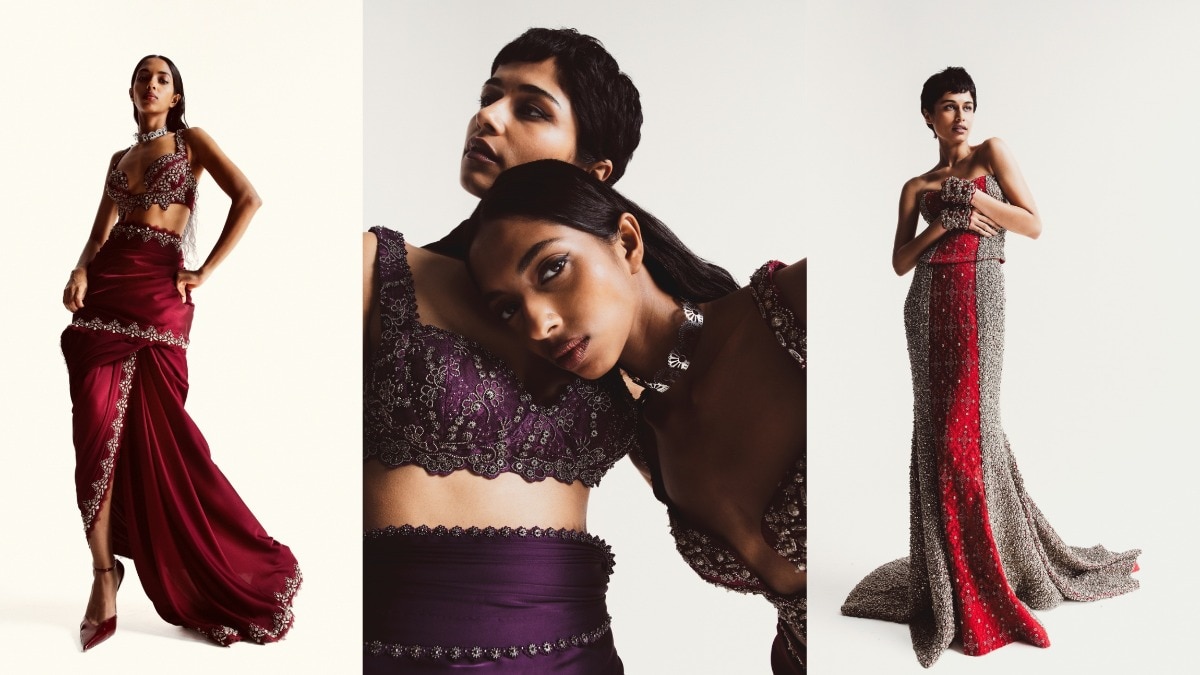
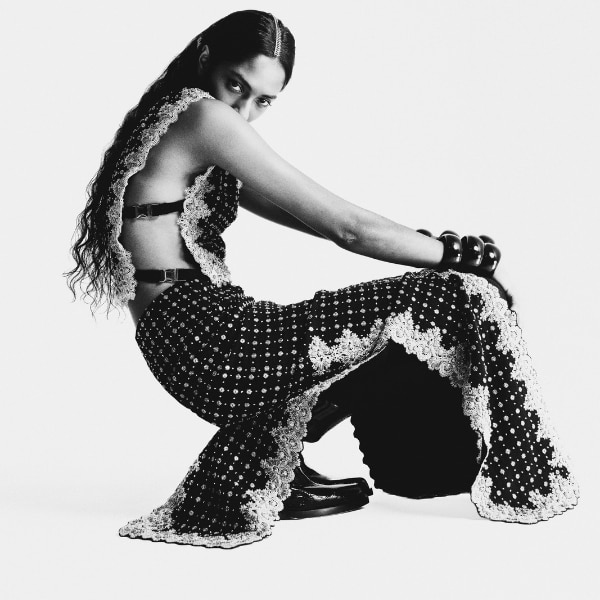
In occasion wear, the details often make the strongest statement. With Pose, Qbik explores the interplay of sculptural silhouettes, intricate craftsmanship, and contemporary Indian design, bringing together delicate lace, polished metalwork, and precise tailoring. Co-founder Vrinda Sachdev shares the inspiration behind the collection and how the brand is reimagining occasion dressing through a balance of structure, texture, and tradition.
Harper's Bazaar India: The new capsule collection, Pose, explores stature, poise, and dramatic presence. What inspired this idea, and how did it translate into the collection's design language?
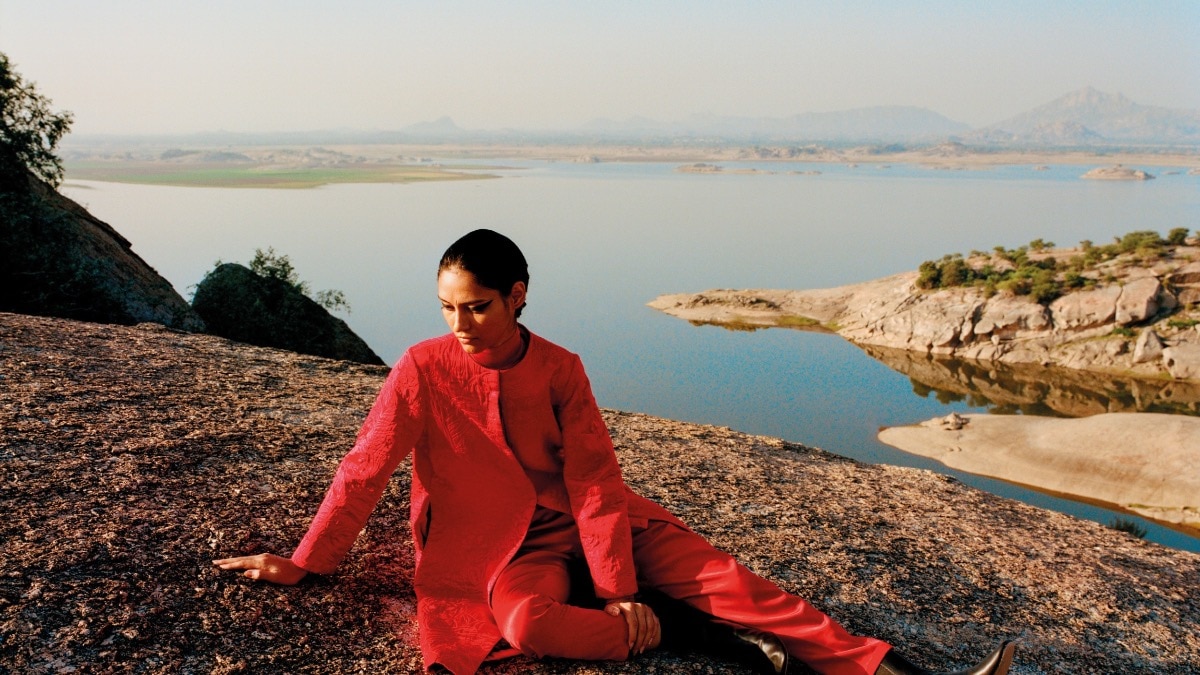
Vrinda Sachdev: You know that feeling when you step into a room where you know all eyes are going to be on you? That’s really where Pose comes from. It’s about that sudden shift in posture when you take a breath, stand tall, and completely own your presence. Design-wise, we wanted garments that naturally pull that confidence out of you. We went for razor-sharp tailoring, sculpted lines, and high-octane shine that catches every bit of light so that when you’re standing still, you’re still creating a total spectacle.
HB: The collection brings together two contrasting materials—delicate lace and sculptural metal. What drew you to this combination, and how did you approach balancing their different textures and qualities?
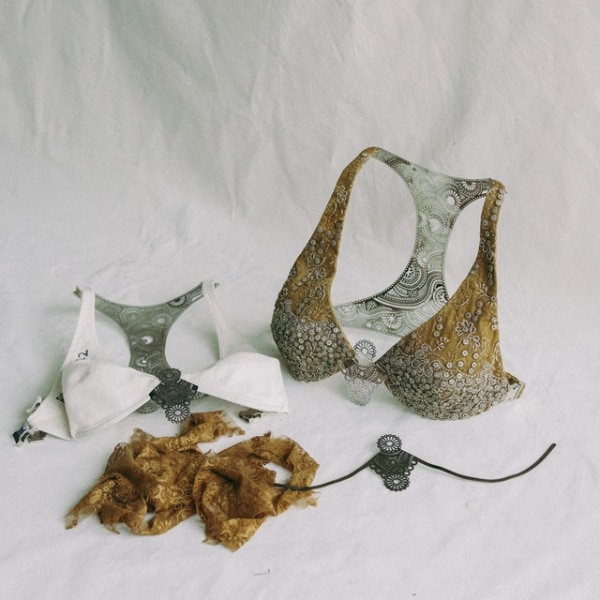
VS: Honestly, we loved the friction between them. Lace is so delicate, romantic, and steeped in history, while metal is unapologetically bold, industrial, and sharp. Pairing them felt like a risk, but that’s usually where the magic happens. The trick to balancing them was treated as a delicate act of proportion: we didn’t want the metal to crush the softness of the lace, nor did we want the lace to tone down the metallic edge. By working with tonal jewel bases and using small, custom-shaped metal pieces, the metal feels like a sparkling, structural extension of the lace pattern rather than something just slapped on top.
HB: Each metal motif is hand-cast, shaped, polished, and individually attached to lace appliqués. Could you take us through the craftsmanship behind these details and the challenges involved in bringing them to life?
VS: Oh, it was an absolute labor of love—and a total nightmare for our atelier at first! Because we hand-cast, shape, and polish every single metal motif in different geometric sizes, no two pieces are identical. The biggest technical hurdle was figuring out how to anchor these heavy metal elements onto delicate, scalloped lace without pulling, tearing, or destroying the drape of the fabric. Our karigars had to hand-sew each individual metal piece using specialized techniques so the fabric moves fluidly with the body. When you touch the pieces, you feel the substantial weight of the metal, but when you put the garment on, it floats seamlessly.
HB: Structure plays an important role in Pose, from boned bustiers and bralettes to tailored jackets and gilets. How do you approach creating silhouettes that balance strong construction with ease of movement?
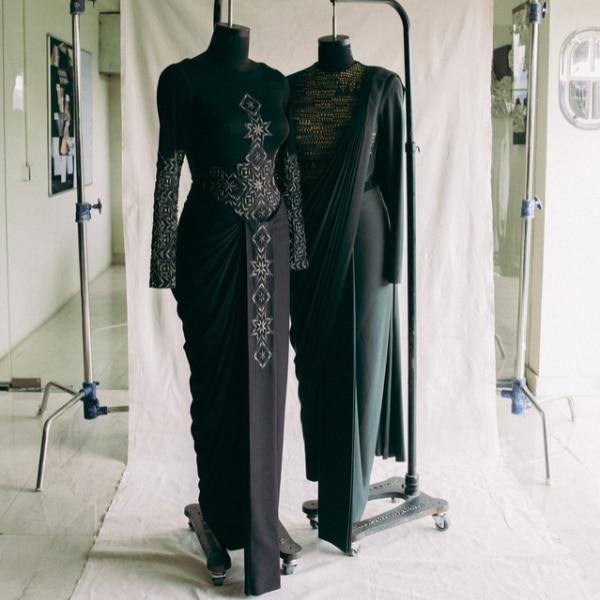
VS: I firmly believe that structure shouldn't feel like a corset straight out of the 1800s. If you can’t breathe or dance in an outfit, what’s the point? For our bralettes and bustiers, we spend weeks getting the internal boning and architectural pattern-making just right so it locks you in and gives that killer hold, but still flexes with your body. We pair those structured, high-support inner pieces with softer, fluid outer layers like sharp-shouldered gilets, tailored jackets, and sweeping high-waisted trousers. It’s all about creating armor that feels utterly effortless to wear.
HB: The collection also reinterprets the Indian saree through pre-stitched drapes and carefully constructed pleats. What was the thought process behind revisiting this traditional silhouette through a contemporary lens?
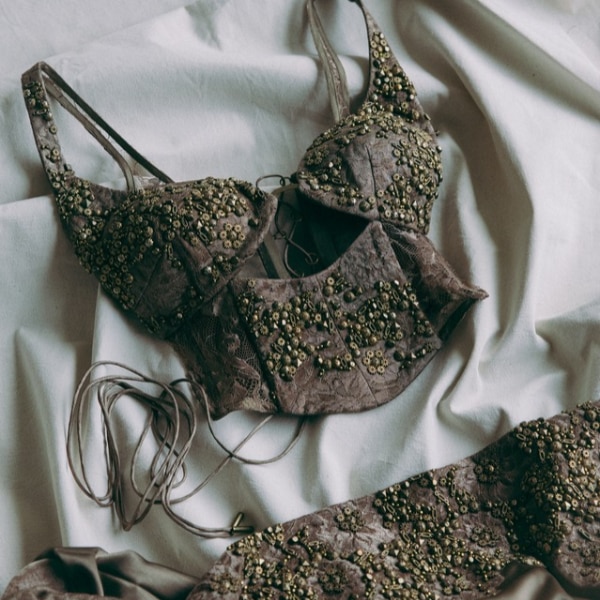
VS: We love the saree, but let’s be real, nobody wants to spend 45 minutes wrestling with pleats when they’re rushing to a major cocktail event or reception! Our pre-stitched sarees are born out of a desire to keep the sheer romance of the saree intact while adapting to how modern women actually dress. We pre-construct the pleat geometry with math-like precision so that the moment you step into it, the heavy metal-and-lace borders fall exactly where they’re supposed to frame your body. It gives you that regal, sweeping drape in under two minutes. Since 2013, we have always tried to find a new way to update our drapes. So the pre-stitched saree has become a very exciting canvas for us that keeps getting updated.
HB: Satin twill, satin lycra, and viscose suiting knits form the foundation of the collection. How did you select these fabrics to complement the intricate lace and metal embellishments?
VS: When your surface embellishment is this heavy and intense, the base fabric has to do a lot of heavy lifting. We needed fabrics that had enough body, rich depth, and structural integrity to carry the weight of hand-sewn metal motifs without sagging. Satin twill and viscose suiting knits give us that clean, razor-sharp canvas for tailoring, while satin lycra gives us that gorgeous, body-sculpting stretch for our fitted pieces. Plus, they all have a subtle, rich sheen that reflects our deep jewel tones beautifully under evening lights.
HB: Qbik is known for its statement approach to occasion and evening dressing. How do you see the modern woman’s approach to dressing for weddings, cocktail events, and other special occasions evolving?
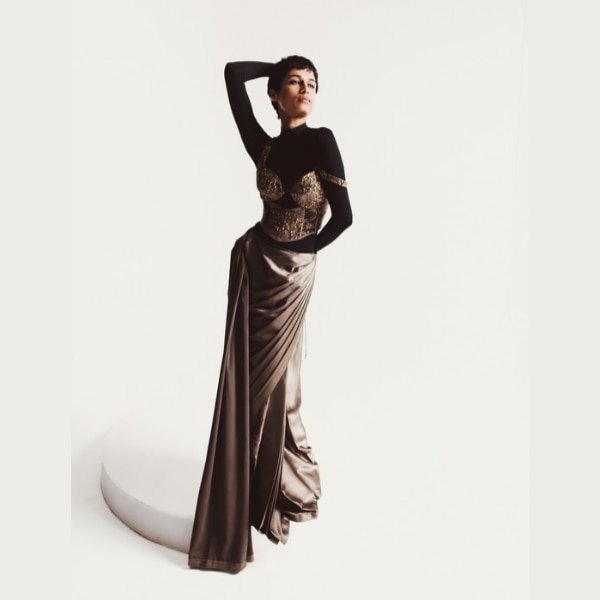
VS: Women are completely over dressing for the male gaze or just following safe traditions. Today, it’s all about dressing for impact and personal expression. People want versatility, edge, and personality. They want to look at an outfit and feel like the protagonist of their own story. We’re seeing a huge shift toward mixing high-glamour Western codes like bralettes, gilets, and metallic embellishments with traditional drapes. Women want to look strong, sexy, and polished, without looking like everyone else in the room.
HB: The collection places considerable emphasis on surface detail, texture, and architectural silhouettes. How do you ensure that embellishment enhances a garment’s design rather than overwhelms it?
VS: It comes down to restraint within maximalism, which sounds like a paradox, but it’s our core rule! We treat surface embroidery as an architectural element rather than just decorative filler. By keeping the color palette mostly tonal and anchoring the embroidery to specific structural zones—like along a scalloped border, framing a neckline, or following the seam of a jacket—the embellishment highlights the lines of the body rather than drowning them. The motif works with the cut of the garment, never against it.
HB: As co-founders, how do your individual perspectives come together during the creative process? How do you balance experimentation with the technical precision required to execute a collection like Pose?
VS: Gurinder and I are like two sides of the same coin; it’s literally in our name, Qbik! I tend to dream in texture, emotion, color, and dramatic narratives, whereas Gurinder brings this insane focus on precision, fit, and technical execution. During Pose, I’d push for crazier embroidery densities and contrasting textures, and he’d figure out the exact tailoring and construction needed to make sure the garment actually holds up and fits like a dream. It’s a constant tug-of-war, but that balance of wild creative play and sharp technical discipline is what keeps Qbik grounded yet avant-garde.
HB: Looking ahead, how do you see Qbik’s design language evolving, and what would you like the brand to explore next?
VS: We’re constantly hungry to push Indian craftsmanship into unexpected territories. You’ll definitely see us experimenting more with unexpected material pairings, modular occasion wear, and expanding our footprint globally. We want to keep breaking the boundaries of what 'Indian eveningwear' looks like on a global stage. Whatever we do next, you can bet it’s going to be bold, detail-obsessed, and built for people who aren't afraid to stand out!
As Qbik looks to the future, its focus remains on pushing the boundaries of Indian craftsmanship through unexpected material pairings, modular occasion wear, and a growing global presence. With Pose, the brand offers a contemporary perspective on Indian evening wear, where traditional drapes meet sculptural forms and intricate detailing. It is this interplay of innovation and craftsmanship that continues to shape Qbik’s vision for occasion dressing.
Lead image: The brand
Also read: The history of Shikargah, the hunting motif woven into Banarasi silk
Also read: The Diwali fashion edit for those who take dressing up seriously
ADVERTISEMENT
Must Read
ADVERTISEMENT