




ADVERTISEMENT
Basque waists and the return of the bustier: Is fashion reclaiming the female gaze?
From corseted compliance to conscious styling, the basque waist traces a history of power written directly onto the body.

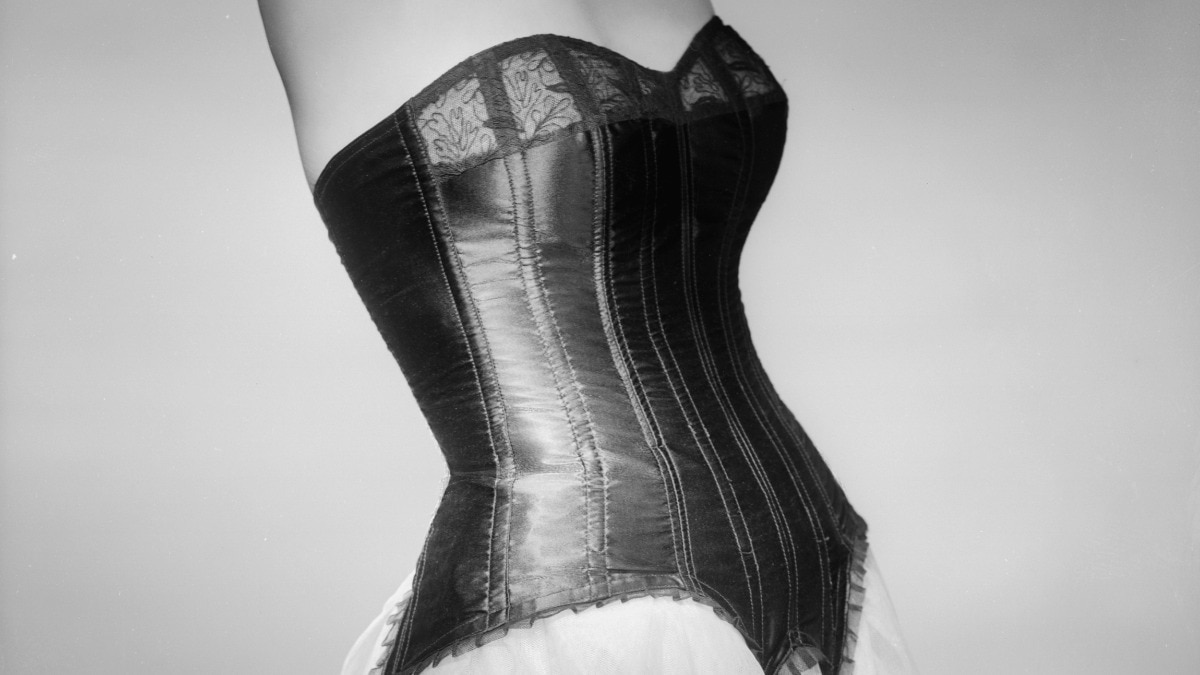
To understand why the bustier's return feels so culturally loaded, you first need to understand what it was originally designed to do and how it was intended to be worn. The basque bodice takes its name from the Basque region of northern Spain and southern France, where a distinctive style of elongated, fitted bodice was worn as early as the 16th century. Initially a garment of regional identity and practical dressing, it was rapidly adopted across European courts, evolving into something far more ideologically pointed: a tool of bodily discipline.
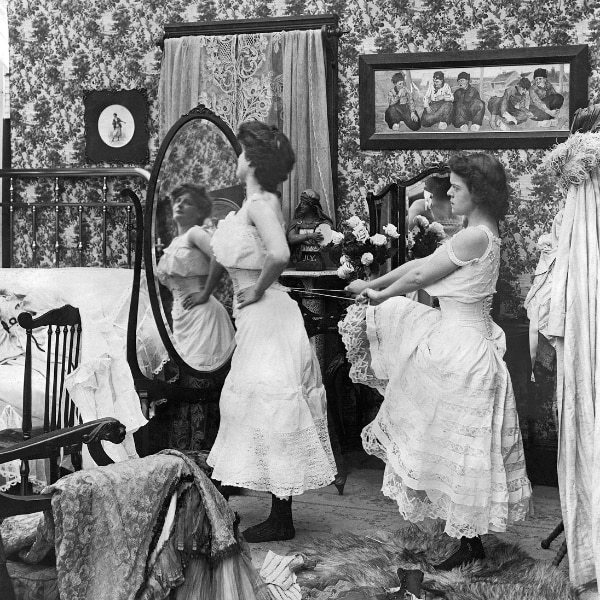
By the 18th and 19th centuries, the corset had become one of fashion history's most contested garments. Women's torsos were boned, laced, and compressed into silhouettes that served the aesthetic appetites of the era, the impossibly cinched waist of the Romantic period, the rigid S-curve of the Edwardian age. Medical professionals debated its effects on internal organs. Reformers rallied against it. And yet, it persisted because it wasn't really about health or even beauty. It was about control. The corset encoded, directly onto a woman's body, society's expectations of femininity: pliable, contained, decorative, and shaped entirely for external consumption.
The bustier—a shorter, boned bodice worn as outerwear—emerged in the mid-20th century as a lighter, more liberated relative. But it still carried its ancestral baggage: structured to flatter, designed to attract, fundamentally outward-facing in its purpose. Until, that is, women began to decide otherwise.
From undergarment to icon: Madonna and the power shift
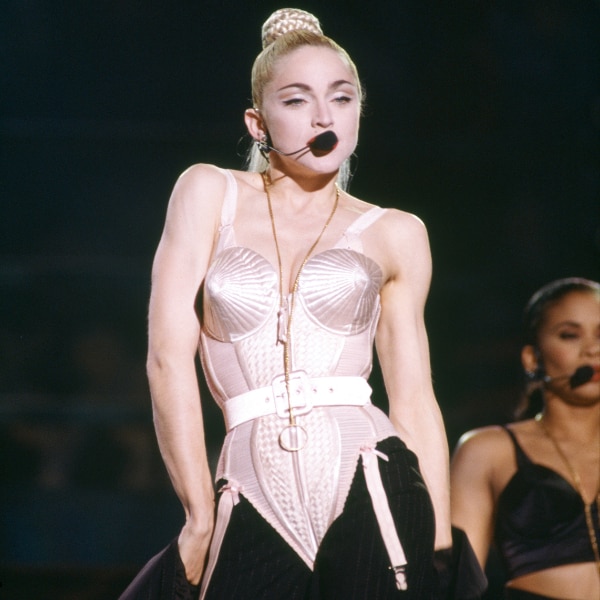
The real cultural pivot came in 1990, when Jean Paul Gaultier dressed Madonna in that now-legendary pink satin corset for her Blond Ambition tour. It was a seismic moment. The bustier, long designed to be hidden beneath layers of propriety, was thrust into the spotlight as the statement piece itself. All at once, structured bodices stopped feeling restrictive and started reading as a statement. In the nineties, the bustier came to signal confident, self-defined femininity. Women styled it their own way over slip dresses, with high-waisted trousers, or under sharp blazers, without letting anyone else decide what it should represent.
Retreat and reckoning: Why the bustier disappeared and what brought it back
The early 2000s were unkind to the bustier. In an era defined by low-rise denim, velour tracksuits, and a peculiar cultural anxiety around overt female sexuality, the structured bodice felt suddenly strident—too much for the eyes of society. It showed up all cinched and put-together, just as fashion was busy loosening up. The mood was all about the undone, the offhand, that perfectly imperfect kind of dressing. In that mix, sculpted femininity felt a little overdressed and was quietly nudged to the sidelines.
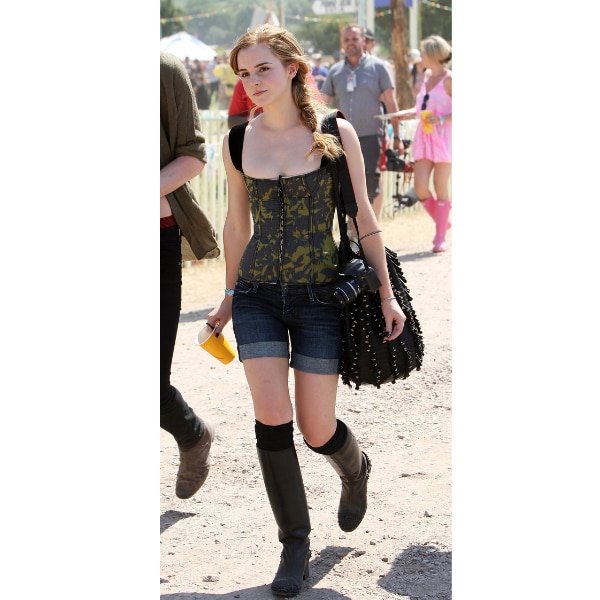
But fashion rarely abandons anything without leaving a trace. Beneath that studied effortlessness, a shift was gathering momentum. By the mid-2010s, conversations around female agency, the male gaze, and the politics of dressing began moving from theory into everyday cultural language. Laura Mulvey’s seminal ideas on the gaze, once confined to academic circles, started to shape how fashion was seen, styled, and questioned. The industry, long fluent in image but less so in introspection, began to ask something sharper: who, exactly, is this garment performing for?
Simultaneously, the rise of vintage and archival fashion gave a new generation of women direct access to the history of the bustier and corset—not as relics of oppression, but as objects with complex, contested, and potentially reclaimed meaning. Styled by women, worn by women, and increasingly designed by women, the structured bodice began its slow, deliberate return.
On the Runway: Structure, sculpture, and the designer's eye
The past several seasons have confirmed what fashion insiders had been quietly noting for some time: the basque waist and bustier are not simply trending—they are being systematically reimagined. And crucially, many of the most compelling reinterpretations are coming from female designers who are explicitly engaging with the garment's fraught history.
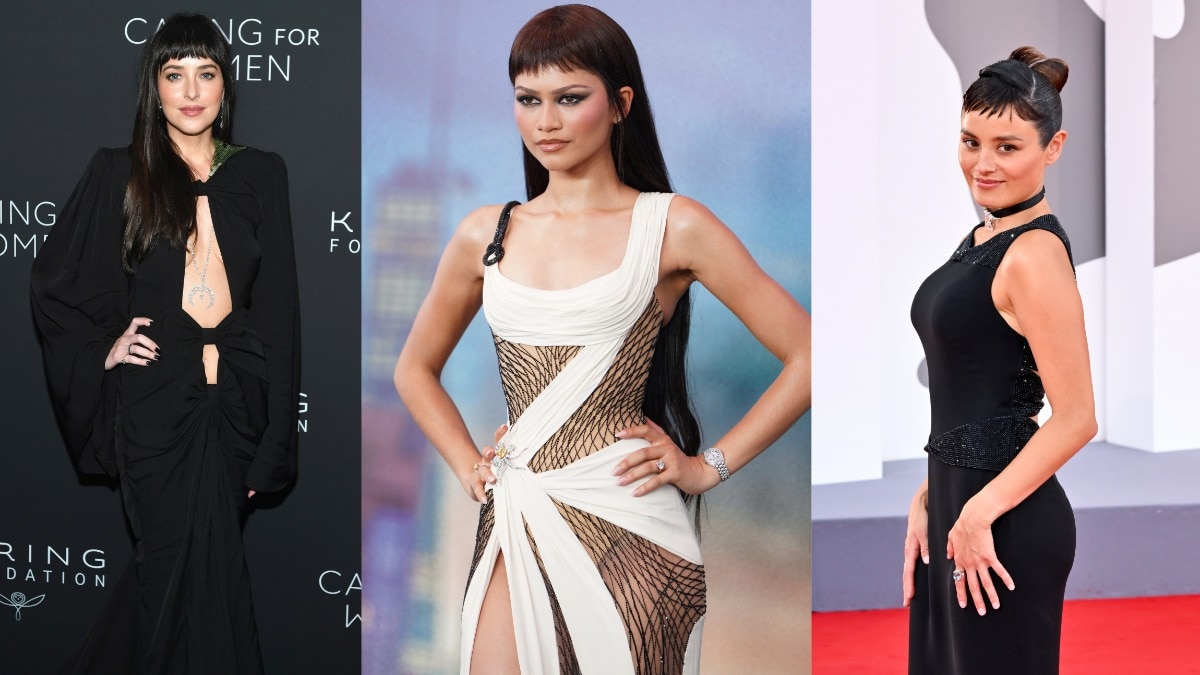
At Vivienne Westwood—long been the house most attuned to the corset's political electricity—the basque silhouette has been rendered in sumptuous brocades and worn with the kind of theatrical, knowing confidence that has always defined the brand. These are garments that reference history without being beholden to it. At Versace, Donatella has presented corset tops as pure architectural power—less about seduction, more about presence. The message is clear: this structure is not for softening. It is for commanding.
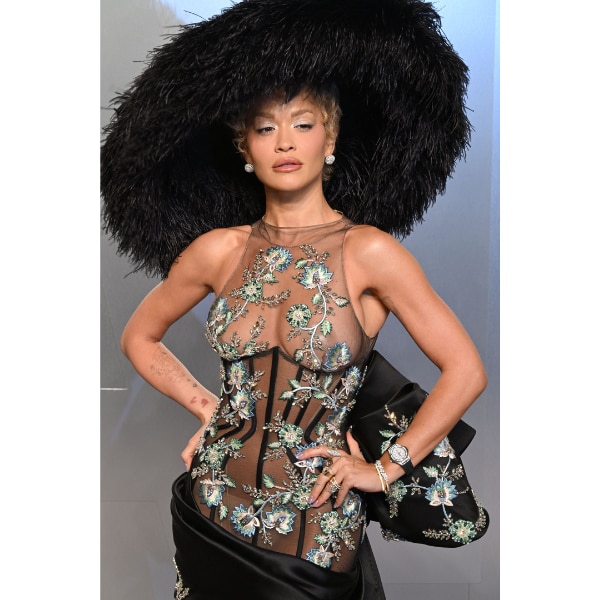
Elsewhere, the conversation has grown more nuanced. Simone Rocha has interpreted corseted bodices with romantic detachment, adorned with floral embellishment and worn with an almost dreamlike remove. Marine Serre has fused the structured torso with her signature sustainability ethos, asking what it means to rebuild the body's silhouette from reclaimed materials. Even in the rarefied minimalism of The Row, subtle corseted waistlines have appeared—proof that structured femininity has moved beyond the maximalist runway and into fashion's most cerebral spaces. Across all of these interpretations, what unites them is intentionality. These are not garments designed to be passively received. They are designed to be actively read.
Reclaiming the Gaze: What the Bustier's Return Really Tells Us
The female gaze—as a concept and as a cultural force—asks a simple question: what changes when women look at themselves, and dress themselves, through their own eyes rather than through an imagined male perspective? The bustier's resurgence offers a surprisingly articulate answer. When women reclaim a garment that was historically designed to shape and present their bodies for external approval, and wear it instead as an act of self-definition, something fundamental shifts.
This is not the naïve claim that putting on a corset is inherently feminist. Fashion is not always that simple, and the conversation is not always that clean. But what the current moment represents is a generation of women, designers, and dressers refusing the binary that says structured femininity must equal submission to the male gaze. In the end, that is what reclaiming the gaze looks like. Not the rejection of beauty or structure or the deliberately feminine—but the insistence that the woman wearing those things is their author, not their subject.
Image credits: Getty Images
Also read: Indian beadwork is finding new life in everyday fashion
Also read: Tinted sunnies that are anything but black
ADVERTISEMENT
Must Read




ADVERTISEMENT