




ADVERTISEMENT
How to go big on Diwali in a small home
No space? No problem. Two designers explain how to make a compact home glow this festive season without adding a single square foot.

Every year, the same thing happens. Diwali approaches, the Pinterest boards multiply, and suddenly, you’re eyeing marigold garlands for a 600 sq ft flat. Hold that thought. In a compact home, every extra object competes with guests, rituals, and your own ability to walk to the kitchen. The good news? Designers Priyanka Gupta and Shuchi Jain say the secret to a festive home is knowing when to stop.
Plan first, shop later
“Before decorating, assess the room layout, ceiling height, natural light, furniture placement, and space for movement,” says Priyanka Gupta, founder of Prodigy Designs. Work out where guests enter, where they gather and where the rituals happen. Keep the main walkways clear, and focus on two or three well-planned zones rather than dressing every corner.
Shuchi Jain, founder and principal designer of Studio Shuchi’s Traces, has an even simpler first step: put the shopping bag down. “Declutter, don’t shop,” she says. Reuse your brassware, glass bowls, trays, and existing lamps. Even swapping a cushion cover or adding a runner can transform a room. And if you must buy something, pick pieces you’ll use all year, such as a good lamp, a mirror, or a versatile tray. “Festive décor shouldn’t become another storage problem after Diwali.”
One hero, please
Both designers swear by a single star of the show. It could be the entrance, the puja corner, a wall facing the main seating area, a styled console or a dining table dressed with flowers, candles, and good linen. Back it up with two or three smaller touches, and leave the rest of the surfaces alone, especially those you use every day.
“When everything is trying to grab attention, the space loses its charm,” says Jain. “A little restraint goes a long way.”
For meal-centred celebrations, Gupta suggests making the dining table the hero, with a low centrepiece that leaves room for serving. Windows can play a supporting role with subtle lighting.
Do the maths
Styling is partly instinct and partly arithmetic. Gupta offers these rules of thumb:
Walkways: At least 90 cm (3 ft) wide.
Seating to coffee table: About 45 cm (18 in).
Table centrepiece: Roughly one-third of the table’s length and under 30 cm (12 in) tall, so everyone can see each other across the table.
Flower arrangements: About 1.5 times the vase height.
Decorative groupings: Arrange objects in threes or fives, at varying heights.
Look up
When the floor is spoken for, use the walls, doors and windows. Torans, vertical garlands, wall hangings and lightweight lanterns add drama without taking up floor space. Removable hooks mean no drilling. Gupta has a ceiling-height rule: opt for slim torans and garlands in rooms with low ceilings, and hanging lanterns in taller rooms. Keep the lower half of windows clear so daylight can stream in.
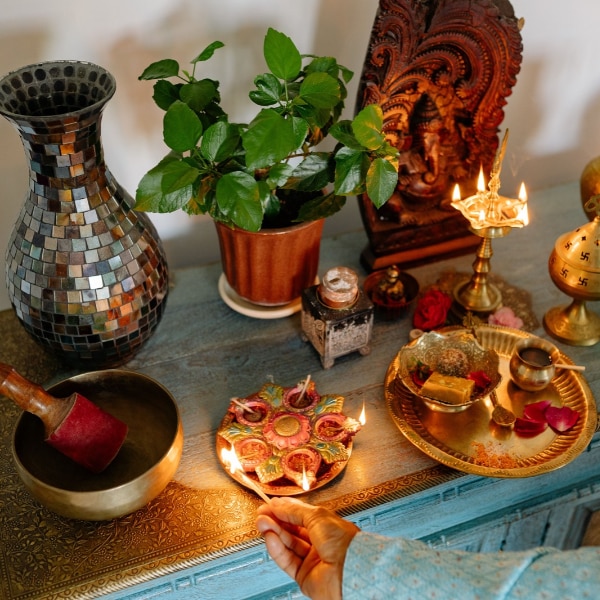
Jain’s vertical décor picks include wall-mounted diyas, decorative shelves, and balcony railing lights. Foldable stools and compact tablescapes can also help make the most of limited space. Her one rule: nothing should block a door or interfere with everyday movement. For a small puja corner, she says, a neat shelf, a brass thali, fresh flowers, and subtle lighting are plenty.
Let there be (warm) light
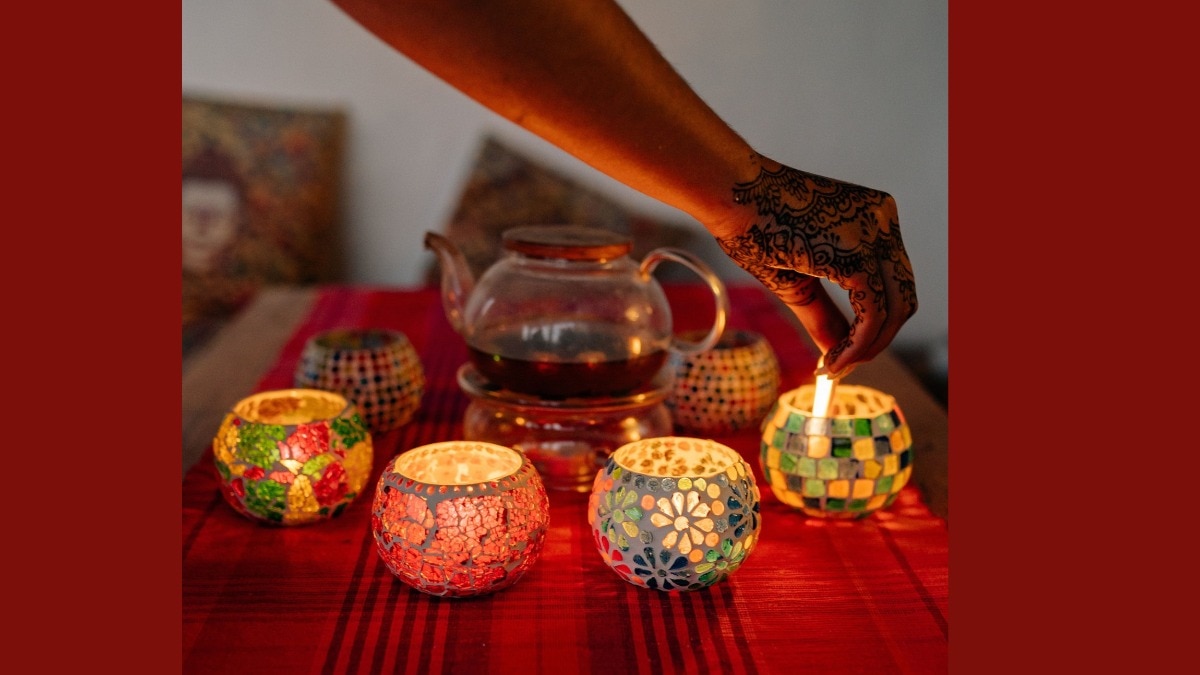
Don’t rely on the ceiling light alone. Layer diyas, mid-height string lights, and soft overhead lighting, or use lamps that wash a wall gently. Opt for warm-white lighting at around 2,700 K for a cosy glow.
Then bring in the mirrors. Placed near a window or another light source, mirrors and brass accents bounce light around and can make a small room feel brighter and more spacious. Jain favours a mirror that catches a pretty corner of the room, paired with ivory, wine and olive green. Light up dark corners, too, but resist the urge to fill them with things. “Sometimes, leaving a little space makes the entire room look more expensive,” she says.
Keep the palette on a leash
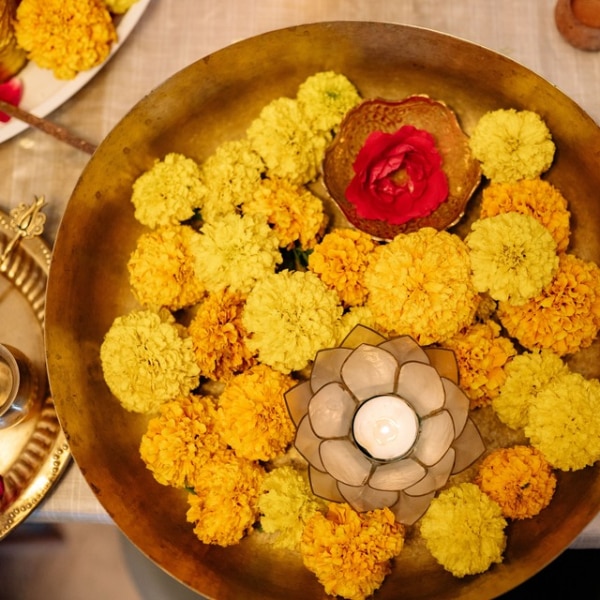
Pick two or three colours and repeat them throughout the home. Marigold, brass, and ivory feel warm and traditional, while white, gold and green create a lighter, more elegant look.
Stick to one or two flower varieties, float loose petals in brass bowls, and scatter small arrangements around the home. Drape a dupatta or saree as a backdrop. Brass vessels, glass jars, and even kitchen thalis make lovely holders for flowers or diyas. What should you skip? Too many colours, competing patterns, oversized decorations, and cluttered surfaces.
The rupee-wise plan
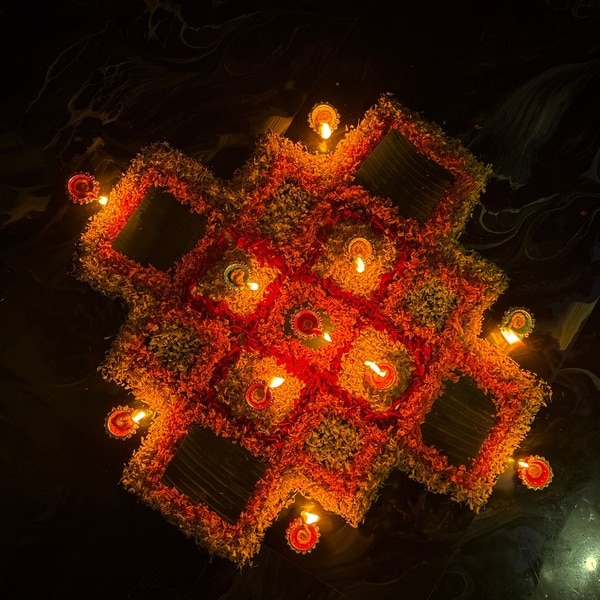
Entrance: Clear away shoes and umbrellas, then add a marigold toran and a simple rangoli.
Living room: Remove extra furniture or cushions, add two or three festive cushion covers, and run warm string lights along a wall or window.
Dining or puja area: A low floral centrepiece or fresh flowers around the puja space are all you need.
The statement piece: Choose a vertical floral installation and place it in a corner or against a wall, away from the walkway. Remove a piece of furniture if necessary rather than squeezing the installation into an already crowded space. Keep the surroundings minimal so it stands out.
Reusing brass, copper, and glassware, along with a few fresh flowers and reusable lights, helps keep the budget in check. As Gupta puts it, a few carefully chosen things can deliver a great result.
The Vastu note
For Jain, styling is as much about how a home feels as how it looks. From a Vastu perspective, she likes the entrance to be clean, welcoming, and well lit, and the puja space to be organised and peaceful. Traditionally, the northeast is preferred for the puja space where the layout allows, while the east or north may be considered for the prayer area, depending on the home’s plan. Diyas bring warmth and auspiciousness, but always place them safely.
Doing Christmas, too?
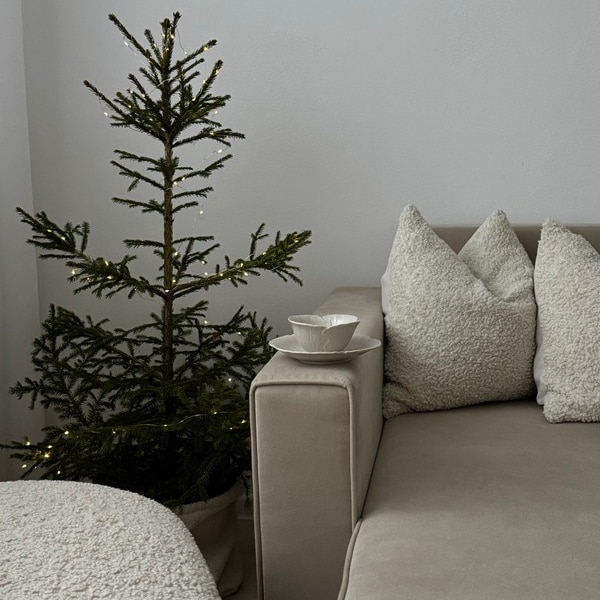
If your festive season stretches into December, Gupta’s tip for compact homes is to opt for a slim tree with a base no wider than 60-75 cm, leaving 15-30 cm between its top and the ceiling. Place it in a corner or against a wall, away from the walkway.
The takeaway
“I don’t think we need to make our homes look perfect for Diwali,” says Jain. A home that feels warm, functional, and lived-in is far more beautiful than one filled with décor just for the sake of it. Clear the walkways first, leaving at least 90 cm of space. Choose one hero element and add two or three smaller touches. Pick two or three colours and repeat them throughout the home. Use warm-white lighting at around 2,700 K, along with mirrors and brass accents. Reuse what you own before buying anything new. Keep diyas away from doors, curtains, and high-traffic areas.
Lead image: Pexels
Also read: Burberry’s Diwali edit makes a case for rich hues and heritage checks
Also read: Festive Diwali home décor to set the scene for celebrations
ADVERTISEMENT
Must Read








ADVERTISEMENT