





ADVERTISEMENT
Anoushka Shankar wants music to feel intimate again
Artiste Anoushka Shankar on de-exotifying the sitar, redefining tradition, and making space for honesty.

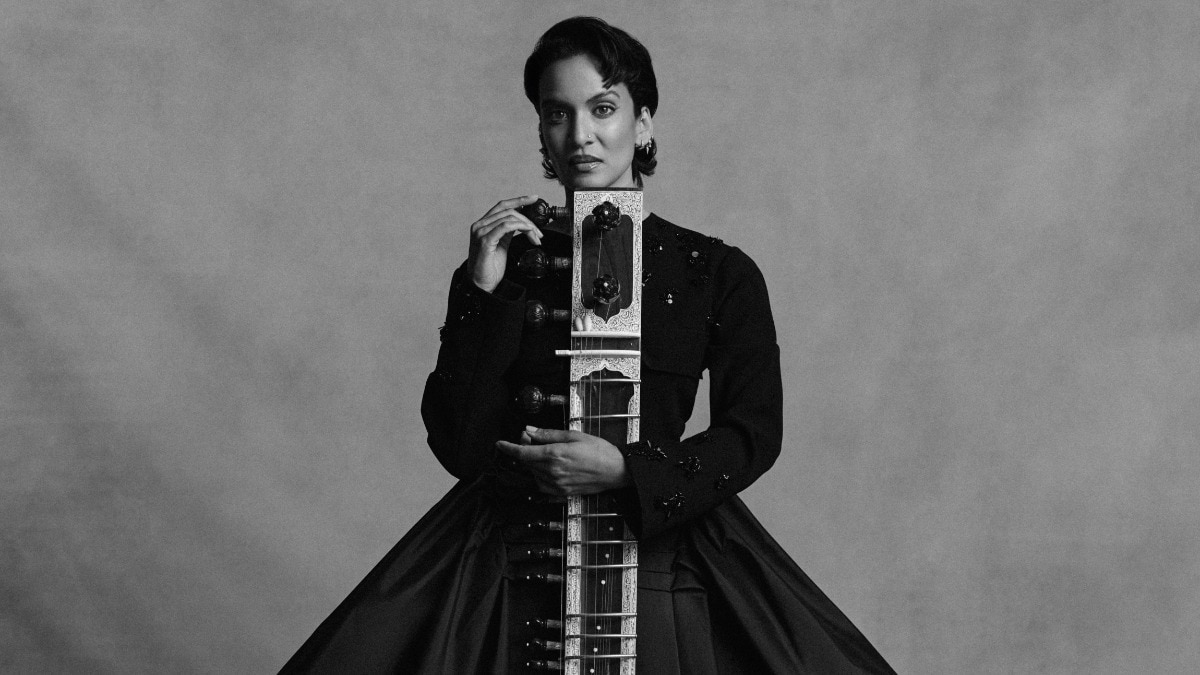
Anoushka Shankar was only 13 when she stepped onto a stage with a sitar in hand for the first time. It wasn’t just an instrument, it was history, inheritance, and a whole lot of expectations far too large for someone so young. In the years since, her relationship with music has kept shifting shape, resisting easy definitions, and growing more honest with time.What she carries today is less visible but far more potent: a voice that no longer asks for permission.
Change—personal, artistic, geographical—runs like a quiet current through Shankar’s work. She belongs, simultaneously, to India, the UK and the US, a global citizen in the truest sense. “India is where I come from,” she says simply, even as London is where life has settled into a different rhythm while she raises her children. This layered sense of home seems to have informed her recent trilogy of albums. Each of these albums has been created on a different continent, each rooted in a specific emotional and physical landscape. Taken together, they feel intimate and deeply personal yet open-ended.
Over the years, Shankar has also had to contend with how the sitar is perceived—often treated as a relic or an exotic flourish. She has little patience for that kind of distance. For her, the sitar is alive and capable of endless expression. Especially over the last decade, she has been reimagining how it can sound—how it’s recorded, how it’s mixed, how it sits alongside other genres without losing its soul. But she insists that this isn’t about rebelling against tradition. It’s about being intimate with it—stripping away the fear and formality that can make both playing and listening feel intimidating.
Our conversation kept coming back to vulnerability—something she believes is one of art’s quiet superpowers, provided the artist learns how to protect themselves enough to endure. We also spoke about hope, a recurring undercurrent in her music, and authenticity, which she describes as messy and shimmering, and just as complicated as people actually are.
As she prepares to tour India between the end of January and early February, Shankar finds herself at a crossroads. After years of relentless touring, she’s craving balance—more time at home, more space for listening, more room to grow as a composer. The future may hold new collaborations, perhaps even a drift towards visual art or dance. Whatever shape it takes, one thing feels certain: she will continue to move forward on her own terms, guided less by expectation and more by instinct.
Harper’s Bazaar: You’ve been performing for 30 years now. How has your understanding of your artistic identity shifted over time?
Anoushka Shankar: We have to put three decades in context. I started when I was 13, my relationship with music then was completely different. As a teenager, I was focused on playing things correctly and presenting them the way I thought I was supposed to. Over time, it became a process of finding myself through music. From my 20s onwards, I began trying to be more personal, to tell emotional stories. My inner voice has become more present in the music, and that’s continued to deepen over the years.
HB: You return to India often. What does “home” mean to you, and how does it influence your music?
AS: Home is many things. There’s where you come from, and then there’s where you build your life. In my case, it was complicated because my parents moved a lot. The UK and India both felt like home, and then we moved to the US when I was 11. India is where I’m from—that’s never changed. But where I raise my children also becomes central, so London feels like home again now. Musically, it changes each time. With the trilogy, I leaned into different geographies for each album, making them on different continents and letting those ideas of home shape the music.
HB: The trilogy feels autobiographical. How literal is it?
AS: Instrumental music is inherently allegorical. With lyrics, it’s easier to say what’s literal and what isn’t. With instrumental music, what people hear isn’t always what you put into it, and that’s the beauty—it becomes everyone’s. It is personal and literal, but by the time it becomes music, it’s interpretive.
HB: Many listeners associate the sitar with heritage and nostalgia. How do you move beyond that?
AS: It does the sitar a huge disservice to box it that way. Instruments aren’t musical styles. We don’t think a guitar is rock or flamenco—it’s just a guitar. The sitar is capable of so much. Especially over the last decade, I’ve thought consciously about how I place it, what sounds it’s paired with, how it’s mixed, and how to make it feel current. In the West, it’s important to de-exotify it; in India, to make it more intimate and approachable, without putting it on an untouchable pedestal.
HB: How do you navigate reverence for tradition while continuing to experiment?
AS: I have as much reverence as ever, but less formality. Reverence can be intimate and loving. I had to remove some intimidation for myself to grow as a musician. Artistically, I don’t believe there’s a right or wrong—only honesty. My job is to be deeply in touch with what needs to come out of me. When I work from the inside out, the music speaks. When I work from the outside in, it becomes intellectual. That balance—between knowledge, respect and intuition—is essential.
HB: Is there a unifying emotion that runs through your work?
AS: Not an emotion—more a current of hope. Hope is a choice and an action. Especially in difficult times, choosing hope is what allows us to move forward and try to create change.
HB: You’ve spoken openly about misogyny and body shaming. How does that shape your art?
AS: It’s all connected. I’ve made music responding to violence, humanitarian crises, and personal experiences. Even when expressing rage or heartbreak, I try to end on hope. Music helps carry me out of those spaces, and hopefully helps others too. Speaking publicly became important over time, within boundaries that feel safe for me.
HB: Do you see vulnerability as a strength on stage?
AS: Absolutely. Vulnerability allows people to feel you. You can give a technically great performance, but when you truly dig in and are yourself, it creates connection. Art, at its deepest, connects us to our souls. Witnessing that openness can be transcendent.
HB: Your music demands patience in a fast-paced world. What does that mean to you?
AS: Everything has its place. Sometimes you want something quick; sometimes you want something slow and immersive. I accepted long ago that my music wouldn’t be mainstream, but I know what it gives to the people who listen. Integrity matters more than numbers.
HB: How do you define authenticity?
AS: It’s everything—heritage, emotion, experimentation, and more. People are complex, messy, beautiful beings. The moment we box authenticity into one thing, we lose its essence.
HB: Is there an art form you’d still like to collaborate with?
AS: I would love to do more with dance, and I am increasingly curious about collaborating with visual art—responding to paintings or creating something with a visual artist.
HB: What do you hope listeners take away from your music?
AS: If they’re struggling, I hope it offers resonance or respite. Otherwise, hope—or simply joy. Any of those is a win.
HB: How do you see your next phase unfolding?
AS: I want more balance—more home time, more space. Artistically, I’m expanding my compositional world, possibly doing more scoring and composing alongside touring.
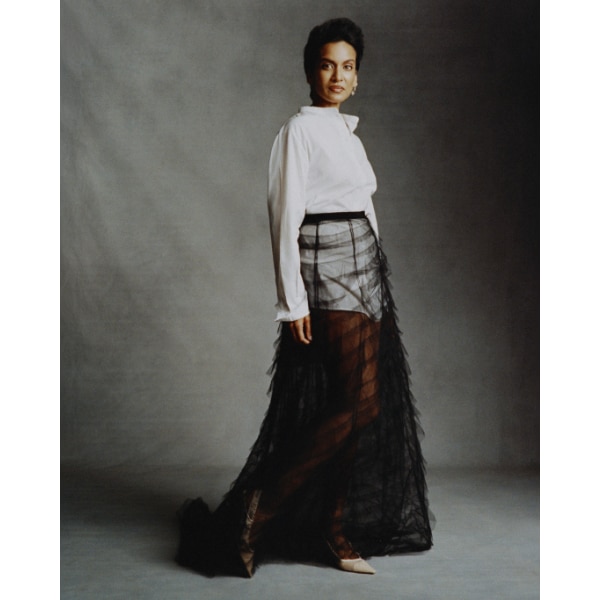
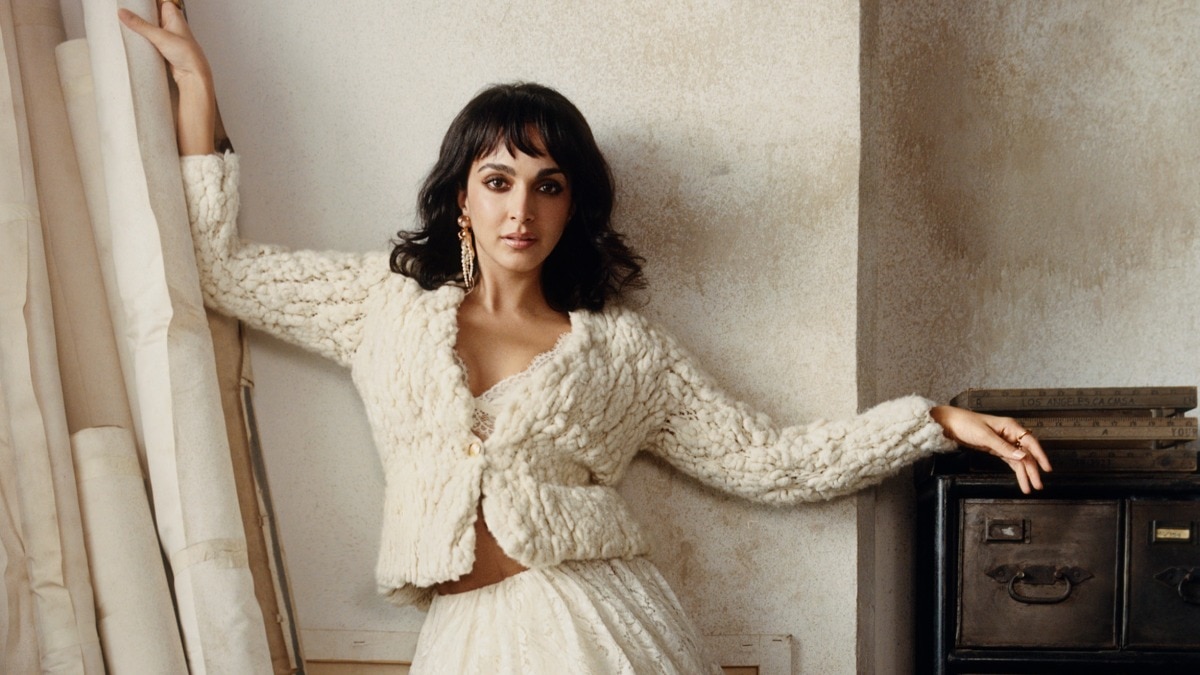
Lead image: Cropped jacket, and pleated trousers, both Chorus; heels, Jimmy Choo; and earrings, Studio Renn
Make-up Artist: Tshering Lama at Feat Artists; Hair Artist: Umang Thapa at Anima Creatives; Editorial Coordinator: Shalini Kanojia; Set Design: Janhavi Patwardhan; Assistant Stylist: Aditya Kamal Singh; Assistant Coordinator: Krishika Shirishkar
Photographs by Soujit Das
Styling by Samar Rajout
This article first appeared in Bazaar India's January 2026 print edition.
Also read: How to reclaim your rhythm after the holiday daze, at work and beyond
Also read: Six children’s films that resonate differently in adulthood
ADVERTISEMENT
Must Read




ADVERTISEMENT