





ADVERTISEMENT
Amitav Ghosh returns to fiction with Ghost Eye—and to the Kolkata of his childhood
A conversation with Amitav Ghosh on Ghost Eye, loss, returning characters, and imagining worlds beyond human exceptionalism.

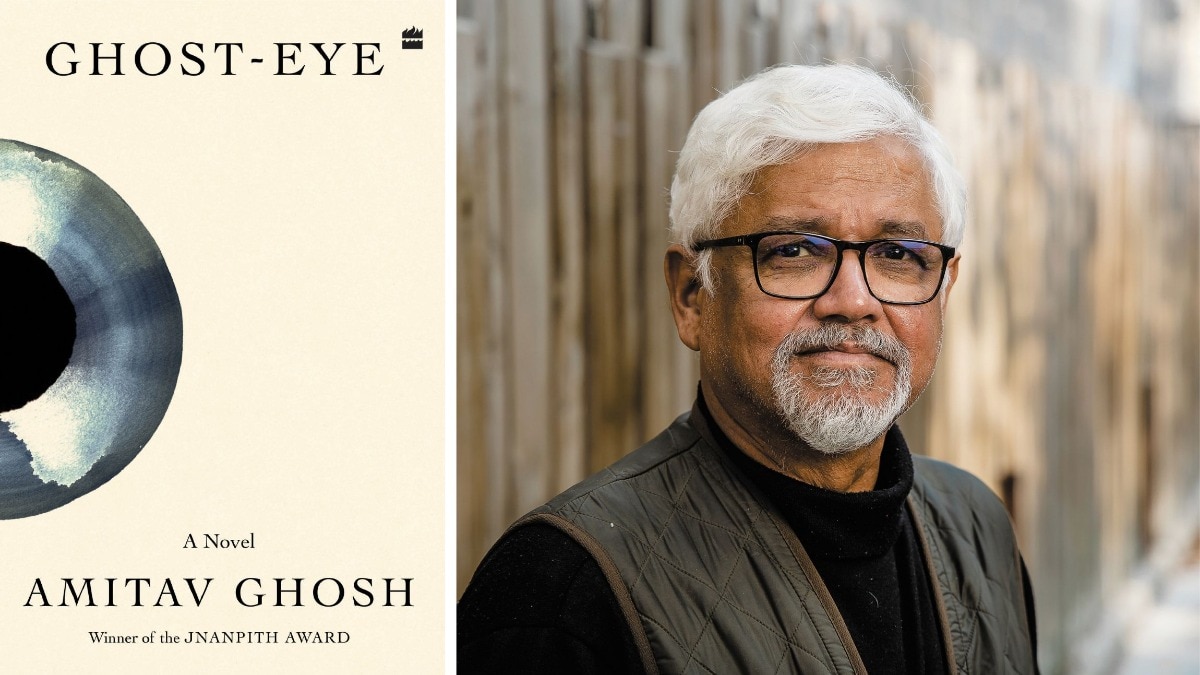
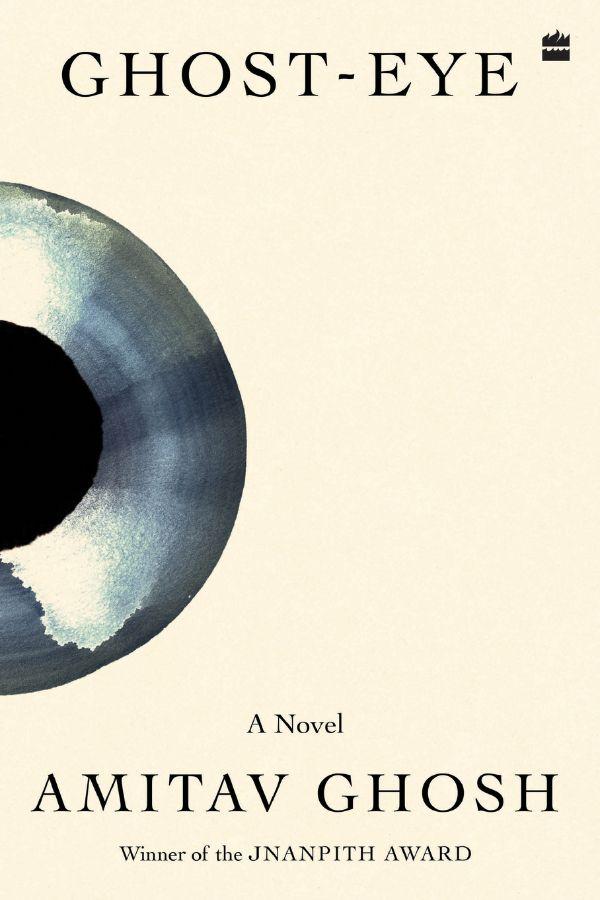
I start with a memory: that of me as a lanky, concerningly unfashionable 20-year-old when I first met Amitav Ghosh—in his characteristic snow-white hair, thick black glasses reminiscent of Mrinal Sen, and the most austere of smiles—at a book-signing event in Kolkata, in a bid to get my copy of the author’s 1988 novel The Shadow Lines signed. As I connect with the 69-year-old author from his Mumbai hotel, amidst the dizzying frenzy of the India leg of his book tour, the joyous serendipity of his starting point is not lost on me. Ghost Eye, Ghosh’s latest work of fiction (a medium he returns to after seven years) after all is a sentient, slow concoction of memory, trauma, loneliness, and the fragile ecology of the planet we humans inhabit.
Despite the chaotic, multi-city, uninterrupted book tour Ghosh currently finds himself in (“the events have been really packed, but it has been terrific to hear the amazing responses people have greeted the book with,” he quips in the middle of sipping his tea), there is an inherent slowness to his latest literary offering. His last novel, Gun Island, was published in 2019. What followed were years of nonfiction, verse, and deep engagement with history, ecology, and empire—Jungle Nama (2021) and The Nutmeg’s Curse (2021) among them. Ghost Eye marks a homecoming to long-form fiction that feels like a distillation of many of the questions that have preoccupied him for decades, primarily the porous boundaries between the human and the more-than-human world.
Like most creative geniuses, Ghosh resists the premise of the question about the inspiration behind the novel. “There’s no explanation for where ideas come from,” he says, in his quintessential sparkling quietude. “Sometimes ideas come from outside. This book almost wrote itself and had a kind of flow unlike anything I’ve written before. But I definitely wanted to think about the Kolkata of my childhood as a starting point.” Never shy of self-effacing humour, he quickly bursts out laughing, calling his own response “not very good”. It is a sincere, self-aware candour that one rarely encounters in artists today—something that makes me diligently point out the softness and love with which he pens the city into being. In Ghosh’s words, one travels back to the City of Joy of the 1960s and 70s and encounters a topographical consciousness that is layered, haunted, and teeming with unseen life.
For his long-time readers, this call back also finds echoes in the peripheral yet pivotal role occupied by the character Pia in this novel. First introduced in his 2004 novel The Hungry Tide, Pia has since also made an appearance in Gun Island. But Pia is not the only spectral presence from Ghosh’s literary corpus that one encounters while wading through this novel. Multiple characters from Ghosh’s epic 2000 novel The Glass Palace also quietly tiptoe their way into this book. “You know, characters rarely just disappear,” he muses. “When you finish a book, a character doesn’t just vanish; they keep growing in your head over the years and naturally reinsert themselves into your work. Also, when you have a nice character, why lose her?”
This sense of continuity extends beyond character. For a novel centred around characters with the ability to recall past lives, Ghost Eye, towards its breathtaking final stretch, oddly resonates with the experimental architecture of Ghosh’s own 1995 enigmatic novella The Calcutta Chromosome. When I, for lack of a better word, use the term “magical realism” to explain the fil rouge running through both works, Ghosh firmly rejects it. “I don’t like that term,” he says without hesitation. For him, magical realism centres human magic and human exceptionalism, whereas his larger literary oeuvre has been an extended attempt at decentering the anthropocene altogether. “The real challenge,” he explains, “is how do we give voice to the non-human?” When pressed to label his 300-page work of f iction—grappling with marine science, ichthyology, and the intelligence of aquatic life—with a genre, Ghosh finally offers one with a laugh: “Why not call it jadoo realism?” And strangely, the term sticks—not because it exoticises the unknown, but because it locates wonder outside the human ego.
The pandemic forms another, more painful undercurrent in the novel. When asked, Ghosh speaks of it plainly, recalling the painful memory of losing his mother while being stuck in the midst of a global lockdown in Brooklyn. “That was a deeply tragic experience,” he says softly. The grief, distance, and loneliness of enforced separation experienced by the author in those months all find their way into Ghost Eye—a shared solitude that many readers will immediately recognise. Paradoxically, he also notes, the pandemic was a period of intense productivity for him. “For a writer,” he reflects, “isolation and loneliness are not new. We spend most of our days locked up in a room scribbling away, which there was a heightened sense of during the pandemic.”
There is an old-school charm to his writing process as well, one that begins with a pencil—“because it doesn’t impose a barrier between you and the page”—then moves to a fountain pen, and only later to digital dictation. Each stage introduces a slightly firmer line, a greater sense of commitment. “The pencil lubricates the flow,” he says. “It allows space for mistakes.”
This philosophy extends to his lifestyle, one that finds a sensuous, memory-filled centrality in this novel. Documenting the pandemic-era explosion of social media cooking videos—particularly those by rural Bengali women recreating traditional dishes—Ghosh lights up. “I’ve always been the family cook,” he says. “Conviviality is ver y important to me.” His favourite childhood fish curry? Doi maach (fish in yogurt gravy), he says without hesitation. In New York Cit y, recreating it requires pilgrimages to Chinatown, searching for pomfret and other familiar fish species. But it’s an inconvenience he seems to pleasantly cherish.
When asked about his favourite character in Ghost Eye, Ghosh chooses Shoma. “She’s the spirit of the book,” he says. What draws him to her is her openness to surprise, mystery, and the possibility that the universe is far stranger than we imagine. In many ways, Shoma embodies the novel’s deepest impulse: a willingness to remain porous to the world. And as for what comes next, Ghosh refuses to speculate. “One should never talk about one’s plans for the future,” he says, with mischief in his voice. “That’s a sure way to doom it.” Characters, as we have learnt after all, have a way of returning on their own terms.
Images: Courtesy Harper Collins India
This article first appeared in the February 2026 issue of Harper's Bazaar India
Also Read: Ai Weiwei’s first Indian exhibition explores the space between play and philosophy
Also Read: Inside Aranyani: Tara Lal’s sacred architecture of forests and memory
ADVERTISEMENT
Must Read









ADVERTISEMENT