




ADVERTISEMENT
Six children’s films that resonate differently in adulthood
It’s all a part of the circle of life.


Did Inside Out feel a little too relatable the first time you watched it? Maybe it was Elsa who first taught you about the fine balancing act of power and self-control, or Moana who triggered a dèja vu moment as she entered foreign shores, all while second-guessing herself. Peel back the whimsical layers of Walt Disney films, and you are left with raw, profound truths that hold relevance well into adulthood.
Call it utopian or outright delusional, but Disney films make a strong case for more than just a “happily ever after”. For grown-ups, Tiana turning into a frog might not strike a chord, but her all-consuming work ethic and struggles to finance her own dreams definitely do. The relatability is metaphorical, rather than literal.
Although life may not be the fantasy fiction the films promise, it can be as exciting and beautiful as the hand-drawn characters we’ve grown up loving. When we see a beloved character experience a slice of our lives, that kind of subtle acknowledgement can be comforting and reassuring. Here’s a list of moments that might have done just that for adult viewers.
Inside Out 2
Riley’s panic attack is more than an outcome of overthinking; it’s a milestone moment on screen which underscores an experience that’s otherwise largely belittled. Anxiety is not the protagonist or the villain here; she’s the anti-hero, and the film does not shy away from staying in that grey space. For the kids and teens watching, it’s effective normalisation; for the grown-ups, it's delayed acknowledgement. The film in itself, including the first one, reinforces the importance of emotions, and each one at that, unlike what prior generations may have inherently learned, “to swallow the emotions” or “wipe away the tears”. Inside Out has kick-started the conversation on emotional awareness, and for adults, perhaps it's been a long time coming.
Elemental
This film reinstates a fundamental concept: to live and let live, a basic prerequisite for decent human behaviour. Co-existing with those who might seem fundamentally different from us, and refraining from passing judgment, is an overlooked trait. With Elemental, the spotlight is on prejudice, gently reminding us to think beyond unnecessary societal constructs. Then, of course, there’s the eternal struggle of choosing between family expectations and self-actualisation, possibly a plague that’s unlikely to spare any generation. As heavy as these obstacles may seem, the film does, in its quintessential Disney stance, give us the solution to love. The clichè four-letter word that comes with infinite possibilities.
Frozen 2
If Idina Menzel gave us Let it go, Kristen Bell gave us The Next Right Thing. But both left us with invaluable lessons. While Frozen taught us about the importance of letting go, the sequel delves into more mature themes, showing us how to tackle grief, the unescapable human emotion. Through Elsa’s “inner voice”, the film also reinforces the forgotten need to listen to our intuition, often drowned amidst the cacophony of judgments that constantly surround us, specifically in the digital age. The biggest learning of all, though, comes through Elsa and Anna’s mother, who warns them not to get too absorbed in the past, through the melodious Nordic lullaby. In this song, she sings “When all is lost, then all is found”, implying how rock bottom is sometimes the strongest base for a better tomorrow.
Finding Nemo
“Just keep swimming”—Dory’s wise words that hold even years after the film’s release in 2003. Even so, the subtle parenting lesson does not go unnoticed. Through Marlin, we see a loving and concerned, yet perhaps overprotective father. Deep-rooted in the trauma of losing his family, Marlin’s worry appears justified. That is, until Nemo turns rebellious and eventually gets separated from his dad. The film shows us how parents’ fears can easily spill over to their children. But it also beautifully emphasises hope in the face of adversity, as Marlin rises against all odds (like those independent baby sea turtles), and eventually finds Nemo, as well as the broken parts of himself that were lost in that tragic accident years ago.
Ratatouille
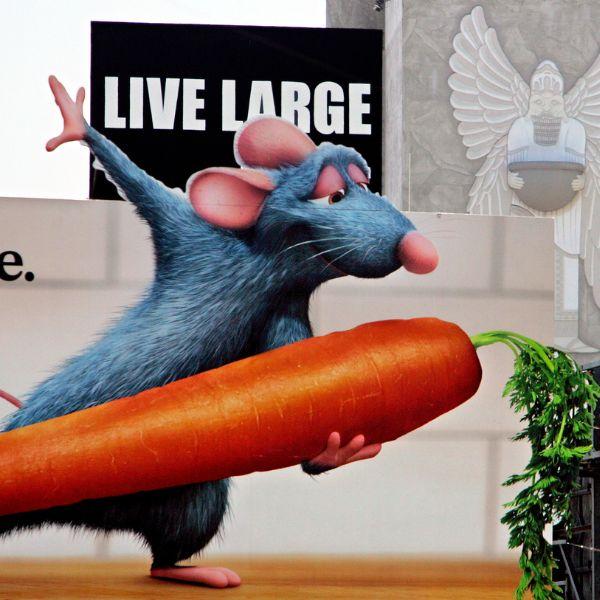
Passion is personal. The catch? Society gets personal about it, too. From your address to the way you dress, people are jumping to judge. They’ll announce their verdict before you've had a chance to try. Yet, the film Ratatouille challenges every such societal dogma that serves no real purpose. If a rat emerging from a gutter can defy all odds to cook up a delicious meal, anything is possible. And sometimes, we adults need to be reminded of that magic in the mundane parts of life. The motto is “anyone can cook”, but the wider takeaway is “anyone can —” and feel free to fill in the blank as per your gumption. Last, but not least, the film carries a surreal message that adults will truly resonate with: the emotional power of food.
Cars
"Lightning" McQueen taught us that in the race of life, winning isn’t everything. But humility in the face of victory is not the only moral adults viewers are left with. This film beautifully reminds us of how mentors shape our lives, influencing not just our craft and skill but also our holistic selves. While it is often lonely at the top, Radiator Springs serves as a gentle reminder that community living is an underrated wellness route, where joy is measured by a shared history rather than steady success. McQueen shows us how slowing down is sometimes a necessary precursor to progress, which can sometimes be difficult to remember in the ruthless race of life.
Lead image: Getty Images
Also read: Why everyone wants to live like a European grandmother
Also read: The introvert’s survival kit for corporate life in 2026
ADVERTISEMENT
Must Read









ADVERTISEMENT