




ADVERTISEMENT
Inside WFL: The women’s football league helping adults rediscover the game
In returning to a childhood love, Aneesha Labroo and Shayoni Nair built a league that allows women to make football their own.

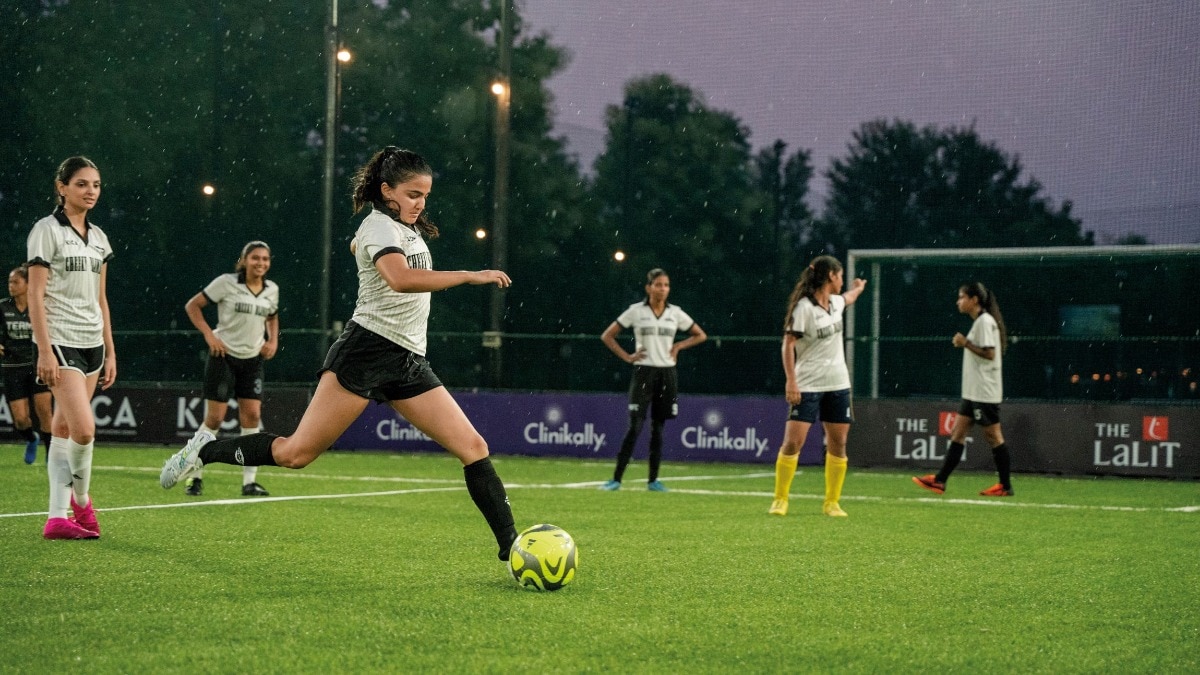
For many women, ending their association with sport is often not a conscious decision—it simply fades from their lives. School finishes, schedules get crowded, and the spaces that once made room for play disappear. Not because the love for the game dies, or the ability wanes, but because finding the time, the people, and the “permission” to keep playing becomes harder with age. Entrepreneur Aneesha Labroo remembers that feeling clearly. Growing up, football was a constant, but when she moved back to Delhi after several years abroad, the game she loved felt oddly inaccessible. Around her, men her age were still showing up for weekend matches, still building their lives around sport. She tried slipping back in. “I joined a few games,” she recalls. “But playing with men is different. It’s louder and more aggressive.”
Shayoni Nair, the founder of Net Gala, a recreational sports community, had felt the same loss. Football had shaped her childhood—training camps, school tournaments, the discipline and joy of the sport. But adulthood came with an unspoken understanding that this chapter was over, folded away neatly as life moved on.
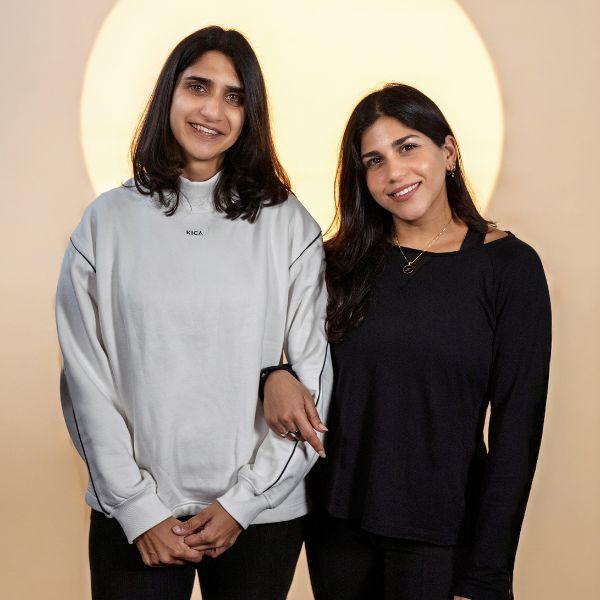
There’s serendipity in how Labroo and Nair’s paths crossed again. They had first met on a football field when they were 10. When they reconnected years later, sometime around 2017, the conversation wasn’t about ambition or building something new. It was about reclaiming something they thought they’d lost. “The desire was to start playing the game again, with more women,” says Nair.
The next step was building a community. Labroo and Nair reached out to women they had played with over the years, along with a few friends of friends. A WhatsApp group was born in 2018. “We started playing twice a week,” Labroo remembers. “Most of these women already knew the game. They weren’t beginners.”
The group grew quickly, and with it, the sense that this was becoming more than a set of weekly matches. Women stayed back after games, conversations spilled beyond the field, and friendships blossomed outside their usual social circles. “It stopped being just about football,” Nair says. “It became about having a space where you didn’t have to justify why this mattered.”
Labroo, who was already working at the intersection of women and movement through her activewear brand Kica, decided to take the idea further. She organised a football boot camp in 2019, expecting largely experienced players. What surprised her was who showed up. “Half the women were beginners,” she says. “You don’t expect many women to want to start learning a physical contact sport like football later in life. That’s when I realised there was potential for a league, not just a one-day event.”
In 2020, Labroo organised the first women’s football league, bringing together players across age groups, professions, and skill levels. She roped in men from her football circles to step in as coaches, assigning one to each team. “We ran a draft and skills day,” she explains. “Everyone who signed up was assessed, and teams were formed accordingly.”
What set the league apart was a deliberate choice. “We’ve never allowed people to sign up as pre-made teams,” Labroo says. “That levels the field and pushes players out of their comfort zones.”
Soon after, the momentum paused, overtaken by the pandemic and everything that came with it.
The Women’s Football League, which has completed three editions, has now been rebranded as WFL. This season, six women team owners have come on board, including content creator and sustainable fashion advocate Sanjana Rishi, and Vanshika Wadhwa, Co-founder of Kamei and Creative Director at House of Fio. “These are influential women who are deeply invested in empowering other women, each in their own way,” says Nair.
The league, which will be held from February 14 to March 14, will feature six teams, competing in a six-a-side format. But the WFL is designed to extend beyond match days. One of the key additions this year is a coaching programme for women who want to learn the sport before stepping into competitive play, or alongside it. “Playing in a league while you’re still figuring out the game can feel intimidating,” Labroo explains. Weekly sessions allow newcomers to build skills and confidence at their own pace.
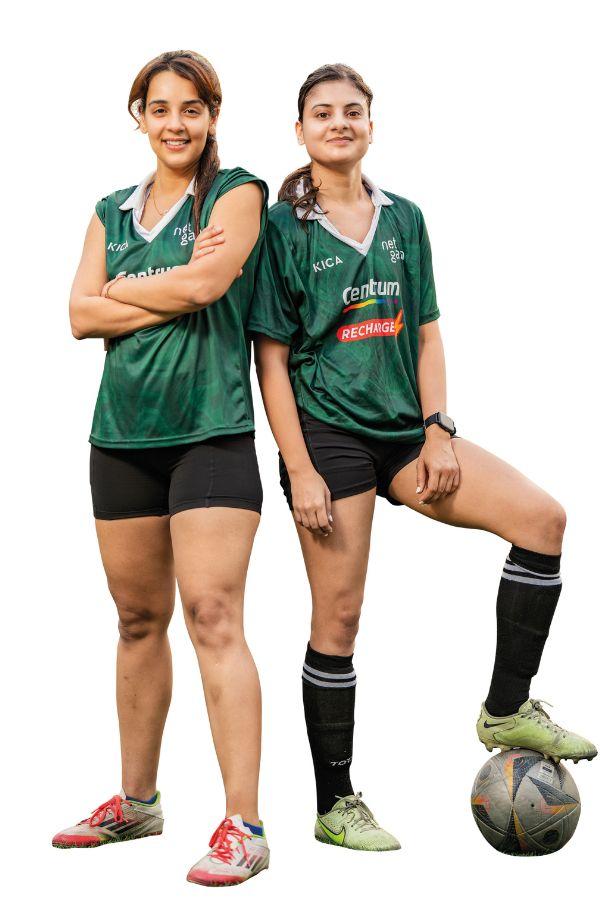
The vision, Labroo adds, extends well beyond a single season. “Our sessions and events will now run all year round, not just during the league. And we plan to take WFL to other cities as well.”
Keeping WFL accessible has been central to its growth. Registration fees are deliberately kept low, and partnerships with organisations like Khel Khel Mein and the Fairy Fari Foundation bring in women from different socio-economic backgrounds—many playing alongside corporate professionals, creatives, and students. “We never want money to be the reason someone can’t play,” Labroo insists.
The shift this creates is visible. Women who arrive unsure grow louder on the field. Confidence builds, not through speeches, but through movement and teamwork. “There’s a moment when you see it click,” Nair says. “They stop shrinking.”
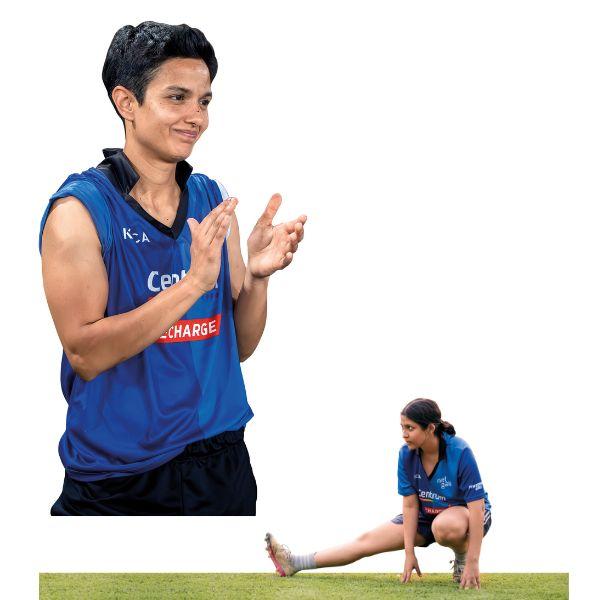
Resistance from families, contrary to expectation, has been rare. What surfaces more often, even among women from privileged backgrounds, is self-doubt about fitness and appearance. “We get messages asking if they’re too out of shape, or too overweight to join,” Labroo shares. “We keep telling them, this is for everyone. The point is to play, enjoy yourself, meet people, and have a good time.”
For Labroo and Nair, the measure of success remains simple. “If someone comes once and never stops playing, that’s everything,” reiterates Nair. Because football never really leaves women. It only disappears until someone dares to make space for it again.
Images: Courtesy Aneesha Labroo And Shayoni Nair
This article first appeared in the February 2026 issue of Harper's Bazaar India
Also Read: How much travel do you really need to heal this year?
Also Read: Everyone’s signing up for ‘adult play’—and it’s not what you think
ADVERTISEMENT
Must Read






ADVERTISEMENT