




ADVERTISEMENT
The essence of a luxury safari lies in nature making all the rules
Because the best thing about the wild is that it doesn't care about your itinerary.

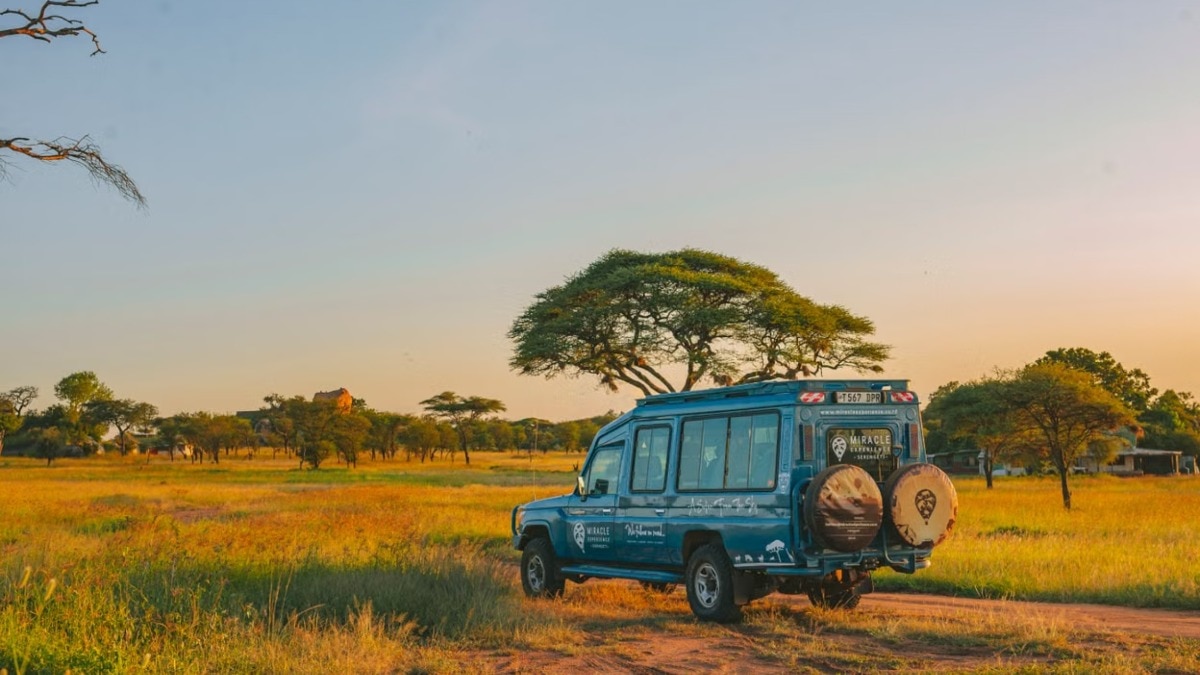
When you read the words luxury safari, the mind conjures up the image of a lush green forest and a homely tent (which looks less like a tent and more like a fully furnished apartment) tucked in the middle of nowhere. Here you can’t hear the high decibels of city traffic or the annoying ding of notifications. It’s serene in the most wholesome sense. And since it is a safari after all, we all step into the woods with flickering hope to sight a majestic carnivore in all its natural glory. We all opt in for safaris with the idea that spotting wildlife is the end goal, and that the universe will pull Mercury out of retrograde so that we can spot a tiger and its cub happily trotting away along the banks of a river.
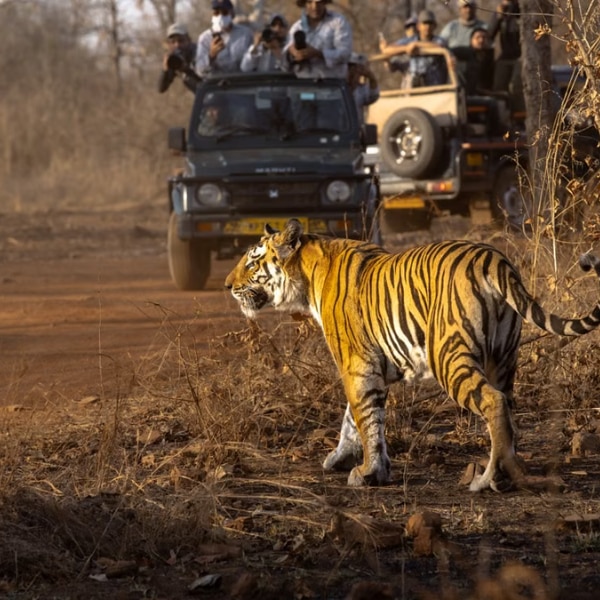
Except, here is the thing about the wild: it does not care about what you want or wish to see.
It does not care about our itinerary, room category, the carefully planned Instagram carousel, or how many safaris we’ve completed just to glimpse what we deem important. The tiger may appear, or not at all. But it is the opportunity to embrace this ambiguity and be present in the moment is what luxury safari is all about.
For a while now, luxury has been synonymous with control. Everything can be anticipated, customised and delivered exactly when you want it. But the wild offers something far more elusive: the privilege of letting go of control. Of being somewhere that refuses to perform on demand.
“Slow is the new luxury,” says expert Rakesh Singh at The Forest Chapter by Sayaji, Sasan Gir. “It is about having the time and space to observe, explore and immerse oneself in nature, without compromising on comfort.” At his property, that translates into a curated jungle safari followed by high tea, birdwatching or a guided nature walk. The point is not to cram every possible experience into a day, but to leave enough time to experience each one to the fullest.
“In the luxury safari and experiential resort segment, five-star amenities remain an expected baseline; guests are increasingly seeking unconventional stays in offbeat destinations, with access to experiences they may not otherwise encounter,” he added. This is a significant shift in the luxury-travel psyche. The modern safari guest is not necessarily looking for more. They are looking for better: more privacy, intimacy and access to experiences that feel impossible to replicate elsewhere. “At The Forest Chapter by Sayaji in Sasan Gir, we encourage going beyond the safari to experience the region’s culture through Siddi community performances, nature-led dining and immersive local experiences,” Singh says.
Which brings us to the slightly awkward question at the heart of luxury safaris: what exactly are we paying for?
According to Jose Louies, CEO of Wildlife Trust of India, the ingredients of a genuinely luxurious safari are surprisingly uncomplicated. “The essentials are simple: a good vehicle, drinking water, snacks, appropriate facilities for waste disposal, suitable clothing for the forest, binoculars, and a camera if required. Most importantly, you need an excellent naturalist who can help you understand what you are seeing.”
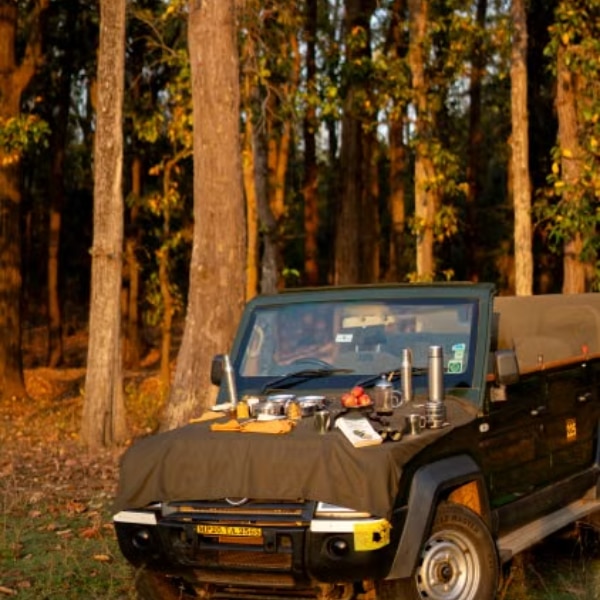
And then comes the plot twist. “However, from a naturalist’s perspective, none of these comforts can truly compare with the experience of walking through the forest, wherever walking safaris are permitted.” That also changes what we mean when we call a safari “great”. Louies isn’t convinced that wildlife should be reduced to a checklist. “Ultimately, if you see the animals you came hoping to see, then it’s great!” he says. “However, I think the idea of a great safari should go beyond simply ticking animals off a list. The more we focus on comfort and guaranteed sightings, the greater the risk of forgetting that wildlife sightings are inherently unpredictable, and that unpredictability is part of what makes a safari special.”
That last bit is worth sitting with: that the wild does not care if you paid a premium to be there with your camera. Somewhere between luxury travel’s obsession with seamlessness and social media’s obsession with proof, we have developed an expectation that every experience should deliver. But the best wildlife encounters are not really encounters in the way we imagine them. Singh also added, “For today’s luxury safari guest, the most valued experiences are those that feel rare, unhurried and impossible to replicate elsewhere. A jungle safari is only the starting point; guests increasingly value the anticipation of spotting wildlife, quiet moments in nature, intimate birdwatching and guided walks and the simple pleasure of lingering over high tea after a safari.”
And on a similar note, Louies makes a useful distinction: “An actual ‘encounter’ with a tiger or lion in the wild will have a long-lasting impact, and not too many people survive such encounters to tell the story!” What most visitors experience, he points out, is better described as wildlife watching from a safe and respectable distance.
In the gambit of luxury hospitality, a certain word loves to make a recurring appearance: private. Luxury travel is obsessed with the word “private”. Private villa. Private pool. Private dining. But should the concept apply to the wilderness too? How would one even enforce it?
Dhaivat Hathi, Environmental Consultant and Founder of The Ecoscapers, Ahmedabad, puts the ownership of responsibility rather bluntly: “In a safari, it is us, the tourists, who are entering someone’s home, and we need to respect and protect nature’s privacy. Also, we need to understand that a wildlife safari is not just about seeing the big wildlife like elephants or lions, but even the tiniest butterfly has equal importance in that ecosystem, and that too should be celebrated.”
In this attempt to understand the wild, the naturalist has quietly become one of the most important luxury amenities on a safari. A good naturalist doesn’t simply help you spot the spectacle. They teach you how to see, give context to the landscape, decode behaviour, identify a bird from a sound and turn what might have been a passing moment into something you remember years later.
This is also where luxury and conservation have to meet—not as a marketing slogan, but as an actual exchange. If a guest is paying a premium to enter an extraordinary landscape, what does that privilege give back? Louies has a simple answer: “Those who can afford a luxury safari should also contribute to conservation through reputable NGOs, foundations, or initiatives supported by the Forest Department. Responsible tourism should ensure they give back to the wildlife, landscape, and communities that make the experience possible.” In simple terms: if the forest is the product, protecting the forest should be part of the price.
While luxury safaris promise exquisite and surreal experiences, they also come with the silent acceptance that the wild doesn’t need to become more entertaining, comfortable, or predictable to justify its price. Because real luxury, says Hathi, “is to be able to witness the majesty of the wilderness as a whole.” And the condition attached to that privilege is simple: we are an incidental part of a habitat that has witnessed eons before us. So, even on the most luxurious safaris, nature still makes the rules.
Image credits: Pexels
Also read: Multigenerational getaways for families that travel together
Also read: From waiting room to luxury destination, the airport lounge gets a makeover
ADVERTISEMENT
Must Read






ADVERTISEMENT