




ADVERTISEMENT
From Chanel, Dior to Rahul Mishra: How couture found new meaning in Paris
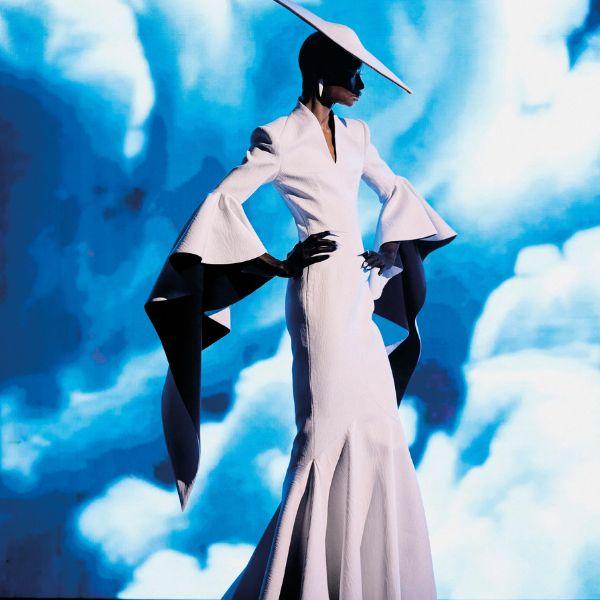
All the guts, glory, and glamour of Spring/Summer 2026 Haute Couture Week in Paris that have set the tone for this year.

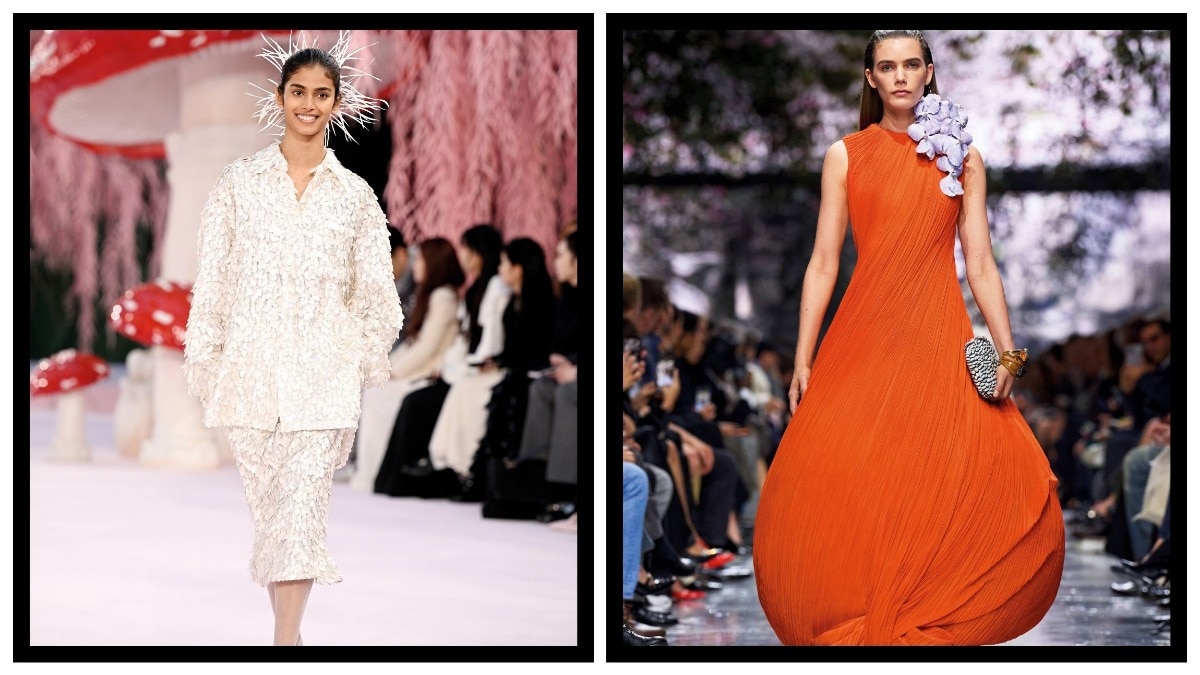
If haute couture has always existed slightly outside time, the Spring/Summer 2026 season felt especially charged with transition. Paris hosted not only spectacular displays of craftsmanship but a series of emotional recalibrations: new creative leadership at historic houses, tributes to founders, and a renewed insistence that couture remains fashion’s most experimental laboratory. In an industry often driven by speed and spectacle, couture this season slowed the conversation down, asking instead what endures—technique, imagination, and the human hand. To me, couture is to fashion what homemade meals are to someone making a home away from home. It feels nostalgic and familiar, yet otherworldly and transportive all at once. The fact that it comes on the heeled brogues of men’s week, and perfectly placed between February’s ready-to-wear cascade, makes it all the more palate cleansing, refreshing, and agenda-setting.
Across the week, designers approached couture less as nostalgia and more as inquiry. And this was a fashion week with some fervent headlines. Jonathan Anderson’s debut at Dior proposed couture as a cabinet of curiosities shaped by memory and nature; Valentino unfolded in the shadow of its founder’s passing, transforming the runway into an act of homage; Chanel explored modern femininity through lightness and transparency, proving that heritage houses continue to evolve without abandoning their codes. Alongside them, designers from India and beyond expanded couture’s geography, demonstrating how global voices are reshaping what was once an exclusively Parisian language.
The result was a season defined not by excess alone, but by emotion—couture as continuity, reflection, and above all, as possibility.
VALENTINO AND ALESSANDRO MICHELE’S TRIBUTE SHOW
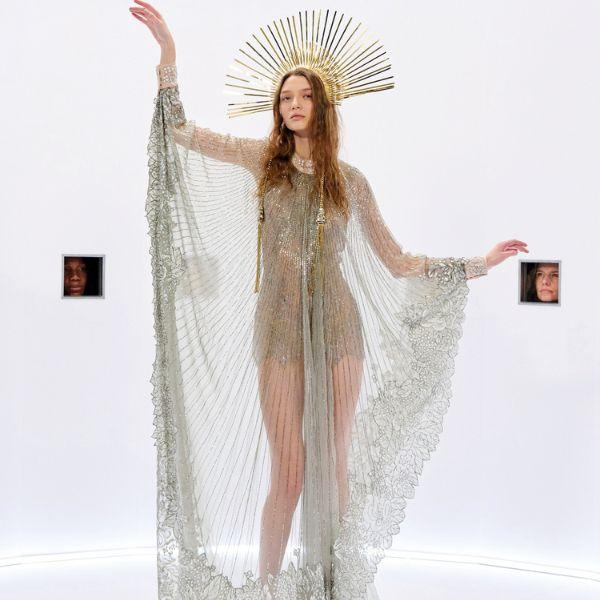
Who doesn’t love a unique show format? Valentino’s Spring/Summer 2026 couture show bore the palpable weight of history: it arrived mere days after the passing of Valentino Garavani, the Italian couturier whose career defined an era of Italian glamour. The house’s creative director Alessandro Michele responded not with elegy but with a richly textured conversation between past and present—a couture narrative steeped in spectacle and symbolism.
Presented within circular ‘peep-show’ booths reminiscent of a 19th-century Kaiserpanorama, the collection encouraged a new gaze, slowing the frantic scroll of modern viewership and inviting focused contemplation of each look. Michele’s approach was cinematic by design: bold red gowns evoked the house’s signature Rosso Valentino, while gilded crowns and ornate embroidery referenced Hollywood’s golden age and mythic romanticism.
Yet, beyond the theatrics, the show felt like a cautious stewardship of legacy. Michele wove Valentino’s signature codes—craft, drama, and devotion to form—into a contemporary couture language that both honoured his predecessor and highlighted couture’s continuing narrative evolution. This was couture as spectacle, ritual and storytelling in equal measure. A post that my transatlantic fashion friend, Shreya Shrivastava, shared on Instagram discussing and dissecting the show as two obsessive brown girlies in fashion do, got over 50,000 views and 2,000 likes. Talk about a couture week with chatter.
DIOR AND JONATHAN ANDERSON’S FIRST COUTURE
Nobody quite knew what to expect from Anderson’s first haute couture collection for Dior. Just before the show began, he spoke about a bouquet of cyclamen gifted to him by John Galliano, describing how the gesture quietly sparked the collection’s direction. That sentiment lingered throughout the presentation, which unfolded less like a debut and more like a passing of creative memory between generations.
Staged at the Musée Rodin, the collection approached couture as a wunderkammer, or cabinet of curiosities, where natural forms, historical references, and experimental craft coexisted. Floral motifs were not decorative but structural: silhouettes bloomed outward in petal-like volumes, tulle constructions replaced rigid corsetry, and dresses moved with the lightness of living forms rather than architectural constraint. Anderson challenged traditional assumptions of couture, proposing softness and curiosity over grandeur.
The result felt deeply personal yet intellectually ambitious. Cameos, fossil-like embellishments, and references to ceramics and antique textiles suggested couture as an evolving archive rather than a fixed tradition. In a season defined by transition, Anderson positioned Dior not as a house looking back to the New Look, but as one rediscovering wonder—proving that couture’s future may lie in emotion as much as technique. It was a literal touching grass moment, and the internet, and those in the room loved it. Also, what’s not to love when genius designer John Galliano is sitting front row in support and approval, and goes on to tell the press later that this was the first ever Dior show he has seen. Because, of course, he’d been working down to his last breath backstage for others!
MATTHIEU BLAZY’S FIRST COUTURE SHOW AND AN ARMY OF NEW-ERA MODELS
At Chanel, Matthieu Blazy delivered his first haute couture collection with a lightness rarely associated with the historically dense discipline. Held beneath giant toadstools and a whimsical runway set at the Grand Palais, the show was equal parts fairytale and atelier manifesto—a fairyland where couture could feel as ethereal as it was exacting.
Blazy’s work played with transparency and texture: silk mousseline skirts that seemed to float like whispers, tweed reimagined through feathers and organic embroideries, and delicate organza frames nodding to nature’s own architecture. Couture here was not just spectacle but intimacy—garments that appeared to breathe and move with ease.
The finale, in which Indian model Bhavitha Mandava closed the show in a pearlescent ensemble, underscored this blend of craft and narrative. A new voice in couture casting and representation, Mandava symbolised a broader cultural shift, hinting at couture’s expanding lexicon of beauty and identity beyond the traditional European narrative.
My favourite part though, among the whispering sheer and love letters on cloth inserted into bags—was the mature model casting of a global face. When else do you get to see an actual couture client and women of their ilk (in age and diversity) reflected on the runway. “Women who are more mature bring a different dimension,” Blazy said in an interview with FT Weekend later. “They are not just beautiful; they have lived and have seen the world. I think it gives another dimension for the women who are going to buy the clothes, the idea that they can recognise themselves in something they see on the runway.” Bravo Blazy!
SCHIAPARELLI’S FANTASY-MEETSFICTION WORLD
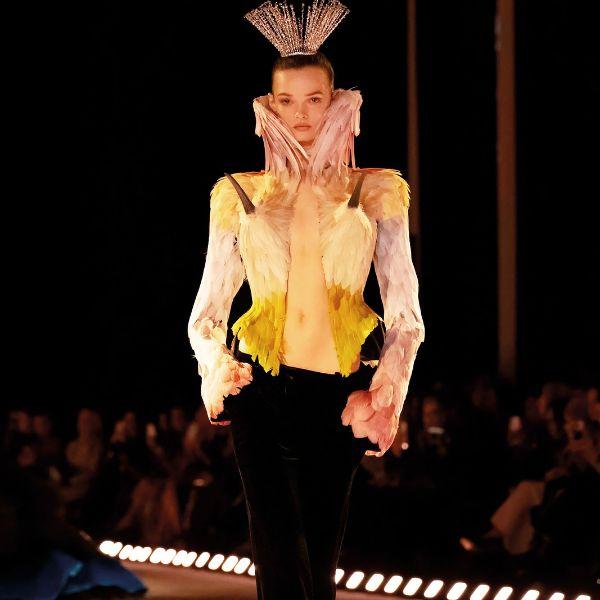
At Schiaparelli, Daniel Roseberry’s Spring/Summer 2026 haute couture collection was one of the most fantastical expressions of the week. Heavily sculptural, the runway featured dramatic silhouettes such as scorpion-tail ball gowns, feather-smothered tiers and jackets mounted with hundreds of shells and pearls—each piece a theatre of craft and imagination.
Roseberry’s sources of inspiration were as varied as they were playful: elements of Michelangelo’s Sistine Chapel, sci-fi references including Alien, and motifs that blended the macabre with the wondrous. The result was couture that felt mythic, its exaggerated forms balanced by painstaking artisanship: thousands of silk feathers, hours of meticulous beading and a sculptor’s sensibility applied to every seam.
Schiaparelli’s offering this season served as a reminder that couture—at its best—operates on the edge between fantasy and mastery, transforming conceptual whimsy into objects of rare material presence. The highlight? Reimagining the burglary of the jewels from the Louvre and if they made it onto a couture model who could wear them all. Somewhere, maybe. In Roseberry’s world, definitely.
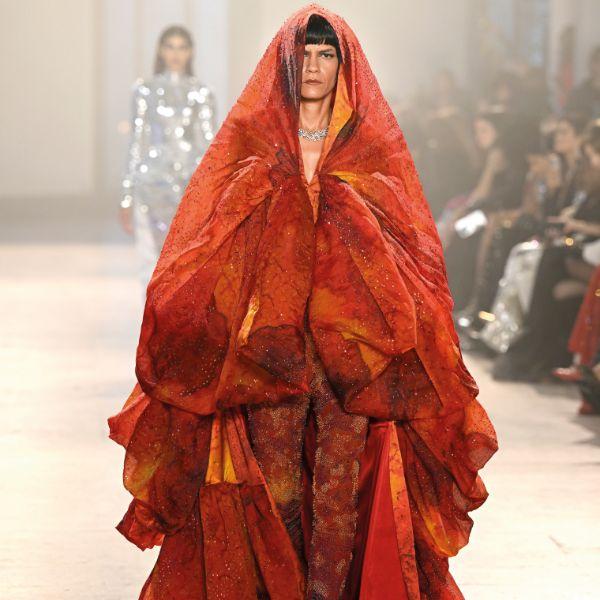
RAHUL MISHRA GAINS GREATER MOMENTUM
Rahul Mishra’s Spring/Summer 2026 couture collection, titled Elemental, unfolded like a meditation on existence itself. Drawing from the five elements — earth, water, fire, air and ether — the designer translated ancient cosmology into couture through embroidery so complex it bordered on the impossible. “We are stardust in a literal sense,” Mishra noted, referencing both the Rigveda and humanity’s shared cosmic origin.
The runway felt immersive rather than theatrical: models moved through soft light wearing sculptural volumes that appeared to evolve mid-stride. Water emerged as crystalline splashes frozen in motion, with blue structures rising dramatically from the torso; fire flickered through flame-like embroideries in molten reds and ambers, while air appeared as swirling metallic forms orbiting the body. A standout earth look — a strapless gown layered with paillettes.
The casting reinforced Mishra’s expanding global language, mixing familiar couture faces with diverse new models, lending the show an almost planetary inclusivity. Rather than spectacle for spectacle’s sake, Elemental felt contemplative — couture slowed down to ask larger questions about time, matter and humanity’s place within both.
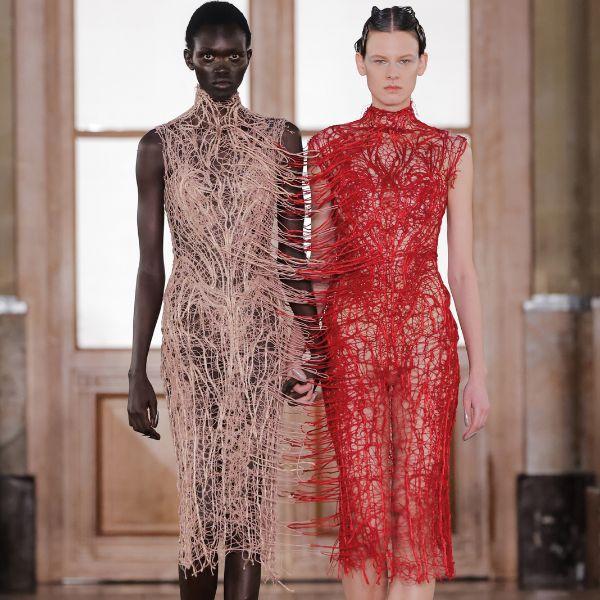
GAURAV GUPTA’S WORLD OF COUTURE
Gaurav Gupta’s S/S 2026 couture presentation, Divine Androgyne, was among the week’s most emotionally charged shows. Rooted in Indian philosophical ideas of duality—where masculine consciousness and feminine energy coexist—Gupta translated metaphysics into sculptural silhouettes. The collection unfolded like a fantasy forest, moving from darkness toward illumination. Hourglass gowns traced the body’s energy points through lace structures, while metallic planets, meteors, and celestial embroideries transformed garments into cosmic diagrams. Serpentine forms, insect-like chandeliers, and petal-feather hybrids suggested cycles of bloom and decay.
The most poignant moment arrived when Navkirat Sodhi, Gupta’s muse, returned to the runway following injuries sustained in a fire. Sacred references threaded throughout: jasmine temple flowers rendered in embroidery, sari-inspired gold webbing, and the interplay of bridal red and ceremonial white, positioned deliberately as “not East or West, but universal.”
In Paris, Gupta’s couture no longer reads as an outsider perspective. Instead, it proposes a new emotional vocabulary for couture itself—one where healing, mythology, and futurism coexist.
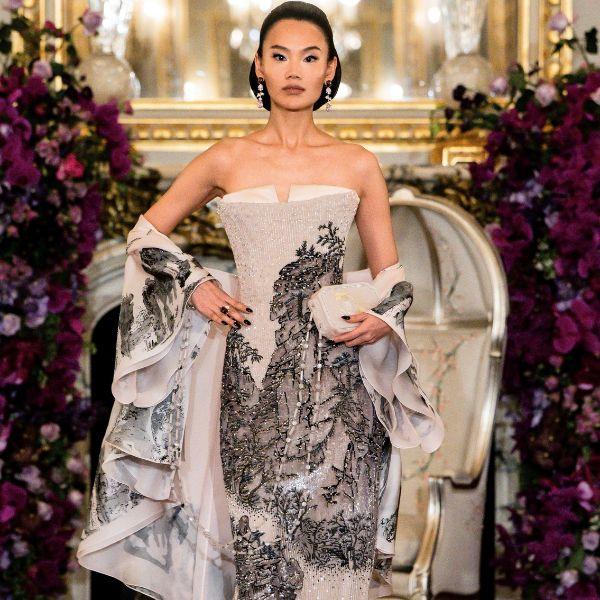
MISS SOHEE STRIKES AGAIN!
At Miss Sohee, London-based designer Sohee Park continued her ascent as couture’s newest romantic provocateur with a S/S 2026 collection that felt equal parts fantasy and precision. Presented in an invitation-only Paris showing, the collection drew deeply from Korean landscapes and memory—wisteria blooms, misty mountains and shifting skies translated into layered organza, silk taffeta and hand-painted surfaces that seemed to breathe as models moved.
The silhouettes remained unmistakably hers: cinched corsetry exploding into sculptural skirts, exaggerated hips balanced by delicate transparency, and gowns densely embroidered with thousands of crystals that caught the light with cinematic intensity. Post-show, the collection became one of the week’s most photographed moments.
What distinguishes Miss Sohee within couture’s hierarchy is her digital fluency. The clothes are engineered for both atelier scrutiny and viral afterlife—dramatic enough for red carpets yet intimate in craftsmanship. In a season defined by heritage houses recalibrating their futures, Park represented couture’s next chapter: youthful, global and unapologetically emotional.
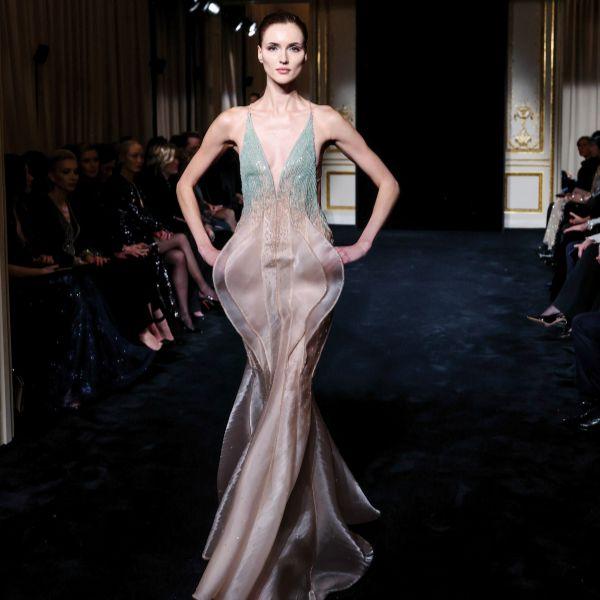
GIORGIO ARMANI PRIVÉ AND THE HOLLYWOOD BRIGADE
Giorgio Armani Privé’s Spring/Summer 2026 presentation carried unusual emotional weight, arriving in the wake of the designer’s passing and marking a moment of transition for one of couture’s most disciplined houses. Under the stewardship of longtime collaborators, the collection leaned into Armani’s enduring philosophy: elegance not as spectacle, but as lived experience.
The palette was intentionally restrained—celadon greens, jade tones symbolising harmony and renewal, and the softest blush shades—while silhouettes moved toward ease, introducing more fluid tailoring and daywear alongside evening gowns. Couture here felt intimate rather than theatrical, privileging movement and wearability over excess.
Front row energy reinforced the house’s enduring cultural reach. Actors including Kate Hudson, seated alongside Diane Kruger and Michelle Pfeiffer, generated one of the week’s most circulated celebrity moments, Hudson’s sharply cut sequinned ensemble capturing the balance between glamour and modern irreverence that Armani has long embodied.
In contrast to couture’s louder propositions this season, Armani Privé offered something rarer: restraint as luxury. The collection read less like a farewell and more like a surefooted continuation—proof that refinement, when executed with conviction, remains timeless. And Carolyn Bessette Kennedy would have loved every piece. RIP style queen.
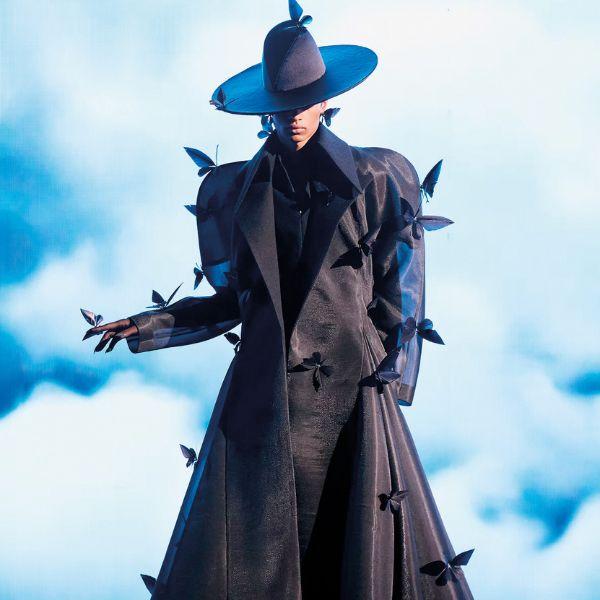
ROBERT WUN AND A WONDROUS WORLD OF COUTURE
If you’ve seen a Robert Wun show live, you’ve seen magical moments come alive. I remember sitting front row a long time ago at one of his shows, and the trail of a jacket had burn holes artfully spread across its entire canvas. The designer had deliberately burned his piece of couture to achieve the desired effect. Now, that is commitment to the craft. This season, he once again, approached couture as theatre, staging a collection that blurred fashion, performance and emotional narrative. Presented within a cinematic setting, the show unfolded like a dark fairytale, with sculptural silhouettes and gothic precision transforming garments into moving installations.
Wun’s tailoring pushed couture toward architecture: sharply contoured gowns, exaggerated sleeves and elongated forms that altered the body’s proportions, creating tension between fragility and power. His work has long explored fashion as psychological storytelling, and this season amplified that instinct—models appearing almost character-like, inhabiting roles rather than simply displaying clothes.
The atmosphere proved especially resonant on social media, where the dramatic staging and sharply graphic silhouettes circulated widely, positioning Wun as one of couture’s most visually contemporary voices. Amid heritage maisons reaffirming legacy, his collection proposed couture as experimentation—a space where emotion, performance and craftsmanship converge.
IMAGES: COURTESY THE BRANDS AND GETTY IMAGES
This article first appeared in the March 2026 issue of Harper's Bazaar India
Also Read: Bored of blues? These coloured jeans are the answer
Also Read: Is birth the end of our truth? An artist duo explores pregnancy, identity, and creation
ADVERTISEMENT
Must Read


ADVERTISEMENT