'Love Story' and the death of the second screen
In an era when TV shows are designed to be watched while scrolling, the new series about John F. Kennedy Jr. and Carolyn Bessette demands something radical: your full attention.

Around 15 minutes into the first episode, I noticed something strange: my phone was nowhere near my hand. As a 23-year-old raised on multitasking media consumption, I rarely watch television without doing something else at the same time. A group chat, Instagram, a quick Google search to identify an actor—most shows accommodate this behaviour. They’re paced for distraction, lit in ways that blur into the background, written so you can follow the plot without watching every frame.
Ryan Murphy’s Love Story doesn’t operate like that. The series, which chronicles the whirlwind romance and eventual tragedy of John F. Kennedy Jr. and Carolyn Bessette, unfolds slowly and deliberately. By the time the episode ended, I realised I hadn’t once reached for my phone. The experience felt oddly immersive, as if the show had quietly reclaimed the kind of attention television used to demand before we started watching everything alongside something else.
Television that demands attention
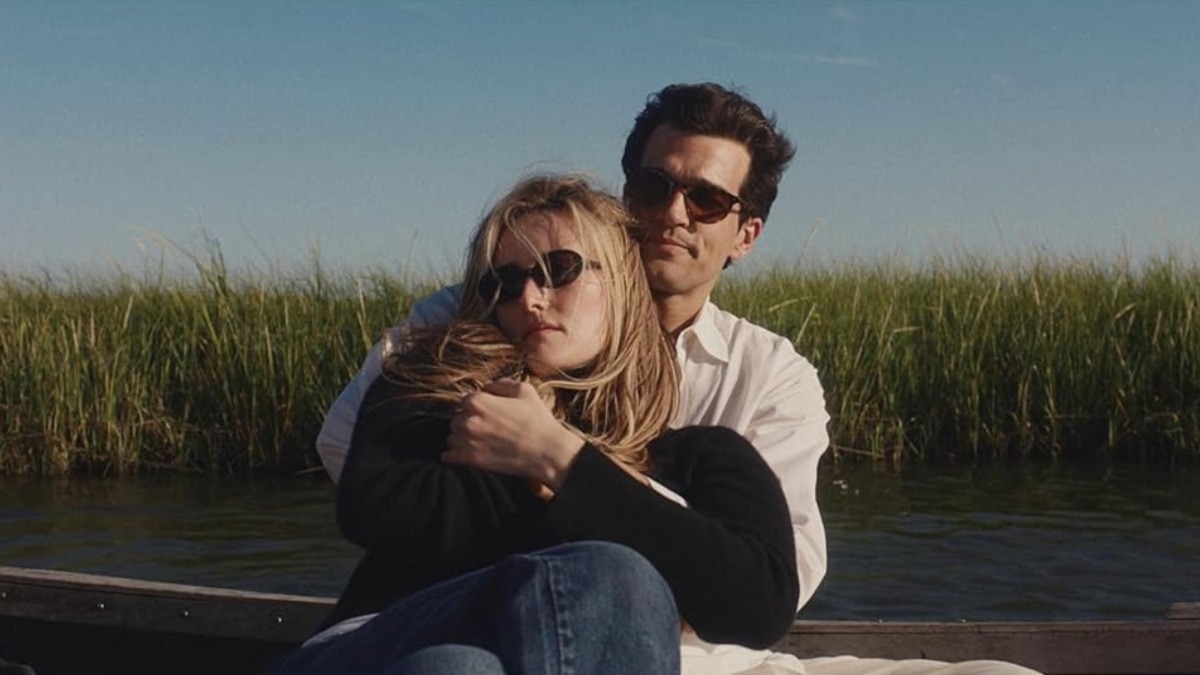
Murphy’s version of 1990s New York is almost hypnotic to look at. Apartments glow in warm light, cigarettes burn slowly in quiet pauses, and conversations stretch longer than you expect them to. The camera lingers on faces and empty spaces instead of racing to the next plot point.
That visual patience changes the way you watch. The pleasure is in small details: the stillness of a Manhattan street before the paparazzi arrive, the tension between two people sitting across from each other, the way a coat slips off a shoulder. It’s visual storytelling that rewards looking closely, and it works because the show refuses to compete with the chaos of the second screen.
Interestingly, the online conversation around the series mirrors that slower rhythm. My feed hasn’t been flooded with clipped scenes or viral dialogue. Instead, people are dissecting Carolyn Bessette’s wardrobe, debating the lighting, or trying to explain why the show feels so immersive. The discourse is less about plot and more about atmosphere, which feels rare for a television release in 2026.
A love story before the internet
Part of the fascination comes from generational distance. I didn’t grow up in the era the show recreates, which is precisely why it feels so captivating. The world on screen existed just before the internet reshaped celebrity, privacy, and attention itself. People walk out of their apartments with nothing but keys and a pack of cigarettes. No phone, no notifications, no silent obligation to document every moment.
For viewers raised in permanently online environments, that absence feels almost luxurious. Intimacy unfolds in private spaces instead of public feeds. Arguments happen without screenshots. Romance isn’t filtered through a camera lens first. The show reconstructs a version of life that existed before every moment could be instantly captured and shared.
Discourse around the show reflects this fascination. Instead of circulating short clips or viral scenes, much of the discussion focuses on atmosphere. Viewers talk about the lighting, the pacing, and the mood of the city. Others dissect Carolyn Bessette’s style or the visual references embedded in the production design. The conversation feels less like real-time commentary and more like collective interpretation.
Here's why we can’t look away
The paradox of Love Story is that it tells a narrative everyone already knows. The relationship between John F. Kennedy Jr. and Carolyn Bessette has long existed as cultural mythology, one of the last celebrity romances that unfolded largely through magazine spreads and paparazzi photographs rather than constant digital coverage.
Ryan Murphy’s version of the story has drawn criticism from some people who knew the couple, who argue the series takes liberties with real events. But historical accuracy is not really the point of the show’s appeal. The outcome has been part of public memory for decades.
What captivates viewers instead is the experience of watching that mythology reconstructed with such careful visual attention. In a streaming landscape where many shows feel designed for passive consumption, Love Story feels almost old-fashioned in its insistence that the viewer stay present.
By the time an episode ends, the story itself is almost secondary. What lingers is the sensation of having watched something without interruption. In a culture built around divided attention, that feeling is unexpectedly powerful. For a generation raised on the second screen, the most radical thing a television show can do is simply make you look.
Lead image: IMDb
Also read: 'Wuthering Heights' was never meant to be this beautiful
Also read: What is the “first in my bloodline” trend taking over the internet?