




ADVERTISEMENT
Inside the India Pavilion at La Biennale di Venezia 2026 with Amin Jaffer
Curator Amin Jaffer on the Pavilion of India at the 61st International Art Exhibition of La Biennale di Venezia 2026.

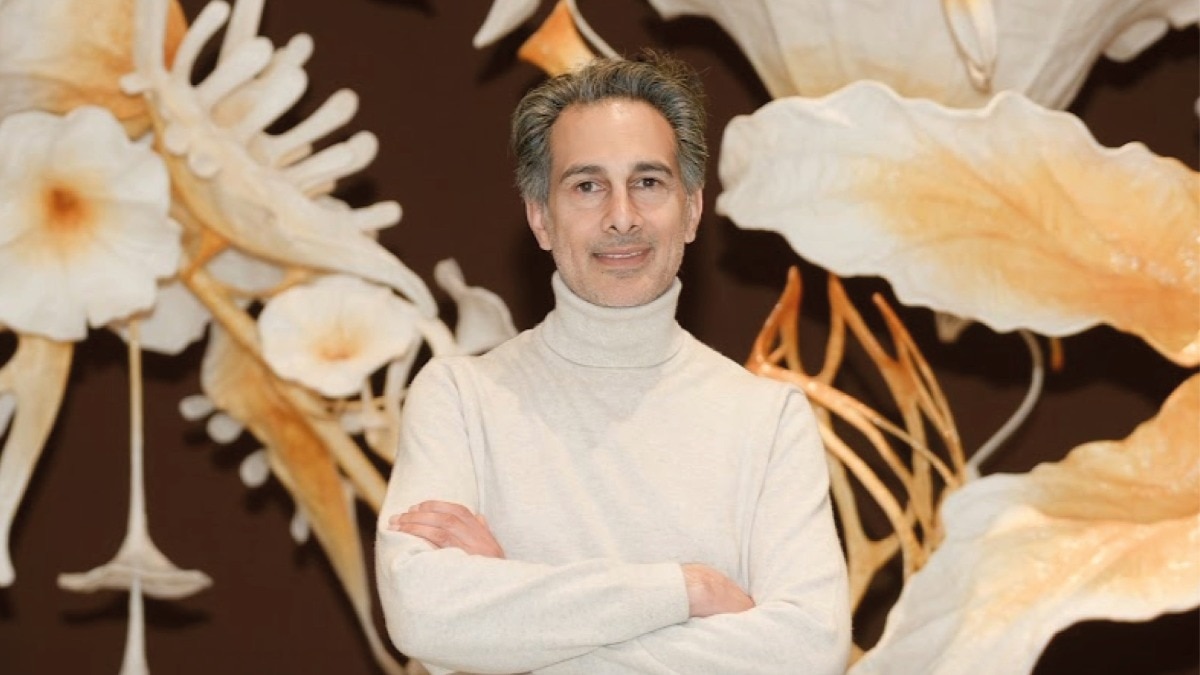
Amin Jaffer’s relationship with art began at six years old, when he walked through the Louvre with a camera. He photographed the Raft of the Medusa, the Coronation of Napoleon, the Winged Victory, and the black basalt Egyptian sculptures, to which he returned more than once. Whatever it was that drew him to those particular works, it appears never to have loosened its hold.
Born in Rwanda to an Indian business family, Jaffer spent a decade at the Victoria & Albert Museum and another as International Director of Asian Art at Christie’s, before becoming Director of the Al Thani Collection and overseeing the creation of its critically acclaimed museum at the Hôtel de la Marine in Paris in 2021. Now, as curator of the Pavilion of India at the 61st La Biennale di Venezia 2026, he arrives at the world’s foremost international exhibition with rare scholarly depth and a sensibility that preceded it all.
Harper’s Bazaar: You were born in Rwanda and have since lived in different parts of the world. What enduring memories of home do you carry with you?
Amin Jaffer: My earliest—and most enduring— memories of home were joint family houses in Kigali, Rwanda and Nairobi, Kenya. My earliest recollections are probably of Kutchi language, the scent of flowers— tuberoses and gardenias—and the bustle of teatime. The first song I remember was by Raj Kapoor and among my first material memories is a gift of some painted Kashmiri toy steamboats which my parents brought back for me after a trip to India.
HB: Were your earliest encounters with art connected to your sense of home in some way, or did they open up a space that felt separate?
AJ: My mother saw beauty in nature and her love of flowers inspired me from a young age. My first museum experience was at the Louvre, which I visited—with a camera—aged 6. After that I had the chance to see the Tower of London, the British Museum, Hampton Court, and the V&A, followed by a grand tour of museums in Venice, Florence, and Rome when I was 9. My parents always gave me gifts that made me dream: a globe, an encyclopaedia set, books about architecture, mythology, and an illustrated Bible.
HB: What were your early days as a curator like, particularly as a young South Asian curator working at leading institutions?
AJ: In the beginning I was on temporary contracts, researching furniture made in India under European patronage. My existence was precarious—there was nothing to guarantee that funding would be found for my post; there was a serious risk that I would end up in Africa running a factory! Support from the Leverhulme Trust, British Academy, and Getty Grant Program ensured that my research could be completed—and published. After producing my first few books, a path opened up before me; my interests focused on cultural exchanges and hybrid objects aligned with the mood of the moment. Eventually I was given responsibility for developing strategic relations with museums in India. At the same time as performing curatorial functions and staging exhibitions I was fundraising for the V&A, introducing some major donors and involving myself in development initiatives.
HB: When and how did you begin conceptualising for the Pavilion?
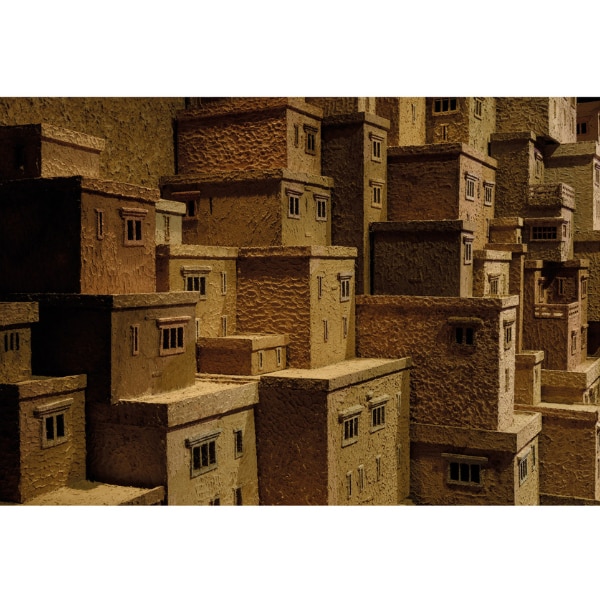
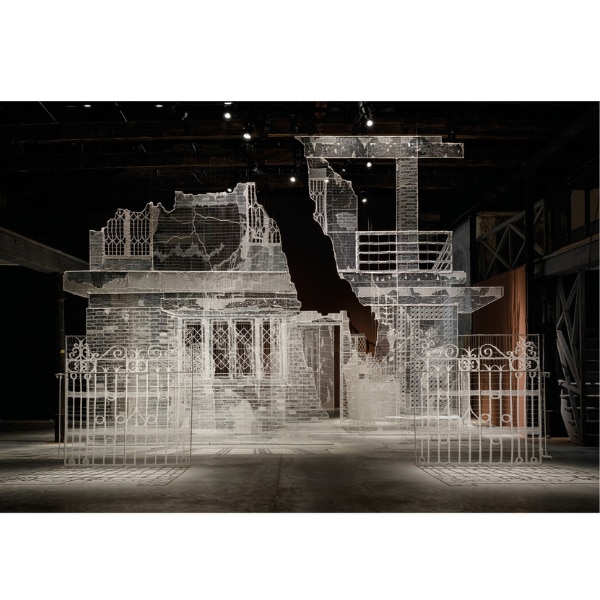
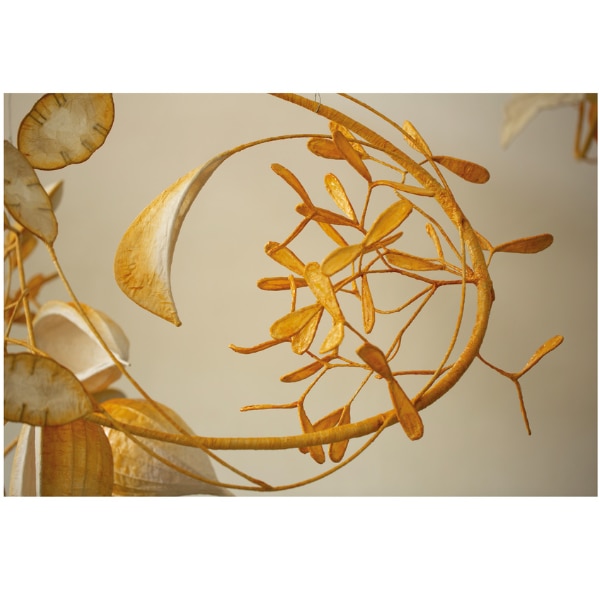
AJ: The Pavilion has been a collaborative effort, with all partners wishing to showcase contemporary art from India in Venice. Isha Ambani’s belief in championing arts and culture led to a larger institutional partnership with Nita Mukesh Ambani Cultural Centre (NMACC) alongside the Ministry of Culture and in partnership with Serendipity Arts Foundation to envisage the National Pavilion of India. The direction crystallised with the Biennale’s theme, In Minor Keys, which called for a quiet introspective project. I found myself thinking of artists who worked with themes that apply to all humanity—that of identity, belonging, and home through the medium of organic materials. At the core of the concept is Sumakshi Singh, whose project to recreate her demolished family home in thread resonated with me deeply. Alwar Balasubramaniam’s fractured earth panels and the cluster of traditional Ladakhi houses developed by Skarma Sonam Tashi both speak about our relationship with environment and ecology. Two of the artists I wished to show have been part of the NMACC’s journey— Ranjani Shettar, with her ethereal, sculptural forms, and Asim Waqif, whose monumental immersive installations in bamboo address ecology and participation. Their practices quietly shaped the direction of the Pavilion, which evolved as a meditation on memory, materiality, and the idea of home.
HB: Were there research threads or references that recurred in the brainstorming phase that are felt in the final result yet not outrightly evident?
AJ: The idea of home, domesticity, and identity have been at the core of my academic work since my undergraduate days. The question of how home is constituted has been churning in my mind for over three decades. From the moment the Biennale theme was announced, I fixed on certain principles: as the India Pavilion, I felt that materials and techniques used in the artworks should be rooted in Indian tradition and practice.
HB: When you speak of materials associated with Indian civilisation, could you elaborate on what they are and what makes them distinctly tied to that context?
AJ: The materials in the Pavilion include soil, thread, bamboo, and papier-mâché, which are all deeply embedded in the cultural and economic history of the subcontinent. Clay is among the earliest sculptural media in India, thread underpins both domestic craft traditions and the textile economy, and bamboo has long been integral to construction and daily life. They are also materials that are worked by hand through inherited techniques that carry memory and continuity across generations.
HB: How does the Pavilion find its own frequency within Koyo Kouoh’s broader vision?
AJ: Koyo Kouoh’s In Minor Keys invited a mode of thinking that is introspective and understated. In responding to this, I sought to work not only conceptually, but materially by favouring what one might call minor materials: fragile, organic, and often associated with manual labour. The Pavilion seeks more to resonate subtly, rather than assert itself loudly, aligning with Kouoh’s vision through its emphasis on emotion, reflection, and nuance.
“Each artist approaches the idea of home from a different vantage point, whether through land, architecture, nature, community, or transformation, yet they are united by a common conceptual and material language.”
HB: How do the artists’ distinct voices form a collective one within the Pavilion?
AJ: Each artist approaches the idea of home from a different vantage point, whether through land, architecture, nature, community, or transformation, yet they are united by a common conceptual and material language. As a curator, my role has been to select the artists and to ensure that their individual expressions are each given space, while also allowing them to enter into dialogue with one another. The result is a kind of harmony: distinct voices, but in a shared register.
HB: How do you hope to shape the memories of people who visit the India Pavilion?
AJ: I hope visitors leave with a sense of quiet reflection, an experience that lingers and invites them to reconsider their own ideas of home, memory, and belonging. The Pavilion represents a confident moment for contemporary Indian art on the global stage. It creates a space where artists move beyond boundaries, bringing deeply rooted, material-driven practices into dialogue with the world. Ultimately, I hope the Pavilion stays with audiences not as a single narrative, but as a layered emotional experience that is intimate, resonant, and enduring. n
Photo Credit: Andrea Avezzù
This article first appeared in the April 2026 issue of Harper's Bazaar India
Also read: Everything we know about 'The Odyssey' and why this might be Christopher Nolan's biggest film yet
Also read: Designer Suhani Parekh reflects on motherhood, memory, and love that changes you forever
ADVERTISEMENT
Must Read






ADVERTISEMENT