




ADVERTISEMENT
From City Palace to your home: Inside the dreamy world of Jaipur Rose
With this limited-edition collection, Good Earth and The Palace Atelier reinterpret the romance of palace frescoes and rose-washed courts for contemporary homes.

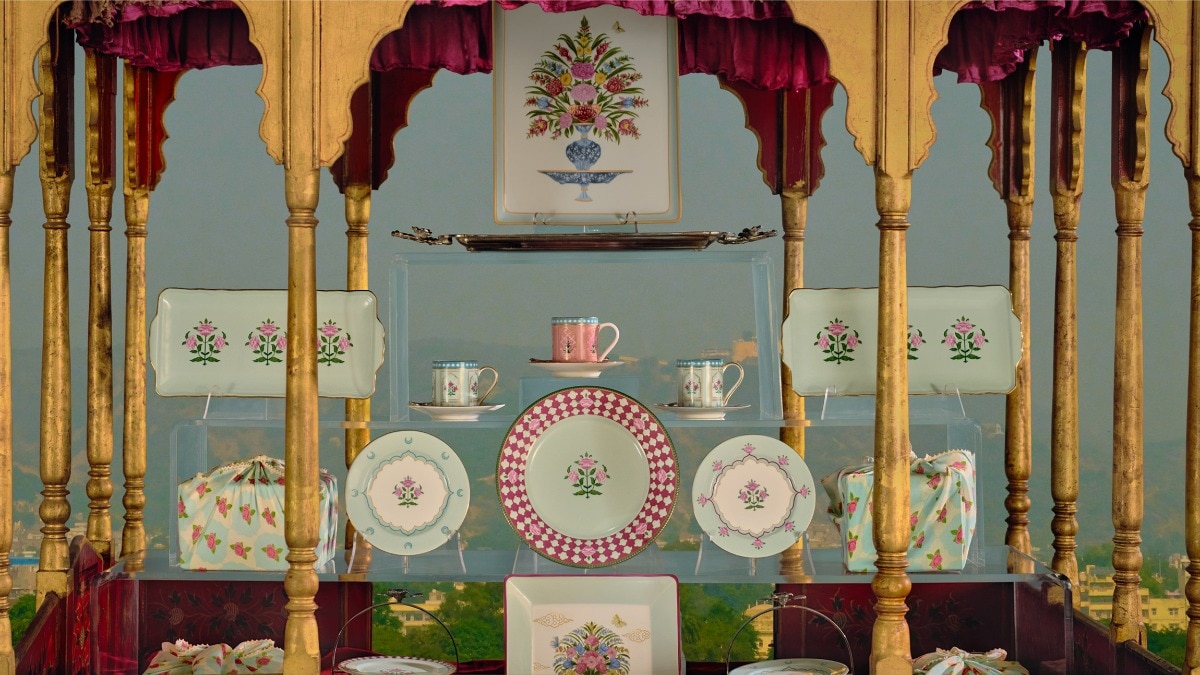
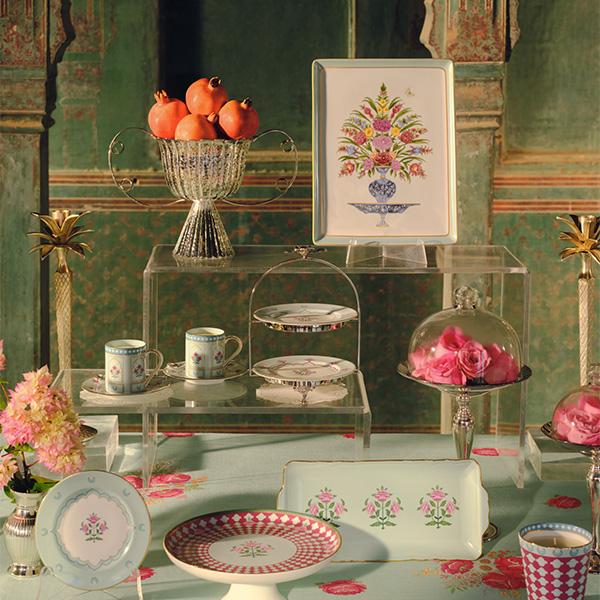
The Pink City has long offered designers a visual vocabulary that is both deeply rooted in history and remarkably adaptable, with its rose-washed façades, scalloped arches, courtyard geometries, and centuries-old frescoes creating an atmosphere that feels simultaneously ornamental and lived-in. It is from this richly layered environment, where heritage quietly infuses everyday life, that Jaipur Rose takes shape as a limited-edition tableware collection conceived by Good Earth in partnership with The Palace Atelier. It is envisioned as a way of bringing the palace’s artistic memory into contemporary domestic settings.
Good Earth has spent decades working with Indian artisans to reinterpret hand-painted porcelain, block-printed textiles, and traditional motifs, using colour and pattern to bring historical craft into contemporary homes. The Palace Atelier, under Gauravi Kumari, extends the City Palace’s creative legacy into the present by treating heritage as something porous and evolving. When these two perspectives meet, the collaboration feels less like a partnership and more like a continuation of a conversation already in motion.
For Anita Lal, Founder and Creative Director of Good Earth, this balance between heritage and contemporary is central to the collection’s appeal. She explains that the brand has always aimed to embed beauty and tradition into everyday rituals, and that Jaipur Rose is a rare opportunity to bring together two worlds that share a reverence for craft and culture. “We have created something that is timeless yet alive, celebrating the living heritage of the City Palace,” she says, emphasising how the collection embodies respect for both history and modern sensibility.
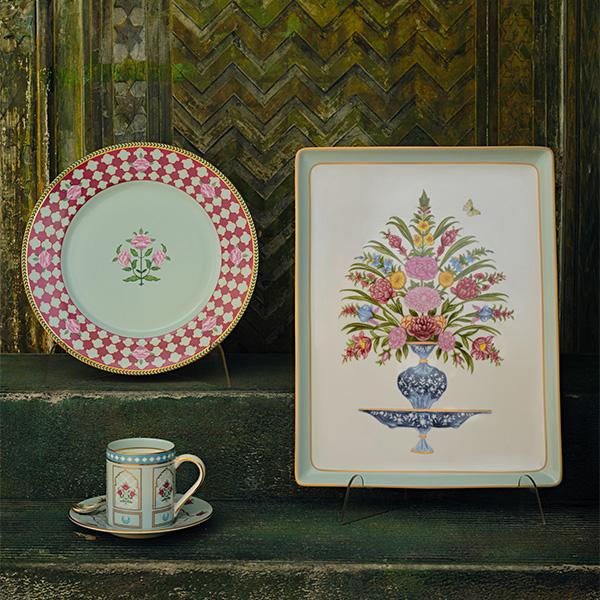
The collection is as much about mood as it is about form. The pieces evoke a romantic, royal mood by harmonising the historic elegance of the City Palace’s floral gates with the luxurious texture of contemporary fine dining. The team drew inspiration from the layered patterns of the jharokas, the frescoed walls, and the intricate detailing of the Rose Gate and Pritam Niwas Chowk. These architectural cues evolved into hand-drawn motifs that reference roses, guldastas, and arched geometries, reinterpreted in a soft, contemporary palette of mint, aqua, fuchsia, and rose.
Gauravi Kumari describes the collection as a contemporary reading of timeless palace motifs, designed to resonate with the present while honouring the past. “With every collection, we seek to bridge centuries of artistry and invite new stories to unfold,” she says, underscoring the idea that Jaipur Rose is as much about creating a living dialogue with history as it is about design.
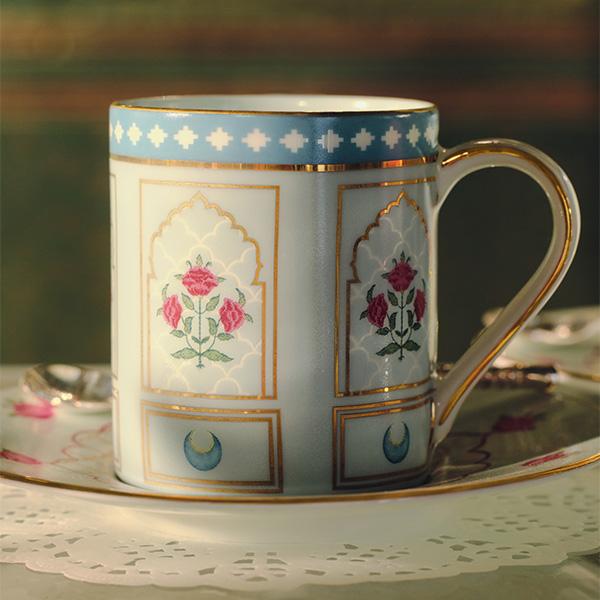
Subtle accents of 24-carat gold lend a restrained elegance, allowing the motifs to feel at once grounded in history and wholly suited to modern interiors. The collection feels curated, translating the visual vocabulary of Jaipur into a series of vignettes that could transform a casual afternoon tea into an intimate, experience, or turn a festive table into something luxurious. With this collection, the city’s heritage infiltrates domestic spaces with a light, considered touch. The pieces themselves are conceived as more than functional objects—they are designed to articulate a lifestyle, where tableware becomes a vehicle for storytelling, mood setting, and refined hospitality. Cake stands and platters act as centrepieces while demitasse sets and porcelain plates carry the motifs subtly across the table, creating a coherent visual narrative. Table linens echo the colour palette and geometry while ceramic candles introduce a tactile, sensorial dimension, making the table as much about ambience as utility.
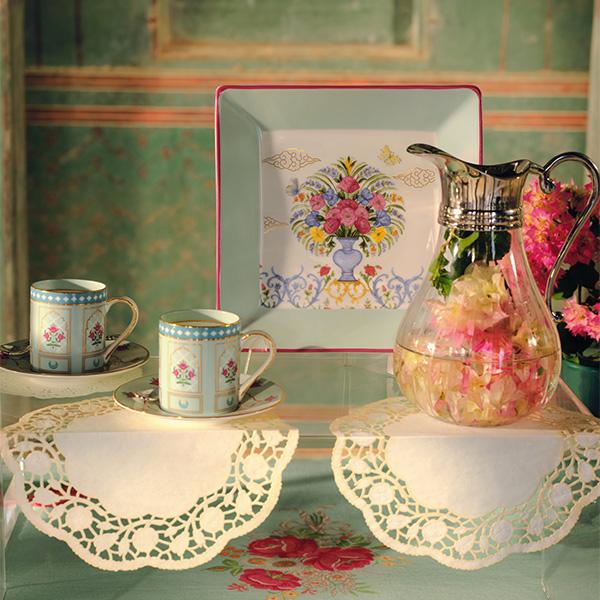
Every detail, from the hand-painted motifs to the in-house firing and finishing by women artisans at Good Earth’s Ballabgarh atelier, reinforces the collection’s commitment to craftsmanship, ensuring that each object feels intentional and part of a larger narrative of heritage meeting contemporary design. In Jaipur Rose, the line between function and artistry dissolves. The collection is as much about how a table feels as how it looks. It invites moments to be savoured, conversations to unfold, and spaces to be inhabited with intention.
All images: Jaipur Rose
Also read: Why more women over 40 are choosing to 'quiet divorce'
ADVERTISEMENT
Must Read



ADVERTISEMENT