Why 2026 is shaping up to be the year of bindis, bangles, and Indian baddies
No more validation required.

The last few years have been a carousel of debates around appreciation and appropriation. Cultural markers from Southeast Asia have been lifted, renamed, recontextualised, and fed back to us as trends. A lehenga rebranded as a co-ord set with a Scandinavian scarf. Juttis elevated into designer heels. The bindi was reduced to a festival accessory. Bangles folded into bohemian styling mood boards. Once renamed, they were declared global. Once renamed, they are pronounced global. Once untethered from their origins, they are pronounced new.
This is the politics of cultural visibility: value is often granted not at the source, but at the point of Western validation.
Global Recognition and the Politics of Cultural Visibility
When a video from Tyla's Mumbai concert surfaced in December 2025, the South African singer's performance wasn't what dominated headlines. Instead, footage of "Indian baddies"—content creators dancing to her track "Push 2 Start"—shattered the internet, accumulating over 11+ million views. One viral comment encapsulated the Western world's collective shock: "I never knew India had baddies like this." The surprise itself reveals a decades-long blind spot in how Indian beauty has been systematically overlooked—or more accurately, systematically erased.
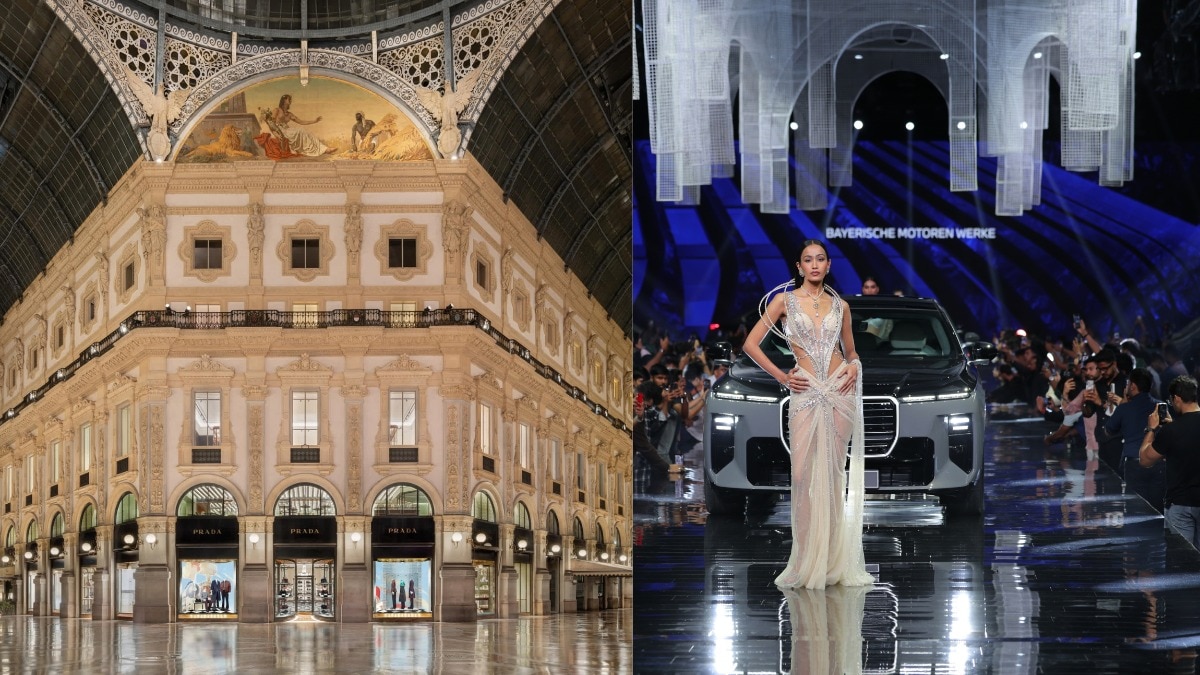
An uneasy truth lingers beneath the surface: collective excitement often surges only when our own culture returns to us stamped with outside approval. The pattern has replayed itself with striking consistency, each cycle echoing the last. In June 2025, Prada faced international backlash after presenting Kolhapuri chappals at Milan Fashion Week, describing them simply as “leather sandals” with no acknowledgment of their centuries-old Indian lineage or the artisans who have sustained the craft across generations. (We can revisit what happened after the backlash another time.) By July, the brand released “Antiqued Leather Pumps” priced at $1,450—designs unmistakably echoing traditional Punjabi juttis, down to the pointed toes, raw-cut edges, and visible hand-style stitching. The same juttis that Indian artisans sell for ₹400 to ₹2,000 were now reframed as European luxury. Elevated in price. Detached from provenance. Reintroduced as discovery.
What this really exposes is not inspiration, but translation without attribution—heritage recorded as high fashion only once it exits the geography that made it possible.
Then came the "Scandinavian scarf" moment. In 2024, TikTok influencers and brands like Bipty began calling dupattas—a staple of South Asian wardrobes for millennia —"Scandinavian scarves," marketing them as "very European, very classy." The renaming wasn't an accidental oversight; it was cultural erasure for profit. Brands like Reformation, Oh Polly, PepperMayo, and many others followed suit, repackaging lehengas and salwar kameez as trendy European aesthetics, selling them for $600+ while the communities who created these designs remained invisible and uncredited.
This comes from a place of deep repression, one that many rightfully trace back to colonialism. The British Raj didn't just extract resources; it imposed a hierarchy of aesthetics that continues to haunt South Asian consciousness. For nearly 200 years, Indian culture was systematically devalued, deemed backward, primitive, "too ethnic." The westernised ideology fed to colonized populations created generations of brown children who learned to feel shame about bindis, to anglicize their names, to straighten their hair, to hide their mothers' cooking from classmates. The changes that era brought upon us linger in every brown girl who was mocked for wearing a bindi to school but watched Selena Gomez praised for wearing one at the 2013 MTV Movie Awards. They linger in every dupatta rebranded as Scandinavian minimalism, in every jutti turned into a Prada pump.
The colonial legacy trained South Asians to seek validation from Western institutions—to believe our culture only had value when filtered through a European lens, sold on a European runway, worn by a European model. This is why the Prada controversy stings so deeply: it's not just about shoes. It's about watching your grandmother's craftsmanship be "discovered" and sold back to you at 1,000% markup while she remains nameless in the village that perfected the technique generations before Milan had a fashion week.
But 2026 marks an inflection point. The numbers tell a different story about what's actually happening beneath the surface of appropriation debates. India's cosmetics market reached $21.50 billion in 2025 and is projected to hit $43.85 billion by 2033. More significantly, 36% of Indian consumers now prefer local beauty brands over imported ones—a striking reversal reflecting growing national pride and rejection of Western validation.
The Cultural Comeback of the Indian Baddie Aesthetic
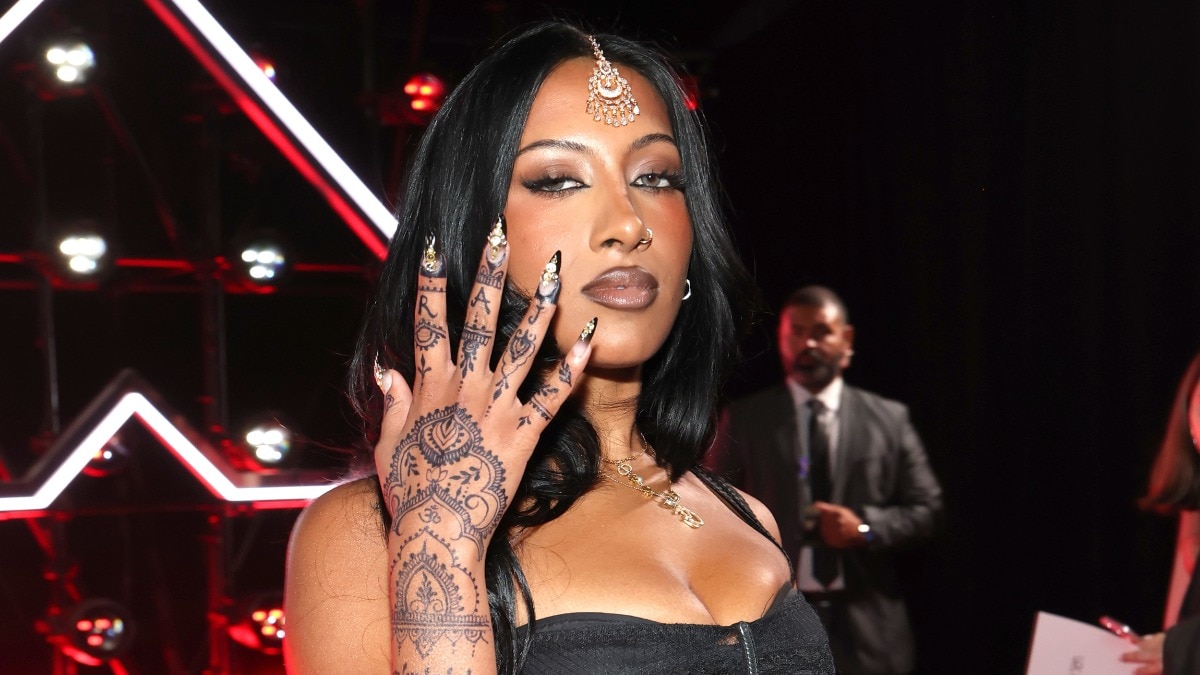
This is where Lara Raj's visibility becomes revolutionary. The 19-year-old Tamil-American singer, the first Indian-origin artist under HYBE as part of KATSEYE, consistently appears with a bindi, Om necklace, and bangles. When KATSEYE won the 2025 MTV Video Music Award for Push Performance, Lara stood on that stage wearing her bindi—not as an exotic decoration, but as a declaration of heritage. She has spoken openly about being mocked for wearing bindis as a child, and her mission now is explicit: to make the bindi something brown girls "want to wear too...It's not something to get made fun of." The distinction is crucial. When Lara wears a bindi, the meaning cannot be stripped away because she controls the narrative.
What made Tyla's Mumbai moment transcend typical concert coverage was her deliberate cultural engagement. She wore a bindi and had "Mumbai" inscribed in her hair, styled by Indian designer Nancy Tyagi. But the gesture also highlighted a painful contradiction: when a global pop star wears a bindi with reverence, it is celebrated. When South Asian girls wear it, they face mockery. For years, bindis were worn by Coachella attendees as casual accessories, despite their deep association with Hinduism, where they symbolise the third eye and spiritual awakening.
The #ReclaimTheBindi movement emerged as a direct response to this commodification, with South Asian women photographing themselves wearing bindis alongside stories about the shame they'd internalised. When Lara appeared in a Gap campaign wearing a bindi and nose ring, the generational shift became visible. That little girl who wondered why faces like hers were never in magazines can now raise daughters who take representation for granted.
This moment has historical precedent, but 2026's reclamation carries different weight. When Aishwarya Rai starred in 'Bride and Prejudice' in 2004, grossing $24 million worldwide, she proved Indian narratives could command international audiences. As the first Indian actress to serve as Cannes juror in 2003, she has graced the red carpet for over two decades, blending Sabyasachi saris with haute couture. But Aishwarya still operated within Western fashion infrastructure, still needed Cannes validation to prove Indian aesthetics mattered.
Rekha, however, never waited for permission. Long before Gen Z claimed experimental beauty, the 1980s witnessed Rekha at glamour's height, with kohl-rimmed eyes and bold styling forming what became a blueprint for maximalist glamour. What insiders now call "Rekhafication" sees Gen Z discovering her archive—her androgynous fashion with blazers and men's accessories in 1990s shoots made her an icon for the LGBTQ+ community decades before it became acceptable. She popularised bold red lips, thick winged eyeliner, and heavy kajal. Her maximalist jewellery and draping anticipated trends that wouldn't resurface for decades. In films like 'Khoon Bhari Maang' and 'Silsila', she carved space for women who owned their sexuality when Bollywood demanded moral purity.
Reclaiming Ownership of Beauty, Heritage, and Narrative
The economic context reinforces why 2026 is different. With 42.7% of India's population under 25, this digitally savvy demographic drives unprecedented beauty demand with purchasing power and platform access their parents never had. Indian brands like Kay Beauty and indē wild are securing spots in UK and US Sephora locations, building products with global ambitions. The shift is structural: for the first time, South Asian aesthetics are being defined by South Asians, distributed by South Asian businesses, and celebrated on South Asian terms.
The "Indian baddie" discourse, for all its reductive terminology, signals something profound: the end of Western gatekeeping over beauty. The shock that Indians could be beautiful reveals how thoroughly colonialism succeeded in its mission of cultural subordination. But the viral response to the video proves something shifted. Bindis, bangles, and bold maximalism aren't trends to borrow for festival season. They're millennia-old aesthetic languages finally being heard on their own terms because the women speaking them refuse to be silenced.
2026 is the year South Asians stop asking for seats at Western tables and start building our own. The year bindis return to foreheads not as rebellion but as birthright. The year we acknowledge that the surprise isn't that Indian women are beautiful—it's that anyone ever succeeded in making us believe otherwise.
Lead image: Getty
Also read: 'Wuthering Heights' was never meant to be this beautiful
Also read: Is mascara falling out of fashion?