




ADVERTISEMENT
This June, enter the worlds of gods, royals, and heroes with these books that retell legends
Ancient epics, divine battles, brave queens, and mythical creatures take centre stage in these masterful retellings and reimaginings of stories that we've inherited for centuries.


For all of us who get enamoured by the scale, depth, and rich detail of cinematic universes and bestselling fantasy sagas, there is the blueprint: historical legends and myths. Stories of gods who walked amongst mortals, warriors driven by fate, and forgotten women whose voices were often relegated to the margins of the very narratives that they helped shape all comprise stories that begin with the seeds of truth and have taken on different forms over the course of the years. These tales endure for several reasons: faith, proof, universal emotions, and also because each generation finds new ways to interpret them.
Today's most compelling authors are walking into the past with a new lens. Some return to ancient epics and sacred texts, peeling back layers to uncover overlooked perspectives. Others transport legendary figures into entirely new emotional landscapes, reimagining familiar stories through a contemporary view.
The result is a body of work that preserves a sort of timeless resonance. They feel both ancient and startlingly modern, proof that these stories are less about the past than they are about the questions we continue to ask ourselves.
Ahead, books that revisit gods, legends, empires, and epic journeys, reminding us that the oldest stories often remain the most powerful.
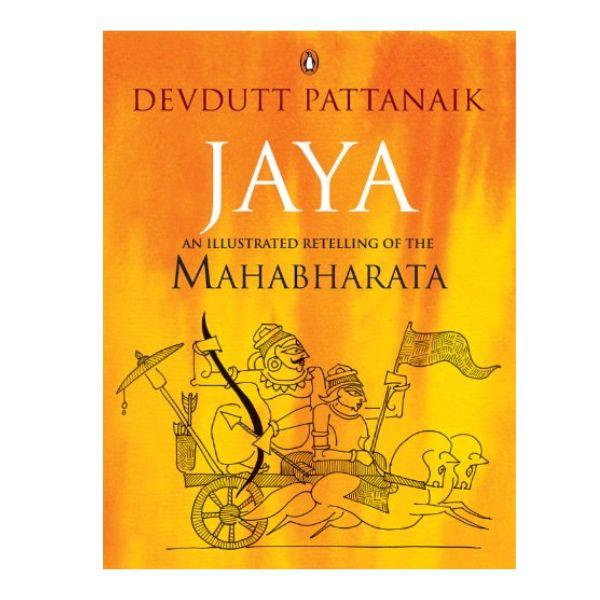
Jaya: An Illustrated Retelling of the Mahabharata by Devdutt Pattanaik
Few works have shaped the cultural imagination of the Indian subcontinent as profoundly as the Mahabharata, and Devdutt Pattanaik's Jaya remains one of its most accessible and illuminating modern interpretations. Rather than presenting a straightforward retelling, Pattanaik draws from an extraordinary range of regional, folk, and oral traditions, weaving together multiple versions of the epic into a single, richly layered narrative. The result feels less like reading one story and more like exploring an entire universe of stories. With contemporary explanations added to what might seem fantastical for today’s reader, Pattanaik deftly handles the precarious territory of explaining without being preachy with aplomb.
The book takes its title from the Mahabharata's original name, 'Jaya', and uses the concept of victory as a framework for understanding the epic's deeper philosophical questions. Pattanaik moves beyond the familiar story of the Pandavas and Kauravas to introduce readers to figures who are often overlooked in mainstream retellings, including Astika, Madhavi, Aravan, Barbareek, and Jaimini. He also explores traditions such as the worship of Draupadi as a goddess in Tamil Nadu, regional interpretations of key events, and even attempts to date the Kurukshetra war through astronomical references.
Beautifully illustrated with the author's own drawings, Jaya delves beyond the familiar conflicts between the Pandavas and Kauravas to uncover lesser-known characters, forgotten legends, and philosophical questions that continue to resonate today. Pattanaik approaches the epic not merely as mythology but as a living text that reflects humanity's enduring struggle with duty, ambition, morality, and destiny. For readers seeking a gateway into India's greatest epic, this remains an indispensable starting point.
Troy: The Greatest Story Retold by Stephen Fry
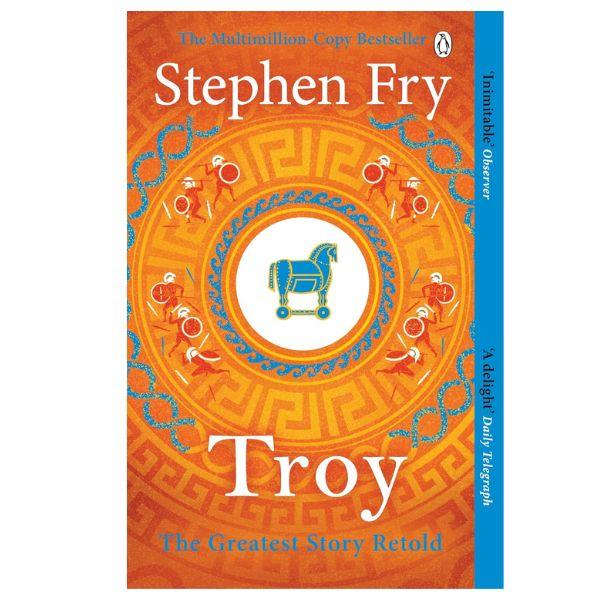
The Trojan War has inspired poets, playwrights, historians, and artists for thousands of years. Yet in Stephen Fry's hands, the legendary conflict feels remarkably fresh. Troy revisits one of the Western world's defining myths with wit, elegance, and an infectious sense of wonder, transforming a familiar story into an irresistible page-turner.
Queen Helen is abducted to be with her love, Paris, and so begins one of the greatest wars of history that lasted a decade. From Achilles' heroics to the infamous wooden horse and the fall of a great city, Fry guides readers through every dramatic twist with the ease of a master storyteller. Along the way, he unpacks the motivations behind famous events, giving readers a clearer understanding of how the war unfolded and why it has remained such a powerful cultural touchstone.
His gift lies in making larger-than-life heroes feel human while preserving the grandeur of the original myths. Equal parts entertaining and enlightening, Troy serves as both an introduction for newcomers and a rewarding revisit for mythology enthusiasts.
Mahadev by Renuka Narayan
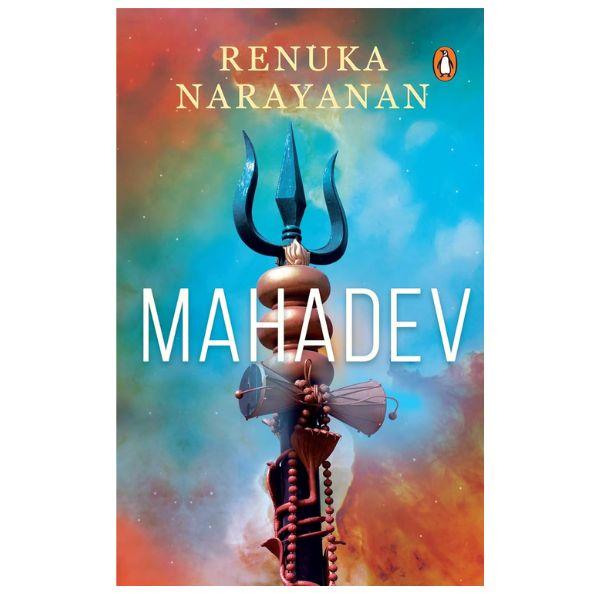
To understand Shiva is to embrace paradoxes. He is the destroyer and the creator, the ascetic and the householder, the cosmic dancer and the silent yogi. In Mahadev, Renuka Narayan uses the traditional Harikatha storytelling style to guide readers through the many lives, forms, and mysteries of one of Hinduism's most beloved deities.
The framework is a child asking a seemingly simple question: Who is Shiva? The answer unfolds across a sweeping collection of stories that travel from Mount Kailash and the Ocean of Milk to temples, sacred sites, and legends scattered across the Indian subcontinent. The book brings together multiple strands of Shiva mythology into a continuous narrative. Narayan explores some of the god's most significant stories, including his consumption of the deadly Kalakuta poison during the churning of the ocean, his grief following Sati's death, his marriage to Parvati, and his dual identity as both ascetic yogi and devoted householder. Alongside these familiar episodes are stories about his avatars, miracles, temples, and interactions with devotees whose lives he transforms in unexpected ways.
Rather than focusing solely on mythology, the book also examines how Shiva's stories are embedded in India's cultural and religious landscape, making it rich with warmth and reverence.
The Song of Achilles by Madeline Miller
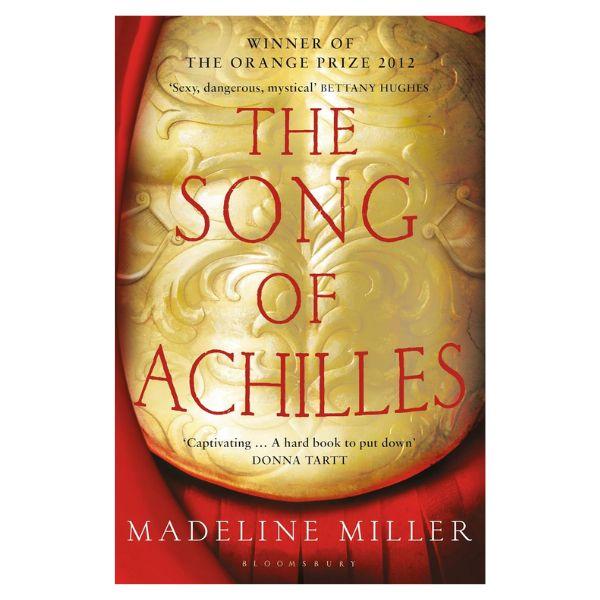
Few modern mythological reimaginings have achieved the cultural impact of The Song of Achilles. Rather than focusing on battles and military glory, Madeline Miller turns her attention to the emotional heart of the Trojan War: the relationship between Achilles and Patroclus.
They could not be more different: Achilles, the son of the legendary king Peleus and the formidable sea goddess Thetis, is everything the world admires—handsome, gifted, and destined for greatness. Patroclus, by contrast, is an awkward and exiled prince. When fate brings them together as boys, they form an unbreakable bond that deepens despite the expectations, interference, and dangers.
Their journey takes them to the centaur Chiron, where they are trained in the arts of war, healing, music, and survival. But peace is short-lived. When Helen of Sparta is taken to Troy, the greatest warriors of Greece are summoned to wage war. Drawn by the promise of immortal glory and a destiny foretold, Achilles answers the call. Patroclus follows, torn between devotion to the man he loves and fear of the fate that awaits him on the battlefield.
What follows is Miller's lyrical retelling of the Trojan War, where legendary heroes and divine forces move alongside profoundly human emotions. By shifting the focus from military triumph to the relationship between Achilles and Patroclus, Miller offers a more intimate interpretation of one of mythology's most enduring legends.
Cleopatra by Saara El-Arifi
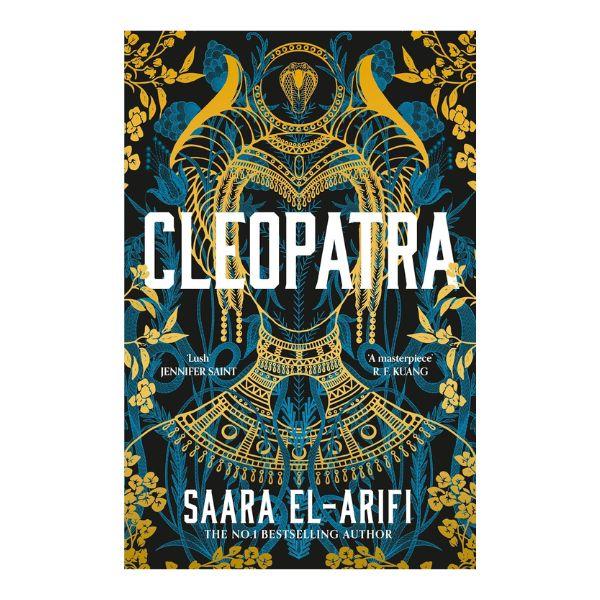
For centuries, Cleopatra's story has largely been told by others: Roman historians, playwrights, poets, and politicians who often reduced one of history's most influential rulers to a seductive stereotype. Yet, she was a woman who had exemplary courage and ruthless ambition. Saara El-Arifi's bold reimagining seeks to reclaim the woman behind the legend, offering a portrait of a ruler whose intelligence and resilience have too often been overshadowed by myth.
Presented as Cleopatra's own account of her life, the novel challenges many of the assumptions that have shaped her legacy. Here, she is not merely a romantic figure defined by her relationships with powerful men, but a strategist, mother, ruler, and woman navigating immense political pressure.
Narrated with fierce conviction, Cleopatra invites readers to see one of history's most misunderstood women through her own eyes. This is not the story of her downfall but of her ascent; a tale of political strategy, motherhood, divine power, and survival. El-Arifi presents a queen who was as fearless as she was determined.
Savage Beasts by Rani Selvarajah
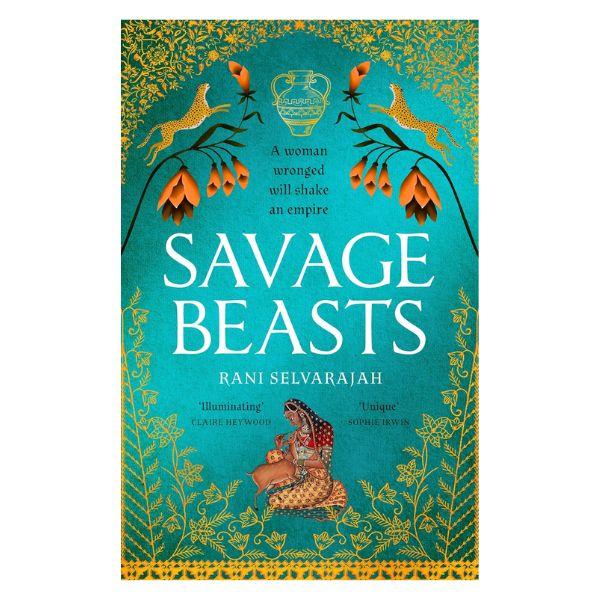
Inspired by the Greek myth of Medea but transplanted to eighteenth-century Bengal, Savage Beasts is a striking example of how far a myth can travel while retaining its emotional core. The novel follows Meena, the neglected daughter of the Nawab, whose life becomes entangled with James Chilcott, the nephew of a powerful East India Company official.
As Bengal edges towards war and the East India Company's influence grows, Meena and James become unlikely allies. Their relationship leads them across Calcutta, Ceylon, and eventually the Cape of Good Hope, carrying with them the consequences of violence, betrayal, and difficult choices. Yet as tensions mount and old wounds resurface, Meena finds herself increasingly isolated in unfamiliar lands, forced to confront the limits of loyalty and the consequences of love.
By weaving Medea's emotional journey into the historical realities of colonial India, Selvarajah creates a reimagining that brilliantly intertwines Greek mythology with South Asian history, creating a narrative that feels entirely its own. Themes of exile, identity, and power simmer beneath the surface, whilst the richly realised historical setting adds further depth. The result is a sweeping, emotionally charged reimagining that demonstrates the enduring relevance of ancient myths in new cultural contexts.
The Palace of Illusions by Chitra Banerjee Divakaruni
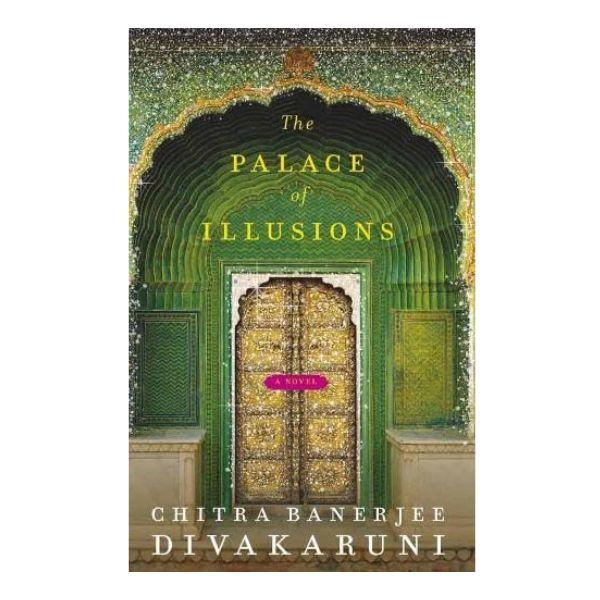
If the Mahabharata has traditionally belonged to warriors and kings, The Palace of Illusions belongs to Draupadi, known here as Panchaali. Draupadi is often remembered through the actions of the men around her; Chitra Banerjee Divakaruni instead places her at the centre of the narrative, allowing readers to experience familiar events through an unexpected viewpoint.
The novel follows Panchaali from her extraordinary birth and childhood through marriage to the five Pandava brothers, motherhood, exile, and eventually the devastating war that reshapes the kingdom. Along the way, readers encounter familiar events from the Mahabharata from a dramatically different perspective, one that foregrounds Draupadi's ambitions, frustrations, relationships, and private desires.
Particularly compelling is the novel's exploration of her connection with Krishna and her complex attraction to Karna, the Pandavas' greatest rival. By focusing on the emotional and psychological dimensions, Divakaruni offers a deeply human portrait of a woman navigating a world governed by men, destiny, and divine intervention. Lyrical, evocative, and emotionally resonant, it remains one of the most beloved reinterpretations of the Mahabharata.
The Hymn to Dionysus by Natasha Pulley
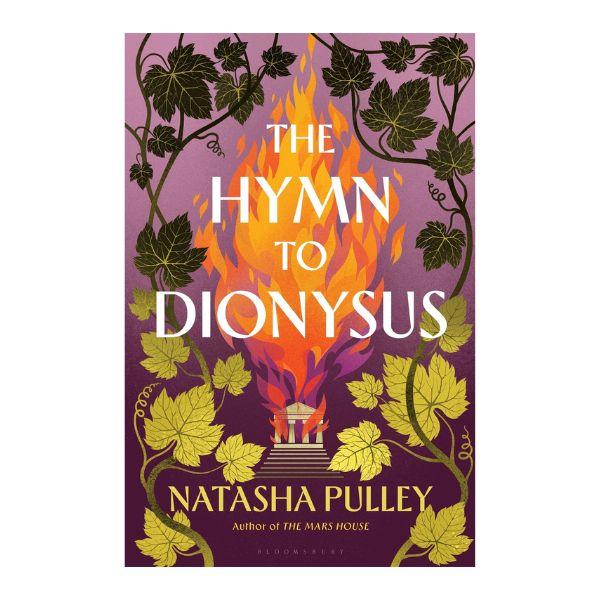
Natasha Pulley's The Hymn to Dionysus draws on Greek mythology while expanding the story far beyond its traditional boundaries. At its centre is Phaidros, a soldier whose life changes when he rescues a baby from a fire at the palace of Thebes and secretly protects the child against orders.
Years later, Phaidros is living with the psychological scars of war, struggling with panic attacks and traumatic memories alongside fellow veterans who appear to be succumbing to a mysterious madness. His search for answers becomes linked to the disappearance of Thebes' lost prince and to a blue-eyed figure named Dionysus, whose presence seems to coincide with social unrest, strange events, and rumours of a new god emerging amongst mortals.
Rather than presenting the god as a distant mythological figure, Pulley creates a deeply immersive world where divinity and humanity intersect in unexpected ways. Themes of madness, faith, memory, healing, and transformation run throughout the narrative, giving the story a dreamlike quality that mirrors the mysteries surrounding Dionysus himself.
Drawing together mythology, warfare, trauma, and faith, Pulley reimagines Dionysus not simply as the god of wine and revelry but as a transformative force whose arrival challenges existing structures of power and belief.
Mother Of Rome by Lauren J. A. Bear
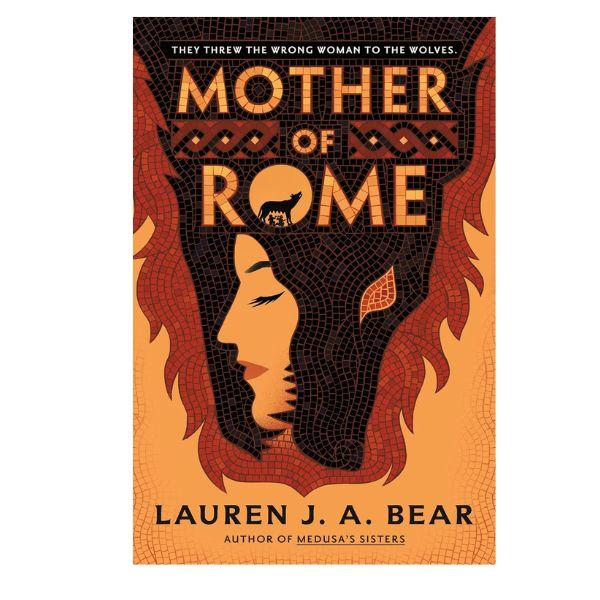
History remembers Romulus and Remus as the legendary founders of Rome. Mother of Rome asks a far more intriguing question: what about the woman who gave birth to them? Lauren J. A. Bear reclaims the story of Rhea Silvia, transforming a largely overlooked figure into the emotional centre of Rome's founding myth.
The daughter of a deposed king, Rhea, loses her position and future after a coup removes her family from power. To prevent her from producing heirs who might challenge the new regime, she is forced into the order of the Vestal Virgins, where she is expected to remain celibate for life.
When she unexpectedly becomes pregnant, however, her existence threatens the political order that sought to erase her. Through political intrigue, divine intervention, and extraordinary resilience, Rhea emerges as a heroine in her own right rather than a mere footnote in her sons' legend.
Morgan Is My Name by Sophie Keetch
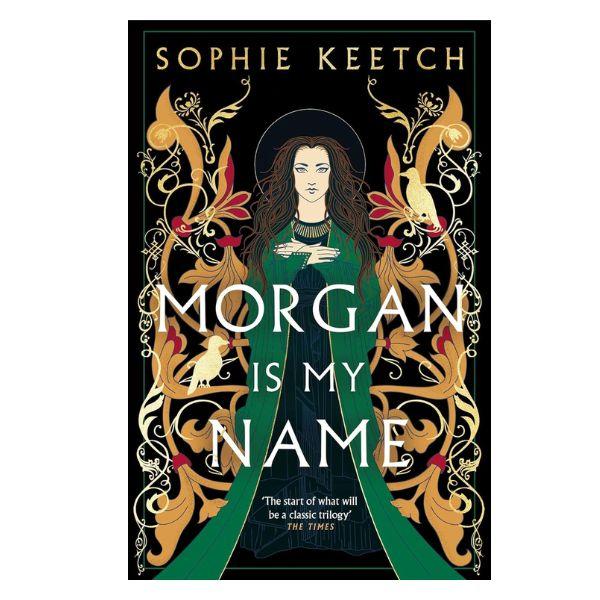
For centuries, Morgan le Fay has occupied a peculiar position within Arthurian legend: powerful, dangerous, and frequently cast as the villain. Sophie Keetch's atmospheric reimagining in Morgan Is My Name seeks to complicate that narrative, presenting Morgan as a woman navigating a world determined to control her.
Set amidst the intrigue of Camelot and the rise of King Arthur, the novel follows Morgan's transformation from vulnerable girl to formidable sorceress. The story begins with the murder of Morgan's father by Uther Pendragon and her mother's subsequent marriage to the king. Growing up in a world dominated by political intrigue, shifting alliances, and rigid expectations placed upon women, Morgan gradually discovers powers that set her apart. As she learns to navigate court life and the ambitions of the men around her, she emerges as a formidable figure capable of challenging even Merlin himself.
Rather than presenting Morgan as a villain, Keetch examines how reputation, power, and history can transform complex women into cautionary tales.
Inanna by Emily H. Wilson
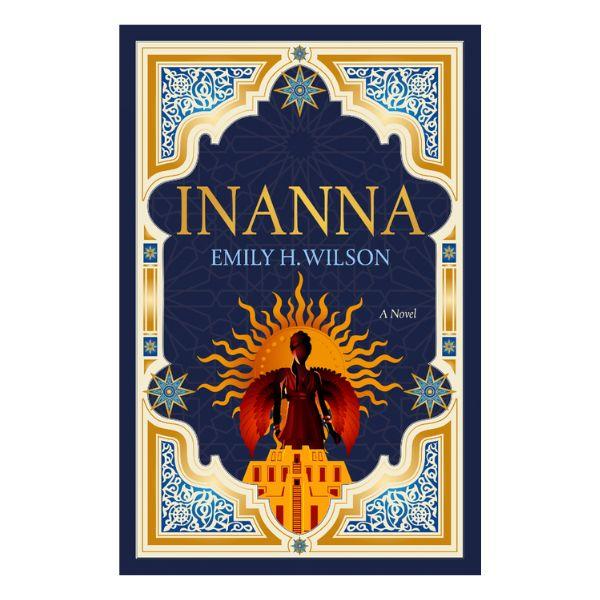
Long before Greek heroes and Roman gods dominated popular mythology, there was Mesopotamia: home to some of humanity's oldest surviving legends. Inanna draws from this rich mythological tradition, reimagining elements of The Epic of Gilgamesh through a sweeping narrative that places gods, mortals, and warriors on a collision course with destiny.
At the heart of the story is Inanna, the first full Anunnaki born on Earth and destined to become the goddess of love. Her future appears secure until the immortal Anunnaki factions descend into conflict, forcing her into a political marriage designed to maintain peace. Alongside her story runs that of Gilgamesh, the arrogant and charismatic son of the Anunnaki, who finds himself imprisoned and given one final opportunity to prove his worth. The third perspective belongs to Ninshubar, a warrior woman cast out by her tribe after an act of compassion, who embarks on a search for acceptance and purpose.
As the paths of these three characters converge, familiar Sumerian myths are reinterpreted, making it a captivating place to begin for readers eager to venture beyond familiar mythology.
Lead image: Getty
Also read: Sunlight, stories, and summer escapes: The books to read this May
Also read: In the world of ‘She’: An exhibition that explores the feminine gaze and the idea of becoming
ADVERTISEMENT
Must Read










ADVERTISEMENT