





ADVERTISEMENT
Sylvia Plath, Billie Eilish, and the return of the 'sad woman trope'
Sylvia Plath and the exhausting project of rediscovering a woman who never actually disappeared.

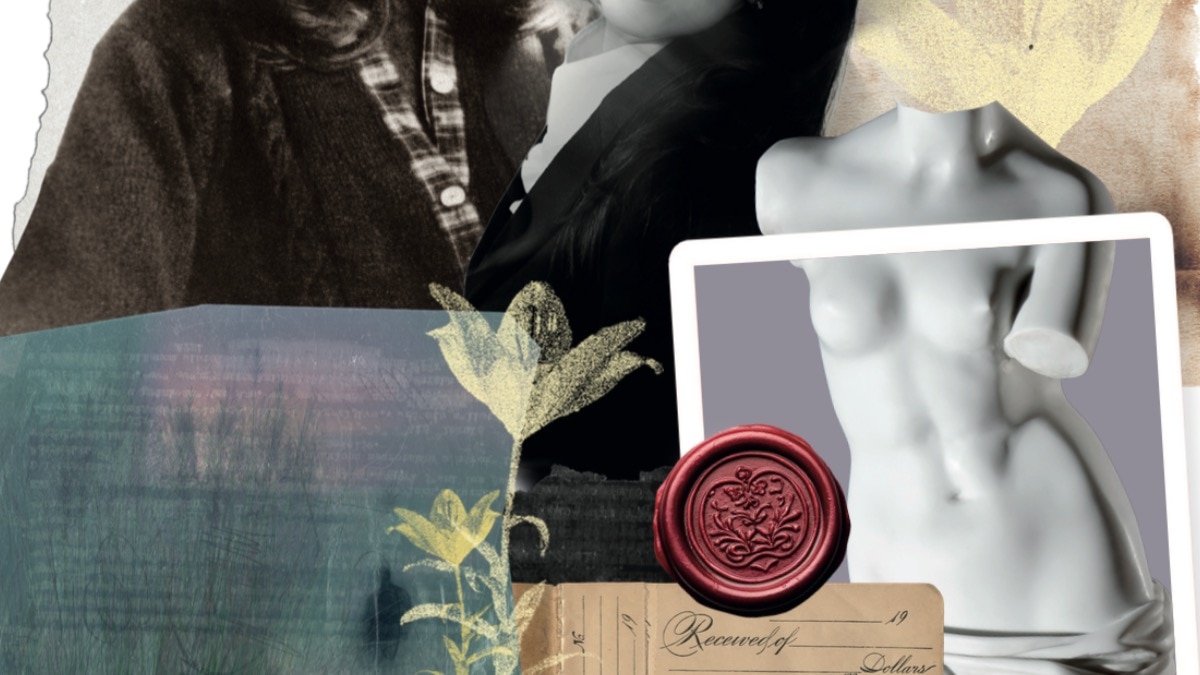
Where does the writer end and the reader begin? Perhaps never, when it comes to Sylvia Plath. One of the most recognisable literary figures alive—and I use ‘alive’ advisedly, because in the cultural imagination Plath commands a busier afterlife than most living writers enjoy careers. She drifts through Instagram edits, quote cards, tote bags, Pinterest mood boards, Substacks, and the occasional book club. There are many Sylvia Plaths in circulation today: the social media star, the postcard philosopher, the patron saint of teenage girls, the tote bag model, and seldom the poet. Across these incarnations, she is mostly consumed as the perfect morsel of exquisite grief.
Every time someone reaches for a Plath quote to describe the epitome of their sadness, a bone dissolves in my body. At present, I am no better than an amoeba. By isolating sentences from her works and observing them through the framework of her death, we have reduced a writer to a mere mood of melancholy. Recently, when news broke that Billie Eilish would play the lead in Sarah Polley’s forthcoming adaptation of The Bell Jar (Plath’s semi-autobiographical novel), the internet responded with a single, telling verdict: perfect casting. Not because Eilish is a proven actress—but, because she has the right energy. She looks the part. In that phrase, the entire problem announces itself.
"Plath’s life has often proved more culturally irresistible than her work itself."
Plath’s life has often proved more culturally irresistible than her work itself. The result has been an industry of biographies, memoirs, documentaries, and fictional reimaginings. Most recently, Helen Bain’s The Daffodil Days fictionalises the final year of Sylvia Plath and Ted Hughes’smarriage before their separation. Even six decades after her death, the appetite for Plath’s life appears undiminished. The poems remain in print, but it is the story of her life that commands a greater audience.
We have chosen to remember Sylvia Plath as literature’s most photogenic tragedy—a part-time poet and a full-time brand ambassador of grief, suicide, and everything death. Lines from Lady Lazarus—“Dying / Is an art, like everything else. / I do it exceptionally well”—circulate endlessly through Instagram captions, Tumblr, and essays. This one, inevitably, is no exception.
So deeply has Plath become intertwined with death in our collective cultural thought that the association now exceeds the writer herself. Her very name is synonymous with misery. Oscar Wilde’s famous line, “Death must be so beautiful. To lie in the soft brown earth, with the grasses waving above one’s head, and listen to silence,” is frequently misattributed to Plath online. What does it tell us? If a sentence sounds sufficiently mournful, sufficiently beautiful, sufficiently preoccupied with death, it feels as though it ought to belong to Sylvia Plath.
Little do we remember that, behind the clatter of tragedy and sadness, is a woman of great ambition who produced a remarkable body of work with a great capacity for life. While death and despair are major themes in Ariel, her last poetry collection, there is also an undercurrent of life that we often turn a blind eye to. In poems like Balloons and Morning Song, Plath turns a fiercely sharp eye toward the domestic world, capturing the pure, sensory delight of motherhood and daily existence.
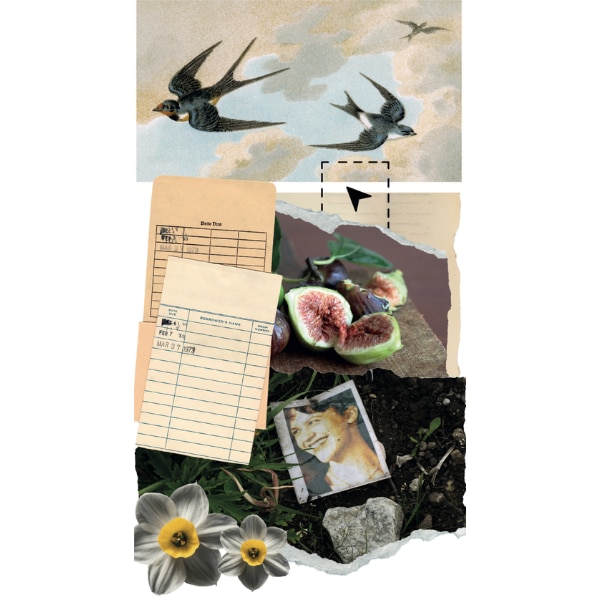
“She was a very fascinating person, extremely funny and generous.” Elizabeth Sigmund, dedicatee of The Bell Jar, told The Guardian. “She made all my friends who were having tea with us laugh and laugh describing how she lay in bed and watched swallows stealing her thatch to make their nest.”
My complaint here is not new. Much ink has already been devoted to rescuing Plath from death. Time and again, scholars and biographers have argued for viewing Plath beyond her tragedies—decoupling the art from the artist and recognising her merit for the right reasons. Emily Van Duyne, the author of Loving Sylvia Plath, attempts to debunk the myths of Sylvia Plath. She was a smart businesswoman, Van Duyne claims. “Not only did she run the business side of their [her and Ted Hughes] writing life, she allowed them to have that life in the first place. Even when she was a student, she was constantly selling her writing and always making money off of her writing,” Duyne says in an interview withThe Millions, an online publication.
She also explains how poems from her collection Ariel, often seen as a forerunner to her suicide, are misread—especially Lady Lazarus. “Because we read the poem backwards through the lens of Plath’s suicide, we assume that it’s predicting her death,” Van Duyne notes. “But when you read her diaries and her letters, that’s really not true... That poem was actually written...when Plath was having this incredible creative upswing... So she’s actually writing this poem about rebirth,” The poem might have been influenced by her first suicide attempt, “But at no point is she thinking, well, you know, in February I’m gonna put my head in the oven.”
Despite so much said, why do we keep revisiting Plath—the tragic concept and maintain a distance from Plath—the writer? The uncomfortable answer is: because we want to. Contemporary culture does not misrepresent Plath by accident or ignorance. It misrepresents her on purpose, which is to say: it extracts from her precisely what it needs and discards the rest with the efficiency of a corporate process. There is, perhaps, something wickedly aesthetic about the imagery of a weeping woman. Isn’t a pale white woman gazing out windows, smoking, and grieving between the pages of her journal—a mouth-watering fodder for the sad girl economy?
This unhinges a broader discourse of gender politics worth dwelling on. When we talk about male writers whose lives ended badly—say Hemingway, who, much like Plath, took his own life—we do not typically begin the conversation with the death or misery. We begin with their work. Their life is context. We mourn the poems Hemingway never got to write; we do not read the works he did write merely as evidence of his self-destruction. With women writers, the logic is often reversed. Virginia Woolf’s novels and Sylvia Plath’s poems are repeatedly drawn into a death-drive narrative, their artistic complexity flattened into symptoms, clues, or premonitions. With Plath, her death isn’t a footnote. It is an introduction. It is the climax from where her story must read backwards, as though her entire career were a long, slow movement toward February 1963 rather than a body of work that existed on its own terms, made its own demands, wanted its own readers.
We keep searching for the real Sylvia Plath. The trouble is, every search produces another version—making her true self all the more elusive. In theory, the afterlife has been generous to Plath, transforming her into a feminist icon, a sad-girl mascot, a social media aesthetic, and a highly quotable fixture of literary lore—a writer’s heavenly dream. The only thing it occasionally prevents her from being is a poet. The effort to rescue Plath from the image of her death has been relentless, even as each generation continues to recruit her life story to explain its own anxieties. Yet, for someone who died in 1963, she has displayed a remarkable ability to keep giving interviews.
This article originally appeared in Harper's Bazaar India's June-July 2026 print issue.
Artworks by Trushieta Naringrekar
Lead image: Getty Images
Also read: Poet and performer Navkirat Sodhi shares her journey of survival, strength, and self-love
Also read: This artist returns with a solo exhibit in Mumbai after 20 years
ADVERTISEMENT
Must Read







ADVERTISEMENT