This bizarre 'Temple' device is going viral online, but can you buy it in India?
From viral memes to serious debate, the mysterious wearable gadget on Deepinder Goyal’s temple has everyone talking.

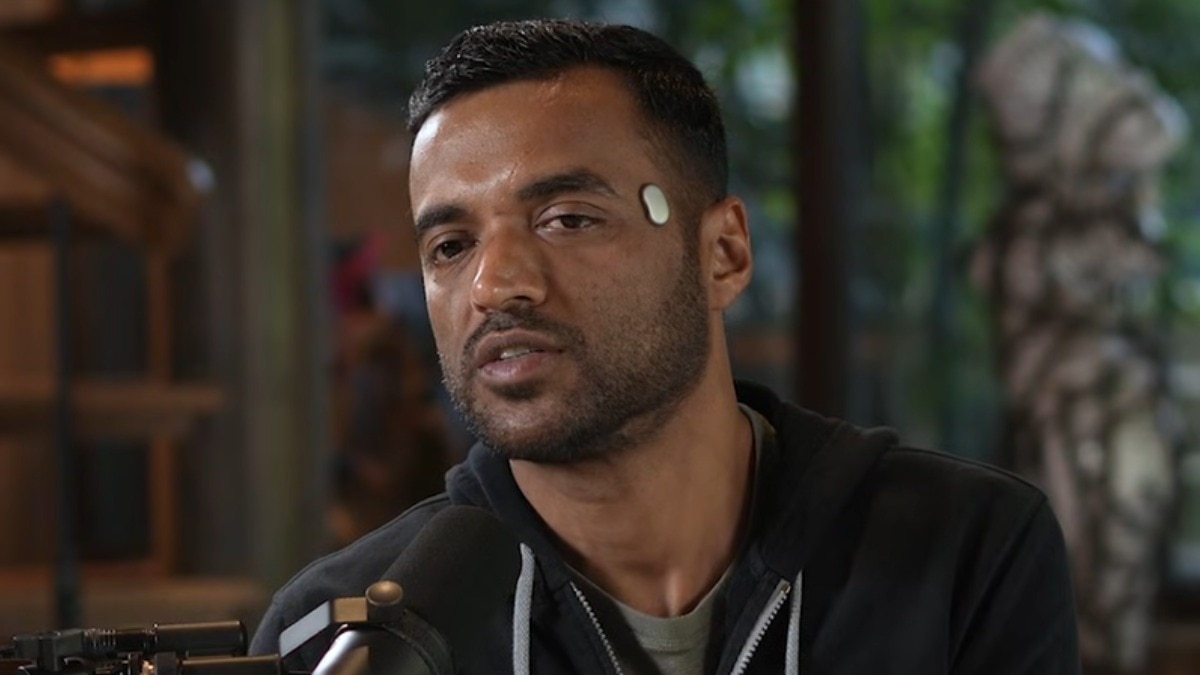
If you were scrolling through social feeds this week and stopped to have a longer look at a photo of Zomato co-founder Deepinder Goyal wearing a tiny gadget on his temple during a podcast, you are not alone. What started as a quirky visual detail, a small metallic patch stuck near his right temple, quickly snowballed into a full-blown online trend. Screenshots, memes, theories, and X threads followed, as curious onlookers tried to decode whether this was tech, health, fashion, or something straight out of sci-fi.
What is this 'Temple' device?
'Temple' is actually the name of the company that Goyal has been developing. And despite what everyone's making it out to be on social media, this device isn’t a skincare tool or a wellness trend. It is a wearable, experimental health tech gadget that Goyal has been wearing as part of his ongoing personal research. The device is designed to monitor blood flow to the brain in real time, a concept that sounds futuristic because it is. According to reports, the gadget uses advanced sensors to collect continuous data on cerebral circulation—something traditionally measured only in medical settings—through scans like MRI or Doppler tests.
The thinking behind it, as explained by Goyal and his team, is anchored in what they call the “Gravity Ageing Hypothesis”. The idea suggests that the constant pull of gravity over the years might subtly impact how blood reaches the brain and, in turn, influence ageing and neurological health. While the theory has sparked curiosity, it remains unconventional and has not been widely accepted in mainstream science.
How it works, in simple terms
Imagine it as a fitness tracker, but for your brain. The gadget is designed to sit just outside the brain, near the temple, and detect signals that correlate with the quality of blood flow to the head. Sensors and possibly AI are said to gather and interpret this data, though how accurately it does so is still a big question mark.
What’s crucial to understand is that this is not a certified medical tool, nor is it FDA-approved or cleared by similar regulatory bodies. It has not undergone the rigorous clinical testing that most health devices require before they are deemed reliable for diagnosis or monitoring, and remains in the experimental phase.
Can you buy it in India?
Here’s the straightforward answer: no, not right now. This temple device remains an experimental prototype. Goyal has hinted that a version might eventually be made available to the public in the near future, but that's that. There has been no official consumer launch or regulatory clearance in India or abroad so far.
That means you won’t find it in stores, on e-commerce platforms or in tech-health shops across the country.
This temple device has sparked conversations around brain health, wearable medical technology, and how innovation is communicated in the age of social media. For now, though, it is not a validated health gadget you can buy or use. But we're curious to see if it passes the necessary tests and actually launches as a new health tech gadget in the market.
So, is this just a marketing gimmick or an actual health tech innovation? Well, only time will tell.
Lead image: Raj Shamani/Youtube
Also read: How women are rewriting pop culture on their own terms
Also read: How India’s terminals are emerging as unexpected art hubs