




ADVERTISEMENT
Meghna Gulzar is guided by instinct in filmmaking and storytelling
Meghna Gulzar on trusting her gut, telling difficult stories, and staying true to reality.

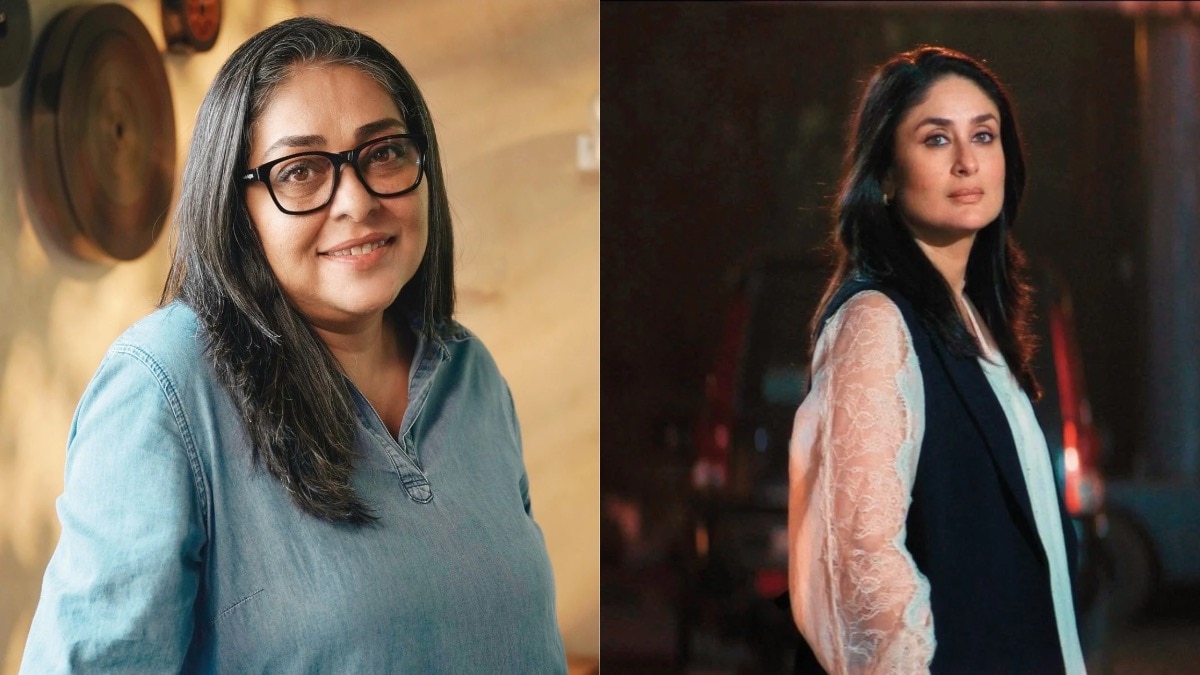
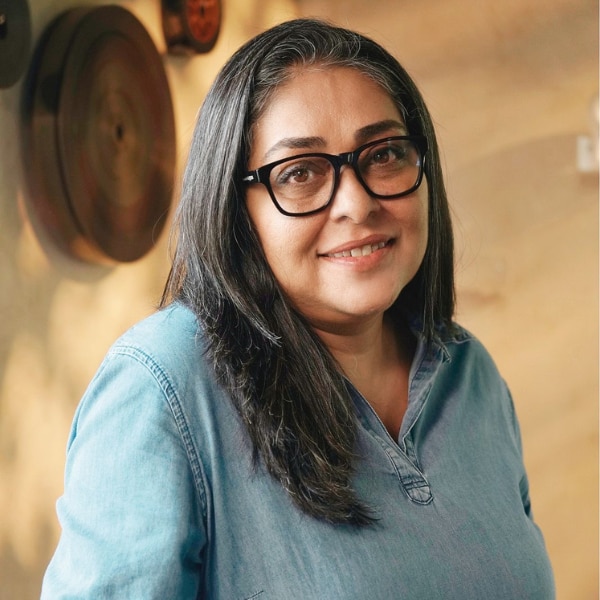
"Stories find me,” Meghna Gulzar tells me, in the stories she chooses to tell. Listening to her, I begin to wonder whether there’s enough weight to that statement, since serendipity alone cannot explain her choices. Gulzar has spent years cultivating particular attentiveness to the social and political currents around her, an instinct for recognising the stories that demand to be told
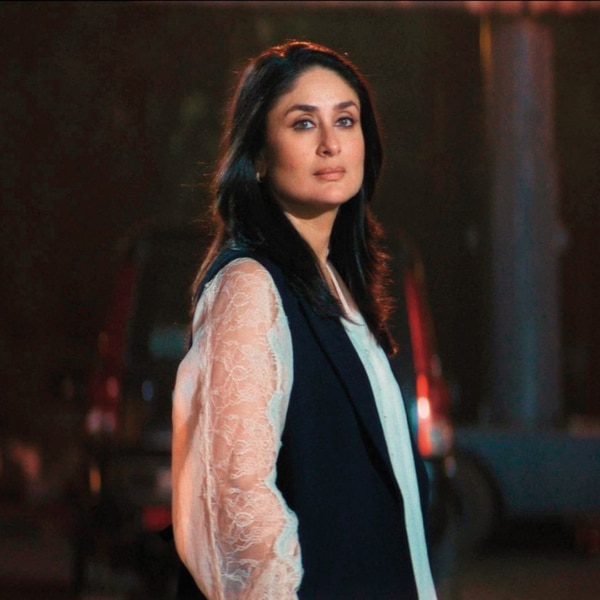
Her latest film, Daayra, is a gritty crime-drama that narrows its lens on the country’s dark underbelly of sexual violence, and investigates the complex morality and legality of extrajudicial police encounters. It landed in her lap as a four-page concept note at a time when the country was in the throes of the pandemic. “Junglee Pictures approached me with the story idea during the lockdown,” she recalls, talking about the film that stars Kareena Kapoor Khan and Prithviraj Sukumaran Rao. “It was something that grabbed my attention instantly because it was an extremely powerful and resonating subject. It’s a story that talks about black, white, and all the greys in between.”
Gulzar, who graciously carved out time for this interview amid the hectic demands of a very intensive post-production schedule, says she has a penchant for being drawn to stories rooted in reality. This includes the undercover spy-thriller Raazi (2018), the impactful Chhapaak (2020) which confronts the prevalence of acid attacks in India, and Sam Bahadur (2023), a biographical war drama based on the life of India’s first field marshal, Sam Manekshaw. We speak to Gulzar about Daayra, the complex characters that inhabit her films, and her strongest influences that’ve shaped her film-making.
Harper’s Bazaar: Daayra is an amalgamation of myriad horrific incidents of sexual violence from across the country. Given how such cases continue to occur in India, the subject is sadly relevant even today. Could you describe your research process?
Meghna Gulzar: We wanted to give the film a broader lens, because such incidents are, unfortunately, extremely common and frequent in our country. That also speaks to why we felt the story would remain relevant. In fact, this was something that came up even during our early conversations around Daayra, because I was scheduled to start making Sam Bahadur next. We were going to work on Daayra only four years later, but we already knew that it wasn’t going to be outdated even then. We scoured cases that occurred across a span of almost 10 years. These were cases that had taken place in different parts of the country. So, our source material was everything that was available in the public domain—whether they were newspaper articles, case files, witness testimonies, or those of affected families. While building a narrative out of this combination of events, we tried to find a connecting thread, whether it was an emotional thread or a punitive action or public sentiment connect. We tried to find such threads across the cases and used that as the base for forming our narrative. of the story that is Daayra. I couldn’t think of a more suitable or apt word for it.
HB: When you come across a story, what’s the first thing about it that draws or compels you to make it? Is it the human emotion or the cinematic possibility?
MG: It’s not any explosive sentiment or national outrage within a story that attracts me. However, when a story is based on real life, it connects with audiences in a different way because it is so close to our history or current social circumstances. It deeply resonates with everyone. I think that’s my first attraction. Also, my decision to make a film on a subject that’s offered to me is almost instant because I go only by instinct. If I’m instantly drawn to it, I know that I will end up making it. However, if I have to convince myself that I’m interested in the story, chances are I will not make it. That’s been my experience so far with the script choices I’ve made.
HB: As a storyteller, how do you move from hard facts of what happened to finding the emotional truth of the people who lived through it?
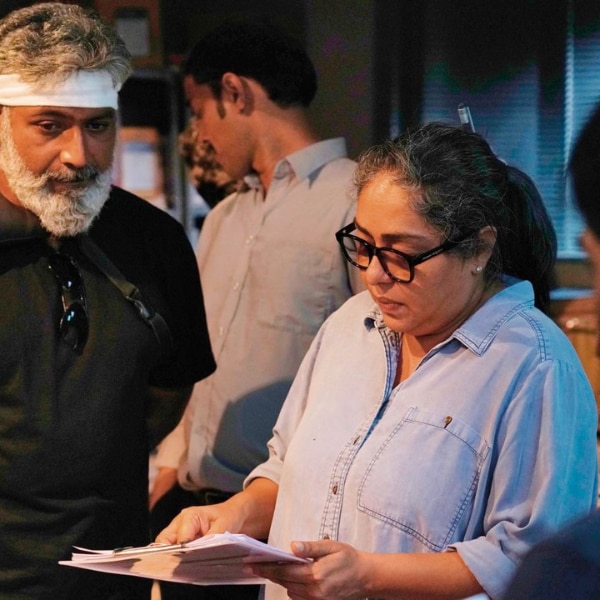
MG: There is very little in terms of embellishment that I take the liberty to do in my films, otherwise I will not able to call them films that are ‘based on true incidents’. That’s an integrity I have to maintain around the case. When it comes to finding the emotional truth of those characters, it was much easier for me particularly on films like Chhapaak because Laxmi [Agarwal] was very much around in the development of the script and she shared her emotional journey with us very intimately during the scripting stage. Similarly, in Sam Bahadur, we had the Manekshaw
HB: The central characters in a number of your films often exist in morally complicated situations rather than straightforward good-versus-evil worlds. Does Daayra continue that exploration?
MG: If you look closely, my films generally don’t have a villain, so to speak. It is the circumstances that are villainous which make people do what they do—or make them ethically or morally grey. Human beings in reality don’t exist in a binary either. They’re not black or white; they operate in realms of grey. In case of Daayra, both characters have their shades of grey. It’s just that one manages to navigate those greys and still keep the righteousness about them while the other can sometimes, make conscious choices that may tip the scales a little bit, and yet be perfectly within the daayra (boundaries) of law.
HB: The title, Daayra, suggests boundary or limitations. What led you to choose it for your film?
MG: The two main protagonists in the film are law enforcement officers, and we often use the phrase, ‘the line of the law’. Now, what happens when both law-abiding officers find themselves on opposite sides of that line? Then, each one has a boundary within which they have to operate to maintain the integrity of the line of the law. That’s the inherent internal dynamic family giving us really precious insights into the man behind the uniform—the father, husband, son, the grandfather. Their inputs really helped me to find the emotional truth to each of the characters.
HB: While working on your films, what has been your strongest influence? Are there any characters that have deeply impacted you or shaped the way you perceive the world today?
MG: My biggest influences always come from the story itself and from the time I’m living in—the circumstances around me when I’m telling a particular story. I’ve been a student of sociology, so there’s a certain antenna that is extremely socially aware, and it stays alive all the time. The good thing with Chhapaak was that Laxmi was sitting next to me while she was watching the final cut, reacting at the right places and smiling at what she saw of herself on the screen. It was a very unusual experience for me. And yes, you’re absolutely right. Not just Laxmi, when I was interacting with all the other acid-attack survivors during the research and the making of Chhapaak, the one thing I learned was that we don’t even tap into 10 per cent of our inner strength that we’ve been blessed with. Until something horrific happens, we don’t realise what we’re capable of dealing with. Every hardship, every experience of pain is relative. But we are given a very, very large supply of resilience and inner strength. That was my biggest takeaway from my journey while making Chhapaak.
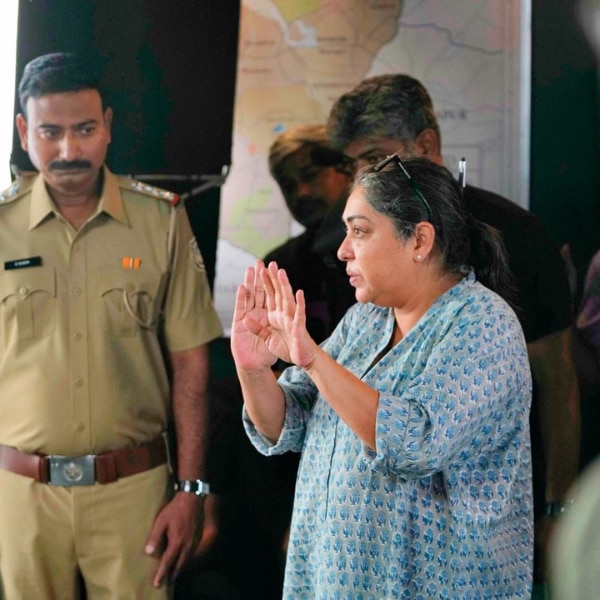
“…my decision to make a film on a subject that’s offered to me is almost instant because I go by instinct.”
HB: While working on a film, you live with one story for many years. Has there ever been a point when you’ve felt saturated?
MG: Getting disinterested or saturated is not an option for me because it’ll start showing up in my work. If you look at Sam Bahadur, for instance, that film was in my life for seven years—from research to release. Also, the process of film-making is such that each part is a different experience: research is different from writing the script, which is different from executing the film. There is something new happening at every step. So there is really no monotony.
Images: Courtesy Saurabh Gupta and Saurabh Goswami (For the still from the film)
This article originally appeared in Harper's Bazaar India's October 2026 print issue.
Also read: The rise of the micro celebrity: Why influence is no longer about millions of followers
Also read: Anavila’s first home collection is a tribute to the village that shaped her
ADVERTISEMENT
Must Read





ADVERTISEMENT