





ADVERTISEMENT
Mixologist Navjot Singh on pairing coffee with Scotch and the future of whisky cocktails
In May, Johnnie Walker Whisky Experiments brought together coffee, cocktails and contemporary Scotch culture. Mixologist Navjot Singh reveals the thinking behind the flavour-driven experience

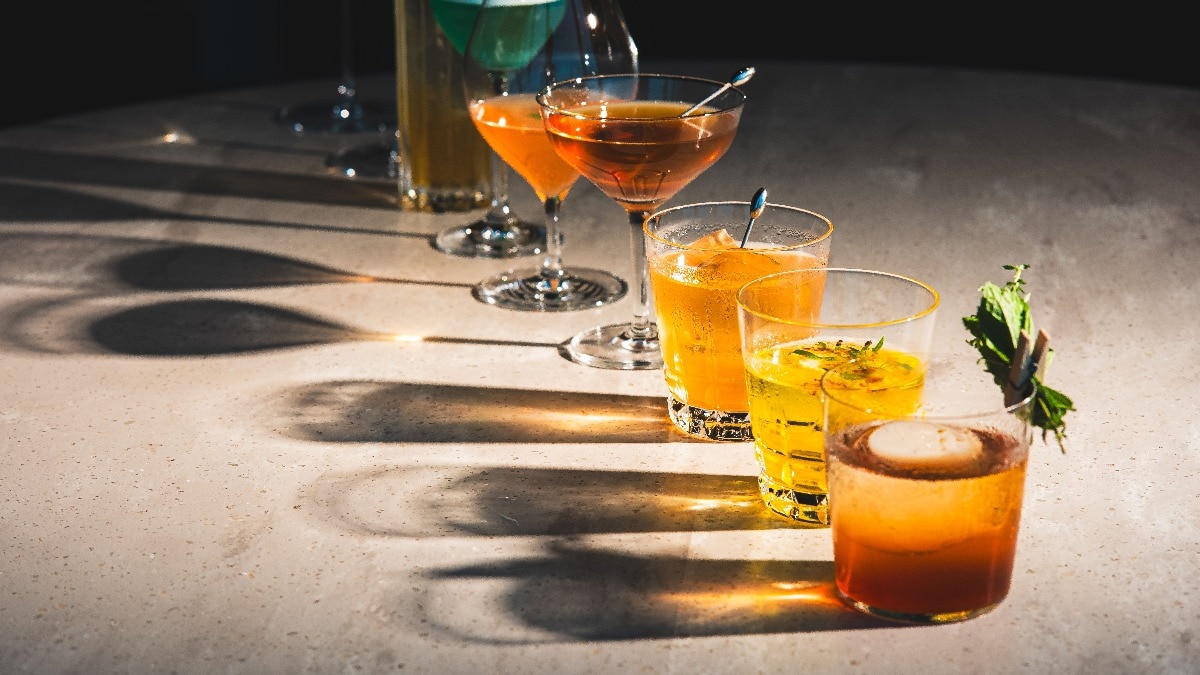
India's whisky culture has seen rapid growth for more than a decade now. According to Statista numbers, in 2023, 252 million cases were sold in India, and they project that by the financial year 2028, this number will reach about 340 million cases. "The consumption of whiskey is evolving from its traditional role as a stimulant to being more oriented towards recreation and social engagement," said the Statista Research Department. Younger Indian consumers are loving the flavour experiments as they reach for premium segments. One of the biggest reasons for this growth became evident earlier last month, when Johnnie Walker brought this versatility to life through a one-of-a-kind experience at STIR Art Gallery in Delhi to celebrate World Whisky Day.
Built around four flavour territories—fresh, fruity, spicy, and coffee—the immersive event invited guests to discover whisky in unexpected ways. Through contemporary cocktails, a live performance by Sixth Ocean, a flair showcase by mixologist Ami Shroff, and curated sensory zones designed to engage the senses of taste, sound, and atmosphere, the evening offered a fresh perspective on how Scotch can be experienced. The focus was on the current cocktail trend in India. It uses whisky as a versatile base, moving beyond a category traditionally dominated by white spirits and opening up more flavour-forward expressions of Scotch for a new generation of consumers.
Varun Koorichh, Vice President Marketing – Portfolio Head, Premium and Luxury, Diageo India, said, "More and more consumers today are exploring whisky in new ways, especially through cocktails that are creative, approachable and full of flavour." He noted that people are becoming more curious and adventurous in their drinking, which is why they were invited to discover a fresh side of the traditional liquor.
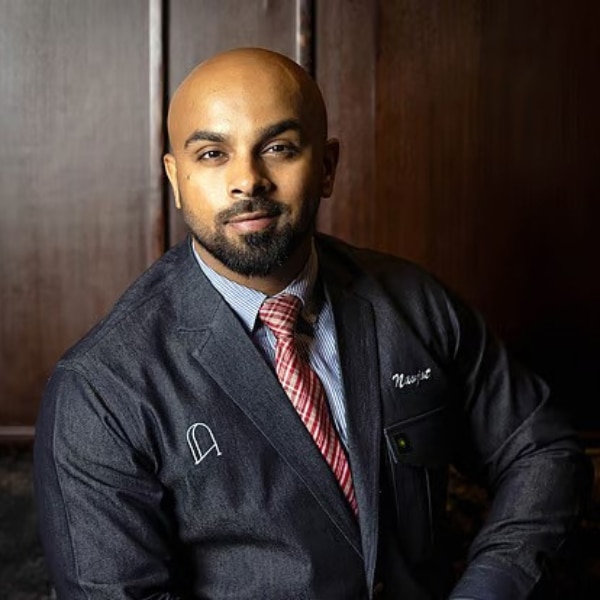
Among those four flavour-led experiences were unexpected pairings crafted by Navjot Singh, Director of Bars at Lair in Delhi. The master mixologist presented regional coffee-forward cocktails inspired by Coorg, Nilgiri, and Tiramisu, exploring bold roasted flavours beyond the classic Espresso Martini, crafted in collaboration with Araku coffee. In conversations with Harper's Bazaar India, Singh delved into his inspiration behind finding the harmony between two strong flavours, keeping whisky's character while building a flavour-forward drink, an underrated whisky cocktail format, according to him, and much more.
Harper's Bazaar India: How do you navigate introducing cocktail formats to guests who are used to drinking Scotch a certain way?
Navjot Singh: For me, Scotch is one of the most classic and timeless spirits in the world. It has survived generations, trends, and changing drinking cultures because of its depth, character, and versatility. I never approach introducing Scotch cocktails by trying to change the way people drink whisky. My goal is to show them another side of it. The biggest mistake bartenders can make is treating whisky cocktails as a compromise. A great Scotch should remain the hero of the drink.
When I'm introducing a guest to a new format, I always start with flavours they already understand and connect with emotionally. Familiarity creates trust. Whether it's the warmth of masala chai in Kaapi Nirvana or the comforting coffee notes of Tiramisu Highball, these flavours act as a bridge between tradition and discovery. What I love about Johnnie Walker Black Label is that it has enough structure, smoke, fruit, vanilla, and spice to hold its identity regardless of the format. Even when paired with coffee, chai, or fruit, the whisky never disappears. It continues to lead the conversation.
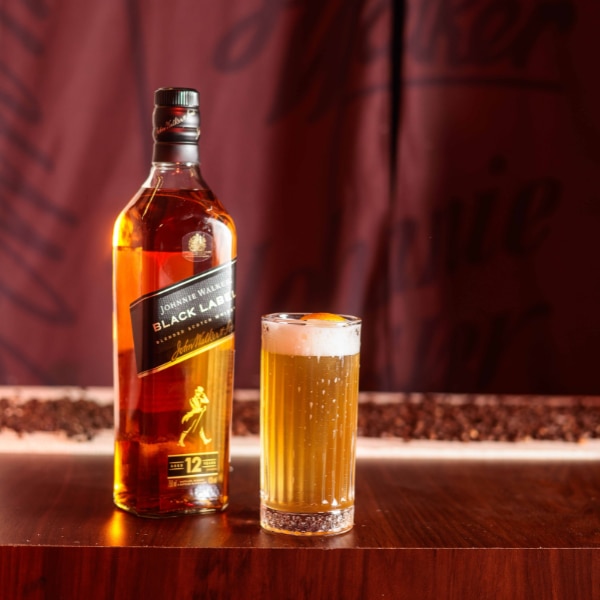
In my experience, once guests realise that the cocktail is enhancing the whisky rather than hiding it, their perception changes completely. The objective isn't to move someone away from drinking Scotch neat or on the rocks. Those serves will always be timeless. The objective is to create another memorable way for them to experience a whisky they already love.
HB: Lair was chosen to represent the 'coffee' flavour territory for this experience. What specifically drew you to pairing the whisky with Araku coffee?
NS: What drew me to Araku was not just the quality of the coffee, but the complexity behind it. At Lair, a lot of our menu development revolves around taking ingredients that seem familiar and discovering new dimensions within them. Coffee has always been one of those ingredients for me. The more you explore it, the more you realise it’s not just about roast or bitterness; it’s about terroir, processing, aroma, texture, and flavour.
What excited me about pairing was the opportunity to bring together two ingredients that are individually complex but can create something remarkably seamless when handled correctly. The philosophy behind the drink was what I often call simplex—making something simple to enjoy, but incredibly complex underneath. Guests should not have to decode the drink; they should simply enjoy it, while layers continue to reveal themselves with every sip. This approach isn’t new to me. In fact, it was the same thinking behind the cocktail I presented at the Global Finals of World Class. I spent considerable time working closely with coffee roasters, understanding how different roast profiles, extraction methods, and flavour compounds behaved when paired with spirits. That experience completely changed the way I look at coffee in cocktails.
For Whisky Experiments, I wanted to move beyond the obvious coffee-and-whisky combination. The dark roast already shares beautiful, roasted, nutty, and chocolate-driven notes with the whisky, but what interested me more was creating tension and contrast. That’s where the Alphonso mango came into the conversation. On paper, coffee and mango seem like unusual partners, but when balanced correctly, the tropical brightness of the fruit lifts the coffee while allowing the smoke, fruit, and spice of whisky to shine through.
I think that’s what makes experimentation meaningful. It’s not about combining unusual ingredients for the sake of surprise. It’s about understanding why they work together and creating a flavour experience that feels effortless, even when there’s a great deal of complexity behind it. That’s a philosophy that continues to shape everything we do at Lair.
HB: Coffee and whisky both carry smoky, roasted, complex notes. Where do you find the tension, and where do they naturally harmonise?
NS: Coffee and whisky naturally harmonise because they share a remarkably similar flavour architecture. Both carry layers of roasted notes, spice, fruit character, bitterness, texture, and a long finish. When I approach a pairing like this, I don’t look at coffee and whisky as individual ingredients; I look at them as flavour systems with multiple layers that can either complement or challenge each other.
The interesting part is creating tension. If you only amplify the smoky, roasted qualities of both, the drink can become heavy and predictable. For me, complexity comes from contrast. Sometimes, opposite flavours create a far more compelling experience than similar ones. That’s why ingredients like Alphonso mango, orange aperitif, or chai spices become important. They introduce brightness, acidity, aromatics, and lift, allowing hidden characteristics within both the coffee and whisky to emerge.
Great cocktail building is about understanding structure. Every ingredient brings multiple dimensions, and when those layers are balanced correctly, the drink feels simple to enjoy while remaining incredibly complex underneath.
HB: What's the hardest thing about building a whisky-forward cocktail that doesn't lose the character of the Scotch?
NS: The hardest part is knowing where to draw the line. When you start working with layered ingredients like coffee, fruit, spice, or even dessert-led elements, there’s always a temptation to build complexity for its own sake. But a whisky-forward cocktail only works if the whisky is still the anchor, not just another ingredient in the mix.
The intention, however, is never about transformation; it’s about interpretation. Allowing different facets of the whisky, whether it's smoke, fruit, spice, or subtle sweetness, to come through in different ways depending on the cocktail direction, while still keeping its identity intact.
The balance lies in ensuring that experimentation adds clarity and dimension to the Scotch, rather than diluting the character that makes it recognisable in the first place.
HB: What does your own palate gravitate toward? And does it show up in the cocktails you design?
NS: My palate gravitates towards balance and drinkability above everything else, and that philosophy absolutely shows up in the cocktails I design. I have always believed that we are not creating drinks for bartenders; we are creating drinks for guests. The consumer should never have to work hard to enjoy a cocktail.
A lot of my process happens long before a drink reaches the glass. I spend time understanding ingredients individually—their flavour compounds, texture, aroma, and how they interact with one another. Only then do I start building a cocktail around them. The goal is to make something that feels simple and approachable on paper, while carrying layers of complexity behind the scenes. I often say that I like drinks that are easy to drink but difficult to create. There should be harmony between the ingredients and the palate. I’m less interested in making a cocktail that feels like a science experiment and more interested in creating one that guests want to order again. For me, the greatest compliment is not when someone says a drink is clever. It’s when they finish it and immediately ask for another. A repeat drink is always a winning drink, and that’s the benchmark I use when designing every cocktail.
HB: Is there an underrated whisky cocktail format or ingredient pairing you think deserves more attention?
NS: For me, the most underrated whisky cocktail format is still the Highball. In a country like India, where the climate remains warm for most of the year, Highballs make perfect sense. They’re refreshing, sessionable, and allow the whisky to shine without overwhelming the palate. I also think we haven’t even begun to explore the potential of regional ingredients within Highball culture. Ingredients like Gondhoraj lime and sandalwood are incredibly underrated. Gondhoraj brings a unique aromatic citrus character that’s very different from conventional lime, while sandalwood offers delicate floral and woody notes that can add remarkable depth without overpowering the whisky.
What I love about the Highball is its simplicity. It looks effortless, but creating balance within such a minimal format requires precision. When done well, it showcases both the whisky and the ingredient in a way that feels elegant, refreshing, and distinctly relevant to the Indian palate.
HB: What's your benchmark for knowing a cocktail is truly finished?
NS: A cocktail is finished when there’s nothing left to add and nothing left to take away. As bartenders, we often fall into the trap of chasing complexity, but for me, the real test is balance and repeatability. My benchmark is always the guest. Does the drink communicate its idea clearly? Does every ingredient have a purpose? Most importantly, does it make someone want another sip and eventually another round? If a guest has to spend ten minutes understanding a cocktail, I’ve probably failed somewhere in the design process. I taste a drink repeatedly throughout development, but the final validation comes when the flavours feel harmonious and effortless. The technique, research, and experimentation should stay behind the bar, not in the guest’s mind. For me, a cocktail is truly finished when it feels simple to drink, memorable to experience, and leaves the guest wanting another one. That’s when I know the work is done.
HB: What's the one drink you'd make for someone who says they don't like whisky?
NS: If someone tells me they don’t like whisky, I’d make them a Paper Plane. Over the years, I’ve realised that most people don’t actually dislike whisky—they’ve just had an experience that didn’t suit their palate.
The Paper Plane is one of the best examples of how approachable whisky can be. The combination of citrus, aperitif, and amaro creates a drink that’s bright, refreshing, and beautifully balanced. It softens the perception of whisky while still allowing its character to shine through. Johnnie Walker Black Label works particularly well because it brings layers of fruit, vanilla, spice, and gentle smoke that add depth without overpowering the cocktail. Everything feels integrated and harmonious.
As a bartender, I love drinks that change perceptions, and the Paper Plane does exactly that. It’s familiar, easy to enjoy, and incredibly well-balanced. More often than not, it’s the drink that turns someone from saying “I don’t like whisky” to asking what whisky they’re drinking.
Lead image: Pexels
Images: The brand
Also read: How the 'aperitivo hour' became the world's most-travelled dining ritual
Also read: The new Indian table: Inside the most coveted restaurants the chic crowd is dining at
ADVERTISEMENT
Must Read






ADVERTISEMENT