The new Indian table: Inside the most coveted restaurants frequented by the chic crowd
A new generation of restaurants is transforming regional Indian flavours into immersive, luxurious experiences, with a whiff of global influences.

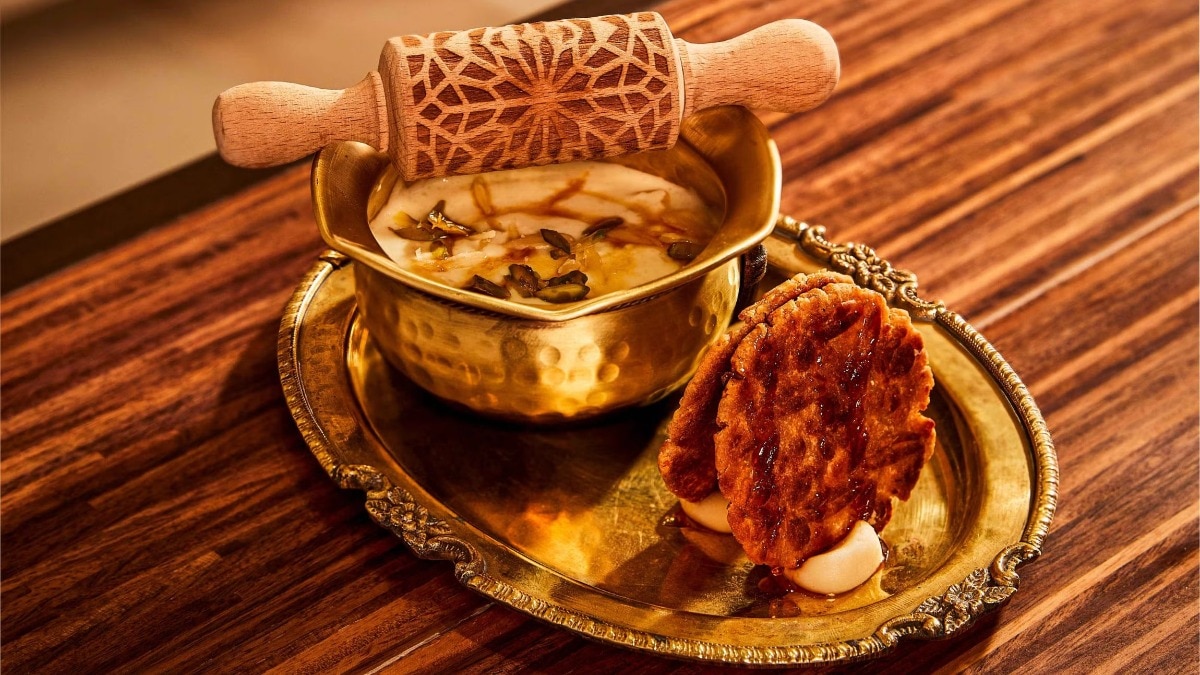
There’s a delicious shift taking place within the Indian dining scene. The new guard looks at nostalgia as reminiscence, but also as movement. Across some of the most compelling kitchens, recipes are being crafted with reverence as well as personal intimacy. The table is set for storytelling, precise plating, and unexpected flavour-pairings.
Think smoky Himalayan hearths, poetic thalis, and menus that feel as global as they are grounded. If you’re wondering where the cool crowd is eating Indian food right now, start here.
Naar
Tap into the spellbinding side of Himalayan cuisine at Naar, unfolding in six seasons, each plate a poetic ode to place, produce, and fire. Translating to “fire” in Kashmiri, Naar is chef Prateek Sadhu’s deeply personal love letter to the mountains, where every dish feels elemental yet exquisitely composed. The idea of Himalayan-forward cuisine takes shape as an ever-evolving narrative, dictated by the distinct seasons that define life in the mountains. A single bite might hold the sun-warmed sweetness of hisalu berries in spring, the tart brightness of cherries at summer’s peak, or the resinous warmth of pine as autumn sets in.
Sadhu’s approach is both playful and reverent: ingredients sourced exclusively from the region are transformed through ancient fire-led techniques. Smoke curling, broths simmering, flavours deepening, the mountains beckoning… all combine to comprise Indian cuisine with an almost spiritual connection to the land.
Nisaba
After decades of defining modern Indian dining, chef Manish Mehrotra offers something a little more personal. Nisaba is where the noise fades, and the food speaks. Freed from the expectations of labels like “modern” or “progressive,” the menu embraces what he calls the food of today’s India: deeply rooted yet effortlessly global. Think summer corn malai with herbed avocado and Benarasi aloo papad, or the kofta with morning glory and kasundi curry, accompanied by a crisp hing kachori.
Desserts are equally inviting, such as the Jaipur saffron pheni with chocolate and a pistachio kulfi. The space mirrors the masterfully restrained opulence. Designed with a soft, almost meditative palette, it invites you to linger and notice the flicker of candlelight, the poetry of sculpture, and the comfort of a well-loved cookbook on a shelf.
Loya
At Loya, heirloom recipes and rugged landscapes converge in an unforgettable dining experience. Drawing inspiration from the vast terrains of the northern subcontinent, from Kashmir’s delicate gravies to Punjab’s robust grills, the restaurant builds its menu on heirloom recipes and time-honoured techniques. The richness of the dishes also stems from being allowed to unfold at their own pace.
Each plate, be it the amaranth kebabs or the Amritsari Wadi Kulcha, is thoughtfully interpreted. The ambience hums with warm, vibrant, and indulgent energy, making it as much a feast for the senses as it is a celebration of culinary memory.
Comorin
Whimsical yet deeply rooted, Comorin’s menu is clever and contemporary. Here, flavours come together from across the country in an ever-surprising feast. You might encounter a lemon gunpowder idli sitting happily alongside arbi ghee roast, ajwain churan and fryums, or indulge in their Old Delhi Butter Chicken with a sesame-encrusted garlic naan. Each element feels like a memory you recognise, gently nudged into something more nuanced.
There’s no heavy-handed fusion here; just thoughtful reinterpretation that honours the essence of regional cooking while making it feel refreshingly current. The cheeni malai toast with honeycomb, as well as the honey caramel gulgule with custard and ginger candy ice-cream, are both unmissable. It’s the kind of meal that makes it Comorin’s playful love-letter to Indian comfort food.
Indian Accent
Few restaurants have shaped the language of modern Indian cuisine quite like Indian Accent. The new menu is pure culinary poetry, and it’s still setting the standard. At Indian Accent, innovation is never at odds with emotion. Signature favourites like the Daulat ki Chaat or the meetha achar pork ribs return like old friends, whilst new creations like a burrata chaat or a delicate guchhi morel pulao push the narrative forward.
The experience is as inclusive as it is inventive, with thoughtfully curated vegetarian, vegan, gluten-free, and Jain menus ensuring that no one is left out of the story. With bold new dishes and beloved signatures, Indian Accent continues to prove why it remains unmatched.
Trèsind
From Dubai to Mumbai, Trèsind’s bold, boundary-pushing Indian cuisine makes it a theatre of taste. The degustation menus here are meticulously crafted journeys, each course revealing a new facet of flavour, texture, and technique. Expect playful presentations, tableside theatrics, and dishes that challenge your expectations of what Indian food can look and taste like.
Imagine a ghewar chaat with avocado kachaloo, delicately seasoned with chaat masala. Yet, beneath the innovation lies a deep respect for tradition; every modernist flourish is anchored in familiar flavours, reinterpreted with precision and imagination.
Avartana
Helmed by ITC Hotels, this pioneering concept elevates South Indian cuisine into the realm of haute dining without losing its essential soul. Each dish is a study in contrasts, and robust flavours are rendered with delicate precision. Coconut, curry leaves, tamarind, and spice blends weave their way through the experience, but never in predictable ways.
Instead, they’re distilled, infused, reimagined—like the asparagus and coconut stew with turmeric, paired with idiyappams—appearing as airy broths, intricate emulsions, or artful compositions that delight both palate and eye. The result is a dining experience that feels almost otherworldly, yet deeply comforting at its core.
Ummrao Saaj
With begum-inspired menus and slow-cooked heirloom dishes, Ummrao Saaj brings the opulence of nawabi kitchens to contemporary Mumbai. Drawing from the regal culinary legacies of Lucknow, Hyderabad, Rampur, and beyond, the restaurant crafts an extraordinary experience. The breads—pillowy taftaan, rich parathas—are designed to pair beautifully with the silken curries and rich, gravy-forward vegetables. The thoughtfully sourced ingredients are expressed through Nava, the restaurant’s food philosophy that reimagines classic Indian flavours with a contemporary lens.
Complementing the cuisine is Raag, a signature cocktail programme featuring Indian-born spirits and creations inspired by musical notes. At the heart of the experience is Sangam, a private dining experience shaped by the confluence of people, palates, and philosophies. A tribute to community, it celebrates India’s culture of shared meals and slow, soulful dining.
Jamavar
Named after the intricate woven shawls of Kashmir, the space mirrors the unmistakable artistry that is layered, luminous, and steeped in heritage. Candlelit urlis flicker softly against gold-embroidered motifs, while hand-carved screens lend a sense of intimacy and intrigue.
The menu traverses the subcontinent with ease, offering dishes like a slow-roasted rogan-e-nishat that arrives indulgently tender, delicately spiced kebabs, and curries that unfold with nuanced depth. Start with the karari aloo and shakarkandi chaat, continue with the Nawabi kofta, and top it all up with the homemade malai kulfi. Here, nothing is overworked, yet everything feels elevated.
Ikk Panjab
Rooted in the legacy of an undivided Punjab, Ikk Panjab brings together nostalgia, resilience, and rich, home-style flavours. Every dish tells a story of family, migration, and kitchens that kept traditions alive across time and borders. Conceived as a tribute to the culinary traditions of an undivided Punjab, the restaurant channels generations of knowledge into an intimate menu where recipes echo the warmth of home kitchens: be it jau ki roti or adrak da halwa.
Each dish is reminiscent of childhood kitchens filled with the comfort of mothers and grandmothers adding their love to slow-simmered dals that feel deeply restorative, tandoor-fired breads with a smoky, irresistible pull, and dishes that carry the undeniable richness of time-honoured techniques.
Lead image: Loya at The Taj Mahal Palace, Mumbai
Also read: 'World Tiramisu Day' is an ode to the indulgent dessert that never goes out of style
Also read: Served in style: The most sumptuous food stories to read this April