




ADVERTISEMENT
From Neeta Lulla to Tarun Tahiliani, the veterans shaping Indian fashion’s lasting legacy
Spanning couture visionaries to runway rule-breakers, these icons prove that influence, creativity, and great style only deepen with time.

Fashion is often framed as an industry preoccupied with youth, but many of its most influential figures tell a different story. In reality, fashion holds space for everyone, from six to sixty and far beyond. Within Indian fashion, some of the most enduring voices who continue to shape the landscape are well into their sixties, seventies, and later, proving that experience and perspective are just as powerful as novelty.
Designers, models, makeup artists, and industry leaders have spent decades building and sustaining the ecosystem that defines the industry today. Their journeys reflect years of creativity, experimentation, and resilience, on the runway, behind the scenes, and in the boardroom. Together, they represent the enduring icons carrying Indian fashion forward, showing that style is defined not by age, but by vision, craft, and commitment.
Anita Dongre
Few designers have shaped contemporary Indian fashion quite like Anita Dongre. At 62, the founder of the House of Anita Dongre oversees a fashion empire that balances heritage craftsmanship with modern sensibility. Since launching her label in 1995 with modest resources and unwavering determination, Dongre has built a global presence that includes multiple brands catering to different audiences.
Reflecting on what she would tell her younger self entering the industry today, Dongre offers a perspective shaped by decades of experience: “Design from belief and conviction and you will resonate with your people. Trends will be loud, opinions even louder, but the only work that lasts is what feels true to you.”
Her philosophy underscores an aesthetic that respects Indian textile traditions while maintaining a light, contemporary approach to dressing.
Rural artisans remain central to her work, with traditional techniques such as Gota Patti continuing to thrive through her collections. At the same time, Dongre emphasises that creativity must coexist with business acumen: “Creativity may open the door, but numbers keep it open. Learn them, respect them, and make decisions with both instinct and insight.”
Her influence expanded internationally after Catherine, Princess of Wales, wore one of her designs during a visit to India, triggering global attention. Today, Dongre’s work continues to embody modern Indian elegance while advocating sustainability, ethical production, and women’s empowerment. Yet perhaps her most personal advice remains the simplest: “Hold yourself to high standards, but never so high that you stifle your inner child. That uninhibited, curious part of you is where the most honest ideas come from. Guard it fiercely.”
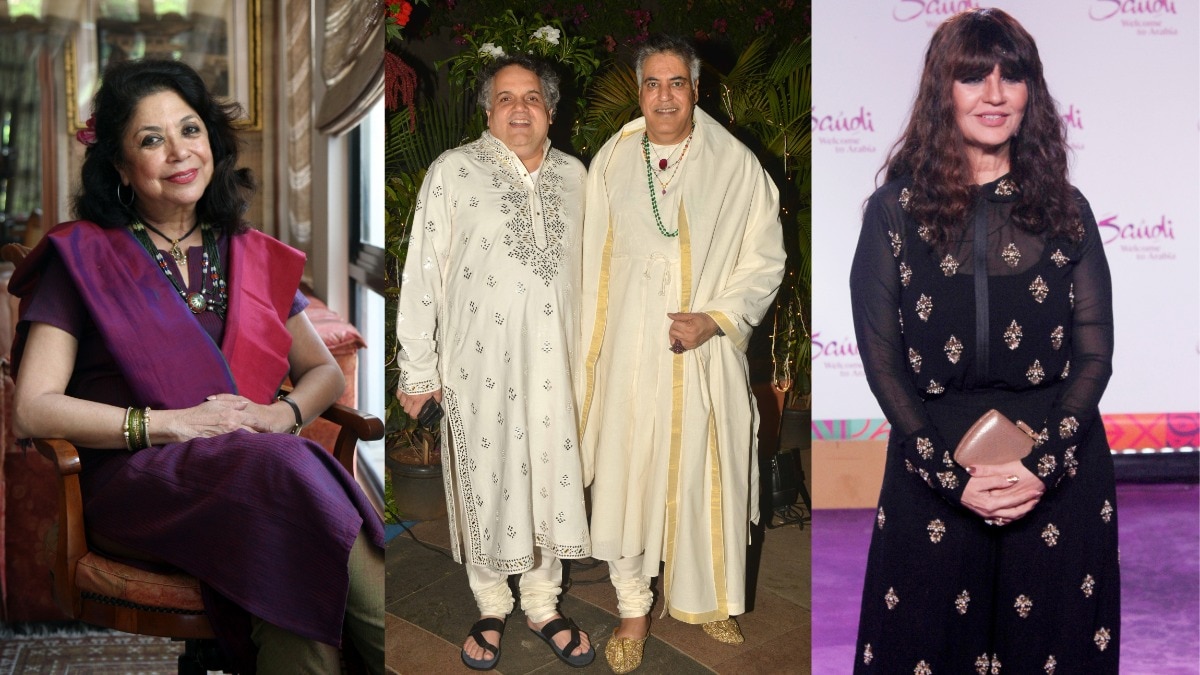
Neeta Lulla
With more than four decades in the industry, Neeta Lulla has left an indelible mark on Indian cinema and couture. At 61, the designer remains synonymous with grand bridalwear and elaborate costume design, having contributed to hundreds of films throughout her career. Her creations frequently merge classical Indian textiles with contemporary silhouettes, resulting in garments that feel both timeless and modern.
Reflecting on fashion’s deeper meaning, Lulla shares a perspective rooted in authenticity and self-expression: “In a world full of noise, fashion allows us to stand out—not by being louder, but by being true. Authenticity is magnetic. When you align your inner essence with your outward appearance, your craft becomes a powerful tool that tells the world your story without uttering a single word.”
Lulla’s work in cinema elevated her reputation within the fashion world, with costumes for landmark films helping define some of Bollywood’s most iconic visual moments, particularly those steeped in lavish historical aesthetics. Her philosophy also embraces adaptability and growth: “When you can’t change the direction of the wind, adjust your sails. Most people fear change, but it’s a beautiful thing. With huge risks come bigger rewards and the chance to make a difference.”
At the same time, her bridal collections have become a reference point for women seeking opulent craftsmanship paired with fresh interpretation. Encouraging the next generation to push boundaries, she adds, “Only by stepping out of your comfort zone—beyond what you know and have learnt—and approaching your work as a learning process with passion and excitement can you create a niche of your own. That’s when a wondrous path opens in front of you.”
Her enduring presence reflects a career built on imagination, meticulous detail, and an intuitive understanding of evolving tastes—one that continues to shape both Indian fashion and cinema.
Mukta Singh
At 61, Mukta Singh represents a refreshing shift in how the modelling world views age. Her entry into the industry came later in life, following years spent balancing family responsibilities and creative pursuits. Before modelling became part of her story, Singh worked with several publications as a freelance contributor and nurtured a passion for painting. Her artwork often celebrated legendary musicians, translating their songs into striking acrylic portraits layered with graphic motifs.
Looking back, Singh reflects on the rigid beauty ideals she encountered growing up: “When I was young, we had very rigid standards of beauty and I always felt inadequate, finding myself not fitting in with the beautiful lot. However much we deny it, we all want to feel beautiful and chic.” With time, her perspective shifted. “I would tell my younger self to stop trying to fit into fashion and instead allow fashion to reflect who I was becoming.”
Life’s demands delayed her pursuit of personal ambitions for many years. While caring for her ailing mother, Singh gradually embraced her greying hair and redirected attention toward her physical and emotional well-being through fitness and self-care. A chance encounter at a wedding changed everything, when a designer invited her to model. Despite skepticism from those who questioned her age, Singh chose persistence over hesitation.
Today, her outlook on style is rooted in self-acceptance and evolution: “Grace and style can be evolved at will once we learn to accept and appreciate our uniqueness. The industry may celebrate youth, but true style comes from self-awareness, consistency, and the confidence to evolve. The real work is not staying relevant—it is staying honest.” Her journey stands as a powerful reminder that reinvention can arrive at any stage of life.
Ritu Kumar
At 81, Ritu Kumar stands as one of the true pioneers of Indian fashion. Long before the industry developed into the global force it is today, Kumar began championing the country’s traditional textile heritage. Starting her journey in Kolkata with a handful of artisans and a small workspace, she dedicated herself to reviving historic embroidery techniques and hand-block printing traditions.
Her work transformed the way Indian craft was perceived, presenting centuries-old artistry within a contemporary design language. Kumar also played a defining role in introducing boutique retail culture to India, offering curated fashion experiences that blended heritage with modern styling. Over decades, her label has expanded across multiple cities while continuing to celebrate the richness of Indian textiles. Her legacy lies not only in clothing but in the preservation and reinvention of cultural craftsmanship.
Anju Modi
Anju Modi has spent decades exploring the relationship between textiles, history, and storytelling. Now 68, the designer is widely admired for collections that draw inspiration from philosophy, architecture, and regional craft traditions. Her work often reflects years of research and collaboration with master artisans across India, resulting in garments layered with intricate detailing and cultural references.
Beyond the runway, Modi’s costume design has brought historical narratives to life in cinema, where her period ensembles have helped define the visual language of several major films. Her creations consistently celebrate the depth of Indian craftsmanship while maintaining a strong contemporary identity. Through her work, Modi continues to demonstrate how fashion can act as a bridge between heritage and modern expression.
Dinesh Mohan
Dinesh Mohan’s path to modelling began far from the glamour of fashion. Before entering the industry, he worked within the Haryana government’s education department, living a largely sedentary life that gradually impacted his health. A turning point came when he decided to step away from his career and focus on personal transformation.
In his mid-sixties, Mohan emerged as a striking presence on the runway, distinguished by his silver hair, confident style, and signature moustache. His modelling career took off after his first professional photoshoot in 2016, leading to collaborations with major designers and appearances in campaigns and fashion shows. Mohan’s story challenges conventional timelines within fashion, proving that reinvention is not limited by age.
Tarun Tahiliani
Tarun Tahiliani has long been credited with shaping the vocabulary of modern Indian couture. Now 64, his work continues to define a sophisticated blend of traditional craftsmanship and global silhouettes. Early in his career, Tahiliani helped transform India’s retail landscape by co-founding Ensemble, widely regarded as the country’s first luxury multi-designer store.
When asked, “After decades in the industry, what continues to excite or inspire you and keeps you passionate about fashion?” Tahiliani responded: “I think this country has changed. I think this is a new fashion that didn't exist 10 or 20 years back because we were still more textile focused and hadn't moved to structure. We've learned that we're a very exciting country at this moment. You know, if you do what you love obsessively, there's very little else you'd rather do.”
His design philosophy centres on draping, intricate embroidery, and fluid tailoring that reflects a contemporary vision of Indian elegance. Over the years, Tahiliani’s collections have expanded internationally while maintaining a strong commitment to artisanal techniques. His contribution to fashion lies not only in design but also in pioneering the infrastructure that allowed Indian couture to flourish globally.
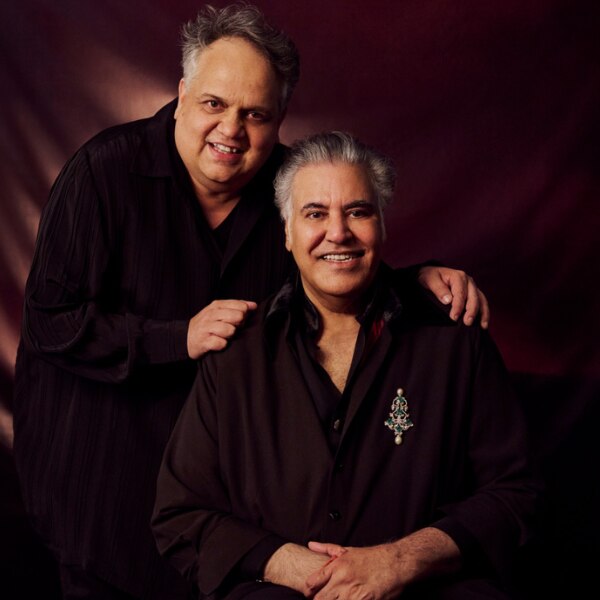
Abu Jani & Sandeep Khosla
As the creative force behind the celebrated couture house Abu Jani Sandeep Khosla, Abu Jani and Sandeep Khosla have spent decades championing maximalist Indian luxury. Now in their sixties, the duo’s design language remains unmistakable: lavish embroidery, mirror work, and intricate craftsmanship woven into dramatic silhouettes that have come to define opulent Indian couture. Their creations are synonymous with grand celebrations and celebrity wardrobes, appearing at global red carpets and high-profile events, while their work has also contributed to the revival of traditional embroidery techniques through a distinctly modern lens. Beyond fashion, Khosla has extended this ornate aesthetic into interior design, bringing the same sense of layered opulence to architectural spaces.
Reflecting on their four-decade journey in fashion, they say: “2026 marks 40 years in Fashion for us. Our work has been a relentless quest for innovation and elevation of design expression. A spirited journey to reach ever higher and also deeper within to create the finest on our own terms sans compromise without shortcuts or cutting corners. We continue to be completely passionate about Fashion, about the limitless possibilities of our creative imagination to unleash impossibly refined objects of beauty destined to become wearable art. The pursuit of a dream has no sell-by date. It is ever evolving, audacious, and ambitious. We are still hungry after 40 years to create anew, bigger and better. Wildly and madly in love with what we do. Work has never been just work; it is our reason for being, our very soul. We create, therefore we are. When design is your absolute passion it will always compel you to dream and those unfettered dreams will result in a fabulously fresh design expression that furthers fashion. As young talents, we refused to limit our vision or our appetite for beauty or originality. We still hold these values as sacrosanct. Our hunger has never dimmed. It never will. We are completely devoted to our pursuit of the impossibly beautiful and flawlessly detailed.”
Sunil Sethi
Few individuals have influenced the structural growth of Indian fashion as significantly as Sunil Sethi. As chairman of the Fashion Design Council of India, he has guided the organisation through years of expansion, strengthening its role as a vital platform for designers and industry professionals. Beyond his leadership within the council, Sethi’s business ventures have helped connect Indian craftsmanship with international retail markets, playing an important role in promoting Indian design globally while encouraging collaboration between artisans, brands, and buyers.
Through decades of advocacy, he continues to shape the broader ecosystem that supports the fashion industry. Reflecting on what he might tell his younger self today, Sethi shares: “I’m imagining myself as Gen Z and I must tell you, besides loving their irreverence and nonchalance, I read a funny, new phrase that best describes today’s lot—it’s called ‘lily padding’ and I’m going to translate it for you… It means how the younger generation likes to job hop, just like an amphibious frog who leaps from one lily to another. Keeping the leapfrogging in mind (pun intended), I would counsel my younger self to not make haste, stay the course to learn the ropes, show loyalty and commitment to people who have given me a platform. I urge them to enjoy the process of discovering treasures of craft—explore hidden nuances of textiles, not be a trend addict, find invisible voices who are carrying forward our heritage.”
The enduring presence of these figures highlights an essential truth about fashion: creativity does not fade with time, it only evolves. Each of these individuals have contributed decades of experience, experimentation, and vision to the industry. Their influence spans runways, ateliers, film sets, and global retail spaces, shaping the way Indian fashion is seen both at home and abroad. In a world often obsessed with the next new thing, their stories offer a powerful reminder that style, craftsmanship, and originality only grow stronger with age.
Lead image: Getty
Also read: COS makes a striking Seoul debut with its architectural Spring/Summer 2026 runway
Also read: Tinted sunnies that are anything but black
ADVERTISEMENT
Must Read

ADVERTISEMENT