




ADVERTISEMENT
From Saim to CRCLE, meet the emerging Indian designers bringing personality back to fashion
From craft-led narratives to contemporary expression, these five homegrown labels are reiterating what Indian fashion looks like now.

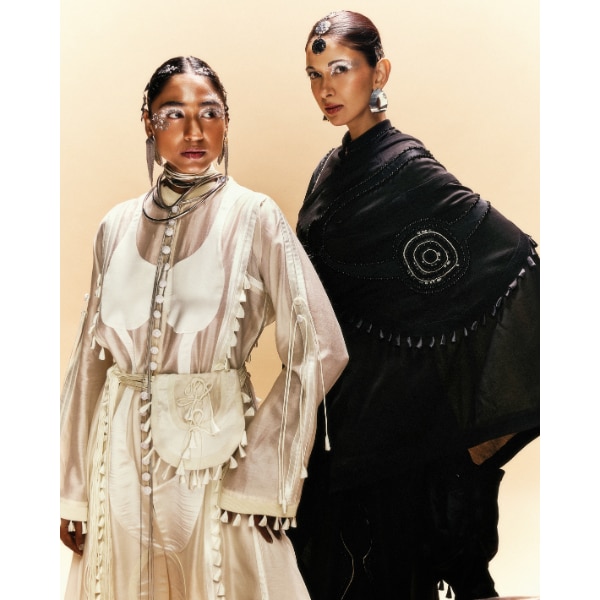
Saim—Redefining festive wear
The tassels, the silk, the contemporary mood board—each piece at Saim moves beyond the predictable codes of festive wear, offering instead a more nuanced take on occasion dressing. “A simple shirt can also be couture and as expensive as one of your bridesmaid or occasion looks!,” claims Saim Ghani, the founder of his eponymous brand. Speaking of festive wear, a quick glance at Saim’s collections is enough to realise the label’s love for Indian culture. Founded in 2023, the brand creates a bridge between culture and cool, one that weaves a little something from every nook and cranny of India. “My creative vision has always been anchored by my country. The multicultural infestations, mythology, and fantastical imaginations, and all the magnified emotions keep building into my subconscious while I create, lending parts from nostalgia and marrying them into our worlds of today,” shares Ghani. In a market often driven by overt embellishment, Ghani shifts the focus inward. “Festive is usually associated with heavy embroidery or surface work—we want to place equal emphasis on construction, quality, and finish,” he adds, hinting towards the desire of dwelling into a deeper section of someone’s mind that’s learning to adapt, observe, and appreciate the tiny details of clothing through his collections.
Triune—The travel edit
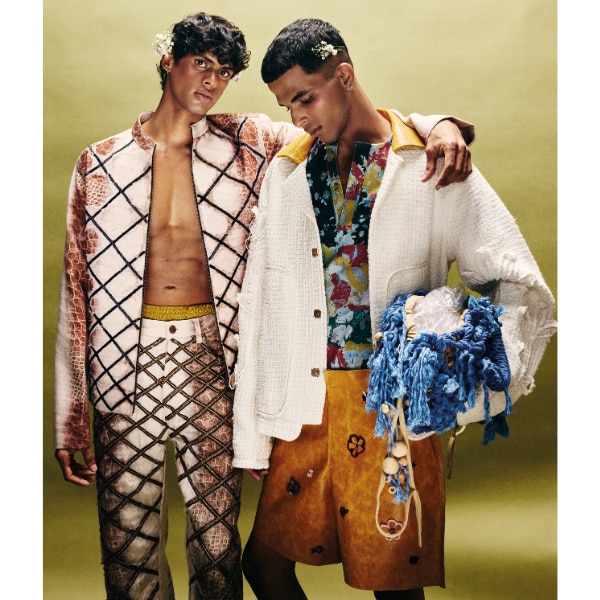
Amidst a plethora of brands and labels fixating on elevated basics, Triune finds a rhythm in vacation-ready wardrobes.Whether it’s a striking print on a shirt or a jacket with all of the countryside’s motifs on it, Triune has got us all hooked on its intricacies. Founded by Prasoon Sharma in 2020, Triune emerged from a desire to create pieces that feel deeply connected to craft, yet drenched in pop culture. What began as an exploration of texture has evolved into a design language rooted in chaos, one that values the wearer to lean into individuality and embrace imperfections without restraint.
The brand is anything but conventional—expect a bright and beaming colour palette, a retro charisma, unabashed style and self expression as muse. “We see imperfections not as flaws, but as evidence of life and process,” Sharma reflects.The designer’s childhood memories of being surrounded by nature became the cornerstone of inspiration for all designs crafted by Triune. From intricate hand-braided dori work, the tropical shirts, to the embroidered texts on tank tops—each garment carries the imprint of the flora around us alongside the artisans behind it. “No two pieces are ever identical. For us, the intricacy is not just a surface technique—it is an emotional process, where craftsmanship, time, and human touch come together to create something deeply personal,” shares the founder. It is this thoughtful approach to design that earned Triune a spot at the GenNext category at Lakme Fashion Week this year, marking its arrival on a larger stage.
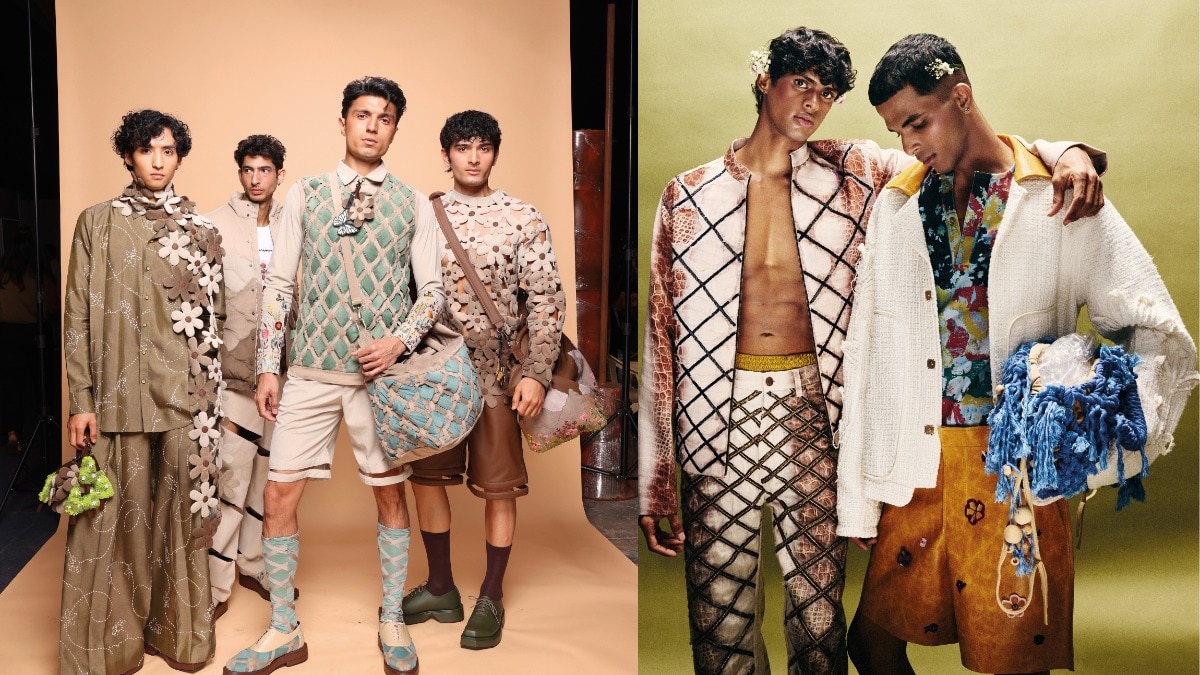
Jubinav Chadha—Loud and proud
One of the three winners in the GenNext category at this year’s Lakme¯ Fashion Week, Jubinav Chadha’s eponymous label leans unapologetically onto maximalism. With prints and motifs dominating their collections, Chadha’s philosophy is rooted in the idea of constantly exploring and evolving a new design language. “We’ve never been interested in playing safe or creating basics for the sake of it,” says Chadha. Talking about menswear in India, he tends to carve a distinct niche—not with gimmicks, but with expression. “Menswear today is heavily saturated with minimalism across every price point. While that space has its place, there’s a growing audience that wants to express more through what they wear—people who want to stand out, but not in a way that feels forced or gimmicky,” notes the founder. The contemporary menswear label, which merges couture techniques such as kantha, appliqué, and quilted surfaces with global silhouettes, remains inherently wearable. The designer adds, “It’s detail-driven, craft-led, and expressive, yet grounded enough to be worn with ease. The intention is to create pieces that feel expressive and detailed, without overwhelming the wearer. It’s about finding that point where craft, emotion, and wearability coexist seamlessly.”
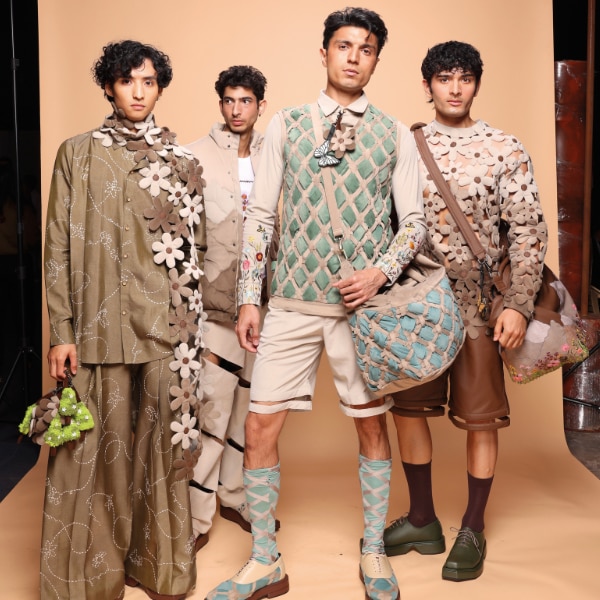
CRCLE—Back to basics
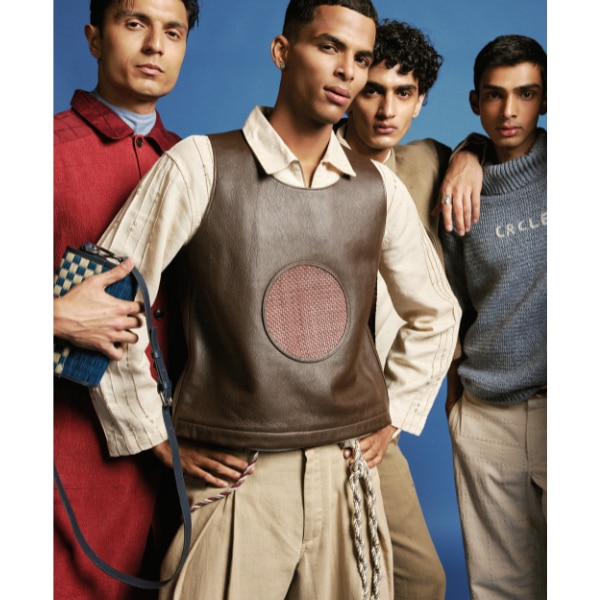
Think man purses, embroidered khadi, knitted polos, an earthy palette, and chic culottes, but make it all sustainable—welcome to CRCLE’s world. Founded by Varshne B in 2024, the Chennai-based menswear brand is a by-product of the founder’s inclination towards “finding new life in discarded textiles.” Negating the search for what’s new, CRCLE is anchored in restoration by returning to the way things were once made. The winner of this year’s Circular Design Challenge at Lakme¯ Fashion Week, the brand’s collection, Dialogue, was a reminder of how well sustainable fabrics blend with contemporary style. “For me, it’s less about following a trend and more about building a relationship with the material and product to ensure it has a future. Ultimately, I’m trying to create pieces that don’t just look good, but feel like they have a soul and a story worth keeping,” shares the founder. More than one-of-a-kind, Varshne wishes to challenge the industry’s surface level obsessions. “We’re seeking to disrupt the linear economy which is the ‘take-make-use-dispose’ cycle,” she shares. CRCLE’s commitment to impact comes alive through collaborations with over 100 artisans and more than 50 indigenous craft communities across Chennai and Pondicherry. Together, they are building a material library, which includes naturally dyed Weganool from Auroville, handwoven Korai grass from Pattamadai, and more. “We are proving that fashion can, and should, be regenerative while still being relevant,” she notes.
Taarini Anand—Knitting nostalgia
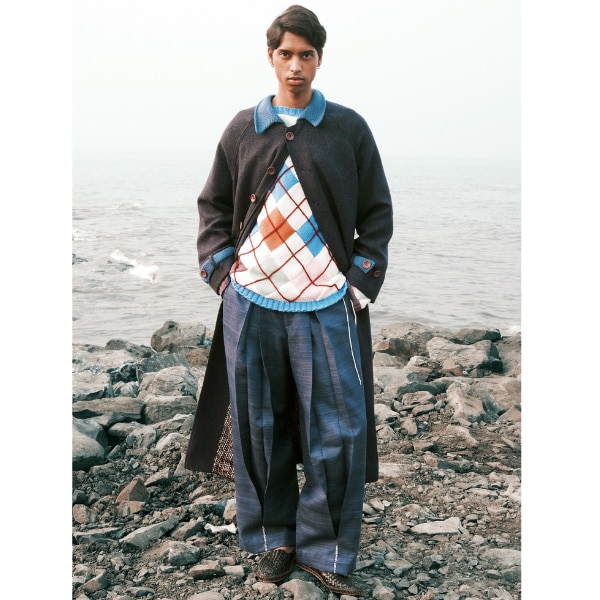
Rooted in nostalgia and woven in traditions, Taarini Anand’s eponymous label, born in 2025, makes a compelling case for sweater weather. Hand-knitting is core to the brand—an inherently intimate practice that traces back to the designer’s own beginnings. “There’s an intimacy to it, a slowness, and irregularity that feels very human and can’t be replicated industrially,” she says. “I learnt how to knit from my nani, so¯everything traces back to her. For our debut at Lakme Fashion Week, she was on the runway, knitting. It was a really special moment, seeing where it all began while reaching a major milestone,” adds the founder. Anand’s work sits at the intersection of craft and concept, where textiles are treated as vessels of memory and emotion. For their hand-knits, the brand primarily works with cotton and merino wool yarns, and crochet as an integrated design element within the knit, alongside techniques like intarsia, where multiple yarns are worked simultaneously.“I see craft as a way of thinking, not just something decorative, and I’m drawn to how knitwear and textiles can hold memory, labour, and emotion all at once,” she explains. And this is evident in her collections, like the latest one was inspired by the Ajanta and Ellora caves, but not in an overt way. The reference acts more as a guide, filtering into the work as a quieter, more layered narrative.
This article originally appeared in Harper's Bazaar India's April-May 2026 print issue.
Image credits: The brands
Also read: The shirt dress is the retro staple your summer wardrobe needs
Also read: A glance at the most iconic Cannes looks by Indian celebs
ADVERTISEMENT
Must Read
ADVERTISEMENT