Everything we loved at Paris Haute Couture Week SS26 (so far)
The most rarefied week on our fashion calendars is back!

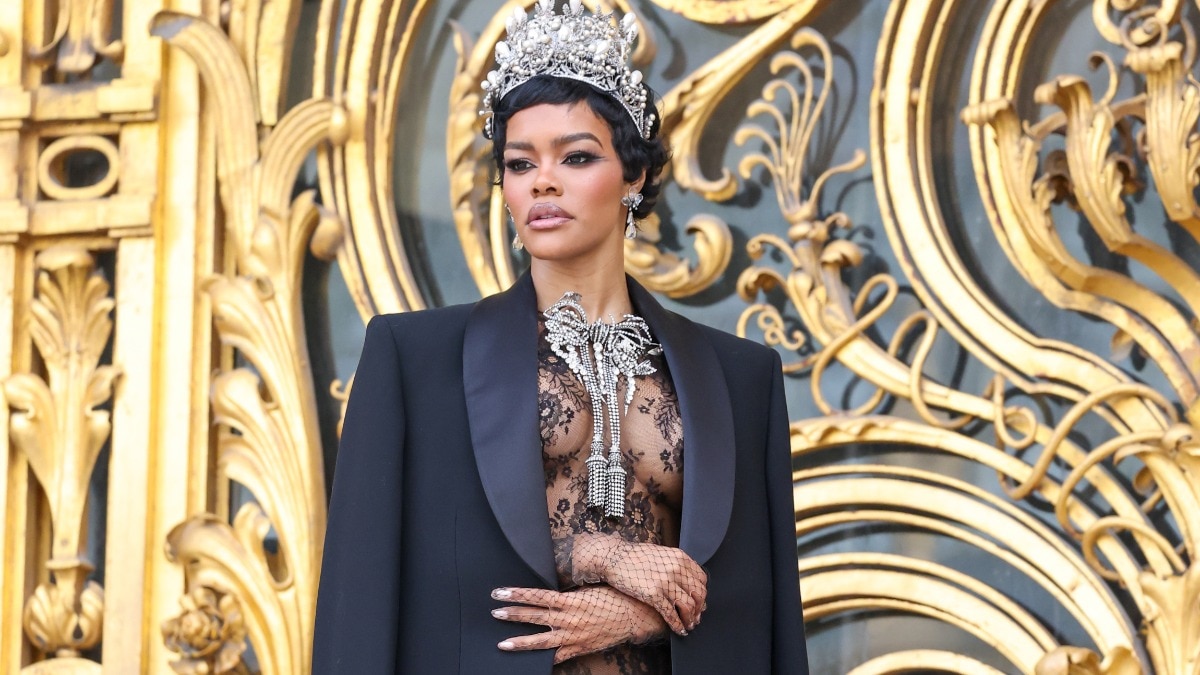
Hot on the heels of Paris Men’s Fashion Week AW26, anticipation for women’s haute couture is already at a fever pitch. Across the city’s historic salons and gilded venues, storied maisons like Dior and Chanel, couture stalwarts including Schiaparelli and Robert Wun, and Indian couturiers Rahul Mishra and Gaurav Gupta are set to return with their most ambitious visions yet–couture as fantasy, as rebellion, and as a reminder of why fashion, at its highest level, still matters. From gravity-defying constructions to embroidery that borders on the surreal, the season feels especially charged: a meeting point of legacy and reinvention, restraint and excess.
This edition is foreshadowed with brimming anticipation–major debuts, emotional transitions, and a growing shift toward broader global representation. All eyes are on Jonathan Anderson’s Dior couture debut and Matthieu Blazy’s first haute couture outing for Chanel. The season also marks a historic moment for Armani Privé, as we’ll see the house presenting for the first time without the late Giorgio Armani. There’s also a heightened sense of expectation surrounding Alessandro Michele’s vision for Valentino, following the recent passing of founder Valentino Garavani.
Below are the hottest moments from Paris Haute Couture Week Spring-Summer 26.
Schiaparelli
Schiaparelli didn’t just open couture week–it cracked it wide open. Titled The Agony & The Ecstasy, Daniel Roseberry’s latest collection was an emotional exhale, sparked by a visit to the Sistine Chapel, and realised through a symphony of heavenly feathers, flowers and tulle. Inside the Petit Palais, where the likes of Demi Moore and Carla Bruni took their seats, Roseberry unleashed a flight of fantasy where nature came alive. Models emerged in razor-cut blazers with cathedral-high feathered collars, scorpion tails arcing over their heads, and avian gowns blooming in tulle, resin and crystal. Standout pieces– like the Elsa jacket, its collar unfurling into a wing–felt less like clothing and more like emotion made tangible. One standout blue gown alone required 8,000 hours of work, 27 shades of blue, and an astonishing 65,000 faux feathers. Alex Consani walked in a feather-and-lace peacock-inspired gown. Couture, Roseberry reminded us, isn’t meant to be worn daily. It’s meant to be felt–viscerally, unapologetically, and without explanation.
Christian Dior
Dior’s couture debut under Jonathan Anderson unfolded like a poetic reset. On the front row, Rihanna, Jennifer Lawrence, Karlie Kloss, and Anya Taylor-Joy set the tone. The collection was softer, more playful, and deeply sentimental. Anderson went big with blooms: supersized silhouettes, 3D flowers, and tactile detailing that demanded a closer look. Inspired by a simple posy of cyclamen gifted by John Galliano, the collection bloomed into an exploration of flora, form, and feeling. Iconic Dior jackets were elongated and reimagined, pear-shaped floor-length gowns curved gently around the body, and conical silhouettes nodded to couture history with a lightness of touch. Nature appeared everywhere– painterly prints, green fringing, and jewel-like ladybug and bee bags. Watching from the front row was Galliano himself, taking it all in up close. Closing the show, Mona Tougaard emerged as the Dior bride in a flower-embellished white gown–romantic, hopeful and quietly joyful. It was Anderson’s Loewe-era whimsy, translated into Dior’s language, proving couture can still surprise.
Rahul Mishra
Rahul Mishra’s Alchemy unfolded at Paris Couture Week as a meditation on creation itself. Rooted in the Panchabuta– the five elements of Indian philosophy–and expanded through scientific ideas of space and time, the collection translated abstract thought into painstaking couture. Months of coordination between India and Paris, involving what Mishra described as “almost an entire village,” revealed themselves in garments dense with labour and intention. Signature protruding silhouettes shimmered with sequins and hand embroidery, structured forms blooming outward as if shaped by air and fire. Rather than literal references, Mishra offered hyper-real interpretations of nature–earth, water, heat and light rendered through texture, volume and craft. Classic yet continually evolving, Alchemy felt like a quiet assertion of Mishra’s worldview: couture not as spectacle alone, but as process, patience and belief–an invitation to slow down, look closer, and remember our place within something far larger.
Chanel
Blazy’s Chanel couture debut marked a reset. One hundred and eleven years after Gabrielle Chanel presented her first couture collection, the maison did the unthinkable: it stripped things back. Watching from the front row were Dua Lipa, Tilda Swinton and Nicole Kidman, seated inside a mushroomed, dreamlike set that echoed the collection’s airy mood. Blazy questioned whether Chanel could still feel like Chanel without its usual armour– tweed, buttons, excess. The answer came in sheer chiffon suits that felt like ghosts of the original, viscose and tweed moving in quiet harmony, raffia jackets, feather-embroidered fabrics, and bags as light as breath. It was sensual, restrained, and surprisingly modern. Closing the show, Bhavitha Mandava emerged as the Chanel bride in a white shell skirt suit– soft, confident, and utterly wearable. While there were some standout conventional couture looks, this was a collection that floated rather than shouted: the lightest Chanel collection in recent memory, and one of its most confident.
Gaurav Gupta
Gaurav Gupta’s collection titled ‘The Theory of Everything’ was rooted in the Indian philosophy of advait– the idea of an indivisible, non-binary reality. The show moved through time, space and spirit with Gupta’s signature sculptural precision.The runway opened with signature architectural gowns in liquid black, their sweeping volumes traced with stardust-like embroidery, before shifting into stark white column dresses that fractured into florals, scales, and high-shine surface work. Gupta’s precision with form was everywhere– cinched bodices exploding into curved, armour-like silhouettes, molten gold–effect bustiers created using specially cut Plexiglas sequins, and web-like lace developed through a new thread technique that mimicked energy flows. The standout finale gown was built from thousands of resin elements in iridescent, deep-space tones, shimmering with movement. Ethereal makeup looks by MAC Cosmetics added to the drama, with embellished faces blurring the lines between fashion and beauty. The collection was conceptually rich yet surprisingly wearable– and that’s what Gupta does best.
Armani Prive
Under Silvana Armani’s solo direction, we saw a subtle but significant shift. Leaning into restraint, wearability and ease, it was anchored by the season’s central hue: jade. The collection opened with masculine tailoring– silk cady palazzo pants sharply pleated up to ten times on each side, softened jackets stripped of structure, and lapel-less cuts edged with tubular glass beading. Fluid pants anchored much of the lineup, paired with organza shirts, neckties and delicate eyewear, while mesh knit sweaters and elongated tunics added a relaxed glamour. Eveningwear remained pared back in silhouette but rich in surface detail, with all-over crystals, bare backs and jade-toned embroidery referencing lanterns and bamboo fans. A rare black bridal gown, designed by Giorgio Armani himself, closed the show– a quiet tribute. Less about spectacle, this was couture grounded in clarity, control and unmistakable Armani elegance.
Elie Saab
Elie Saab leaned fully into jet-set fantasy for his SS26 couture collection, titled “Golden Summer Nights of ’71”. Set against a moonlit runway, the lineup channelled Seventies glamour through a sun-warmed palette of blush, bronze, molten gold and soft desert tones, punctuated by lilac and seafoam. Silhouettes felt fluid yet deliberate: deep V-neck gowns, asymmetric draping, dropped waists and sweeping capes, while fringe, skinny scarves and open waistcoats nodded to the era without tipping into costume. Shimmer was constant– sequins rippled across columns, crystal cascades spilled over bodices, and metal mesh caught the light like constellations. Narrow column skirts added structure and drama, underscoring impact over ease. The show closed with the Elie Saab bride in a beige-rose lace slip embroidered with stones and crowned in gold, ethereal and cinematic. With minimal makeup and softly undone hair, the focus stayed firmly on craftsmanship– opulent, nostalgic, and unmistakably Saab.
Valentino
Alessandro Michele’s “Goddess Worship” was at his most cinematic. Staged inside illuminated viewing boxes inspired by early cinema, the presentation invited the audience to linger— quite literally- on the clothes. Michele leaned into Old Hollywood and Art Deco glamour: bias-cut satin slips layered with velvet embroidered coats that pooled into dramatic trains, white chiffon capes dusted with silver geometric motifs, and black velvet kimono-style coats adorned with graphic florals. Ostrich feathers, rhinestone-encrusted headdresses, gold lame goddess gowns and sunburst-pleated crowns amplified the sense of spectacle, while nods to Erté and Ziegfeld Follies gave the collection a decadent, almost operatic rhythm. Watched by Kirsten Dunst and Dakota Johnson, this was couture unapologetically built for myth-making- lavish, escapist, and destined for the red carpet’s brightest moments.
Robert Wun
Robert Wun treated fashion as armour- literal, emotional, and unapologetically heavy. Staged against a backdrop of storm clouds and lightning, the show delivered sculptural looks built for battle: face-swallowing collars, crystal masks, exaggerated breastplates, knife-sharp shoulders and fishtail skirts that trailed like war banners. Materials pushed into the extreme: gowns that looked molten, metallic, almost 3D-printed, with surfaces encrusted in glass beads and crystals. The closing white bridal dress alone weighed nearly 92 pounds, embroidered with roughly three million beads, transforming tradition into endurance. Accessories veered into the surreal- cuff bracelets sprouting extra hands, aerodynamic headpieces, even swords piercing the body. Witchy, warrior-like and defiantly theatrical, Wun’s couture resisted softness or ease. In a season of lightness, this was fashion built to withstand impact- and to make it.
Lead image: Getty Images
Also read: Studded belts that instantly elevate basic outfits
Also read: What are all the cool girls wearing in 2026? A pair of boots, duh