




ADVERTISEMENT
Breguet at 250: A house that treats time as a craft
Two watches reveal the true meaning of Breguet’s 250-year celebration

Some invitations linger longer than others. A couple of months ago, I found myself boarding a flight to Paris for an almost unreal 48 hours, courtesy Breguet. Crisp December air, an after-hours visit to Versailles, and the promise of something rare unfolding after dark—it didn’t read like a typical brand engagement. And it wasn’t.
Breguet’s 250-year celebration was not another gala dinner or a fleeting moment of spectacle. It was a meditation on time itself—on endurance, evolution, and relevance. Founded in 1775 by Abraham-Louis Breguet, the maison is not merely a witness to horological history; it is its author. From inventing the tourbillon to creating the first wristwatch for Marie-Antoinette, Breguet has shaped the language of watchmaking for over two centuries.
Yet what defines Breguet today is not nostalgia, but momentum.
A NIGHT AT VERSAILLES: WHERE HISTORY BREATHES
Versailles after dark felt cinematic. Moving through marble corridors and glittering chandeliers, I wandered in rooms once inhabited by queens and kings—the Queen’s Bedroom in particular, with its ornate tapestries and exquisite detailing, serving as a reminder that true craftsmanship transcends time.
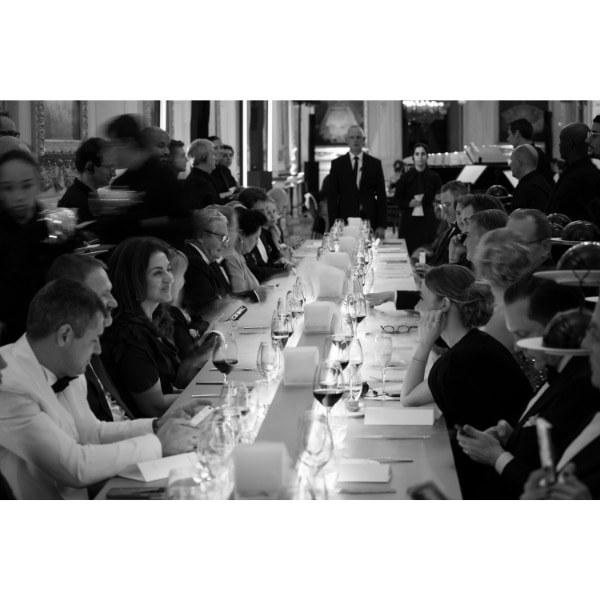
Live performances filled the palace, blurring past and present. Dinner followed—intimate, indulgent, and unexpectedly candid. Over a conversation with Gregory Kissling, CEO of the brand, the message was clear: Breguet is no longer looking backwards. It is among the most dynamically evolving Houses in high watchmaking—embracing technology, advanced materials, and experimental design while fiercely protecting its codes.
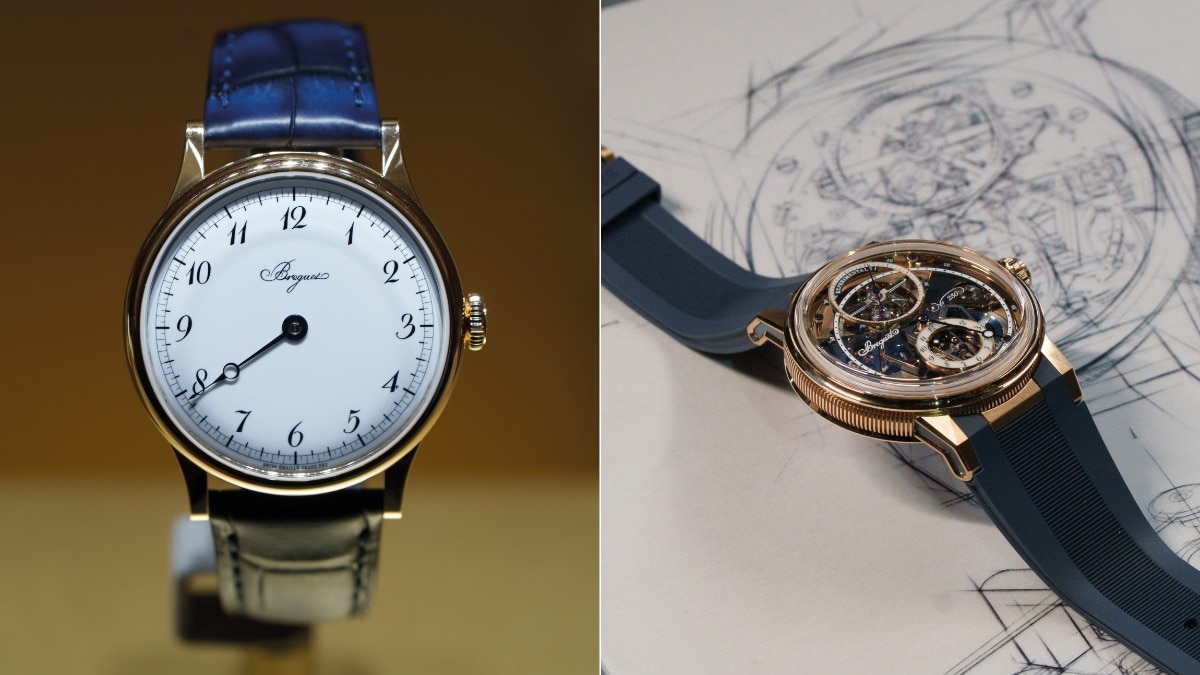
That duality came into focus through two very different watches: the Classique Grande Sonnerie 1905 and the Expérimentale 1.
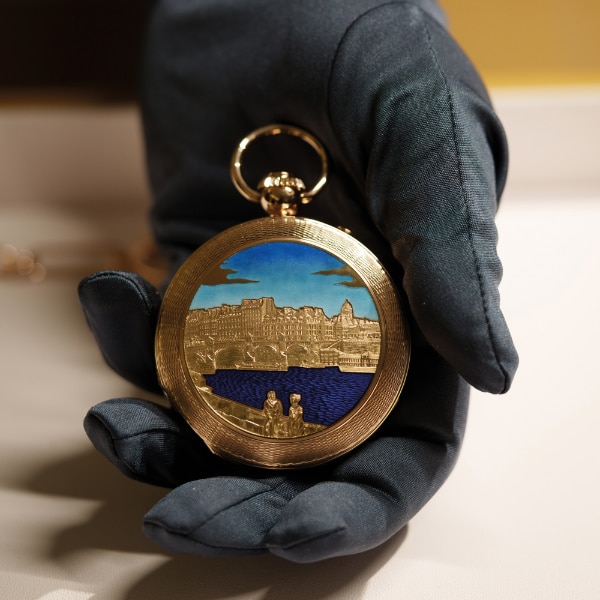
The Classique Grande Sonnerie Métiers d’Art 1905 is the penultimate creation of Breguet’s 250-year celebration—and one that quite literally took my breath away. A highly complicated pocket watch, it brings together some of the maison’s most important inventions, pairing centuries-old métiers d’art with the capabilities of its modern manufacture.
A grande sonnerie complication, enhanced by Breguet’s magnetic strike governor and gold gongs, sits beneath hand engraving and flinqué enamel. Encased in nearly 60 mm of Breguet Gold, the case features the Quai de l’Horloge guilloché, inspired by the historic Turgot map of Paris, finished with Bleu de France grande feu enamel and the signature Breguet “B”.
The emotion extends beyond the watch itself: it is presented in a box crafted from the last reserve of Marie-Antoinette Oak, sourced from Versailles, accompanied by a resonance box of spruce from the Risoud forest near Breguet’s manufacture. History, distilled.
If the 1905 honours the past, Expérimentale 1 defines the future. Conceived as a research-driven platform, it reimagines Breguet’s principles—precision, legibility, and mechanical intelligence—through a distinctly contemporary lens.
Architectural construction, advanced materials, and experimental design come together without reliance on nostalgia. Instead, Expérimentale 1 positions technology as a creative partner, reaffirming that innovation has always been central to Breguet’s identity—only now expressed with new confidence.
Together, these two watches reveal the true meaning of Breguet’s 250-year celebration. If the Classique Grande Sonnerie 1905 is a love letter to Breguet’s past, the Expérimentale 1 is a manifesto for its future.
All images: The brand
This article first appeared in the January 2026 issue of Harper's Bazaar India
Also read: The Devil wears Dolce & Gabanna, Balenciaga, and Chanel
Also read: Why fashion can’t quit broderie anglaise
ADVERTISEMENT
Must Read





ADVERTISEMENT