




ADVERTISEMENT
Inside Jaipur’s 'PDKF Artisan Collective' and the women rewriting craft
A platform that shifts Indian craft from tradition to transformation, led by women across generations.

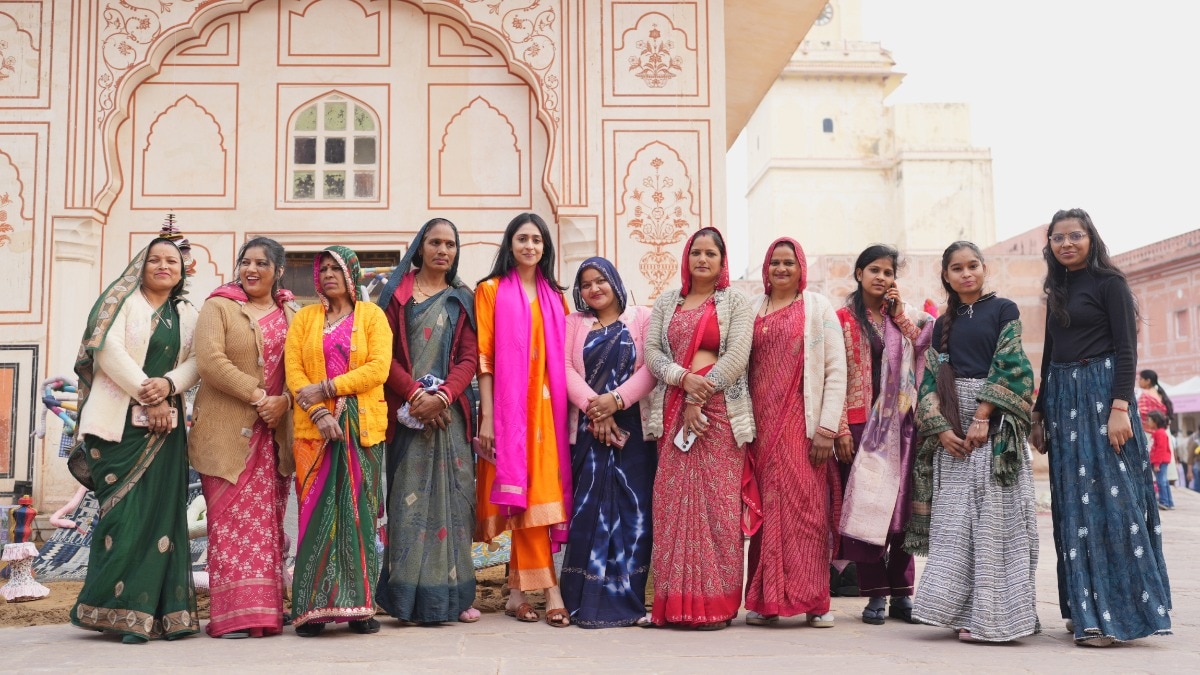
Jaipur, better known as the Pink City, has long been India’s beating heart of craft, colour, and cultural memory. Its lanes carry centuries of textile traditions, artisanal knowledge, and design language that continues to shape how Indian craftsmanship is seen across the world. It feels only fitting, then, to experience the 'PDKF Artisan Collective' in Jaipur, a gathering that brings together women-led craft, contemporary dialogue, and a renewed sense of purpose. Attending the collective, one senses an urgency to move craft beyond preservation and into progress, positioning it firmly within today’s cultural and economic conversations.
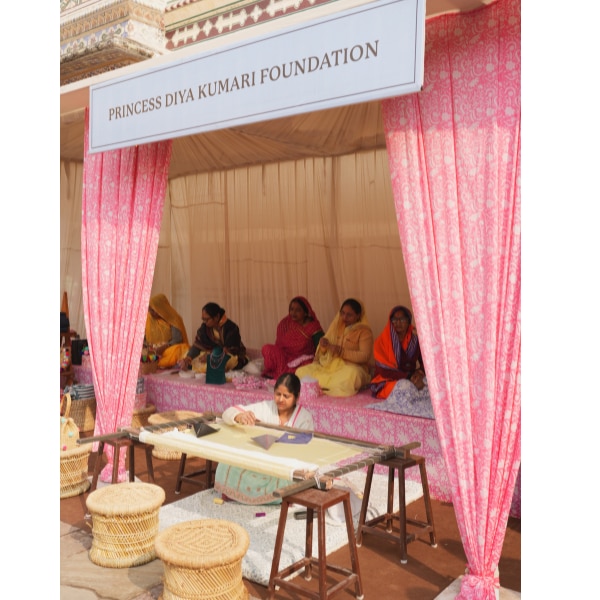
At the centre of this vision is the Princess Diya Kumari Foundation (PDKF), a Rajasthan-based non-profit that has quietly but powerfully redefined what grassroots empowerment can look like. One of my personal favourites, and a cult name for good reason, the PDKF has spent years nurturing social entrepreneurship by training hundreds of women in income-generating skills, forming self-help groups, and linking them to government support systems. From stitching and handicrafts to education, health initiatives, agricultural awareness, and long-term skill-building, the foundation’s work focuses on creating livelihoods that foster dignity, independence, and sustained opportunity. The Artisan Collective feels like a natural extension of this mission: a space where impact meets visibility, and where women artisans step forward not just as makers, but as leaders of their own narratives.
The Collective
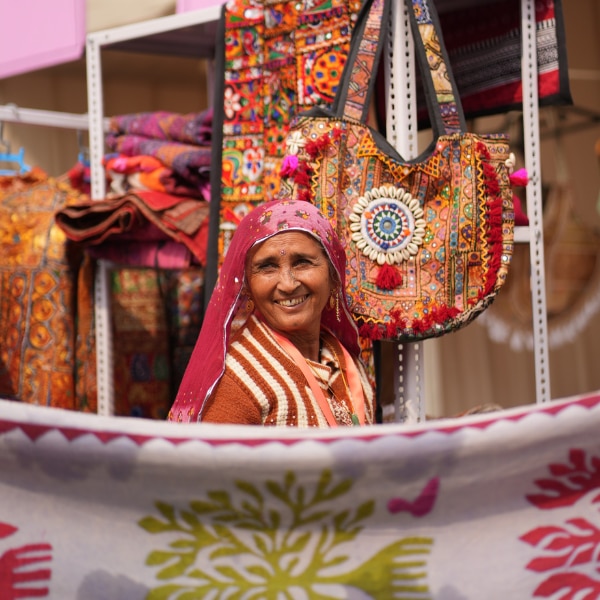
Held from January 23 to 25 in Jaipur, the second edition of the PDKF Artisan Collective brought together over 70 women artisans, representing more than 40 craft forms from 20+ states across India. But this was not a marketplace alone. It was tasteful; a platform where heritage met contemporary thinking, and where craft was framed not as nostalgia, but as an evolving economic and cultural language.
The programme unfolded through conversations, performances, and immersive experiences, ranging from discussions on blending business and craft with industry voices like Neeta Lulla and Akanksha Arora, to reflections on the future of Indian craft with Dr Toolika Gupta and Priyamvada Golcha. Performances by artists such as Tripti Pande, the Flute Sisters, Zoya Bhargava, and Lisa Mishra added rhythm to the narrative, while workshops like ghoomar and heritage craft styling grounded the event in lived tradition. Each element reinforced the same idea: craft thrives when it is allowed to adapt, converse, and be seen.
In conversation with Princess Gauravi Kumari
Harper's Bazaar: What sparked the idea behind the PDKF Artisan Collective, and why did it feel important to create a platform centred on artisans at this moment in time?
Princess Gauravi Kumari: I’ve been working with the Foundation for a few years now, and it’s been incredibly inspiring to see how our women artisans have grown—not just in skill, but as a community that supports one another. That sense of shared purpose and strength became the inspiration behind the PDKF Artisan Collective. We wanted to create a platform that would bring together women artisans from across the country in the same spirit, giving them not only visibility but also a network of peers, collaborators, and champions who could help each other thrive.
While Indian craft is celebrated globally, the women behind it often remain unseen and unsupported. This felt like a moment where we needed to move beyond admiration and into action, towards creating platforms that offer access, dignity, and long-term opportunity. Through PDKF, the collective became a way to reframe craft not as nostalgia or luxury alone, but as a living economic and cultural force led by women who deserve visibility, agency, and authorship over their work.
HB: What aspect of this gathering—where women, craft, culture, and fashion intersect—feels most meaningful to you personally?
PGK: What feels most meaningful is the shift in perspective. When women artisans are placed at the centre of conversations that include fashion, culture, and design, the narrative changes, from consumption to collaboration. Seeing women speak confidently about their work within spaces that have traditionally excluded them is incredibly powerful. For me, the collective represents a moment of recognition, where craft is no longer peripheral, but integral to how we imagine contemporary culture.
HB: Women artisans are often the invisible backbone of Indian craft traditions. How does PDKF aim to shift visibility, agency and authorship for these women?
PGK: At PDKF, we are very conscious of not speaking for artisans, but creating spaces where they can speak for themselves. Visibility, in our view, is not just about exposure; it is about context, credit, and continuity. By foregrounding women as entrepreneurs and cultural contributors, we encourage ownership of process, pricing, narrative, and legacy. The collective is designed to support that transition, where women move from being anonymous makers to recognised decision-makers within their own craft ecosystems.
HB: When people leave the PDKF Artisan Collective, what is the one feeling or understanding you hope they carry with them beyond the event itself?
PGK: I hope they leave with a sense of responsibility. An understanding that craft is sustained not by admiration alone, but by conscious choices, how we buy, who we support, and what stories we choose to amplify. If visitors walk away recognising women artisans as contemporary creators and entrepreneurs, then the collective has done its work.
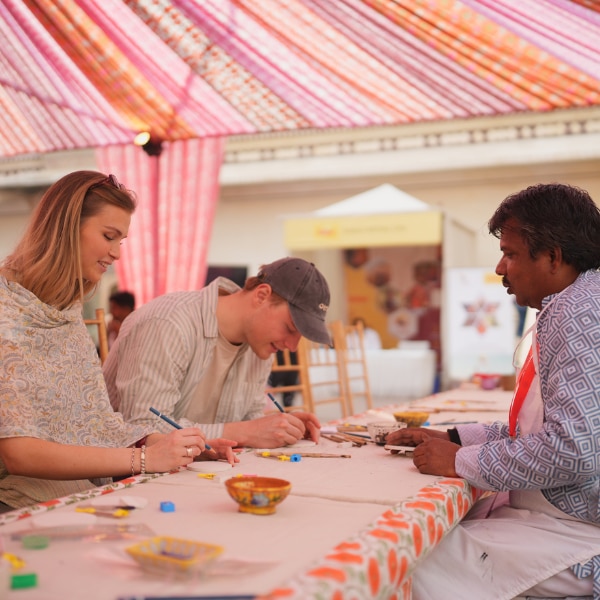
Leaving the PDKF Artisan Collective, that sense of responsibility lingered with me. In a world quick to consume craft as aesthetic, this gathering asked us to pause, to acknowledge the women behind the work, their labour, their leadership, and their futures. What PDKF has built in Jaipur is not just an event, but a framework, one where craft is valued as authorship, community, and livelihood. And in that reframing, the future of Indian craft feels not only secure, but powerfully, purposefully female.
All images: PR Pundit
Also read: The fashion era that was 2016, explained
Also read: Sophisticated, cool, and anything but trendy—here is the fashion news we can’t stop talking about
ADVERTISEMENT
Must Read
ADVERTISEMENT