




ADVERTISEMENT
What happened to Indian sitcoms? The rise and fall of TV comedy
The Indian sitcom, once bringing families together, has vanished from the silver screen. Where did our humour go?

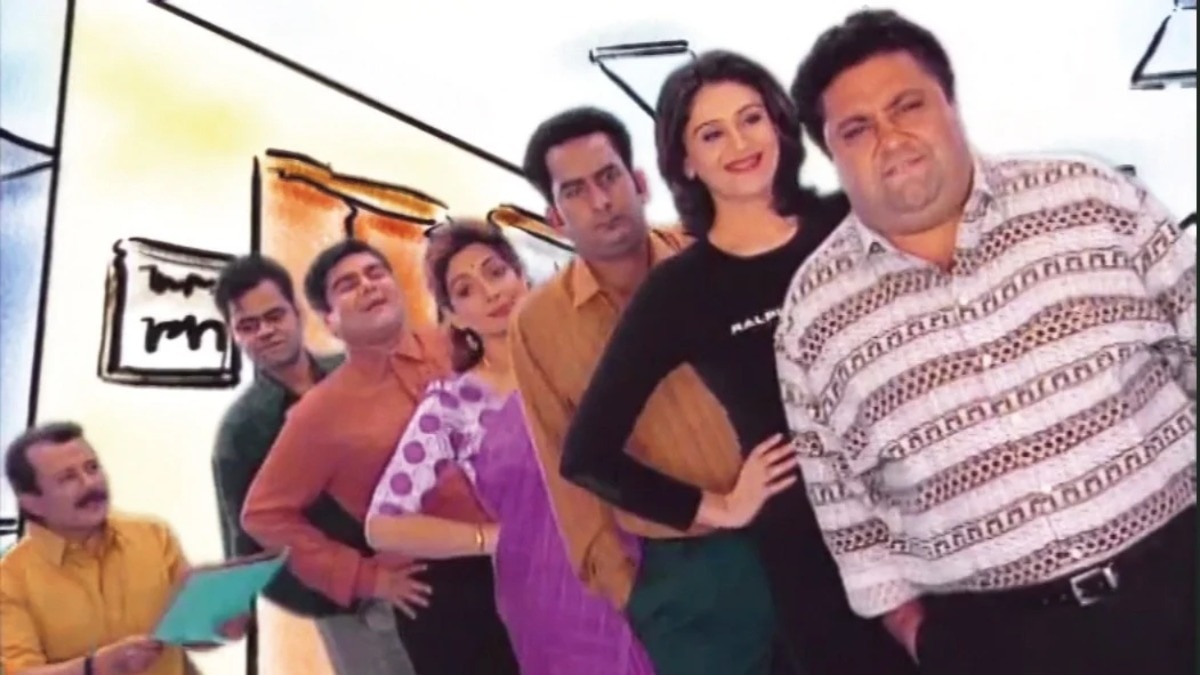
There was a time when we were all on TV. Maybe you saw yourself in Kajal bhai, the tomboyish sister from Hum Paanch (1995-1999); or recognised your own stern grandfather in Khichdi’s (2002-2004) grumpy Babuji. Watching Sarabhai vs Sarabhai (2004-2006), the sharp-tongued Maya, clad in designer blouses, probably triggered memories of that snobbish aunty you only see at family parties. And it’s likely you sympathised with the harrowed Musaddilal—played memorably by veteran actor Pankaj Kapur in Office Office (2001-2006)—as he dealt with sleazy corrupt officials, bizarre schemes, and exhausting red tape in various public offices.
These characters represented the common man, the relatable, often hilarious friction of daily life, the numerous people we cross paths with every day: from the rude department store owner in Yeh Jo Hai Zindagi (1984) to the stingy landlord in Idhar Udhar (1985-1998). It’s why internet users still resonate with them, squealing with delight at the continued relevance of Monisha’s endless bargaining and Hansa’s stubborn refusal to do any chores. “Best era of Indian television: 1990-2010,” a Reddit account declares. And it really was.
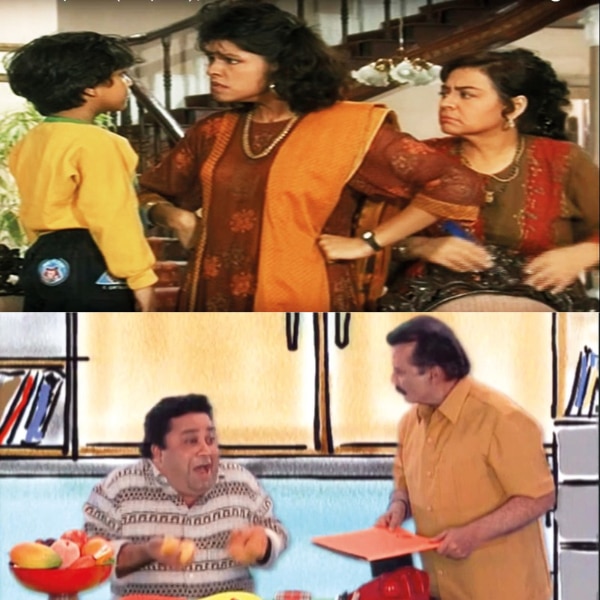
These were family shows, to be watched together on TV every evening. There was an intimacy to them—like visiting your best friend’s home and quietly observing their younger brother do homework while their Dadi is glued to an Ektaa Kapoor soap. In Dekh Bhai Dekh (1993-1994), two siblings fight over a shirt, then fangirl over a newly-released SRK film. In a scene that could have been written today, their grandmother worries about the amount of trees being chopped down across India, and a high-rise replacing a children’s park. Scathing satires like Sarabhai vs Sarabhai and Office Office also remain fresh 20 years later, their borderline outlandish plotlines highlighting the absurdities of how we live: the hierarchies, hypocrisies, and social norms we never question. “This episode is dedicated to those corrupt officials whose selfish interests have inspired us to turn to art,” begins Flop Show (1989).
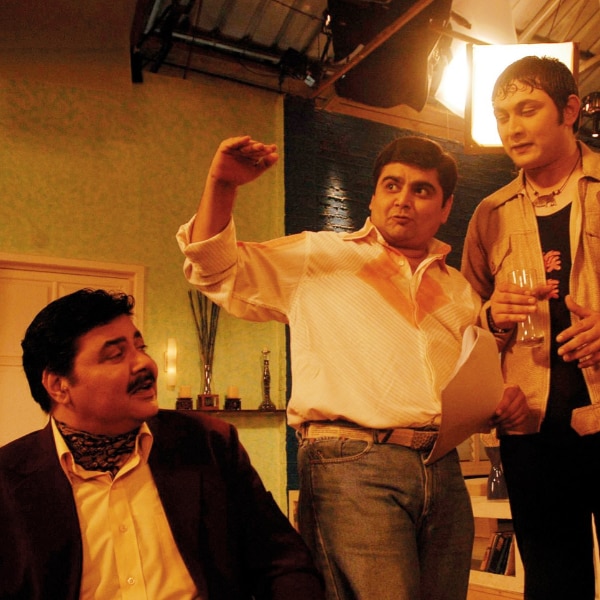
Take Maya, starting her day with a hunger strike against the rising prices of foodgrains and following it up with breakfast, salad lunch, a chocolate exhibition, and cocktail dinner. In Office Office, a city morgue comes up with a creative solution to remedy the abundance of unclaimed corpses: if you claim a body, you get another completely free. Actor Deven Bhojani—who starred in countless acclaimed sitcoms but is best known for his iconic roles as gadget-freak Dushyant (with the catchphrase “I’ll explain”) in Sarabhai vs Sarabhai and the childlike Gattu in Baa, Bahoo aur Baby (2005-2010)— recalls the light atmosphere on these sets. “While filming daily soaps, you sometimes never even got to meet your co-stars because everyone would shoot their scenes separately,” he reveals. “But because these comedies had multi-camera set-ups, it was important for the cast to rehearse and be in tune with each other.”
As a child, I knew the moment Bhojani appeared on screen that a show was to be trusted. What I didn’t know was that he was equally proficient behind-the-scenes, director of Sarabhai vs Sarabhai and creative director of Instant Khichdi. “I was a strict director because I believe comedy is serious business. The audience must laugh even if we don’t,” the 56-year-old opines. In addition to the stellar casting, he points out that the warmth of these sitcoms made them such timeless classics: to this day, they can be rewatched again and again. “Of course this isn’t how people talked at home, but we loved to imagine how fun it would be to talk like this, live in a family like this,” he shares. “These situations were relatable and the characters could be identified with. I think that’s why people are still so nostalgic—such slice-of-life comedies are very rare today.”
Despite wracking his brains, media analyst Karan Mirchandani can hardly name any recent sitcoms created as thoughtfully as these comedies once were. Instead, intelligence is now equated with seriousness, OTT platforms oversaturated with the grander narratives of crime dramas and mythological thrillers. It seems the ordinary Indian has vanished from the silver screen. And while many believe audiences are to be blamed for this—Gen Zs labelled easily offended, media dumbed down for those doomscrolling while watching— Mirchandani considers another reason: “Writing comedy is deceptively difficult and while you do manage to get away with a lot under the garb of humour, more than you would in a drama, I think there’s a real fear of punching up at the wrong people that would not take it well or shut it down immediately.”
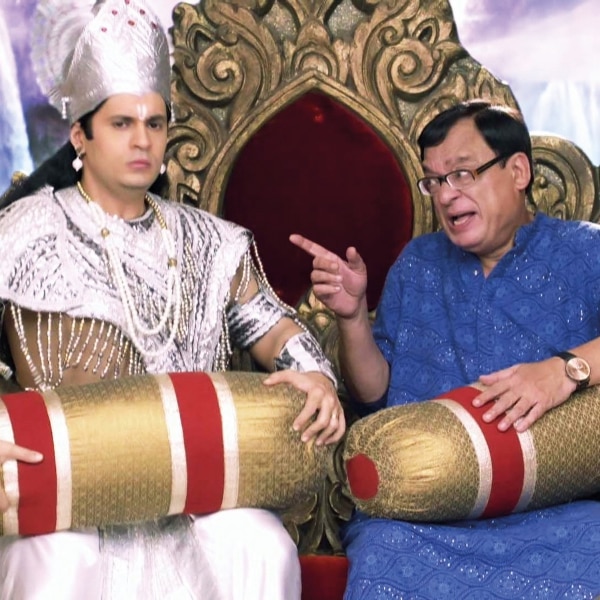
But the point of comedy has always been subversion, to draw attention to the uncomfortable truths of life— whether this is through satirising the average Indian’s experience of trying to get a loan, or by recognising ordinary people’s day-to-day existence as worthy of depiction. This is why humour is often the first thing to be quelled in oppressive regimes, why women are discouraged from laughing too loudly, why political cartoons have all but disappeared from newspapers and stand-up comedians across the country are being slapped with legal notices. It’s also why everywhere you looked during the recent nationwide youth protests, there was a meme, a reference, an irreverent joke: from a bottle gourd with ‘Dick-tatorship’ scrawled across it to Salman Khan’s viral ‘It’s done, bro’.
“Comedy has always been a tool for the powerless to challenge the powerful; it is discouraged in Indian systems because it’s the opposite of obedience,” notes Maithili Ganjoo, media researcher who has spent decades studying the genre in India. “Laughing makes the other person angry because laughter is an act of equality.” And while things have been dire for the last decade—if I see Kapil Sharma make a transphobic joke one more time, or hear another boring man from Taarak Mehta Ka Ooltah Chashmah yell at his wife, I swear I’ll scream— change seems to be coming.
“The early season of Panchayat (2020-) was a great balance of sharp critique and a low-stakes comfortable watch,” says Mirchandani. Most recently—in the span of just one month—family comedies Chumbak (2026) and Matargashti (2026) have come out on Netflix, featuring the same legendary actors who practically carried comedy on their backs in the 2000s. “The response we’ve received makes it clearer than ever that audiences are yearning for shows like this,” Bhojani concludes. So once again, the ordinary human seems to be clawing their way back onto TV—and into our hearts.
Artworks: Trushieta Naringrekar; Images: Courtesy Getty Images
This article originally appeared in Harper's Bazaar India's November 2026 print issue.
Also read: Into the many worlds offered by coffee-table books
Also read: The female gaze versus the male gaze: Who gets to decide what's desirable?
ADVERTISEMENT
Must Read




ADVERTISEMENT