




ADVERTISEMENT
Milan fashion week SS27: The shows making their mark this season
From Prada and Gucci to Bottega Veneta and Dhruv Kapoor, Milan Fashion Week SS27 brought together fresh perspectives, evolving house codes, and defining moments for the season ahead.

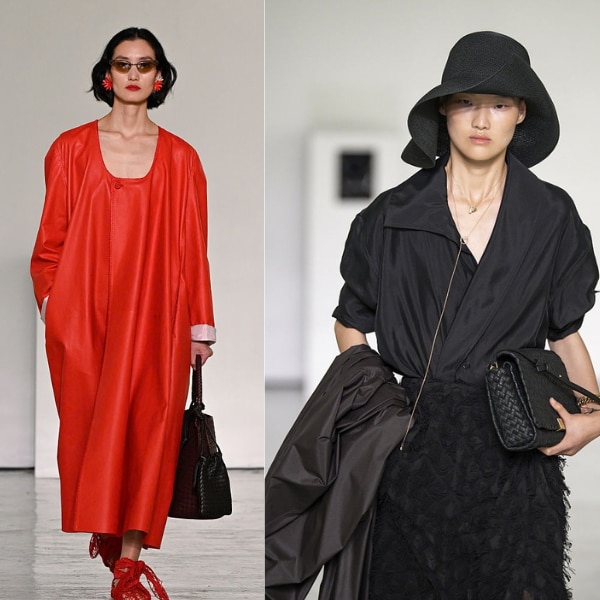
Milan Fashion Week has always had a particular way of balancing the familiar with the unexpected. For Spring/Summer 2027, that tension felt especially pronounced. Running from September 22-28, the season brought together some of Italy’s most established houses alongside designers continuing to define their place within the fashion landscape. Prada opened the week, while Giorgio Armani closed it, with Fendi, Gucci, and Bottega Veneta among the houses developing their latest creative chapters.
Designers used concepts of the body, movement, memory, and craft to examine the wardrobe in different ways. While some broke down familiar codes and took a new tack, others returned to recognisable house signatures. Here are the shows and collections that defined Milan Fashion Week SS27.
Prada: The skirt takes centre stage
Miuccia Prada and Raf Simons centred Prada's Spring/Summer 2027 collection on a single, deceptively straightforward item: the skirt. From pleated and A-line forms to embellished and layered variations, the collection explored the garment through different lengths, proportions, fabrics, and treatments across 63 looks.
Prada made the skirt the focal point of each ensemble rather than treating it as a supporting piece. Its character shifted depending on what it was paired with, appearing alongside knitwear, shirts, bra tops, and outerwear. The result was a collection that transformed an everyday wardrobe staple into an exploration of proportion, styling, and individual expression.
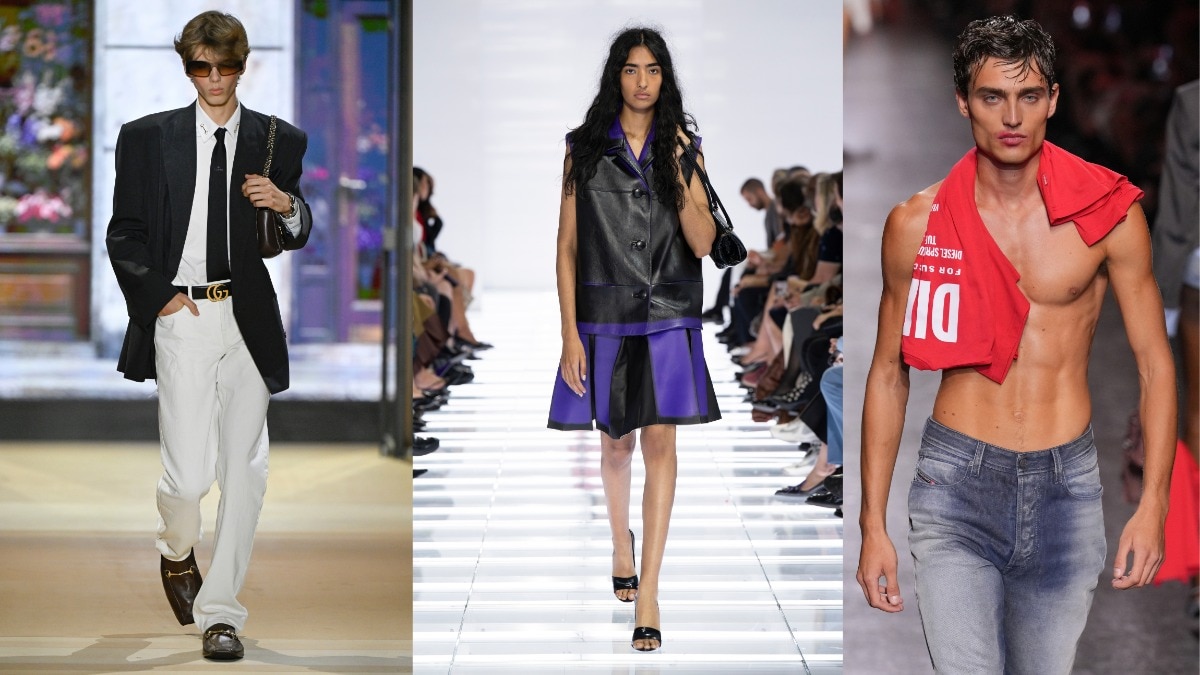
Diesel: Glenn Martens signs off
Spring/Summer 2027 marked Glenn Martens’ final collection for Diesel after six years at the brand. His farewell brought together many of the signatures that have defined his tenure: distressed denim, hybridised garments, experimental surfaces, and a deliberately undone attitude.
Denim was coated and laser-treated to resemble leather, while knits, polos, shirting, and tailoring appeared partially unravelled or reconstructed. T-shirts and sweatshirts were reduced almost to fragments, reinforcing the collection’s interest in transformation. It was a fitting final statement from a designer who spent his time at Diesel pushing the boundaries of what the brand’s denim vocabulary could become.
Fendi: Fashion looks to the body
For her second Fendi ready-to-wear collection, Maria Grazia Chiuri explored the relationship between clothing and the body. Lingerie-inspired pieces, lace, sheer fabrics, bralettes, slips and tailored outerwear came together in a wardrobe that moved between exposure and concealment.
The presentation itself reinforced the idea. Models walked inside a mirrored structure inspired by Luciano Fabro’s Cubo di specchi, meaning the audience saw both the clothes and their own reflections as the collection passed by. On the runway, lace-trimmed shorts, bralettes and silk pieces sat alongside sharply tailored jackets, fur and embellished Baguettes.
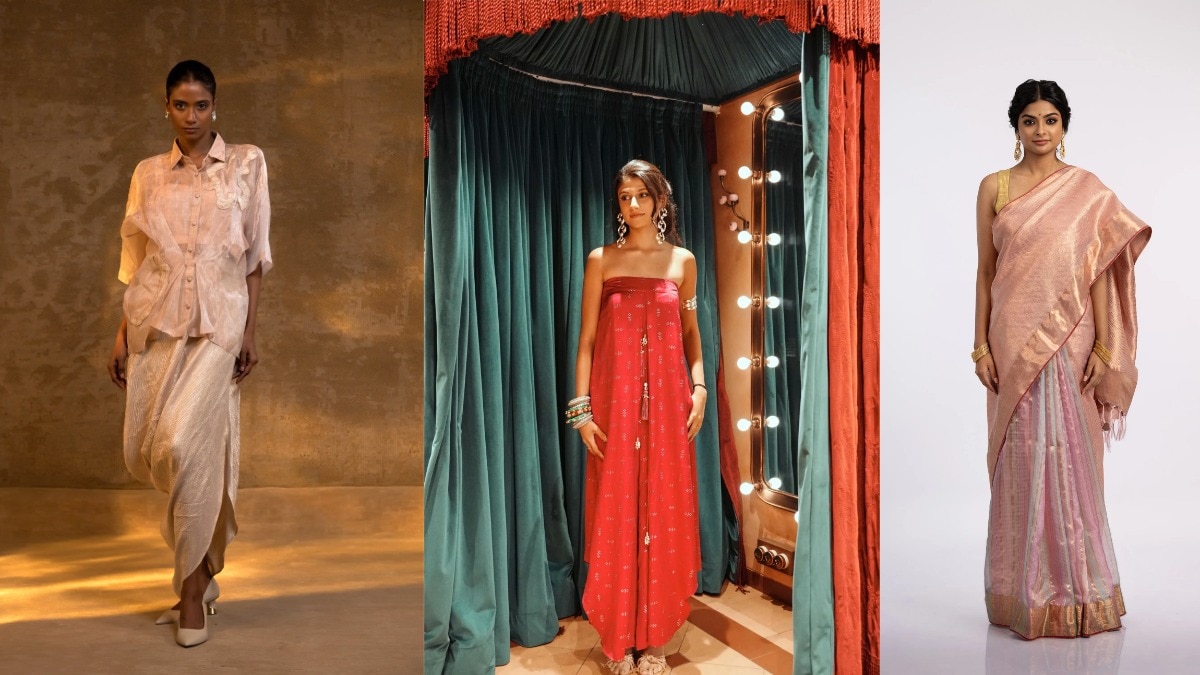
Dhruv Kapoor: A moment to be present
Indian designer Dhruv Kapoor brought a distinctly personal perspective to Milan with Presence, a collection centred around stillness, awareness, and the idea of living in the present. Following his earlier exploration of movement and transit, Kapoor shifted his attention towards what happens when that movement stops.
The collection moved between floating silhouettes and fitted forms, sun-faded colours and saturated tones, tailoring and draping. Indian references, including lungis, vests and saris, were reworked rather than reproduced literally, while layered textiles, weathered surfaces and reconstructed proportions gave familiar forms a contemporary edge. The collection also incorporated the PUMA x RCB x Dhruv Kapoor collaboration, bringing sportswear and Indian cricket culture into his Milan vocabulary.
Missoni: Dressing for movement
At Missoni, Alberto Caliri looked at the idea of the nomad—not necessarily through travel, but through constant movement and possibility. The collection took cues from the late Rosita Missoni’s instinct for dressing comfortably while retaining a sense of eccentricity.
Fluid dresses, balloon trousers, low-slung pants, peignoirs, chenille pieces, and drawstring details created a relaxed wardrobe designed to be added to and taken apart. Missoni’s familiar stripes and geometric patterns appeared looser and more frayed, while unexpected combinations such as thick socks with delicate sandals reinforced the collection’s easy, instinctive approach to dressing.
Onitsuka Tiger: A trip down Route 66
Onitsuka Tiger took a detour from its Japanese roots into an imagined American road trip for Spring/Summer 2027. Andrea Pompilio transformed the runway into a sprawling roadside environment complete with a car wash, flower shop, laundry, café and supermarket surrounding an Onitsuka Tiger gas station.
The clothes followed the setting. Western-inspired tailoring, fringe, suede, check prints and floral dresses were combined with the brand’s athletic vocabulary. A collaboration with Honda introduced perforated leather miniskirts and shorts, alongside a reworked motocross uniform made from archival technical fabric. Even the footwear referenced Onitsuka Tiger’s Mexico 66, translated into knee-high lace-up boots and other updated silhouettes.
Roberto Cavalli: Back to the party
Fausto Puglisi leaned into Roberto Cavalli’s more decadent side for Spring/Summer 2027, looking back to archival codes while giving them a distinctly contemporary, after-dark energy. Animal prints, velvet devoré, embroidery, and bold separates dominated the collection.
Miniskirts, bike shorts, halter tops, hot pants, lace-trimmed camisoles, and low-rise denim made up a wardrobe that embraced a deliberately unapologetic approach to dressing. Puglisi also drew on references ranging from Courtney Love and Beverly Hills, 90210 to Cavalli’s own earlier work, resulting in a collection that embraced maximalism rather than toning it down.
Emporio Armani: Traces of time
Emporio Armani presented its Spring/Summer 2027 collection as Traces of Time, marking the final collection overseen by Leo Dell’Orco and Silvana Armani before Dario Vitale takes over the brand next season. Rather than a conventional runway, the collection was presented at Armani/Teatro in a gradual chromatic progression from white to black, moving through green, grey, and greige.
Tailoring remained central, with sharply cut suits, textured fabrics, and accessories that softened the formality of the silhouettes. The presentation became a fitting transition between eras for the house, with the collection reflecting both the continuity of Emporio Armani’s codes and the change to come.
Tod’s: A new take on the ’90s
For Spring/Summer 2027, Matteo Tamburini looked to the decade he grew up in — the 1990s — and translated its imagery, music and films into a contemporary Tod’s wardrobe. The collection played with the tension between sporty and formal dressing rather than choosing one over the other.
Tailoring was loosened, sportswear was refined, and familiar Tod’s codes were placed within a more youthful framework. The result was a wardrobe built around contrasts: formal pieces made less rigid, sporty elements made more considered, and classic house signatures brought into a more relaxed context.
Gucci: Demna continues the conversation
For his second Gucci ready-to-wear collection, Demna continued to work through the question of what the house should mean under his direction. The presentation took place inside a fully constructed Gucci store, complete with velvet seating and retail details, turning the show space itself into an extension of his vision for the brand’s future.
The collection followed several ideas Demna has been exploring since arriving at Gucci—the house’s past, its 1990s identity, the body-conscious direction of his debut and the idea of Gucci as a broader cultural language. Rather than treating each reference as a separate chapter, the collection continued his attempt to bring them into the same wardrobe.
Ferragamo: The surreal side of the 1940s
Maximilian Davis looked to Salvatore Ferragamo’s 1947 Invisible Sandal as the starting point for Spring/Summer 2027. From there, the collection drew on the world of Lee Miller, Man Ray, and the photographic technique of solarisation.
The 1940s influenced the silhouettes, particularly through defined waists and belted shapes, while Davis avoided turning the references into straightforward period dressing. Transparent silk-wool, rubber, draped fabrics, and cracked leather brought a sense of surrealism to the collection. Footwear remained particularly important, with the house’s F-shaped construction informing new pumps, wedges, sandals, and slingbacks.
Dolce & Gabbana: The family wardrobe, reimagined
Dolce & Gabbana called its Spring/Summer 2027 collection Stravaganza Siciliana, looking towards the idea of an inherited wardrobe rather than a perfectly coordinated contemporary one. Domenico Dolce and Stefano Gabbana imagined clothes being discovered across generations and combined instinctively—pieces from the 1920s, ’50s and ’70s existing together in the same wardrobe.
That approach translated into a collection with a broad mix of silhouettes and references. Instead of stripping back the house’s maximalist DNA, the designers allowed it to feel more youthful and spontaneous, bringing together different eras, proportions and styling ideas.
Bottega Veneta: Letting the light in
Louise Trotter’s third Bottega Veneta collection considered the transition between seasons — the gradual movement from protection and layering into the lightness of spring and summer. The result was a noticeably lighter interpretation of the house’s craft vocabulary.
Outerwear opened the show before giving way to vibrant pastels, handmade lace, crochet, fringe and large-scale intrecciato. Butter yellow, lilac and vivid red interrupted a largely neutral palette, while leather, woven accessories and sculptural jewellery kept the focus on Bottega Veneta’s artisanal identity. The collection demonstrated how the house’s signature craftsmanship could feel lighter without losing its sense of precision.
Giorgio Armani: A nocturnal finale
Giorgio Armani closed Milan Fashion Week with a collection presented under the creative direction of Silvana Armani. The show marked a new chapter for the house following the death of its founder, drawing on the sleek, nocturnal side of Armani’s visual language.
A white, Rubik’s Cube-shaped invitation hinted at the idea of rearrangement, while the runway itself took the form of an all-white, disco-inspired setting. Black liquid-silk tuxedo dresses, bustier-led evening looks, metallic details, and sharply controlled silhouettes brought a sense of evening glamour to the finale.
From Prada’s singular focus on the skirt to Dhruv Kapoor’s meditation on presence and Bottega Veneta’s exploration of lightness, Milan’s Spring/Summer 2027 collections shared an interest in looking at familiar fashion codes differently. Heritage, in this context, became less about looking backwards and more about finding new ways for established codes to live in the present.
Lead image: Getty Images
Also read: London Fashion Week SS27: The shows that deserve your attention
ADVERTISEMENT
Must Read

ADVERTISEMENT