





ADVERTISEMENT
Why Indian women are so obsessed with gold
Gold in India has long functioned as a form of financial autonomy for women, shaped by history and the patriarchy.

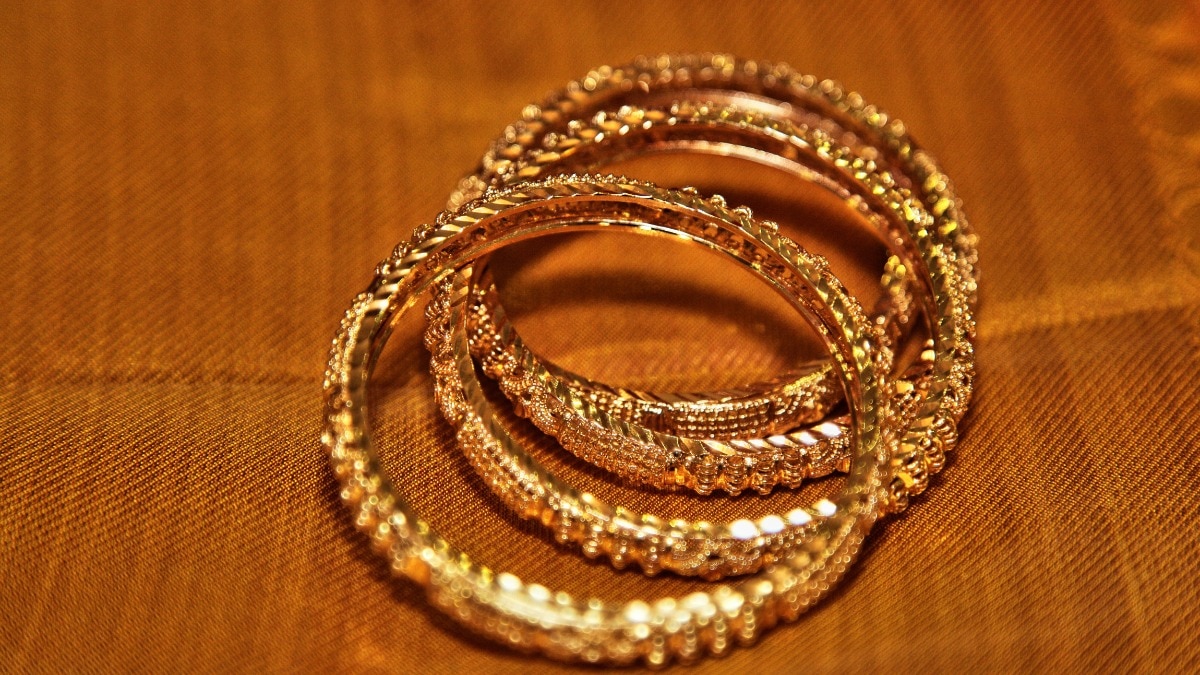
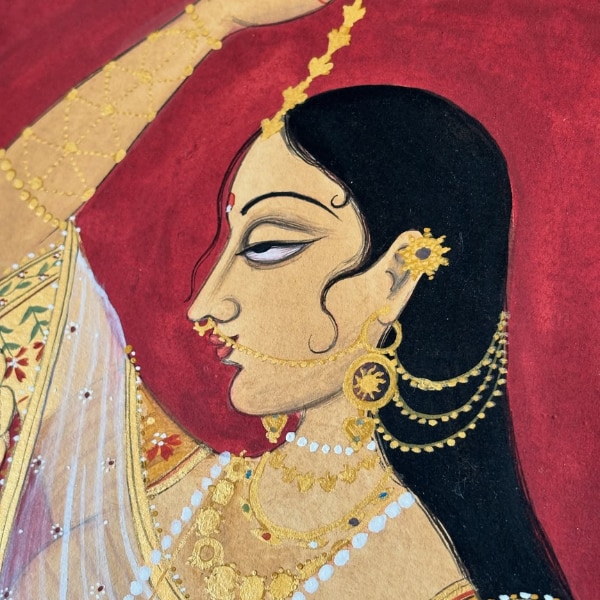
In the lives of Indians, gold is everywhere. It is layered onto a bride at her wedding, gifted during festivals and family milestones. It is even worn daily in the form of chains, rings, bangles or a pair of earrings that hardly ever come off. It moves through generations as heirlooms, and surfaces at moments that demand celebration. At any Indian wedding, gold is impossible to miss. It glints at the wrists, rests heavily along the neck, and is even woven into the very fabric of the occasion.
The deeply ingrained need for Indian women to collect gold, adorn themselves, and their daughters with it stems from a much darker reason than one might assume. Gold, for Indian women, was never just decorative. It was defensive.
Streedhan (Women's wealth)
Gold was one of the main forms of streedhan. The word itself tells you most of what you need to know. Streedhan joins two Sanskrit words, stree (woman) and dhan (wealth). It has been a part of Hindu law since the Smritis catalogued the kinds of property a woman could hold in her own right. In modern terms, streedhan is the property a woman receives before, at and after her marriage over which she has full ownership and control. Under Indian law, it serves as an essential financial safety net, entirely distinct from joint marital assets.
Historically, women held limited rights over inherited property. More so, the Indian patriarchal system was not in favour of women inheriting property at all. Streedhan breaks this pattern. A woman would have the unilateral right to sell, gift, spend or alienate her streedhan during her lifetime. She does not require the consent of her husband, father-in-law, or children to dispose of it. Gold, therefore, came to represent far more than adornment. It was one of the most accessible and enduring forms of financial security a woman could own outright.
The “Custodian” Issue
The brutality of an Indian household is often revealed to us by the stories shared by women. A young bride from Kerala handed over 89 gold sovereigns: a lifetime of her family’s savings, worked into the ornaments she wore to the mandap. Her husband took them “for safekeeping” and passed the lot to his mother. Within a few years the sovereigns were gone, quietly sold to clear the in-laws’ debts. That gold was her streedhan, while in law it was hers alone. When she asked for it back, she was refused.
Most women know the jewellery is theirs in some moral sense but have no idea which law protects it, which court to walk into, what proof they need, or whether it’s already too late. This is why most choose to simply have it on themselves at all times.

The Strategy of Wearable Wealth
For thousands of years, a woman's body was virtually the only territory she truly controlled. Turning wealth into heavy, wearable jewellery was a sophisticated workaround for a system that denied women independent economic existence.
Patriarchal succession laws globally, and specifically within old interpretations of the Hindu law, barred women from inheriting or owning immovable land. This was to ‘protect’ the male lineage, and keep familial empires intact. Sages and community elders recognised that women entering new marital homes needed security. Because they could not be given a piece of the family farm, they were given their inheritance in the most concentrated, portable format possible: high-purity gold.
A bride moving into a patriarchal joint-family home always faced immense vulnerability. By shaping gold into heavy bangles, anklets, and waistbands, a woman literally locked her wealth onto her person. Taking it from her required a physical violation, creating a severe social taboo. The items remained under her perpetual, literal custody.
Even well into the mid-20th century, formal financial institutions heavily discriminated against women. For generations, a woman could not open a bank account, take out a loan, or buy property without a father or husband's co-signature. Gold jewellery bypasses this entire power dynamic. It is a decentralised asset that ignores the state, the bank, and the patriarchy.
Emotional Inheritance
The strategy became sentiment. Mothers stopped explaining why they piled gold onto their daughters at weddings. They just did it, the way their mothers had done before them. A pair of earrings passed down from a grandmother carries no written instruction. And yet every woman who receives it understands that somewhere beneath the surface it means: this is yours. No matter what.
The 2005 amendment to the Hindu Succession Act, 1956 gave daughters equal inheritance rights over ancestral property; a seismic legal shift that should, in theory, have changed gold's role entirely. And yet it didn't.
Indian women today are among the largest consumers of gold in the world, holding an estimated 25,000 tonnes (more than the reserves of the United States, Germany, and the IMF combined). The reasons have evolved, but the impulse has not.
Gold does not need to be explained. It has simply always been the thing a woman could hold onto when everything else was uncertain. That may no longer be the whole truth. But it has not stopped being part of it.
All images: Getty Images
Also read: Meet the Indian fashion brands reimagining handloom for a new generation
Also read: Medallion necklaces are having a major fashion moment
ADVERTISEMENT
Must Read









ADVERTISEMENT