The brands winning right now all have one thing in common—and it’s not a filter
Point of view is the only thing you can't fake, and the only thing that lasts.

We chased perfection so hard we lapped ourselves. Now the grain is the point.
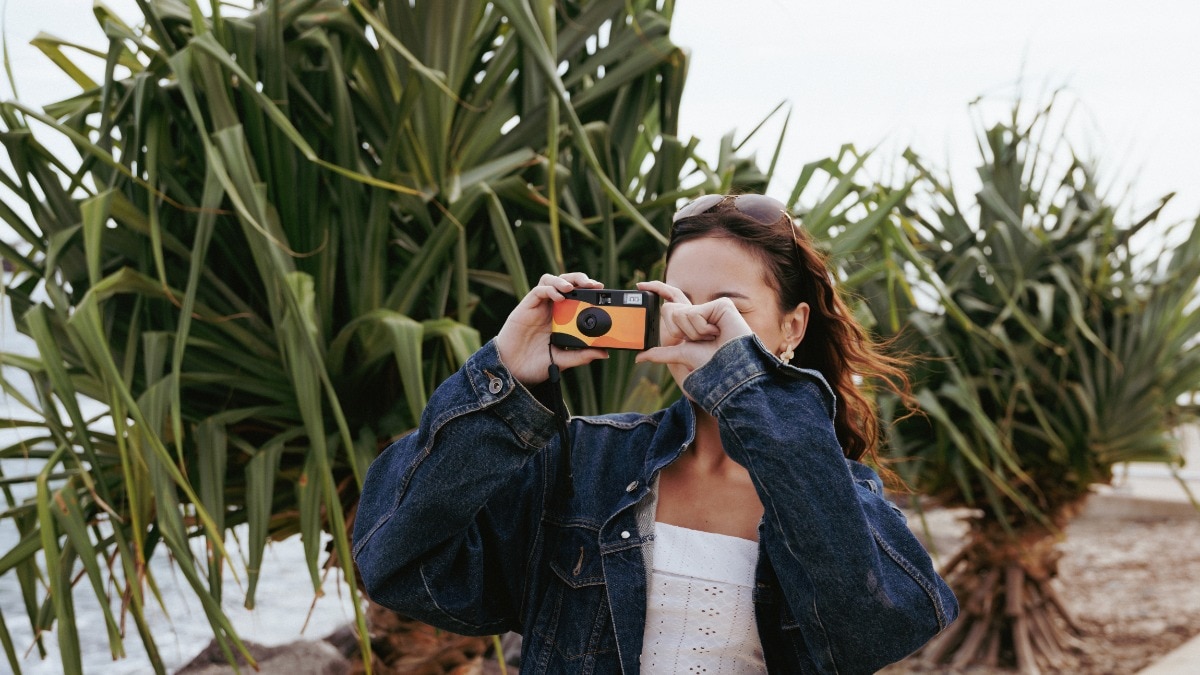
We spent the better part of a decade building the most sophisticated image-making technology in human history, and the collective cultural response was to reach for a disposable camera.
And I get it. I really do. Scroll your feed right now and tell me honestly what you see. Technically impeccable images. Obsessively lit. Surgically retouched. Algorithmically optimised to within an inch of their lives. Beautiful, every single one of them. Forgettable, every single one of them. By image four, your thumb is already moving, and you couldn't tell me what you just saw. This is what happens when everyone races to look premium: premium quietly stops meaning anything at all.
Then AI arrived and really finished the job. Entire campaigns, no humans in the room. Imagery that is correct in every measurable way and present in absolutely none. The pictures aren't bad. They're just not there. And audiences—far sharper than brands have ever given them credit for—felt it immediately. Even if they couldn't name what was missing.
So culture did what culture does. It shrugged and reached for something else.
Grain. Blur. The blown-out phone photo that looks like it was never meant to be published. The image that feels like evidence rather than content—evidence that a human was actually there. And brands, being brands, saw this happening and immediately started producing it at scale with a full production crew and a six-figure budget.
This is the part I find genuinely funny.
There is now an entire ecosystem dedicated to making things look unproduced. Photographers are briefed to shoot like they're not trying. Creative directors specify grain overlays with the same obsessive precision they once brought to retouching skin. The rawness has been rendered. The imperfection has been perfected. The chaos has been carefully choreographed. We have successfully industrialised authenticity—which is to say, we have produced its exact opposite.
Different costumes. Same game. The algorithm wins again.
Which brings us to Hailey Bieber and a pimple patch.
When Rhode launched, she didn't call a photographer. She picked up a phone. The campaign—shot casually, with her husband, in what felt like a real Saturday morning rather than a set—broke through precisely because it looked like something you weren't supposed to see. Yes, Justin Bieber being in the frame helped. But celebrity alone doesn't explain virality. Plenty of celebrity-adjacent brands flop spectacularly. What Rhode understood is that the product entering someone's real, unpolished, slightly chaotic life was the message. The phone camera wasn't a budget decision. It was a statement.
The same instinct drove the Mirror Palais La Piscine campaign: shot on a phone, drenched in that blown-out, overexposed light that feels like a stolen holiday memory. It didn't look like an ad. It looked like a reel from someone's private summer, something you stumbled onto rather than something placed in front of you. That distinction, stumbled upon versus placed, is everything right now. We are so accustomed to being marketed at that the moment something feels genuinely unmediated, we lean all the way in.
But here's the uncomfortable truth: Rhode works not because of the phone. It works because Hailey had been building a specific, consistent, genuinely personal world from the start, and the phone happened to be the most honest way to document it. The medium followed the message. Mirror Palais works because the brand actually lives in that dreamy, overexposed, nostalgic world: the visual language isn't borrowed from a trend deck, it's an extension of something already fully formed. You cannot fake that kind of coherence. You either have a world, or you don't.
The moment you reverse-engineer the format without the conviction behind it, audiences feel it. They always feel it. We just forgot, for a while, that they were paying attention.
Divya Saini of Bodements says it better than most strategy documents manage to: "Hyper-polished content, once aspirational, is now starting to feel distant and interchangeable. Professionally shot content still builds aspiration—but it's the raw, process-driven moments, the in-betweens, that build connection and trust." And then the line that should be printed and pinned above every creative director's monitor: "The shift isn't away from quality, but toward honesty." People are engaging more with work that feels like it has a point of view, rather than just a finish.
"A point of view. Not a filter. Not a format. Not a vibe sourced from Pinterest and briefed into a campaign as authentic-feeling." An actual opinion about what is beautiful and why—held consistently enough that it shows up in everything, without anyone having to think too hard about it. India, incidentally, has been sitting on this secret for a while. And doing it quietly, which is most of the point.
A handful of Indian labels never participated in the visual arms race to begin with. They had something specific to say, and they found the language to say it before anyone told them it was the right move. Which is, of course, exactly why it works.
Raw Mango doesn't make campaigns. It makes arguments. Every image Sabyasachi Mitra releases is a position, on craft, on beauty, on what Indian luxury actually looks like when it refuses to apologise for itself. The Sujan shoot. The Aurobindo Garden campaign. These aren't raw in the lo-fi sense. They're raw in the original sense: unmediated, direct, without apology. The technique is impeccable. The vision behind it is what makes the technique feel like it matters. Raw Mango's images don't just look handmade. They look like they come from somewhere. That specificity of origin is the thing no grain overlay on earth can replicate.
NorBlack NorWhite does something almost opposite and equally committed. The archival black and white, the grain that reads like memory, the studio mess and the shock of visible craft—it builds a world where you genuinely cannot tell if you're looking at an advertisement or a document. Amrit Kumar and Mriga Kapadia, the co- founders, remember exactly when social media lost the plot: "It was fun when platforms simply let us share process, work and ideas in an easy and raw form. Then, when it began getting commercial, everything started feeling polished, and that was overwhelming." Their answer wasn't to chase the algorithm. It was to refuse it entirely. "We just do what we want without a formula. If we feel like sharing a curated shoot, we do; if we want to share work-in-progress phone shots, we do." Half personal diary, half promo platform, entirely on their own terms. The algorithm has had to figure out what to do with them. It has.
And then there's Aashna Singh of Olio Stories, who puts the sharpest point on what this moment actually requires: "I don't think people are over beauty. I think they're over sameness. When everything is polished in the exact same way, it stops feeling real. " And the part brands keep missing: "What people enjoy now is seeing how something was made, not just the final result. The final image still matters, but it hits differently when you've seen the journey." That sentence should put an end to about fourteen creative briefs being written somewhere right now.
Here is the thing about the grey area that nobody really wants to say out loud: you cannot manufacture your way into it.
You can only arrive there by actually having something to lose—a real aesthetic, a genuine conviction, a world you've been building long enough that the visual language grew out of it, rather than being applied on top. Film photography is interesting right now, not because grain is trending, but because it signals time. The slight halation around a light source. The colours that don't quite behave. The grain that says: a human was here, made a choice, waited for a moment. It is the visual opposite of AI generation, which optimises everything out of the image, including any evidence that anyone was present at all.
The brands still worth looking at in five years won't be the ones that found the right format. They'll be the ones that had the right conviction and let everything else—the format, the platform, the campaign, the grain—follow from that.
Point of view first. Everything else is just texture.
And no. You cannot outsource the point of view.
Lead image: Getty
Also read: Not quite 'The Devil Wears Prada': What it’s really like to work at a fashion magazine
Also read: Masters of Indian art take centre stage in Mumbai