'The Devil Wears Prada 2' finds new rules in a collapsing old world
Hell hath no fury like two women scorned.

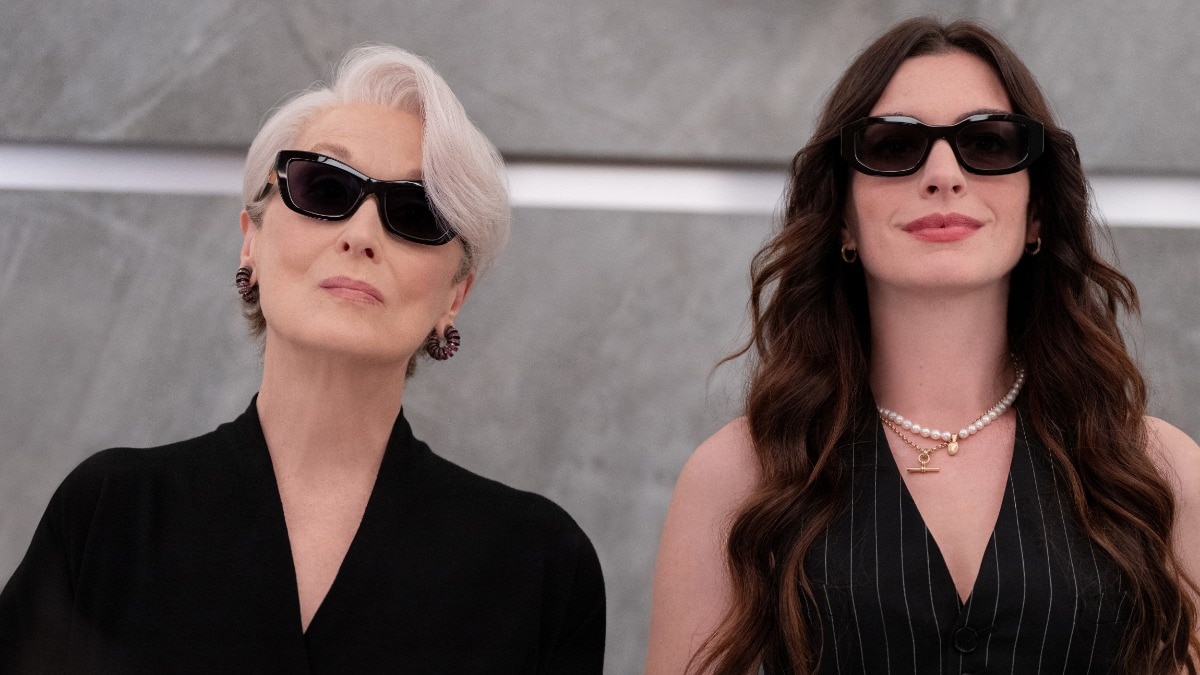
There is something almost ironic about watching The Devil Wears Prada 2 in 2026 and realising that the most unrealistic part of the original film is no longer Miranda Priestly’s cruelty, but the idea that a magazine like Runway could exist untouched by technology. This sequel, directed again by David Frankel, quietly shifts the script from fashion fantasy to a media survival story, and in doing so, it becomes less about clothes and more about control. The film brings back Meryl Streep, Anne Hathaway, Emily Blunt, and Stanley Tucci, but the real antagonist this time is not Miranda. It is the slow, unsettling takeover of journalism by algorithms, AI-led content, social media, and a world where taste is measured by the number of views your reel can get.
The plot places Andy back inside the Runway machine after she gets laid off at her newspaper job, just as Miranda is dealing with the collapse of print authority and the rise of a digital-first industry that no longer needs gatekeepers. The film does not scream “AI takeover” all the time; rather, it lets it seep into every frame. Meetings are more about data than instinct, and editorial decisions are driven by social media trends and clout. The film understands that the real horror for someone like Miranda is not losing power to another person, but losing it to something invisible, something which is not even human to begin with.
And yet, for all its anxiety about the future, the film is full of callbacks and familiar rhythms. The cameos add to the spectacle. Lady Gaga appears not just as a performer on the soundtrack but within the film’s world, while fashion royalty like Donatella Versace and Naomi Campbell glide in and out, reminding us how the success of the first movie attracted industry stalwarts to associate with Miranda Priestly & Co. It begins to feel like fashion’s own version of Om Shanti Om, where spotting who shows up next becomes part of the pleasure. David Frankel leans into the chaos of celebrity culture, as if to say that even if the system collapses, the spectacle will survive.
But what stays with you is not the spectacle. It is the softness that has quietly replaced the sharp edges of the first film. The original thrived on hierarchy, but this one leans into solidarity. Andy and Miranda are no longer just boss and assistant. They are women navigating the same collapsing industry from different ends. There is a sense that Andy understands Miranda now, and Miranda, in rare flickers, allows herself to be understood. Around them, the film builds a network of women holding each other up in ways the original never allowed. Emily, once the very embodiment of ambition at any cost, is now both rival and mirror. Without giving spoilers, Lucy Liu’s cameo adds another layer to this shifting power dynamic, where she, not once but twice, saves Andy and Miranda from potential doom. Even Lily, who once stood outside the Runway world, becomes part of this emotional scaffolding as she helps her best friend navigate personal and professional life (and gets a Valentino handbag in return!)
What makes this dynamic interesting is that the film does not pretend these women are perfect for each other. Miranda is still snapping at Andy and also at her new assistant, Amari (played by Simone Ashley). Andy is still seeking Miranda's validation. Emily is not holding herself back in a bid to get what she wants. But in a world where AI can replicate taste and predict trends, the only thing left that feels human is the way these women choose to stand by each other, even when it is inconvenient.
The Devil Wears Prada 2 feels less like a commentary on AI and fashion and more like a story about women learning to stand by one another in a world that is constantly shifting beneath their feet. What could have easily been another tale of rivalry instead becomes something softer and far more interesting. The film still gives you the clothes, the cameos, the callbacks, but those feel almost secondary to this shift. Beneath all the spectacle lies the quiet realisation that survival, especially in industries that are constantly evolving, is no longer about outdoing one another but about holding space for one another. And maybe that is why it lingers. Because long after the spectacle fades, it is the relationships that stay with you: women choosing each other, not that easily or perfectly, but making the choice nonetheless.
Lead image: 20th Century Studios
Also read: Not quite 'The Devil Wears Prada': What it’s really like to work at a fashion magazine
Also read: The Devil wears Dolce & Gabanna, Balenciaga, and Chanel