The quiet stars: How silence has become the loudest form of stardom in India
In an era of viral fame and endless noise, a new kind of Indian celebrity is quietly—yet powerfully—redefining what it means to be a star.

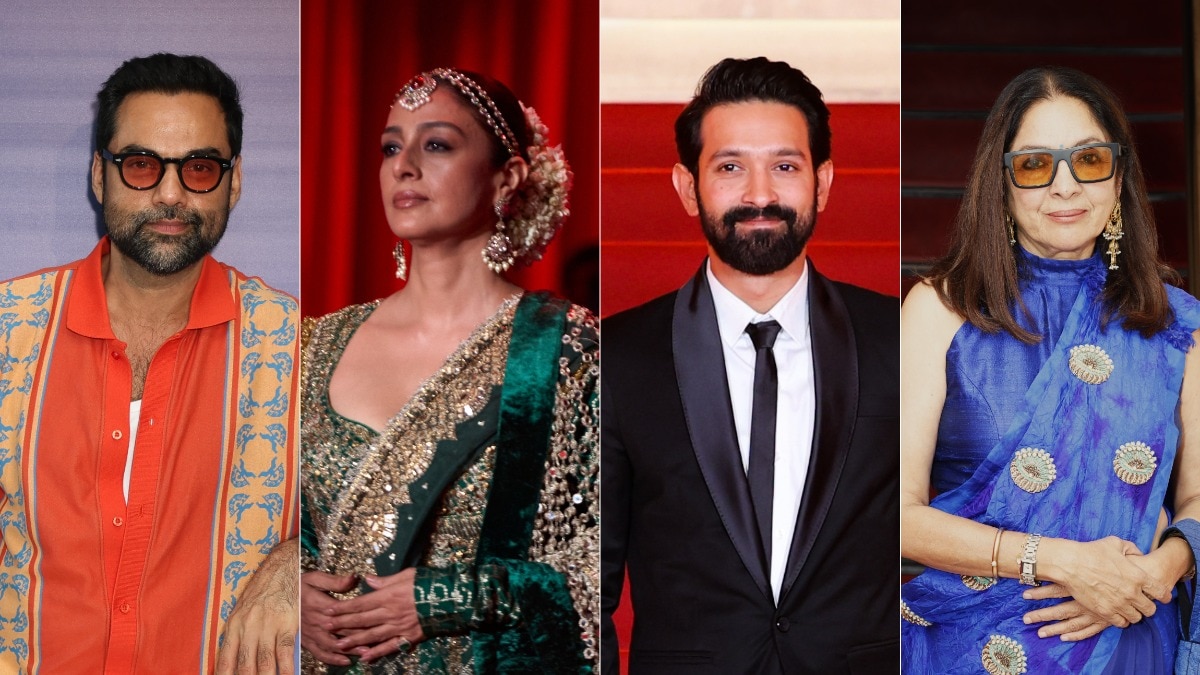
In a culture obsessed with visibility, the most intriguing stars today are the ones who don’t crave the spotlight. They aren’t hustling for attention or trending on a random weekday; instead, they are cultivating a quieter, more enduring kind of influence—one built on artistry, restraint, and the sheer grace of being real.
Welcome to the age of quiet stardom. It is a space where talent outweighs theatrics, where being grounded replaces grandeur, and where success is measured not by how often your face appears on a billboard, but by how deeply your work lingers in the collective consciousness.
This is a generation that doesn’t need to announce its arrival—it’s already here, quietly but unshakeably, changing the language of Indian cinema. They live with intention, choose their scripts with precision, and protect their mystery in an era of overexposure. They remind us that charisma doesn’t have to be loud to be lasting.
Meet the actors at the heart of this cultural shift—artists who prove that quiet can, in fact, be magnetic.
Tabu
Tabu is the high priestess of subtlety—a masterclass in control, charisma, and quiet fire. She doesn’t just play characters; she inhabits them, effortlessly moving from Maqbool to Haider, The Namesake to Drishyam, carrying an almost regal stillness that commands attention without demanding it.
Her career has never been dictated by trends or titles. Tabu’s magnetism lies in her mystery—an ability to say more in a glance than most can in a monologue. Off-screen, she is equally enigmatic, choosing privacy over projection and letting her craft, not her clout, do the talking. She is proof that true stardom doesn’t age—it evolves.
Konkona Sensharma
If quiet stardom were a person, it might just be Konkona Sensharma. She doesn’t perform for applause; she performs for truth. Her filmography—Page 3, Lipstick Under My Burkha, Lust Stories 2, A Death in the Gunj, among others—reads like a masterclass in authenticity.
There’s no rush to prove anything, no chase for mass appeal. Sensharma's work speaks in the language of depth—measured, layered, and strikingly human. Off-screen, she embodies the same quiet integrity: thoughtful, self-contained, immune to the noise. In an industry that glorifies visibility, she is the ultimate reminder that stillness can be powerful.
Abhay Deol
Long before “authentic” became a buzzword, Abhay Deol was living it. The original outsider-insider, he walked away from formula films while everyone else chased them. His film choices—Dev.D, Oye Lucky! Lucky Oye!, Manorama Six Feet Under—weren’t just bold; they were prophetic, carving space for the offbeat and the original.
Deol's rebellion was never noisy. He didn’t rant; he just acted—with conviction and quiet defiance. His brand of fame was never about frenzy—it was about freedom.
Vikrant Massey
Vikrant Massey’s ascent has been steady, deliberate, and earned. From his television beginnings to his breakout in A Death in the Gunj and the recent 12th Fail, his trajectory is a testament to what happens when talent is allowed to grow without the pressure of spectacle.
He brings an emotional precision to his roles that few can match. On-screen, he dissolves into his characters; off-screen, he’s measured, grounded, and refreshingly devoid of posturing.
Neena Gupta
Neena Gupta’s story is not just a comeback—it’s a redefinition. After years of being under-recognised, her renaissance with Badhaai Ho, Masaba Masaba, and Panchayat has been nothing short of glorious.
What makes her so captivating is her candour. Gupta speaks her mind, laughs at herself, and lives without filters—qualities rare in an age of polished personas. Her fame is lived-in and liberating, a celebration of selfhood on her own terms. She is a reminder that grace and honesty can be the boldest statements of all.
Vijay Varma
Vijay Varma’s stardom has been a slow burn—magnetic, unhurried, and entirely on his own terms. From Gully Boy to Dahaad to Mirzapur, he has built a filmography that’s fearless and fascinating.
What makes him stand out is his ability to hold duality—to be edgy on-screen and entirely composed off it. He doesn’t shout his success from rooftops; he wears it like an invisible crown. Varma represents the new-age actor who lets his work do the talking, even when the world is busy shouting.
Amol Parashar
In the digital age, where stardom often comes in short-form bursts, Amol Parashar’s rise has been refreshingly unhurried. His breakout with Tripling introduced audiences to an actor who wasn’t trying to be a sensation—he was simply being himself.
Parashar's charm lies in his understated ease. Whether playing the carefree brother on a road trip or the revolutionary Bhagat Singh in Sardar Udham, he brings a rare gentleness to his craft. His social media isn’t a highlight reel—it’s a quiet reflection of a career built on relatability and restraint. He is part of a new wave that values connection over clout.
The power of quiet
These Indian actors have quietly rewritten the rulebook. They have made it cool to be selective, powerful to be private, and desirable to be grounded. They are shaping a cinematic culture where individuality matters more than image, and where the loudest impact often comes from the softest voice.
Quiet stardom isn’t the absence of fame—it is the evolution of fame. It is a rebellion in whispers and poise. And in a world that’s constantly talking, these stars remind us that sometimes, it’s the silences that speak the loudest.
Lead image: Getty Images
Also read: The new first lady of New York is an artist, an activist, and the chicest woman alive