




ADVERTISEMENT
Is “salt stomping” the key to better sleep, reduced stress, and achieving an overall calm?
Experts say this wellness ritual does work, but there’s a catch.

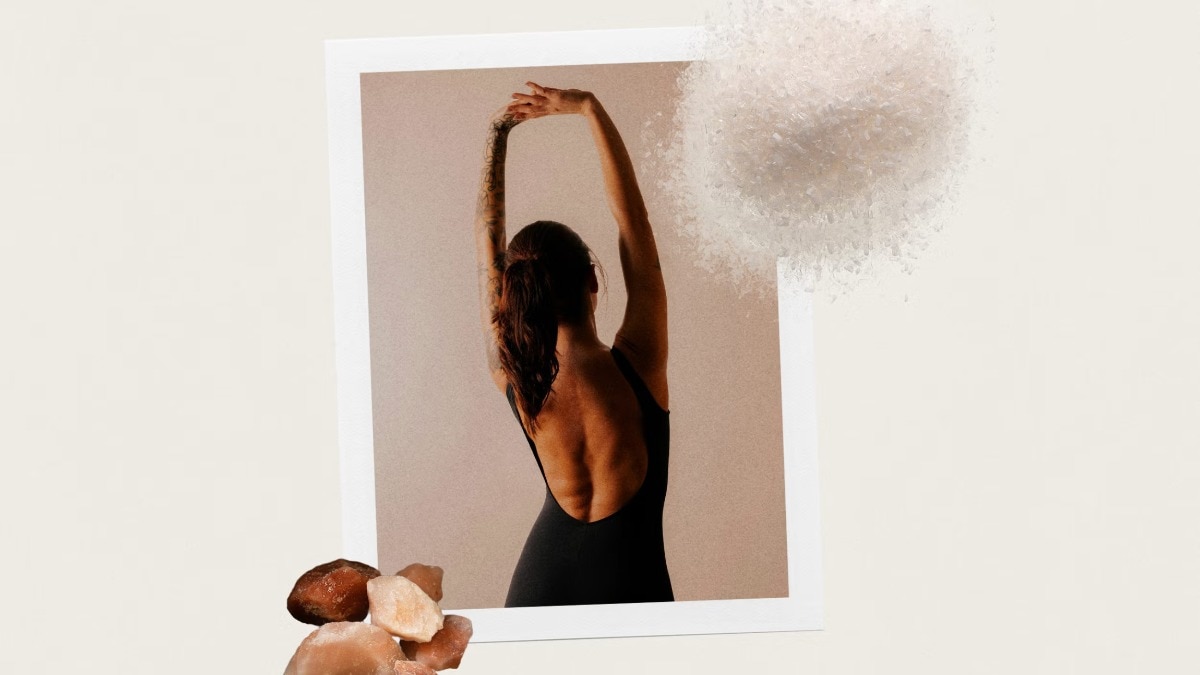
During a pre-bed TikTok scrolling session the other night (we’re all guilty of it), I watched a woman put sea salt—the kind we all have in the kitchen—onto a sheet pan and stand on it barefoot for 10 minutes. Of all the wacky wellness trends I’ve seen on the app, this might take the cake.
She touted the “standing on salt” method for exfoliating her feet, reducing inflammation, and shifting her nervous system into “rest and digest” mode. To back it up, she showed sleep statistics from her Oura Ring for both a regular night and a night when she stood on salt, and her deep sleep went up a full 10 per cent, which, if you have a sleep tracker, you know is hard to achieve.
I was taken aback not only by the video but also by the number of comments that echoed the power of “salt stomping.” I’m willing to try (almost) every bizarre wellness trend that promises a better night’s rest and reduced stress—from calming teas to pillow sprays. But standing on salt? I had to find out if it’s really the magic solution TikTok claims it to be before I laid down the crystals.
“Salt stomping means standing barefoot on coarse Epsom salt for about ten minutes at night, often while doing your skincare,” says Doreen Zarfati, a New York–based psychiatrist and chief medical officer at Fountain. “My first reaction as a physician is that the salt itself isn’t doing what people think—but that doesn’t mean the ritual isn’t useful.”
Celtic salt boosts hydration, and Epsom salt baths reduce muscle soreness, but salt has tons of other healing properties. It’s a necessary mineral for basic bodily functions (in moderation, of course), mostly because it helps regulate your water levels, and some forms, such as Himalayan pink salt and Epsom salt, contain magnesium, which has been touted as a sleep and muscle recovery aid.
However, ingesting salt and standing on it won’t impact your body in the same way. “No data is showing that standing on salt crystals changes your serotonin or cortisol, and there’s no evidence that magnesium is absorbed through the soles of your feet and resets your nervous system,” Zarfati says, adding that the benefits have less to do with the salt and more to do with the “grounding” ritual. “It allows you a moment of calm, standing still, barefoot, off your phone before bed. Having a consistent wind-down ritual signals to the brain that it’s safe to shift out of stress mode and into rest. If standing on salt is what allows you to slow down for ten minutes, I’m not going to argue with the result.”
Internist and longevity expert Amanda Kahn echoes this, adding that “contact with salt in this way is unlikely to meaningfully impact inflammation, circulation, or nervous system function.” She does recommend Epsom salt baths, since Epsom salt contains magnesium sulfate, and there is evidence supporting magnesium absorption through the skin when used in soaks.
Experts agree, though: One of the most beneficial aspects of standing on salt is the sensorial feeling. There’s a reason spa pedicures that use coarse bath salts are exponentially more relaxing than a regular pedicure. “Standing barefoot on a textured surface also gives you constant sensory feedback, which is grounding and pulls your attention into your body and out of your racing thoughts,” Zarfati explains. “So mentally, people feel calmer and sleep better, but that comes from the stillness, the routine, and the sensory focus, not from the mineral. If standing on salt is what allows you to slow down for ten minutes, I’m not going to argue with the result.”
If you’re going to incorporate salt stomping into your nightly routine, that doesn’t mean you should abandon all of your other calming rituals. “From a longevity perspective, I encourage evidence-based nervous-system regulation through meditation, breath work, regular exercise, restful sleep, spending time outdoors, and creating meaningful social connections,” Kahn says. However, 10 minutes off of your phone before bed, whether you’re standing on salt or not, will always relax your nervous system and prep you for a good night’s sleep.
“Any rituals that encourage mindfulness and relaxation do reduce stress and improve overall well-being, so I think that the mental benefits are likely behavioural more than physiologic with standing on salt,” Kahn adds. “Anything that can help my patient disconnect and reduce stress, I am all for.”
This article is originally from harperbazaar.com in June 2026
Lead image: Collage by Sarah Oliveri
Also read: Can an olive oil and lemon nightcap really work wonders? Experts weigh in
Also read: Are you guilty of using therapy speak?
ADVERTISEMENT
Must Read









ADVERTISEMENT