




ADVERTISEMENT
Y3K is fashion’s new DNA and leap into tomorrow’s wardrobe
From bioluminescent algae gowns to wind-powered couture, Y3K fashion is annihilating traditional clothing concepts and engineering the prototype for human dress in the millennia ahead.

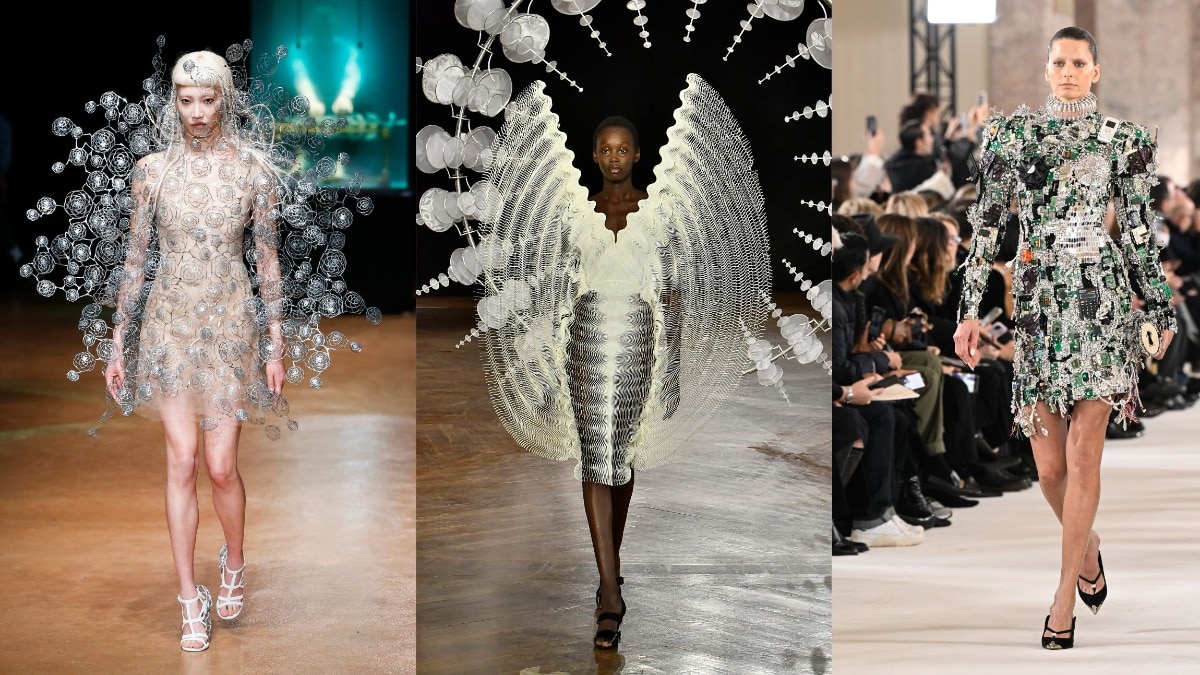
Fashion has always been a crystal ball, but never has it gazed quite so far into the future as it does now. While we were still catching our breath from Y2K's nostalgic revival—all low-rise jeans and butterfly accessories—the industry has catapulted itself forward by a millennium, landing squarely in the realm of Y3K. This isn't merely about adding extra zeros to our aesthetic timeline; it's a complete reimagining of what human expression through clothing might become when technology and imagination collide most spectacularly.
The Science Fiction Catwalk: Fashion's Laboratory Moment
Paris Fashion Week 2025 brought the fashion world's most anticipated event, with Japanese designer Kunihiko Morinaga for Anrealage presenting his Spring/Summer 2025 collection entitled "WIND." Building on his legacy of exploring frontiers between fashion and technology, Morinaga contemplated the art of dressing and undressing with help from natural air movement, using wind to breathe life into clothing and sculpt new silhouettes. Offering a characteristically playful technological solution to increasingly scorching summers, the designer conjured a 'cool-wear' wardrobe that literally refreshes, with garments designed in collaboration with KUCHOFUKU, a Japanese pioneer in fan-equipped, air-conditioned utilitarian garments.
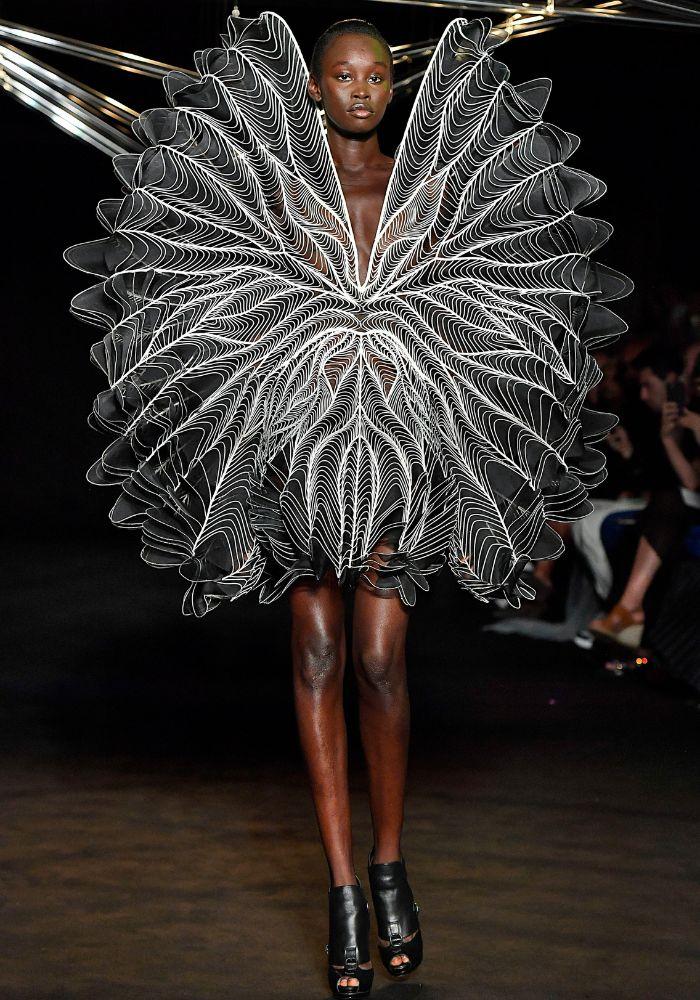
The revolutionary spirit extends into the biological integration territory previously unexplored. Iris van Herpen created a "living look" incorporating 125 million bioluminescent algae that require eight hours of rest, eight hours of light, and a calm, cool environment to thrive. Her collection "Sympoiesis" carried urgency across every facet, as the couturier worked in communion with primordial organic rhythms and technological imperatives. This transcends traditional fashion—these are garments that breathe, think, and respond to life itself.
Bollywood was eerily ahead of the curve in imagining the aesthetics we now call Y3K. Robot (2010) dressed its cyborgs in adaptive metallic suits; Ra.One (2011) built entire characters out of holographic, dimension-shifting costumes. Both films imagined a future where clothing became an extension of identity and capability—exactly what Y3K fashion delivers today. The chromium finishes and geometric patterns from these cinematic visions now walk actual runways, proving that yesterday's science fiction has become today's haute couture reality.
The Anatomy of Tomorrow: Deconstructing Y3K Design
Y3K fashion treats clothing as wearable sculpture, redefining garments as three-dimensional art that bends rules of fabric, gravity, and form. Designers across the world are already experimenting: Dutch couturier Iris van Herpen’s 3D-printed gowns move like living armour; Japanese label Anrealage sent UV-sensitive pieces down the Paris runway that shift colour under light; Polish designer-researcher Iga Węglińska created “emotional clothing” that reacts to heart rate and skin conductivity; Canadian collective Myant X is embedding textiles with sensors to monitor the body; while Montreal-based Ying Gao builds garments animated by touch and presence. Even MIT’s Self-Assembly Lab in Boston has tested knitwear that changes shape with temperature.

What defines Y3K fashion is its radical departure from earthly constraints. Where Y2K celebrated the playful optimism of early internet culture, Y3K imagines a world where humanity has evolved alongside its technology. The colour palette speaks to this transformation: bioluminescent greens that evoke genetic modification, deep space purples and blues that reference our expanding cosmic consciousness, and prismatic whites that suggest the sterile beauty of advanced technological environments. These aren't cold, clinical choices—they're imbued with warmth through innovative fabric treatments that create subtle texture variations and mesmerising light refraction.
The Wearable Future: Your Guide to Y3K Integration
Y3K fashion doesn't require a complete wardrobe overhaul—it's about strategic touches that signal the future. Start with metallics as your foundation. Silver creates the classic spaceship aesthetic we've imagined for decades, while rose gold adds warmth to futuristic looks. Copper and bronze suggest industrial evolution, and gunmetal grey channels cyberpunk sophistication. The key is mixing these metal tones rather than matching—pair silver accessories with gold hardware, or layer bronze jewellery over platinum-toned fabrics.
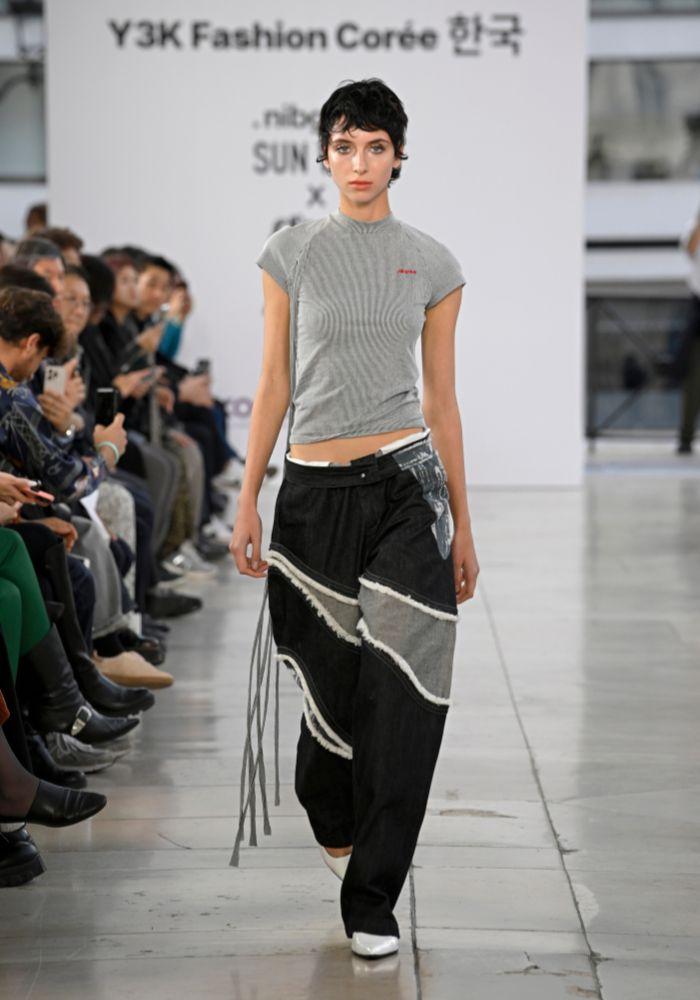
Texture mixing becomes your secret weapon. Combine sleek vinyl with soft knits, pair holographic accessories with matte leather, or layer mesh over solid fabrics. Patent leather boots ground ethereal chiffon pieces, while metallic pleating adds dimension to simple silhouettes. Even a basic black outfit transforms with the addition of reflective tape detailing or chrome hardware.
Proportions play with conventional expectations. Oversized shoulders reference both 1980s power dressing and robotic construction. Exaggerated sleeves create sculptural interest, while high-low hemlines suggest garments in motion. Asymmetrical zippers, off-centre buttons, and diagonal seaming add architectural elements without requiring custom construction.
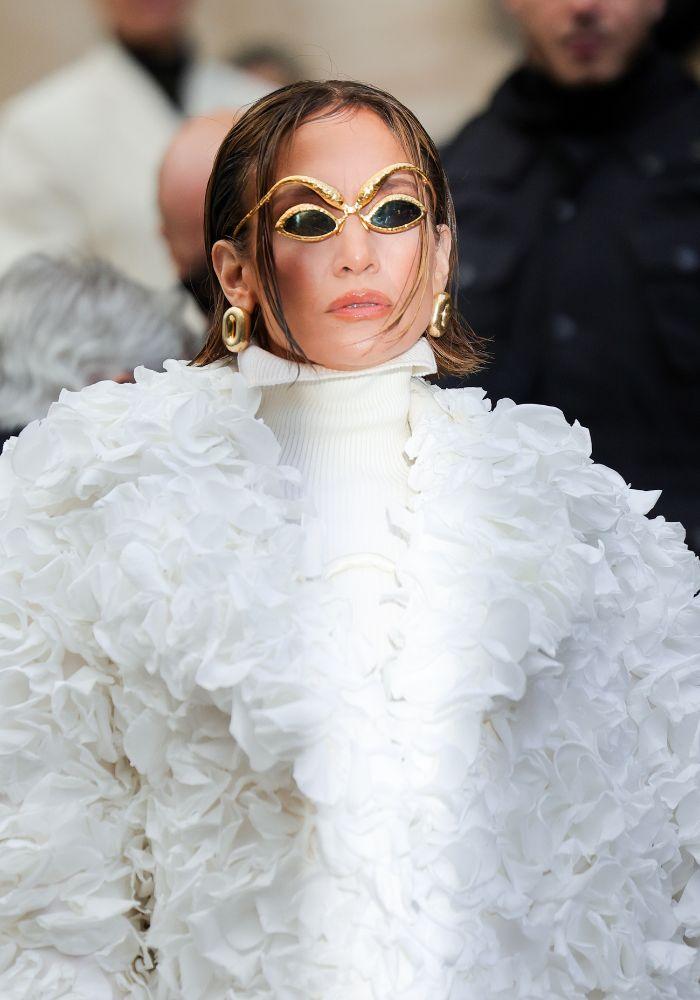
Accessories drive the Y3K narrative most effectively. Geometric sunglasses in metallic frames, oversized digital watches, chain-link jewellery in mixed metals, and bags with structured, angular silhouettes. Hair accessories become particularly important—metallic headbands, sculptural hair clips, and even temporary metallic hair colour create instant futuristic impact.
The beauty of Y3K fashion lies not in its impossibility but in its accessibility through thoughtful styling choices that reference our collective vision of tomorrow.
All images: Getty Images
Also read: Everything to wear this festive season, other than the little black dress
Also read: An experimental fashion show on the Hooghly River that let tradition evolve
ADVERTISEMENT
Must Read
ADVERTISEMENT