




ADVERTISEMENT
There is a beautiful connection between Dior's latest haute couture collection and Ahmedabad
India's rich artistic heritage once again finds its place on the global fashion map

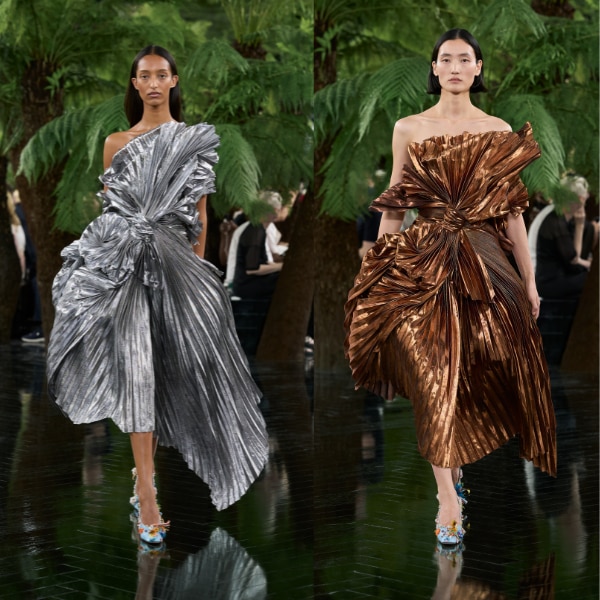
Jonathan Anderson's second haute couture collection for Dior may have been presented in Paris, but some of its most compelling references trace back to Ahmedabad. Titled Grammar of Forms, the Fall/Winter 2026–2027 couture collection draws inspiration from the work of celebrated American sculptor Lynda Benglis, whose long-standing relationship with India, and in particular Gujarat's cultural capital, became an unexpected, but powerful thread running through the collection. From vibrant peacock-inspired embellishments to centuries-old Indian chintz textiles, Anderson's latest outing proves that India's craft traditions continue to shape the language of global luxury fashion.
At its heart, Grammar of Forms is an exploration of sculpture through the language of couture. Anderson looked to the work of American artist Lynda Benglis, whose sculptures often transform flat, two-dimensional materials into expressive three-dimensional forms through pleating, knotting, moulding, and draping. It is a philosophy that mirrors the very essence of haute couture, in which fabric is hand-manipulated into sculptural silhouettes that come alive only when worn.
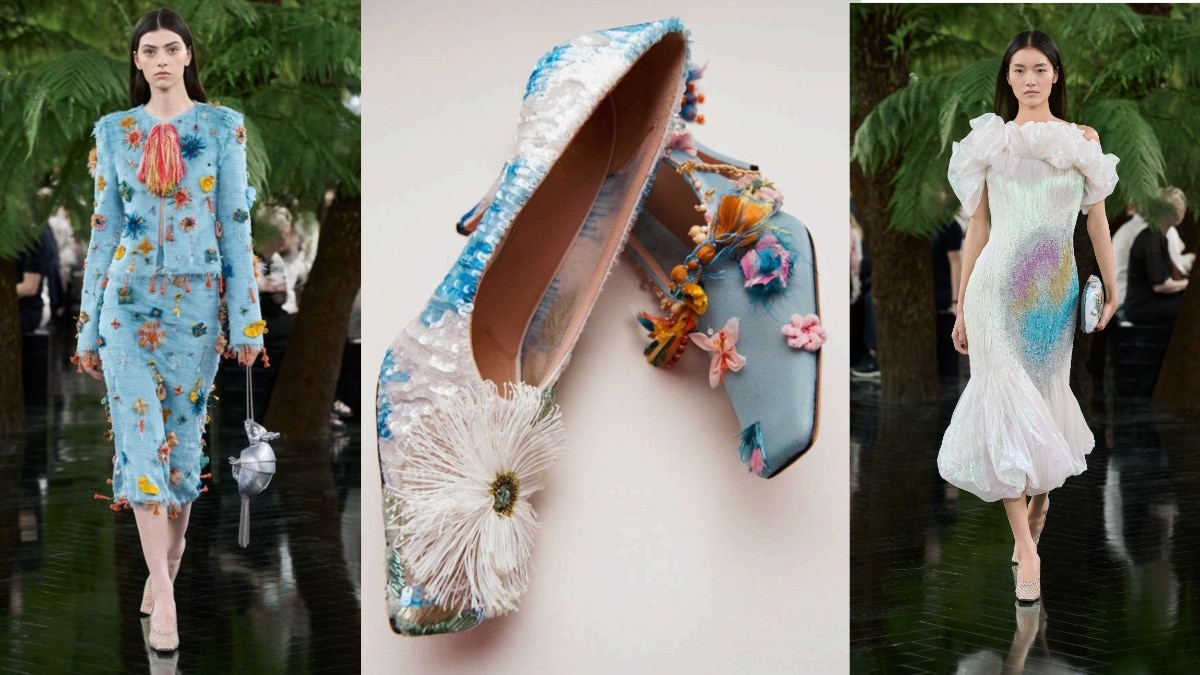
Throughout the collection, the Dior ateliers translated Benglis' artistic vocabulary into couture craftsmanship. Metallic finishes, iridescent surfaces, richly encrusted embroideries, paper-like textiles, and delicate silver netting designed to resemble chicken wire all echo the unconventional materials and textures that have defined Benglis' work for more than six decades. Rather than simply referencing sculpture, Anderson allows each garment to become one.
Yet one of the collection's most meaningful narratives lies thousands of kilometres away from Paris, in Ahmedabad. During the late 1970s, Benglis spent time at the Sarabhai family estate in the city, where the vibrant landscape left a lasting impression on her artistic practice. The peacocks she encountered there inspired her celebrated Peacock series, and Anderson has now reinterpreted those same works through couture. Bright floral embellishments, intricate beadwork, and richly coloured detailing appear throughout the collection as subtle tributes to the birds that first captured Benglis' imagination in Gujarat decades ago.
Ahmedabad's influence extends beyond motif and colour. Anderson's research into Benglis' work led him towards one of India's most significant textile traditions: 18th-century chintz. These finely woven cotton fabrics, meticulously hand-painted or block-printed, transformed European decorative arts after they were exported from India centuries ago. Rather than recreating the prints, Anderson incorporated authentic antique fragments of Indian chintz and indiennes, sourced through a specialist dealer, onto Petit Dîner and Mini Lady Dior bags. The collection also draws upon the contrasting landscapes that shaped Benglis' life and practice.
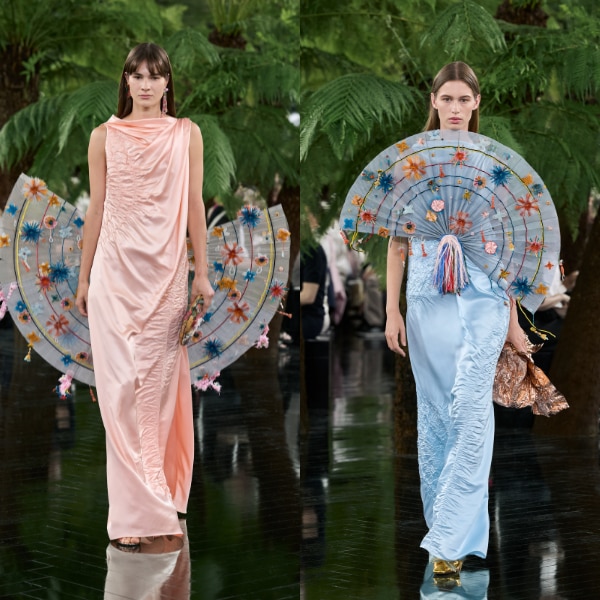
Ahmedabad's lush flora sits in conversation with the arid terrain and crystalline light of Santa Fe, New Mexico, where the artist also lives and works. Anderson translates these opposing environments into colour, texture, and silhouette, allowing the collection to move seamlessly between abundance and restraint, softness and structure.
The title, Grammar of Forms, reflects Anderson's belief that couture is a language in itself. Just as grammar provides the framework through which ideas are expressed, couture relies on generations of craftsmanship, construction, and technique to bring even the most experimental visions to life. The collection also nods to Christian Dior's own fascination with architecture and sculptural dressing, recalling the legendary New Look and the House's tradition of naming collections after geometric forms such as A, H, Tulip, and Zig-Zag.
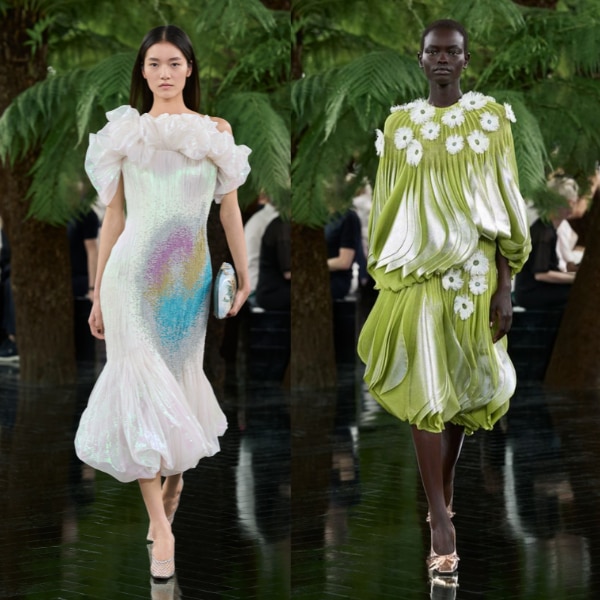
India has long influenced the world's greatest fashion houses, but Grammar of Forms feels especially personal in its references. Rather than treating Indian craftsmanship as decoration, Jonathan Anderson acknowledges it as an integral part of fashion's creative vocabulary. Through Ahmedabad's peacocks, centuries-old chintz textiles, and the enduring legacy of Lynda Benglis' time in Gujarat, Dior's latest haute couture collection serves as a reminder that some of the industry's most compelling stories begin far beyond the runway, and that India's artistry continues to inspire fashion at its highest level.
Image credits: Dior
Also read: A luxury Mahjong table to a bag inspired by the French Riverea, this is the IT news in fashion
Also read: The breastplate is back—courtesy of Schiaparelli, Rahul Mishra, Gaurav Gupta, and more
ADVERTISEMENT
Must Read







ADVERTISEMENT