





ADVERTISEMENT
Does India need Prada to sell its Kolhapuris, or is this just fashion déjà vu in new shoes?
The question arrives with irony, sharp and absurd.

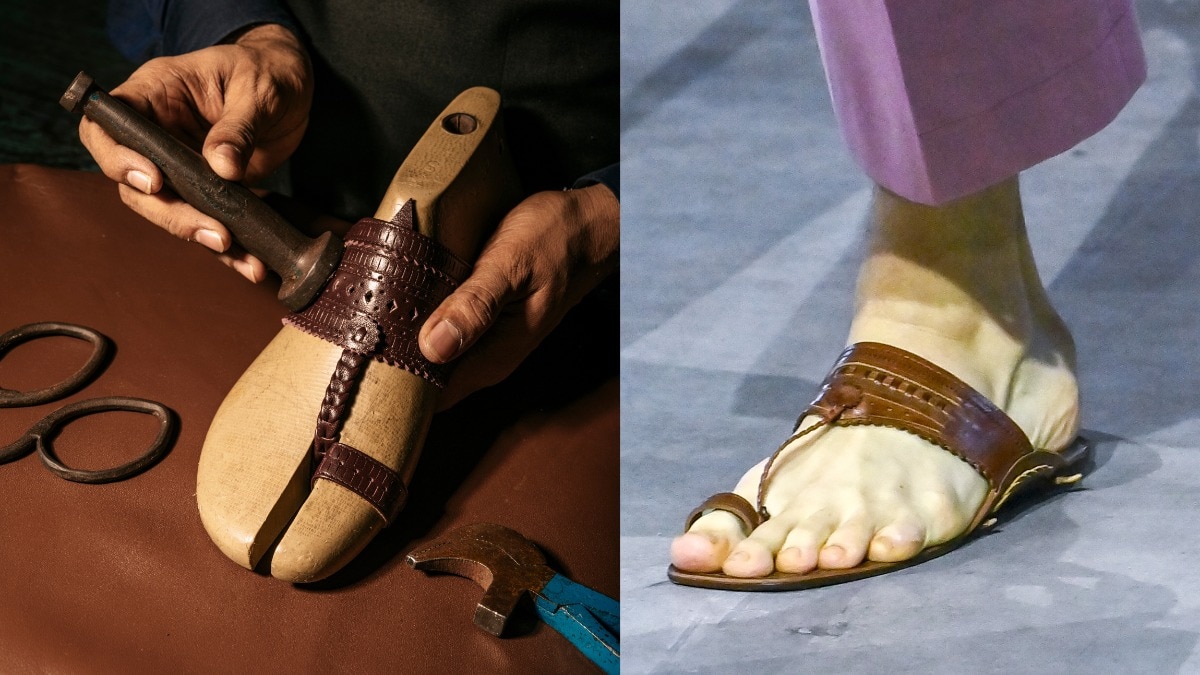
Prada has unveiled ‘Made in India’ kolhapuris priced at $930, and now the global fashion world is gasping like it’s discovered fire. Meanwhile, the artisans who’ve kept that fire alive for generations are probably wondering whether the world is looking away or just at the wrong hands.
India doesn’t need Prada to confirm the worth of its kolhapuris. Our leather has seen more history than most luxury brands have in their corporate timelines. These sandals have walked through kingdoms, bazaars, monsoons, heartbreaks, weddings, and back again.
They’ve outlasted empires and trends. They’ve done all this without a runway, a press release, or a marketing department that uses terms like “heritage” and “core.” So yes, there’s a sting. A sly, sarcastic sting. Because it feels darkly satisfying to watch the world applaud a silhouette crafted by your great-grandfather in a courtyard. It’s like watching someone win an award for a lullaby your grandmother wrote.
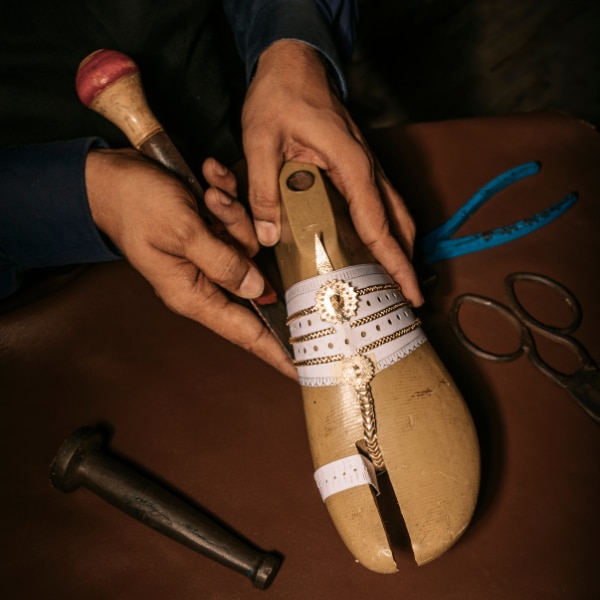
But what this really means is more complicated. Prada’s move is both wrong and right at the same time. It feels bizarre that a European luxury house is what finally gets the world to pay attention to what India has been creating with incredible skill for centuries. Yet, like a paradox wrapped in premium leather, it also holds hope.
Let’s be honest: sometimes visibility needs a megaphone, and Prada has one the size of a minor planet. If that megaphone directs attention toward Kolhapur, toward the narrow lanes where artisans sew history with their bare hands, then the irony becomes strangely bearable.
Here’s the philosophical bit: Craft in India has always been a prayer, a meditation, a lineage. But in the global market, value is a performance. And Prada performs loudly. If this performance shifts even a fraction of the world’s focus toward the artisans, their wages, their dignity, their dying looms, and their dimly lit workshops, then we might have to swallow our pride and admit that luxury has, by accident, done something right. Still, let’s not idealise the situation into oblivion.
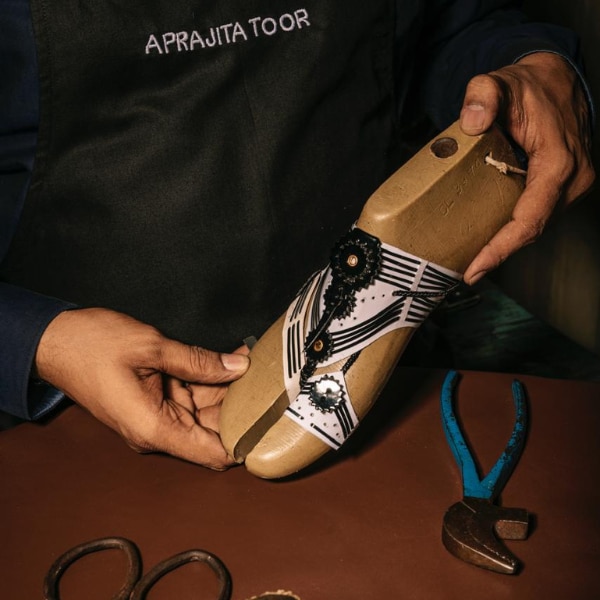
The real question isn’t “Does India need Prada?” The real question is, “Will Prada need India enough to honour her?” Will the artisans be paid fairly? Will their names matter? Will this be a collaboration or just another case of luxury outsourcing presented as global respect? Will this craft be allowed to thrive instead of being strip-mined for style? What’s at stake isn’t just a sandal. It’s a future. A future where young artisans don’t abandon their craft for jobs that drain their spirit. A future where heritage isn’t buried under fast fashion. A future where handmade isn’t seen as a charity case but as the luxury it has always been. Here’s the twist: If Prada’s kolhapuris spark even a hint of global curiosity, investment, opportunity, or respect for Indian craftsmanship, then perhaps this strange moment becomes a lifeline. Not for India. But for the hands that keep her stories alive.
Those hands deserve applause louder than any runway show. Those hands deserve the spotlight Prada accidentally turned on. In a world where fashion is obsessed with reinvention, the chapters that truly last are the ones that revive, protect, and honour the quiet brilliance of forgotten makers. If this is the start of such a chapter, let it be written boldly. Let the echo travel far beyond the runway. Maybe this is how forgotten legacies return to the light: not through grand statements but through quiet awakenings disguised as global trends.
Craft has never needed validation; it just required witnesses. So, if Prada’s sandals become the unlikely messenger, let them walk gently. Let them carry the weight of history with the dignity it deserves. Let them serve as a reminder that some stories aren’t meant to be rebranded; they’re meant to be revered. As the world slips into these $930 echoes of our heritage, may it finally recognise one simple, powerful truth: the essence of a craft can’t be outsourced; it can only be rediscovered.
All images: Aprajita Toor/Elevate Promotions, Getty
Also read: How this heritage jewellery maison turned into a Gen Z favourite
Also read: How Indian designers are rewriting denim through craft, culture, and couture
ADVERTISEMENT
Must Read






ADVERTISEMENT