




ADVERTISEMENT
The Anne Hathaway dinosaur movie is good, actually
The 'End of Oak Street' offers a thrilling, dino-powered summer blockbuster, proving that all a great movie needs is 90-ish minutes and a heart

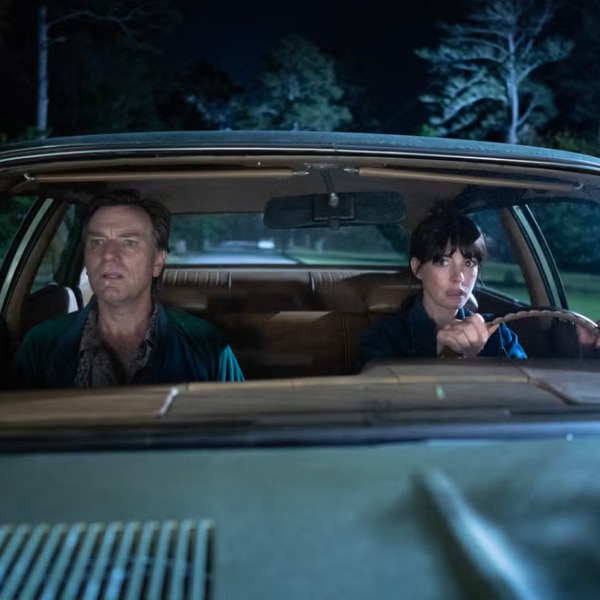
I harbored my doubts about The End of Oak Street, a suburban (time-traveling?) dinosaur movie starring Anne Hathaway and Ewan McGregor, up until the moment I left the theater. I expected another forgettable monster movie. Instead, I left eating crow, admitting David Robert Mitchell’s self-assured sci-fi spectacle is one of the best movie-watching experiences of the summer.
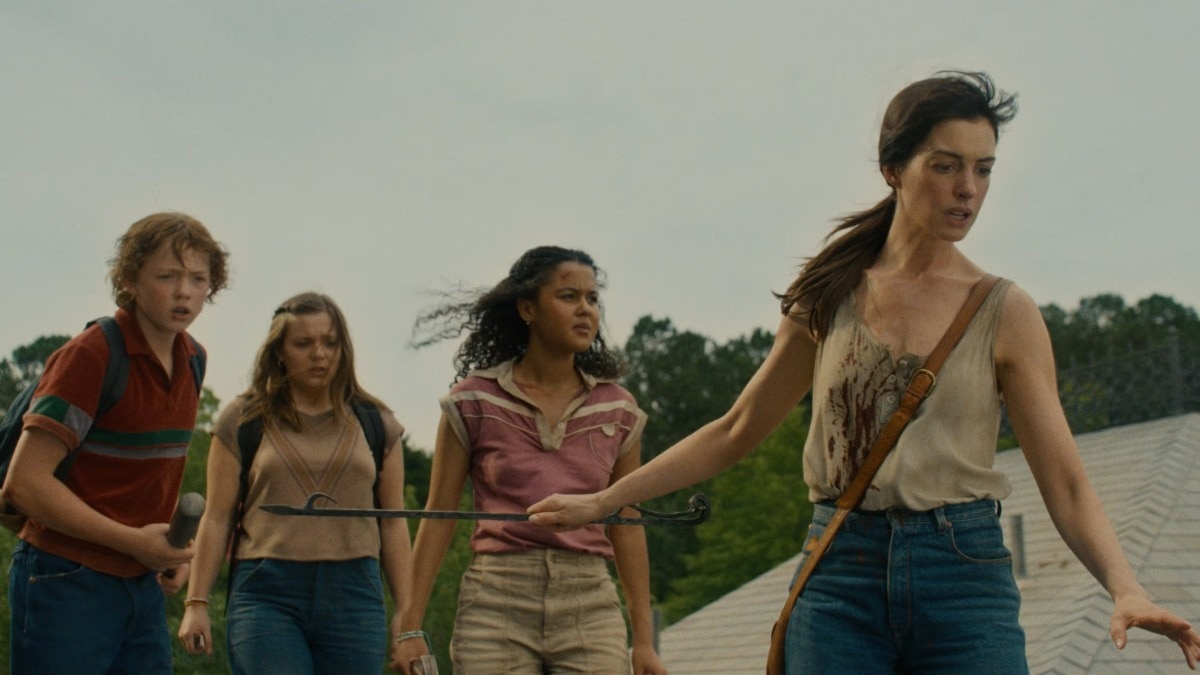
One fateful, stormy night in 1982, the suburban-dwelling Platt family witnesses a blinding flash of light near their house—and the thunderstorm suddenly stops. The power is out, the air is thick and sweltering, and they hear faint cries from down the block. The next morning, they see their neighbors being torn to shreds by, um, dinosaurs and quickly realize their entire neighborhood has been transported to prehistoric times (by a wormhole or something—don’t think too hard!). Just yesterday, Denise (Anne Hathaway) and Greg (Ewan McGregor) spent the afternoon at the cul-de-sac grill-out socializing (and bickering) with their two kids and dog, Starbuck; now they’re battling velociraptors.
Shortly after the Platt family realizes where (or when) they landed, the Carl Sagan–obsessed daughter Aubrey (Maisy Stella) sneaks away to the car, where she plays a cassette of Steve Winwood’s “Valerie,” tearfully singing along. It’s a prolonged sequence that narrows in on the raw (and rightful) turmoil the daughter feels. At first, I thought to myself, how is there time for this in this 90-ish-minute movie? Then it dawned on me: The End of Oak Street only works because of the heart Mitchell imbues in his character, steadily elaborating on Aubrey’s emotions even as dinosaurs ravage the neighborhood. What the director proves is just how little one needs to craft a snackable, delightful movie-going experience. (This undercuts whatever the Jurassic Park franchise has been doing for a decade). The End of Oak Street testifies to the power of an essentially extinct blockbuster formula, in which 99 minutes of screen time are packed with stars, meaty stories, and actual feeling.
Even if Mitchell wastes no time sending the Flowervale suburb back in time, the filmmaker establishes the rocky (yet still loving) relationship between Denise and Greg. Denise, who has secretly written a novel, shares it with a neighbor, who gleans from it that Denise fantasizes about leaving her suburban life behind. Meanwhile, Greg hides his recent unemployment (and whiskey drinking) from her, working part-time as a pizza delivery driver. Their kids, Audrey and Brian (Christian Convery), worry about their imminent divorce. This is an American family riddled with nostalgia, plucked from a Steven Spielberg movie. Even with dinosaurs raging outside, Mitchell reminds us that this is just a family with real problems thrown into difficult circumstances.
We witness this when the Platt family first discovers what’s wrong in the neighborhood. Mitchell allows the audience to piece together the Jurassic surroundings before the Platts. Greg searches for Starbuck but instead finds a velociraptor. Denise, too, stumbles upon a dinosaur who’s just killed her friend and editor. The ensuing panic, in which the family boards up the house and comes to terms with what’s happening, feels incredibly human—and still riddled with the same familial bickering.
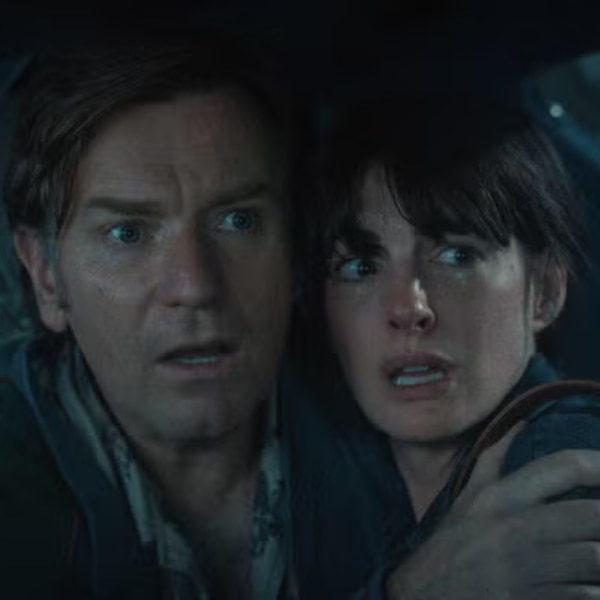
A great deal of credit belongs to Hathaway and McGregor, neither of whom scoff at their roles. The two A-list actors embrace Denise and Greg, weaving the ups and downs of a rocky marriage into several thrilling dino-biting sequences. At one point, Denise and Greg scout a safe path back to the house and encounter two stegosauruses, well, getting intimate (an obvious parody of the iconic Jurassic Park sequence). The couple embraces the light moment as Denise snaps a Polaroid picture of Greg in front of the dinos. This brief cheerful moment reinforces their connection, so that later, when a tragedy occurs, it’s all the more devastating. This is a family under immense pressure.
Some praise is also warranted for the dinosaurs. This isn’t like other monster movies, where some characters feel impervious, as if they can fend off any dinosaur. We see familiar monsters and scary rare ones: a prehistoric colossal snake or armored killer crocs. At every instance, they feel legitimately dangerous. The Platt family fights to survive, with Hathaway toting a shotgun aimed squarely at T. rexes and velociraptors for a good portion of the movie. Even when supporting characters face the wrath of prehistoric nature, Mitchell imbues it with life-and-death stress.
What stands out most is perhaps the pure joy of filmmaking here. Mitchell and cinematographer Michael Gioulakis play with camera techniques to capture the anxiety between family members and establish the soon-to-be-menacing suburban environment. In myriad diopter shots, they juxtapose close-ups of Hathaway (mostly) with her surroundings or her children. In some ways, the frequency of these shots might feel excessive or overwrought, but their deliberate use conveys excitement from behind the scenes (while also serving as a functional way to enhance the storytelling). This same feeling emerges at every corner of the film, whether it’s the intentional playfulness or the high-adrenaline chase scenes.
I stopped by a late-afternoon showing of The End of Oak Street on opening night, grabbed a beer, and took my seat. After freeing myself of preconceptions about the movie, I leaned in—and what a treat, reveling in a bite-size thriller with star-powered performances. I left wondering when the last time was that I had experienced a movie this quick and easy (still thinking!). When I stepped out of the theater, the sun was still shining, and I felt lifted up by the moviegoing experience rather than drained of energy. The End of Oak Street proves, for any studios wondering, that a successful blockbuster just needs around 90 minutes and a heart.
This article originally appeared on harpersbazaar.com/US in August 2026.
Image credits: Warner Brothers and Daniel McFadden
Also read: The best movies and shows to watch this September: 'The Uprising', 'Daayra', and more
Also read: Move over, movie stars. The director is the reason we now buy that ticket
ADVERTISEMENT
Must Read








ADVERTISEMENT