




ADVERTISEMENT
Cartier goes Into The Wild
Cartier channels its fascination of the natural world into a new collection of sculptural, magnetic jewels.

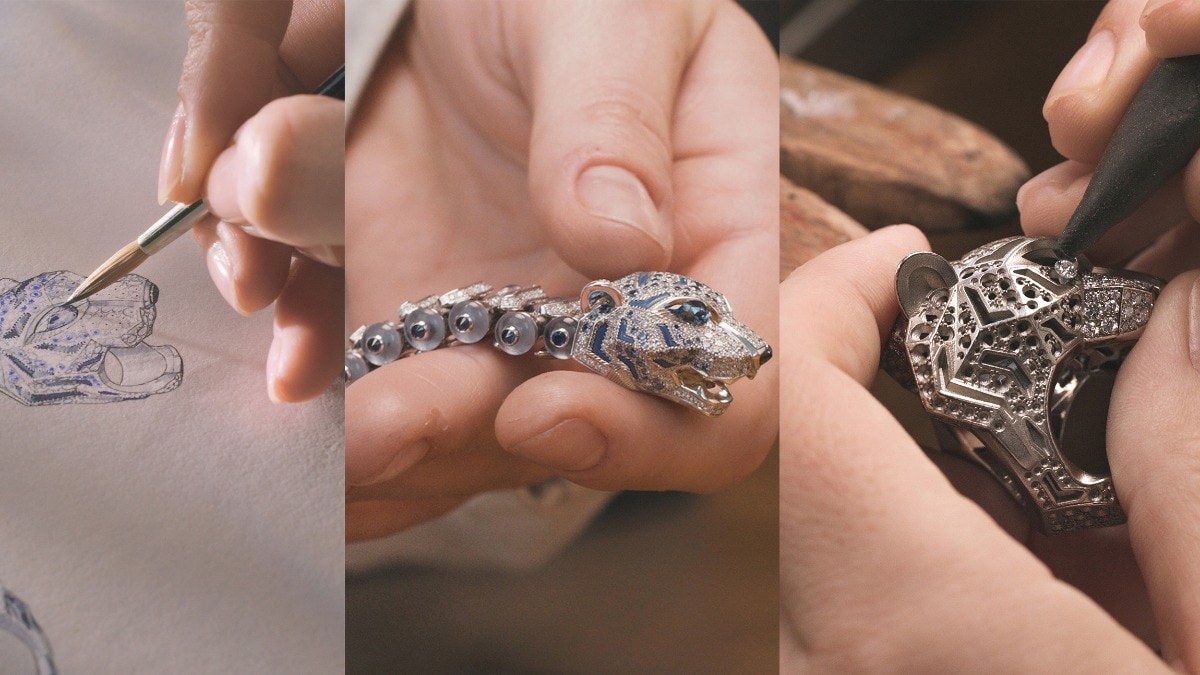
There is something enthralling about Cartier jewellery. It is luxurious, of course, but it is never just about the diamonds, the gold, the gemstones, or the scale of a piece. There is always a sense of character that draws you in. The Maison has built this particularly well through its fascination with animals as its primary subjects, turning that inspiration into some of its most recognisable and enduring jewellery pieces. The panther is perhaps the best example of this, but with its Into The Wild collection, Cartier takes that fascination a little further, creating an entire world of creatures that feel sculptural and almost alive.
The collection brings together five very different animals—tiger, parrot, carp, crocodile, and rhinoceros—each with its own personality and presence. What makes them so compelling is the way Cartier transforms something so intrinsic into something distinctly luxurious. If you look closely, these designs are not simply recreated in precious stones. Their expressions, textures, and movements are translated through the Maison’s craftsmanship, making each piece feel more like a portrait that speaks to you personally.
What began in the early 1900s with birds and insects gradually grew into a much larger menagerie, with reptiles, felines, chimeras, the zebra, and the elephant becoming part of the Maison’s visual language. The panther, which first appeared in its three-dimensional sculptural form in 1948, has remained at the centre of this world. Into The Wild builds on that history, but this time the focus moves towards five new characters, each interpreted through a mix of jewellery techniques, colour, and precious stones.
The collection stands out in the way Cartier approaches wildlife almost like an artist would approach a subject in the wild. There is a close observation of anatomy, but also an interest in what makes each animal distinctive. In wildlife art, it is often not enough to simply capture what an animal looks like. The real challenge is to capture its movement, expression, and the feeling it creates when you see it. Cartier takes a similar approach, translating these qualities into jewellery through sculptural forms, precious stones, and intricate settings.
This idea comes through most strongly in the way Cartier portrays each animal: narrowing down to their most recognisable features, but elevating through volume, colour, and craftsmanship. There is something almost theatrical about the way these creatures confront you. Like a work of sculpture, they are designed to be looked at from different angles, allowing the details to reveal themselves gradually. The jewellery becomes less about simply wearing an animal and more about carrying a piece of Cartier’s interpretation of the natural world with you.
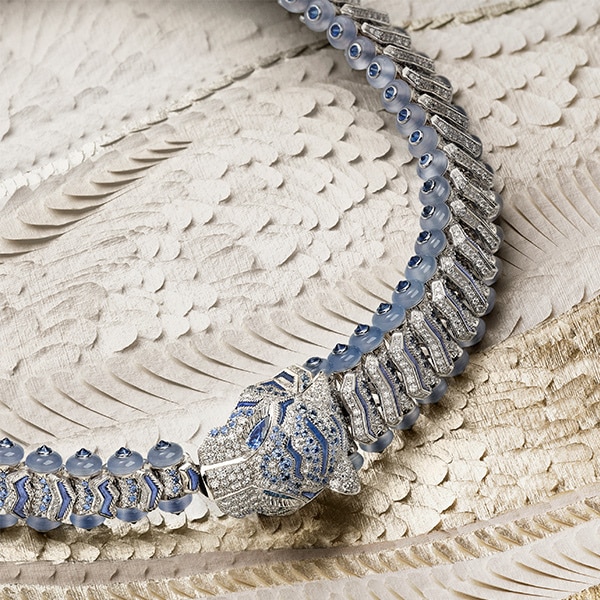
The Tiger Bracelet and Necklace take this idea even further. The tiger’s head immediately catches your attention, but it is the contrast between the head and the body that makes the pieces so interesting. Cartier keeps the head close to the animal’s actual anatomy, while the body becomes more abstract and graphic. It is almost like looking at a wildlife sculpture that has been broken down into lines, movement and texture, before being rebuilt in gold and gemstones. This balance between realism and abstraction is what gives the jewellery its sense of life.
For the tiger, Cartier chooses a palette of deep and icy blues. Dumortierite quartz forms its distinctive stripes, sapphires cover the head and body, and aquamarine creates its eyes. The head is covered in diamonds using a graphic galuchat-effect setting, giving the surface a texture that recalls the animal’s coat. Rather than simply reproducing the colours of a tiger, Cartier takes the idea of its markings and translates them into something much more precious. The familiar becomes something almost otherworldly.
There is also a sense of movement built into the bracelet. Its body sits on a fully articulated gold structure made up of moveable links, allowing the piece to follow the movement of the wrist. Dumortierite quartz and sapphires create the abstract pattern across the body, while chalcedony beads set with sapphires add another layer of texture. It has weight and presence, but still moves with you, almost mimicking the natural movement of the animal itself.
Even the clasp has been incorporated into the design. The opening and closing mechanism is hidden inside the tiger’s mouth, so there is no visible interruption in the form. It is the kind of detail that may not be immediately obvious, but is important to the overall illusion. The engineering disappears, leaving only the image of the tiger wrapped around the wrist.
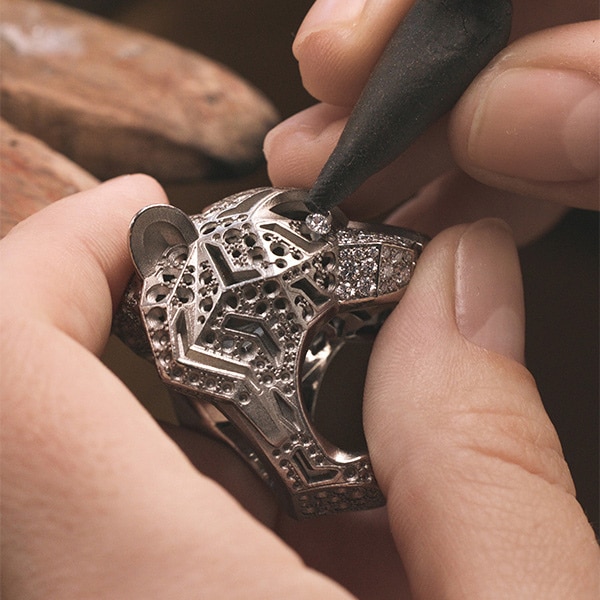
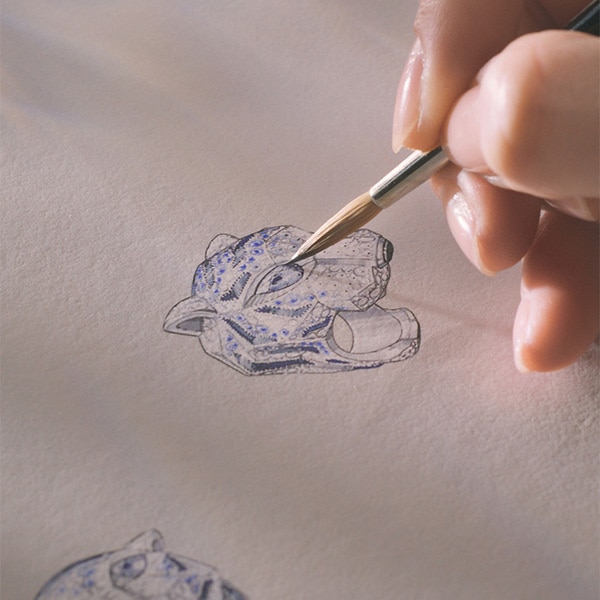
This attention to detail runs through the collection. Cartier’s designers, jewellers, lapidaries, and gem-setters work together to recreate the different textures found in the natural world. For the tiger, the dumortierite quartz is carved to create its stripes, while specialised paving techniques are used to suggest fur and other animal textures. The craftsmanship allows the pieces to move beyond representation. And perhaps this is where Into The Wild feels most like a natural extension of Cartier’s world. The Maison has always understood that memorable jewellery is not necessarily the piece with the most stones, but the one that leaves an impression. There is a certain magnetism to these creatures because they feel like characters rather than motifs. Pierre Rainero, Cartier’s Director of Image, Style and Heritage, describes the Maison’s fauna as moving between naturalism and extreme stylisation, with each creature carrying its own attitude, personality or state of mind.
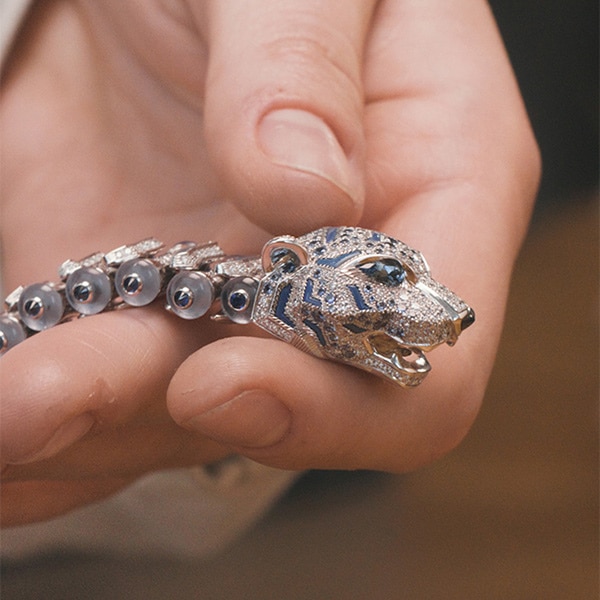
The Tiger Bracelet and Necklace capture that idea particularly well. They have the grandeur expected of Cartier high jewellery, but there is also something more instinctive about them. Like a striking work of wildlife art, they ask you to look twice. The more you look, the more you notice the carving, the setting, the movement and the relationship between the stones. Nature provides the subject, but Cartier turns it into something sculptural, personal, and entirely its own.
Image credits: The brand
Also read: Ballerinas are getting the sneaker treatment—and we aren’t complaining
Also read: Checkered fashion finds that make the classic print feel new
ADVERTISEMENT
Must Read








ADVERTISEMENT