The rise, fall, and return of the Indian supermodel
Bhavitha Mandava’s ascent marks the latest chapter in a legacy that began decades ago.

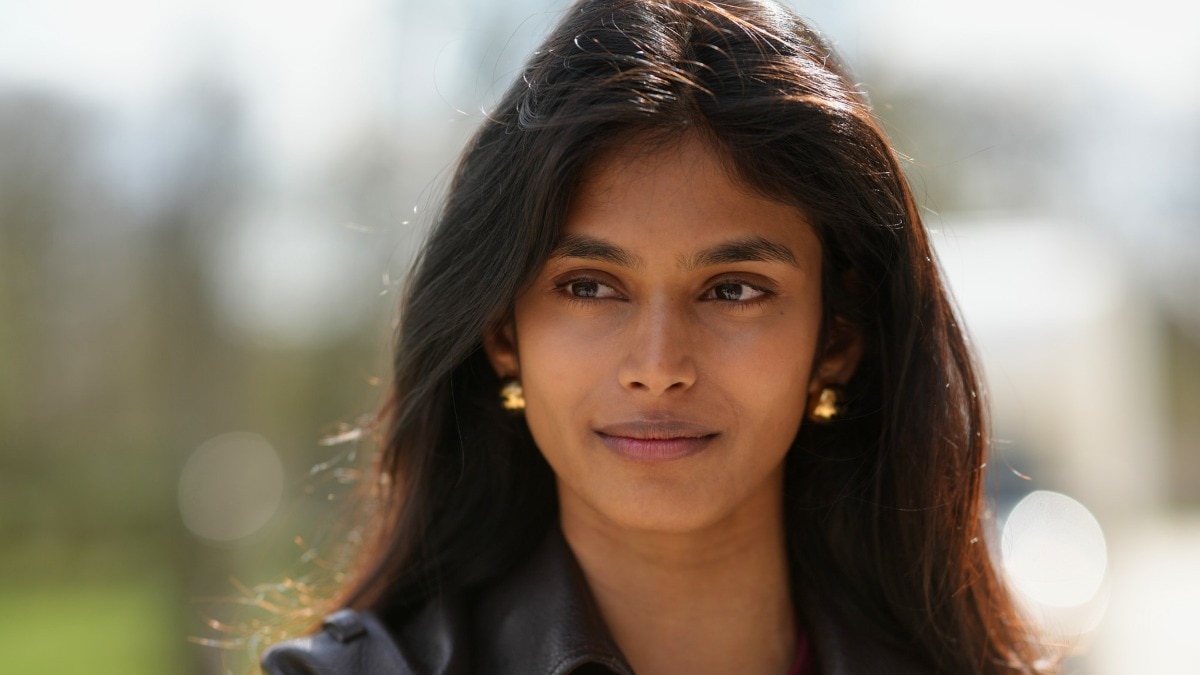
In fashion, certain runway moments feel larger than the show they belong to. When Bhavitha Mandava opened the Chanel Metiers d’Art 2026 Collection in New York last year, it carried the electricity of a cultural shift. Not simply because it was historic—Mandava became the first Indian model to open a Chanel show—but because it arrived as the latest chapter in a much larger story.
As she walked across the subway platform set—perhaps an uncanny echo of the one where she was first scouted—Mandava wore Matthieu Blazy’s vision for Chanel with effortless ease: a T-shirt layered under a half-zip sweater, relaxed jeans, a suede bag slung casually over the shoulder, a jacket tucked under her arm. The look was deliberately unfussy, almost cinematic in its simplicity. And yet the symbolism of the moment felt profound. To see one of our own on the runway of one of fashion’s most anticipated shows of the year was not just a personal milestone for Mandava; it was a win for South Asia on the global stage.
But Indian models haven’t simply appeared on international runways over the years. Slowly, almost imperceptibly, they have reshaped how fashion imagines beauty itself. Mandava’s rise feels particularly resonant because it sits at the end of a lineage that has been unfolding for decades.
Long before diversity became an industry buzzword, supermodel Ujjwala Raut was already navigating the international runway circuit. In the late 1990s and early 2000s—an era when global catwalks were still dominated by a narrow aesthetic—Raut was a familiar presence on the runways of Gucci, Valentino, and Dolce & Gabbana, bringing an unmistakable Indian poise to the runway. At the time, her presence wasn’t framed as a breakthrough. But in retrospect, Raut’s success quietly expanded the visual vocabulary of global fashion. She would go on to become the first Indian model to front a campaign for Yves Saint Laurent, a moment that subtly shifted perceptions of who could represent a heritage luxury house. The idea that an Indian face could belong alongside the industry’s biggest supermodels suddenly felt entirely natural.
The next wave of Indian models built on that foundation with striking momentum. Among them, Lakshmi Menon became one of the most recognisable Indian faces in international fashion. Campaigns with Hermes and Givenchy, alongside runways for Chanel and Stella McCartney, placed her firmly within the global fashion circuit. For much of that period, Menon remained one of the few Indian models consistently working across the major fashion capitals (Paris, Milan, New York) at a time when the industry was only beginning to confront its limited understanding of diversity. Over time, her longevity made the presence of Indian models feel less exceptional and far more expected. By the 2020s, Delhi-born Avanti Nagrath arrived with a distinctly contemporary energy, quickly becoming a favourite among luxury houses. Her opening of the Versace Autumn/Winter 2022 show in Milan—making her the first Indian model to do so—felt like a moment that crystallised years of incremental progress.
A similar evolution can be traced through the career of Neelam Gill, the first Punjabi model to walk the Victoria's Secret Fashion Show in 2024. For many in the South Asian diaspora, her presence carried an acknowledgement that the industry is beginning to reflect the global audiences who engage with fashion. Against this context, Bhavitha Mandava’s house ambassador announcement feels inevitable. Her story carries the serendipity fashion folklore loves: discovered on a New York subway while studying at New York University, she soon entered the orbit of Matthieu Blazy, who would later cast her in his debut runway for Chanel. Within months, she found herself opening one of the house’s most anticipated shows.
Mandava’s moment also reflects a broader shift unfolding within fashion itself. South Asia is increasingly recognised not only as a thriving market but also as a cultural force capable of shaping the industry’s visual language. Designers, casting directors, and editors are looking beyond the traditional fashion capitals, discovering new narratives (and new faces) in the process. She embodies that transition with an ease that feels entirely contemporary. She doesn’t read as an exception or a token inclusion; she feels exactly like where fashion is headed. After all, we now live in a world where a relatable 25-year-old architecture student from Telangana can also be a quintessential Chanel girl.
The runway has always mirrored cultural change. For decades, Indian models appeared as cameos sprinkled across the global fashion circuit. But in 2026, the industry’s perception of real representation is finally widening. And moments like Mandava’s remind us that progress is built through generations of women stepping onto unfamiliar stages and redefining what belongs there.
From Raut and Menon’s enduring international careers to Nagrath and Gill’s cultural resonance, we’ve come a long way. Bhavitha Mandava being named a House Ambassador for Chanel simply adds another rung to that ladder.
Lead image: Getty
Also Read: What is the ‘Sydney Sweeney effect’ and how is it changing the rules of modern stardom?
Also Read: Growing up in public: Ananya Panday on fear, fame, and finally finding her centre