




ADVERTISEMENT
This New York restaurant is rewriting the map of South Asian diaspora cuisine
At Drāvida, every dish tells a story of migration. Chef Aarthi Sampath explains why those stories deserve a place at the centre of South Asian dining.

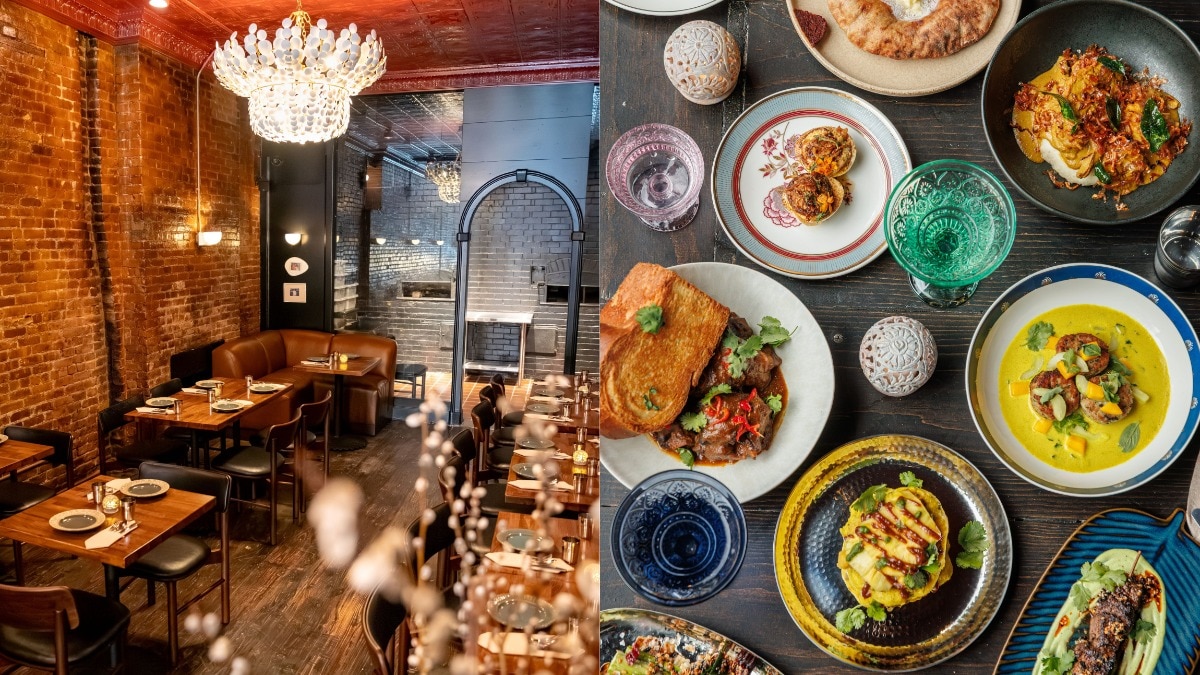
Indian restaurants around the world have long been built around geography. Whether they're centred on North Indian classics, South Indian staples, or hyper-regional cuisines, the goal is often to recreate a version of a place left behind. In doing so, they celebrate India's extraordinary regional diversity, but they also overlook another equally rich culinary story that exists beyond the country's borders.
That story belongs to the South Asian diaspora. From Guyana and Trinidad to Malaysia, South Africa, and New York, recipes travelled with generations of migrants, adapting to new ingredients, cultures and histories while holding onto the flavours of home. The result isn't simply Indian food abroad, but entirely new culinary traditions shaped by movement, memory and exchange.
It's this overlooked history that Mumbai-born chef Aarthi Sampath brings to Drāvida, her East Village restaurant dedicated to the breadth of the South Asian diaspora. Rather than defining authenticity by state lines or regional labels, the menu draws connections across continents, pairing Guyanese curries with Nepali timut pepper, South Indian comfort food and flavours influenced by centuries of migration. The result is less a regional restaurant than a celebration of South Asia's shared yet deeply diverse food heritage.
After more than a decade in New York's restaurant industry, and wins on Chopped and Beat Bobby Flay, Sampath is betting on a concept many once considered too niche. In conversation with Harper's Bazaar India, she reflects on building Drāvida, why diaspora cuisines deserve a place in the global dining conversation, the changing face of women in hospitality, and why the future of South Asian food extends far beyond the borders that have long defined it.
Harper's Bazaar: You describe Drāvida as a restaurant rooted in the South Asian diaspora rather than simply Indian cuisine. What inspired you to centre the restaurant around migration, memory, and shared culinary histories instead of regional boundaries?
Aarthi Sampth: Drāvida is rooted in the South Asian diaspora. Our menu is inspired by the many corners of the world where South Asians have settled—from Guyanese Indians and Malaysian Tamils to Sri Lankans, Pakistanis, Bangladeshis, Nepalis, and beyond. It's a celebration of the journeys that carried our culture across continents.
Over centuries, through the spice trade, migration, and indentured labour, South Asians built communities around the world. They took their recipes, spices, and traditions with them, adapting to local ingredients while holding on to their roots.
At Drāvida, those stories come to life through familiar spices, shared cooking techniques, and dishes that reflect how our cuisine evolved across countries and generations. It's a celebration of South Asia not just as a place, but as a global community connected through food.
HB: Your menu brings together influences from India, Sri Lanka, Trinidad, Guyana, South Africa, and beyond. What do these diaspora dishes reveal about South Asian food that traditional narratives often overlook?
AS: What I'm really trying to celebrate is the beauty of our diversity. Every state and region has its own ingredients, cooking techniques, and flavours. Then imagine that diversity travelling across the world.
As South Asians migrated—through the spice trade, as merchants, and later as indentured labourers—they carried their food memories with them. They recreated the dishes they grew up with, adapting them to the ingredients they found in their new homes.
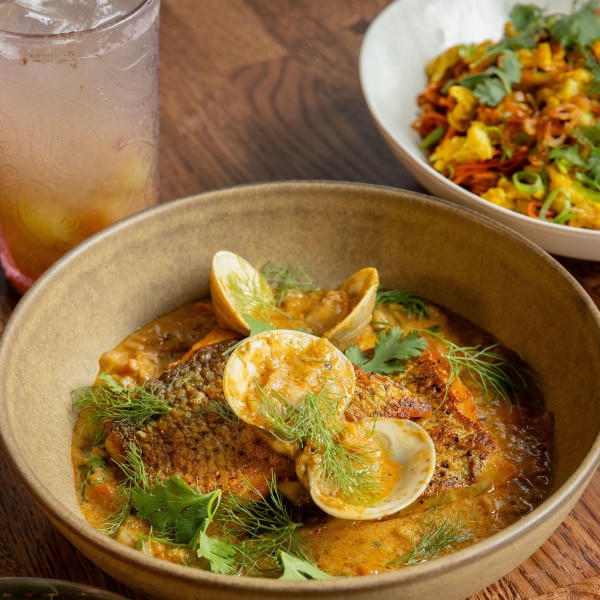
Take Guyana, for example. The Indian community there still makes incredible chicken and goat curries, but they've evolved. They use local ingredients like wiri wiri pepper, which is intensely spicy, floral, and almost fruity, along with herbs such as thyme and parsley that became part of the local pantry.
The result is a curry that still feels unmistakably Indian, but has an identity of its own. It's different from a North Indian curry not because it's any less authentic, but because it reflects a community adapting, surviving, and creating something uniquely theirs.
That's what Drāvida is about. Every dish tells the story of how South Asian food travelled, adapted, and evolved, celebrating both our shared roots and the incredible diversity that grew from them.
HB: You mentioned that this restaurant is for New Yorkers who haven't seen their food get represented. What, according to you, does meaningful representation in hospitality look like beyond simply putting a dish on the menu?
AS: New York City is the greatest melting pot in the world. Every culture, tradition, and diaspora is represented here, so if you want to experience the world, you don't have to look much further.
My travels to places like Nepal, Sri Lanka, Singapore, and Indonesia have certainly inspired my cooking, but nothing compares to the exposure you get from living in New York—the people you meet, the stories you hear, and the food they share with you.
That was the inspiration behind Drāvida. Despite the city's diversity, so much of South Asia's culinary landscape isn't reflected on restaurant menus. We see the same dishes time and again, while so many regional and diaspora cuisines remain overlooked.
I wanted to change that by showcasing these bold, vibrant cuisines that are deeply rooted in history. Every dish tells a story of migration, adaptation, and culture. For me, that's what meaningful representation looks like.
HB: Hospitality has long relied on women, yet restaurant leadership remains disproportionately male. Have you noticed a shift in opportunities and attitudes over the past decade?
AS: Hospitality demands a lot from you. You give up weekends, holidays, birthdays, and family gatherings because those are often your busiest days. It's a profession that requires tremendous sacrifice.
For women, there's often another layer to that. Many still carry a large share of the responsibilities at home, whether that's raising children, caring for family, or managing the household. Balancing those responsibilities while running a restaurant can be incredibly demanding.
I don't think it's impossible—far from it. There are so many incredible women proving every day that it can be done. But having a strong support system, whether that's a partner, family, or community, makes an enormous difference.
I also think things are changing. More partners are sharing responsibilities at home, and we're seeing more husband-and-wife teams building restaurants together. My friend Hanisha and her husband, Jamsheed, who run a successful restaurant group in Delhi, are a great example. They support one another, share parenting responsibilities, and build together. That's the future I'd love to see more of—one where hospitality doesn't require one person to sacrifice everything, but where families and partners build those dreams together.
HB: Was there a dish on the menu that people advised you against serving because they thought New Yorkers "wouldn't get it"?
AS: Forget a dish—my entire idea was dismissed. Investors, chefs, and restaurateurs all thought I was crazy. I was rejected more times than I can count and constantly told it would never work, that people wouldn't understand it, and that it was too niche.
But I've always believed that just because someone else can't see your vision doesn't mean it's wrong. Sometimes it's simply ahead of its time.
I believed in this idea from day one, and I believed in myself. At the end of the day, that's what matters. If you don't believe in your own vision, no one else will.
HB: You've spoken about building kitchens around respect, systems and consistency. What does good leadership look like to you today, and how different is it from the kitchens you trained in?
AS: Great leadership is really about training. It's about repeating yourself, communicating your vision, teaching your standards, and inspiring people to perform at their highest level.
I don't believe great teams are built through fear. They aren't built by yelling, disrespecting, or intimidating people. They're built by investing in people, coaching them, and giving them the confidence and tools to succeed.
When people understand why something matters, they take ownership. And when they take ownership, that's when excellence happens. To me, that's what great leadership is all about.
HB: What's one ingredient you think deserves the same global recognition as miso or gochujang?
AS: I'm obsessed with timut pepper from Nepal. It comes from the Himalayan region, and while it reminds people of Sichuan pepper, it has a much deeper, more citrusy, almost grapefruit-like aroma. It's floral, fragrant, and leaves this incredible tingling sensation.
We use it on our wood-fired steak at Drāvida, and it completely transforms the dish. It's one of those ingredients that makes people stop and ask, "What is that flavour?"
I genuinely think timut pepper deserves to become an everyday seasoning. Sprinkle it on eggs, grilled vegetables, steak, roasted chicken—almost anything. Once you try it, you'll wonder why it isn't already in every pantry.
HB: If Drāvida succeeds in changing just one perception about South Asian food, what do you hope that perception is?
AS: I don't believe one cuisine is better than another. Every culture has something beautiful to offer—its own ingredients, traditions, techniques, and stories. That's what makes food so exciting.
At Drāvida, I wanted to bring all of those flavours together. Every dish offers something different, so eating here feels like a journey across the South Asian diaspora. Every bite introduces you to a new flavour, a new culture, and a new story.
In the short time we've been open, it's been incredible to watch people's reactions. We've seen Indians discovering dishes from Guyana and Sri Lanka they've never tried before, Pakistanis learning about Malaysian Tamil food, and non-South Asians realising just how incredibly diverse our cuisine really is.
That's exactly what I hoped Drāvida would do: create curiosity, spark conversations, and celebrate the diversity of South Asian food. My goal is simple—to keep showing up, keep telling these stories, and keep introducing people to cuisines that deserve far more recognition.
All images: Rainmaker Consults
Also read: Inka by Bastian's new lunch menu brings together the best of two worlds
Also read: Window Magic Atelier opens in New Delhi
ADVERTISEMENT
Must Read







ADVERTISEMENT