




ADVERTISEMENT
Why Erdem Moralıoğlu believes fashion should outlast trends
As London-based label ERDEM turns 20, the designer reflects on permanence, storytelling, independence, and the women who continue to inspire him.

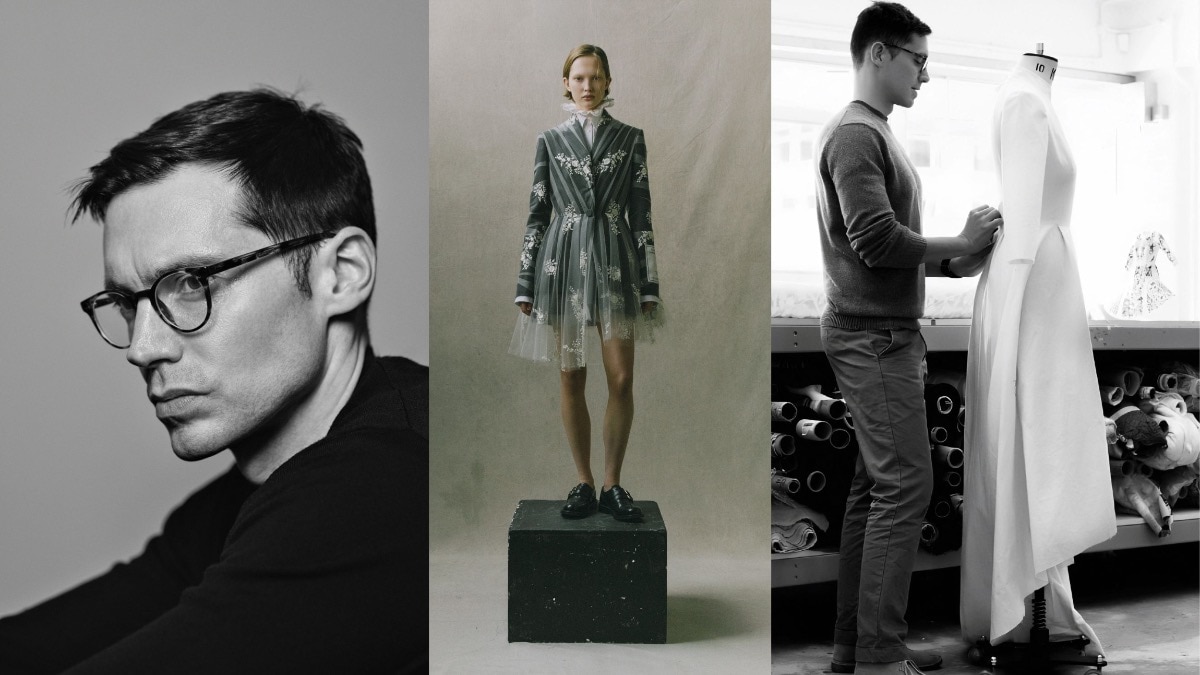
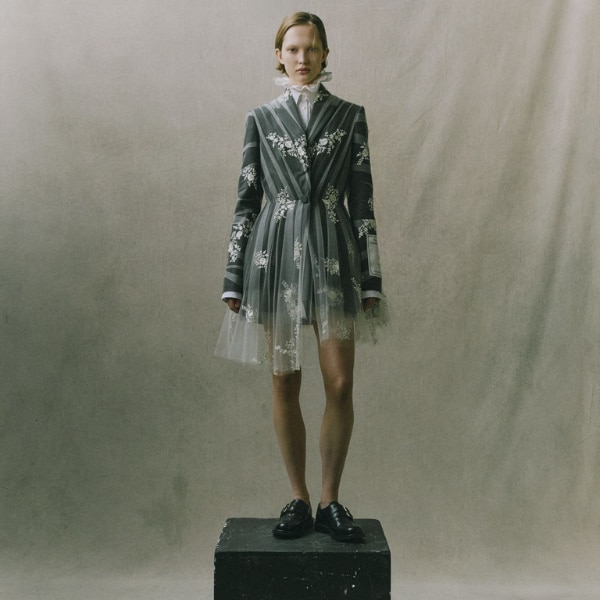
It has been 20 years since Erdem Moralıoğlu launched established itself as one of the industry’s most devoted archivists of feeling. Seeking inspiration from lost histories, half-remembered romances, eclectic visions, an ERDEM creation could have emerged from anywhere; from a faded photograph to dusty library shelf, to a grand country house, or even a fever dream.
To mark this very special anniversary—no mean feat for an independent label from London—the designer’s team put together a short film with friends of the House congratulating him on this milestone. Recorded with the grainy translucence of digital camcorders from the naughties, the film features an array of familiar faces—from Glenn Close and Helen Mirren to Keira Knightley and Anna Wintour—and ends with singer-songwriter Beth Ditto jubilantly screaming into the camera, “You’ve made it!”
Moralıoğlu laughs when I bring it up. “Somehow it feels like 20 years and somehow it really doesn’t,” he says as we connect on Zoom from his London studio, where he sits before a stacked bookshelf, full of novels, poems, letters, memoirs, and plays that the designer loves to read to understand in stasis a playwright’s craft beyond the embodied movements afforded by a proscenium. “Every show still feels exciting. That’s what’s wonderful about this world. We get to start over every season and create a new body of work.”
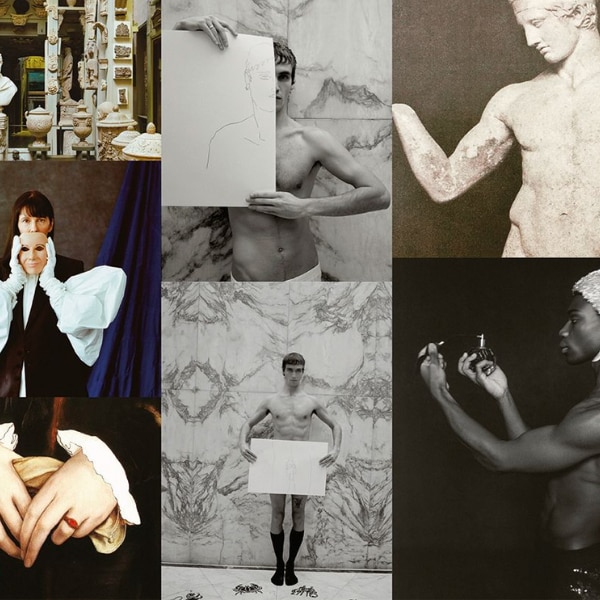
The sentiment that reveals something fundamental about Moralıoğlu; despite standing atop a body of work that’s rooted in history, nostalgia, yearning, whimsy, and romance, he continues to be one of the most intrinsically future-facing artists of our times. Yet, long before he became one of Britain’s most celebrated designers, Moralıoğlu was a boy growing up in Montreal, fascinated by women. Raised alongside his twin sister by their British mother, he became captivated by “the language of the feminine”: the way women moved through the world, how they dressed, walked, and spoke. “Even as a little boy, I always drew aesthetics. Inspired by French writer George Sand, he instead created a romantic wardrobe populated by lovebirds, neck scarves, and sweeping dresses. It was deeply personal, entirely self-funded and brought to life by former Royal College seamstresses. Looking back, he sees in that debut, the beginnings of an idea that would define his career. “Even then, I was interested in creating something with permanence,” he says. “I loved the idea that a customer might look at my clothes and wonder: is it new? Is it old? When and where is it from?”
Permanence is a word with loaded rarity today in the fashion industry, where the cruel trappings of the digital economy seem determined to take anything and everything into immediate obsolescence. Yet, it’s a word that runs through Moralıoğlu’s vocabulary, and in a way defines his post-trend collections which sometimes implore viewers to reconsider their relationship with women,” he recalls. “I was interested in women. Fashion was always something I was going to do.”
Through television programmes such as Fashion Television and Fashion File in his adolescence years, he voraciously drank in every aspect of the world that he could lay his eyes upon. “Fashion was my food,” he says simply. “I was obsessed.” It was an obsession that eventually brought him to London. Having missed the application deadline for Central Saint Martins by a day (“a very unromantic reason for not going to CSM,” he admits with a laugh), Moralıoğlu submitted an application to the Royal College of Art, drawn by the institutions’ alumni roster which included visionaries like Ossie Clark and David Hockney.
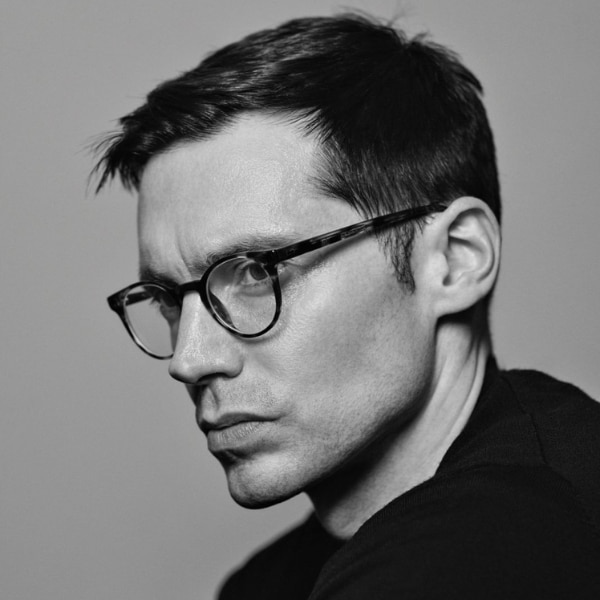
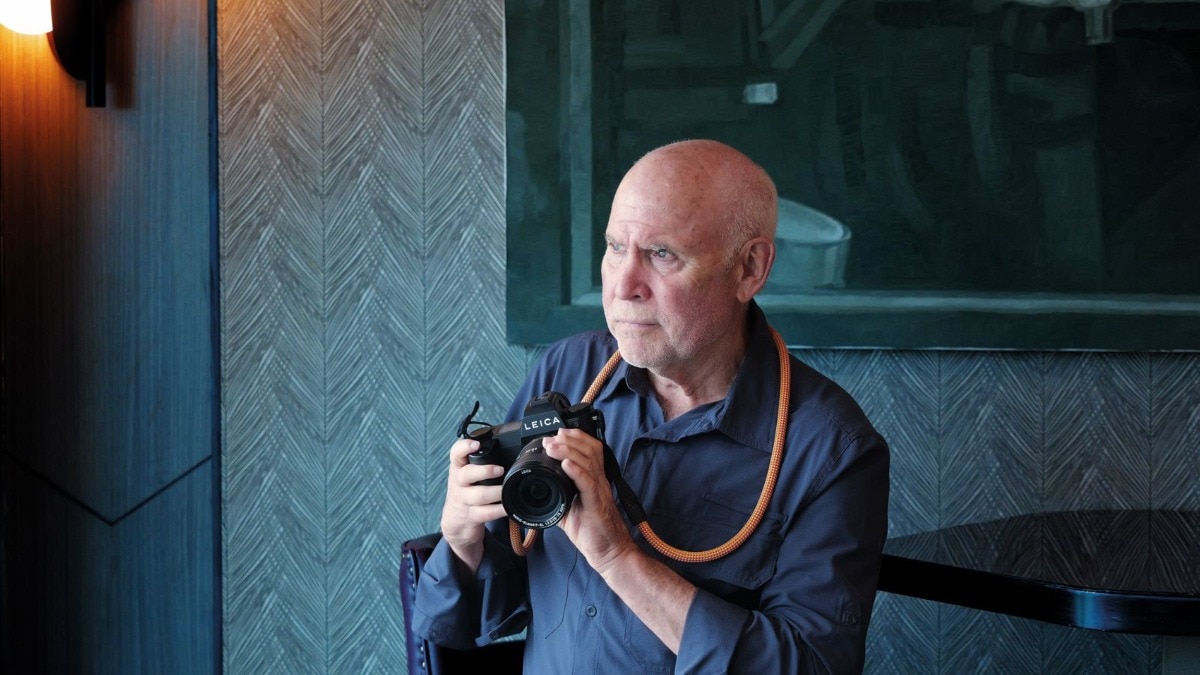
Photo Credit: Erdem Moralioğlu and Tom Mannion (For Moralioğlu’s Portrait)
Spending his many afternoons loitering in the adjacent galleries of the Victoria & Albert Museum, Moralıoğlu soon landed an internship at Vivienne Westwood. There, he encountered a radically different understanding of fashion history where the past was perceived as something not meant to be preserved in glass but something that needed to be dismantled, reinterpreted, and transformed. “How wonderful to look at how an 18th century frock coat is cut and then apply that to a women’s jacket,” he remarks. It is a reflection that seems particularly timely as he remains one of the few contemporary designers of our times whose engagement with history is as irreverently inventive as it is radically imaginative.
“Somehow it feels like 20 years and somehow it really doesn’t.”
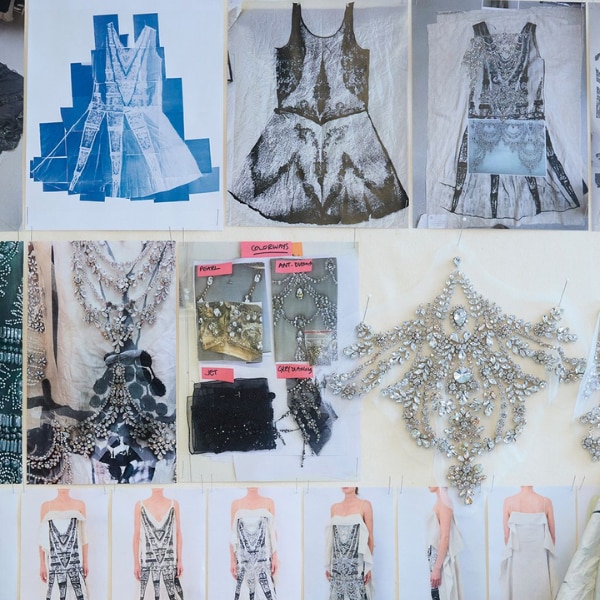
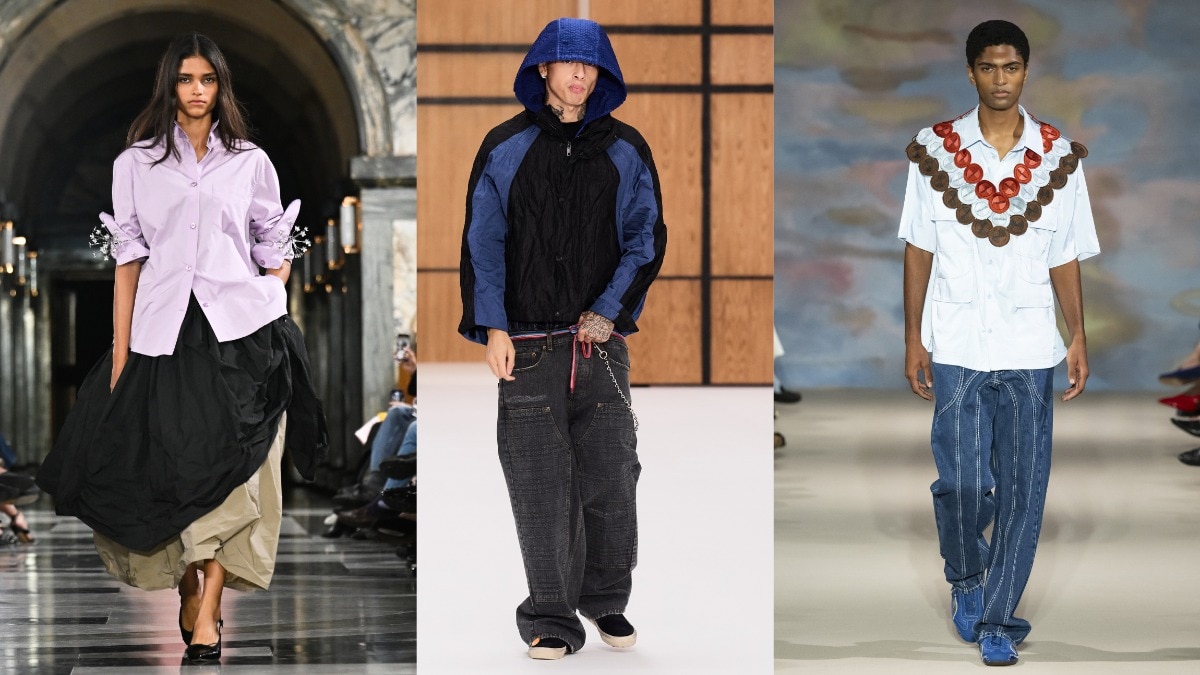
When Moralıoğlu launched his first collection in 2005, London fashion was dominated by darker, punk-inflected time itself. It is a preoccupation evident in his Autumn/Winter 2026 collection, Imaginary Conversations, a meditation on his own archive. Rather than staging a conventional retrospective, Moralıoğlu approached 20 years of work with a deliberate irreverence.
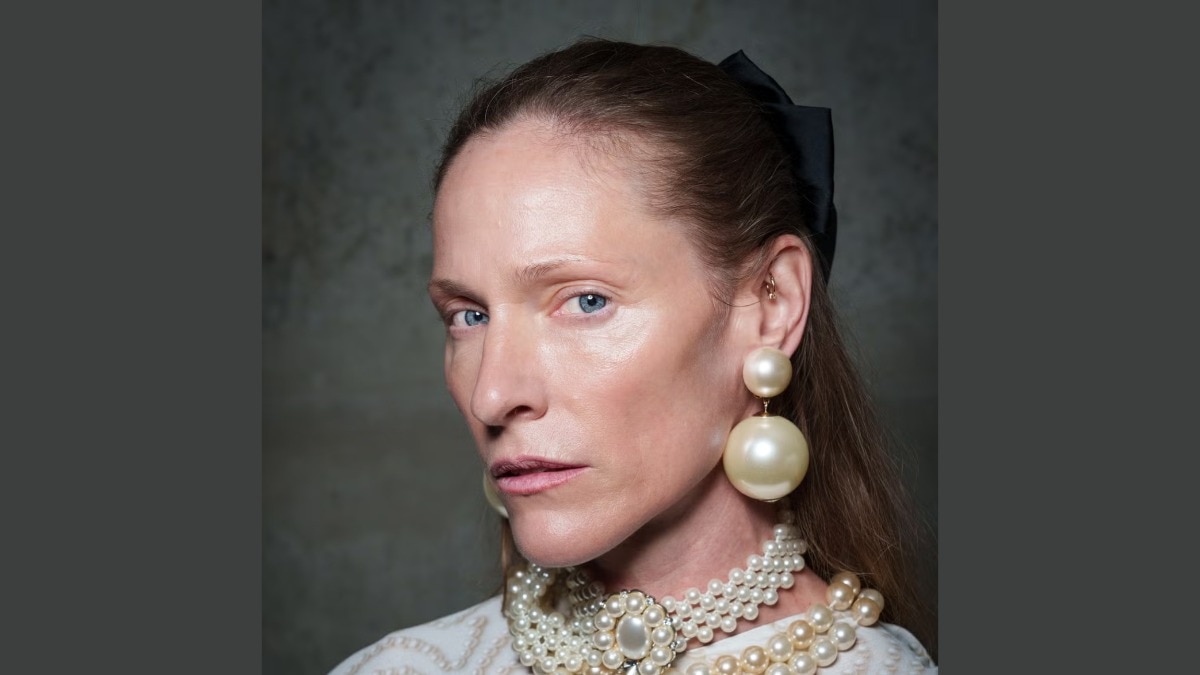
Photographs by: Emma Harries & Paul Kooiker
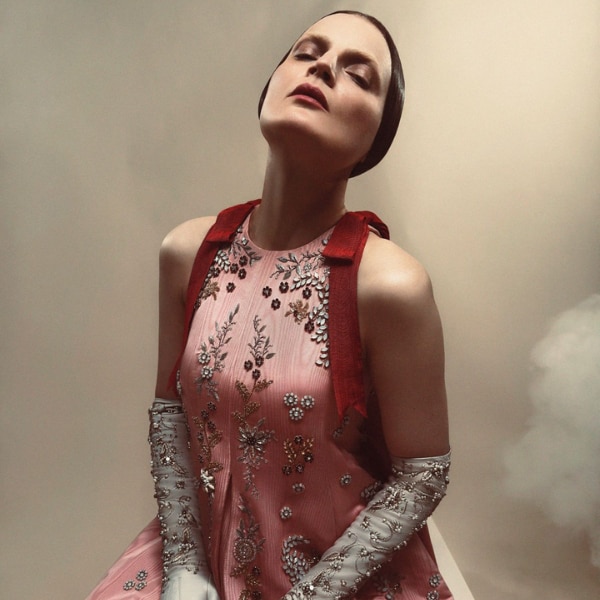
“It’s a dangerous thing, a retrospective collection,” he says. “I wanted to be un-precious about it.” Instead of faithfully reproducing past successes, he dismantled them. Dresses were cut apart and reassembled, and silhouettes from different years were made to collide as long-standing muses seemed to converse with each other across decades. He imagined figures such as Radclyffe Hall, George Sand, and Tina Modotti occupying the same room in a séance. One look in particular remains close to his heart: a pink dress originally inspired by a conversation between Queen Elizabeth II and Duke Ellington. For the anniversary collection, he sliced it apart and paired its romantic bow-sleeves and embellished torso with the minimal utilitarianism of flared denims. “It felt thrilling,” he says. “Taking something precious that I have created and doing something radical with it.”
But these rebellious and radical acts of design often begin with the simple, yet disciplined act of Moralıoğlu retreating to the library at the beginning of every week. There, surrounded by books and silence, he researches and sketches. “You can’t use your phone. You can’t talk to anyone,” he says. “I sit there and draw.” There is surely a monastic quality to the ritual, and it is within the folds of its hermetic hours that the seeds of future collections begin to emerge. “Sometimes it’s just a blank page staring at you,” he says. “And then there’s that moment where the penny drops and you realise: this is it. This is where we’re going.” Inspiration, for the designer, can arrive from anywhere: a novel discovered on a shelf, a blue plaque on a building, an artwork glimpsed at the Venice Biennale. Sometimes an idea remains dormant for years before resurfacing.
Photographs by: Emma Harries & Paul Kooiker
He visited India once a few years ago, travelling through Jaipur, Jodhpur, Jaisalmer, and Delhi.
Earlier this year, two ERDEM pieces entered the permanent collection of the Costume Institute at New York’s Metropolitan Museum of Art. Among them was the trapeze opera coat and its companion skirt from his Spring/Summer 2024 collection inspired by the Dowager Duchess of Devonshire and brought to life in close association with Chatsworth House archives. Produced in close collaboration with Barbour, a long-time collaborator of the designer, the piece was also on display in the Costume Institute’s 2026 annual spring exhibition, titled Costume Art. The Costume Institute has long been a source of inspiration for Moralıoğlu and “to have two pieces live permanently in the collection felt thrilling,” he says.
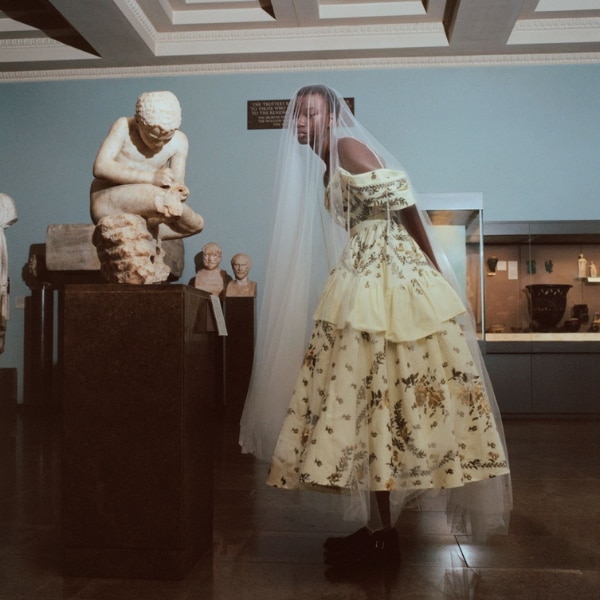
Our conversation soon reveals the subcontinent as another abiding source of inspiration for the designer. Moralıoğlu visited the country once a few years ago, travelling through Jaipur, Jodhpur, Jaisalmer, and Delhi. “When our guides would take me to the usual tourist places, I’d ask them to instead take me to the local shops where their wives bought saris and fabrics from,” he recalls. “I wanted to see where people actually shopped to understand the texture of the country and its culture a little better.” Those excursions led him into neighbourhoods rarely included on tourist itineraries and offered a richer understanding of Indian textiles, craftsmanship, and visual culture. Elements of that research eventually informed his Spring Summer 2026 collection inspired by Hélène Smith, the 19th-century Swiss medium who believed herself to be many different women across multiple lifetimes, including a Hindu princess. “I need to come back however,” he adds. “India is such a huge country. I’ve only scratched the surface.”
This appetite for more and an unpaused search for the next, is perhaps what has allowed him to sustain himself as an independent designer for two decades in an increasingly volatile industry.
Over 20 years, he has witnessed seismic changes: the collapse of influential retailers, the rise of direct-to-consumer business models, and the uncertainty brought by the pandemic. “You realise you’re independent when something like Covid happens,” he reflects. Yet independence remains one of ERDEM’s greatest achievements. While many contemporaries have disappeared, been acquired or radically repositioned, the brand has maintained a distinct identity.
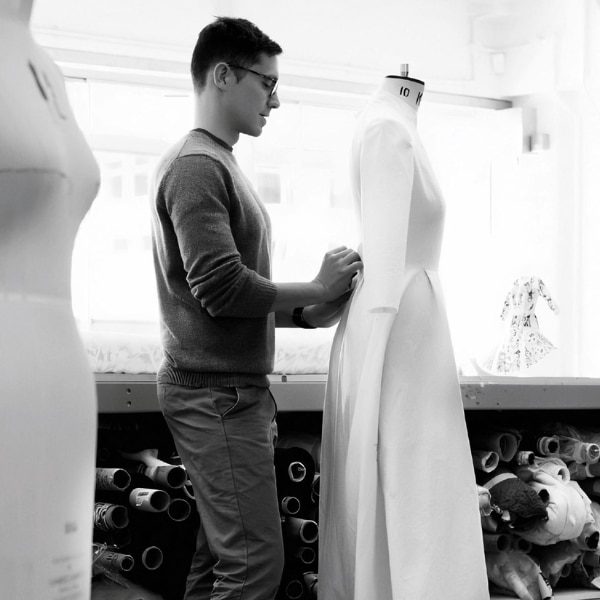
Photograph by: Toby Knott
Part of this conviction also emerges from direct connection. The opening of a second London boutique on Sloane Street introduced ERDEM to a new clientele and reinforced the importance of owning spaces where the brand can communicate with customers on its own terms. When I ask him to describe the ERDEM woman in three words, he pauses, before answering with a smile, “She’s individual. There’s a permanence to her. And she’s beautiful.” The response could just as easily describe the world he has spent two decades creating: a world where beauty is never fleeting, history remains alive, and where fashion, against all odds, still possesses the power to make time stand still.
This article originally appeared in Harper's Bazaar India's June-July 2026 print issue.
Images: Courtesy ERDEM
Also read: At Bazaar dialogues 2026, Anamika Khanna asks the one question luxury cannot ignore
Also read: Manish Malhotra’s artistic couture look is turning heads
ADVERTISEMENT
Must Read

ADVERTISEMENT