Ralph Lauren’s "vintage" earrings are Indian jhumkas, and remain uncredited
When heritage is treated as an anonymous style, fashion stops honouring its roots.

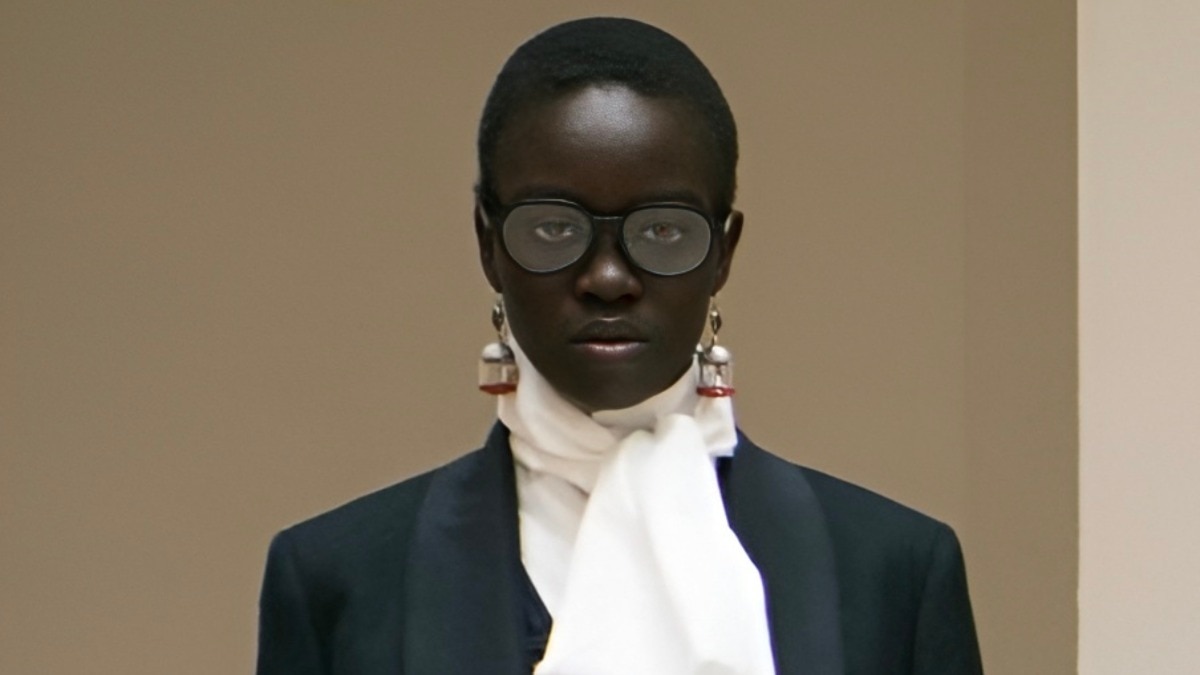
At Paris Fashion Week, where every detail is analysed and every move is intentional, a pair of earrings sparked scrutiny among the South Asian community. At Ralph Lauren’s Fall 2026 runway show, models wore dome-shaped, bell-like earrings that were unmistakably Indian jhumkas. However, they were introduced not as jhumkas, but as “vintage accessories,” with no reference to their cultural origins. The description felt anonymous, neutral, and notably detached from a design that has been part of South Asian jewellery traditions for centuries.
Jhumkas have not appeared out of nowhere. They are rooted in Indian history, visible in temple sculptures, classical dance traditions, bridal trousseaus, and everyday jewellery boxes across the country. Their defining silhouette—a bell that moves with the body—is instantly recognisable. To present them on a global runway, one that shapes trends season after season, without naming that origin is not a minor oversight. It reflects a larger pattern, where cultural details are softened to make them easier to sell and harder to trace back to where they came from.
When ‘vintage’ becomes a convenient label
In luxury fashion, language does a lot of quiet work. Words like “inspired”, “heritage”, and now “vintage” are often used to smooth over uncomfortable questions about origin. In this case, calling jhumkas “vintage” strips them of their geography and authority. It only suggests age, not identity. And while at it, it removes India from the conversation entirely.
This is not the first time an Indian origin design has been relabelled for a global audience. From embroidered textiles to traditional footwear, elements of Indian craft have repeatedly appeared on international runways without clear credit. Prada faced backlash for showcasing Kolhapuri-style chappals without initially acknowledging their Indian origins, and more recently, Givenchy showcased a draped skirt that resembled a saree but was not cited. The shift in terminology is subtle but effective. Once something is framed as vintage, it doesn't matter much where it belongs.
It is a pattern
The backlash to the Ralph Lauren moment was immediate because it is so familiar. Luxury fashion houses have long drawn from Indian aesthetics while keeping Indian artisans and histories at a distance. What makes this cycle frustrating is not just the borrowing, but the lack of credit for where it comes from.
Jhumkas are not abstract design ideas. They are made by skilled craftsmen, often working in local clusters of India where techniques are passed down through generations. Yet, on global platforms, that lineage disappears. The focus remains on styling, not sourcing. The story is told without the people who made it possible.
Why this feels personal
Jewellery in India is not just decorative. It is emotional, cultural, and deeply tied to the country's history. Jhumkas are worn at weddings, festivals, and everyday moments. They are associated with identity in a way that goes beyond trend cycles. When such an object is lifted out of its context and presented as a generic "vintage" accessory, the disconnect is felt rather sharply.
This is why the reaction is not just against fashion language. It is about giving credit. And calling something by its real name is the simplest way to do that. Without it, the design is reduced to just how it looks.
Credit is the new luxury
The global fashion industry no longer operates in restriction or isolation. Audiences are informed, vocal, and quick to call out gaps between 'inspiration' and acknowledgement. What was once overlooked is now questioned in real time, because people have had enough. For brands like Ralph Lauren, the expectation is not just good design. It is also accountability. And surely, crediting cultural origins does not diminish luxury.
Jhumkas are not just any other "vintage accessories". They are Indian, and they deserve to be recognised as such.
Lead image: The brand
Also read: Espadrilles are having a moment again and here’s how to wear them now
Also read: ‘Pillbox hats’ are reclaiming their place as fashion’s power accessory