




ADVERTISEMENT
Can a hand-woven textile survive the digi-tech acceleration?
Three designers, three vantage points, one shared question: can craft keep pace without losing its pulse?

The tension currently vibrating through global ateliers is one of existential physics: how does the "hand-feel" of a textile survive an industry moving at the speed of optical fibre? We have entered a phase of fashion in which garments are often born twice, first as a "digital twin" in a GPU-rendered simulation, and only later as a physical object.
Using Adobe Illustrator, designers are now engineering garments at a molecular level, mapping patterns to accommodate embedded electronics, resulting in pieces like a dress composed of 1,182 sequin-like petals, each hand-applied onto what feels like a fairy-tale garment for the digital age. At the same time, spectacle took on a new form when Bella Hadid stood on the runway as Coperni spray-painted a dress directly onto her body, collapsing the distance between creation and performance. The medium of fashion is becoming increasingly fluid, programmable, and fast.
Yet, as the industry accelerates toward this automated horizon, the hand-woven textile stands as the definitive counter-rhythm. It is the artisanal DNA of the subcontinent, a material that refuses to be rushed or flattened. This is not a simple struggle of "old versus new," but a sophisticated negotiation of value. In a world where AI can hallucinate a thousand perfect prints in a second, the physicality of the hand-woven cloth—with its weight, its drape, and its inherent non-fungible nature—is being repositioned as the ultimate luxury.
The Algorithmic Speed Trap vs The Human Error
This digital acceleration has fundamentally rewired the idea of trends. Algorithm-led forecasting now dictates production cycles, demanding a velocity that the manual loom simply cannot and should not match. For the mass market, this is a triumph of logistics; for the heritage weaver, it is a structural threat. When speed becomes the only metric of success, the complex, cerebral labour of a Jamdani or a Paithani is often dismissed as inefficient.
But this efficiency comes at a profound sensory cost. There is a deficit in a purely digital fashion economy: the absence of tactile character.
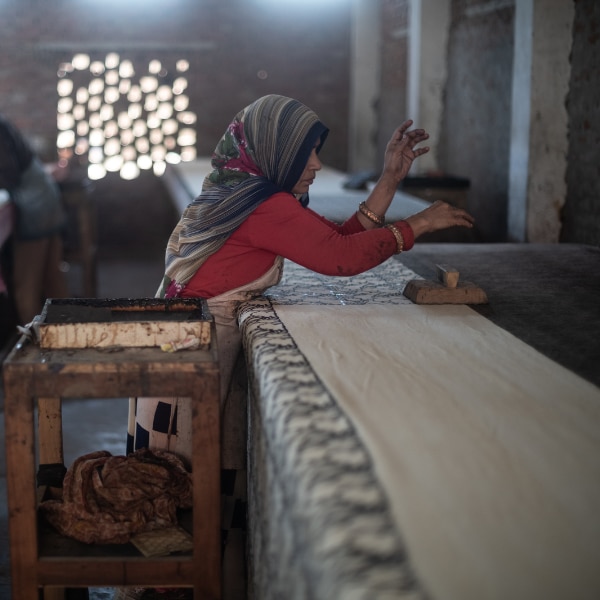
"Technology is undeniably transforming fashion; design cycles are faster, sampling is more efficient," Anita Dongre, Indian fashion designer and founder of the House of Anita Dongre, observes. But she argues that textiles born of the hand operate in a completely different value system. "Their worth lies in time, human skill, and cultural memory. There is a beauty to human error that renders character to the craft."
In an era of perfect machine-led production, the slight irregularity in a hand-drawn line or the organic bleed of a hand-blocked dye becomes the signature of the authentic, a physical proof of life.
The Loom as an Ancestral Processor
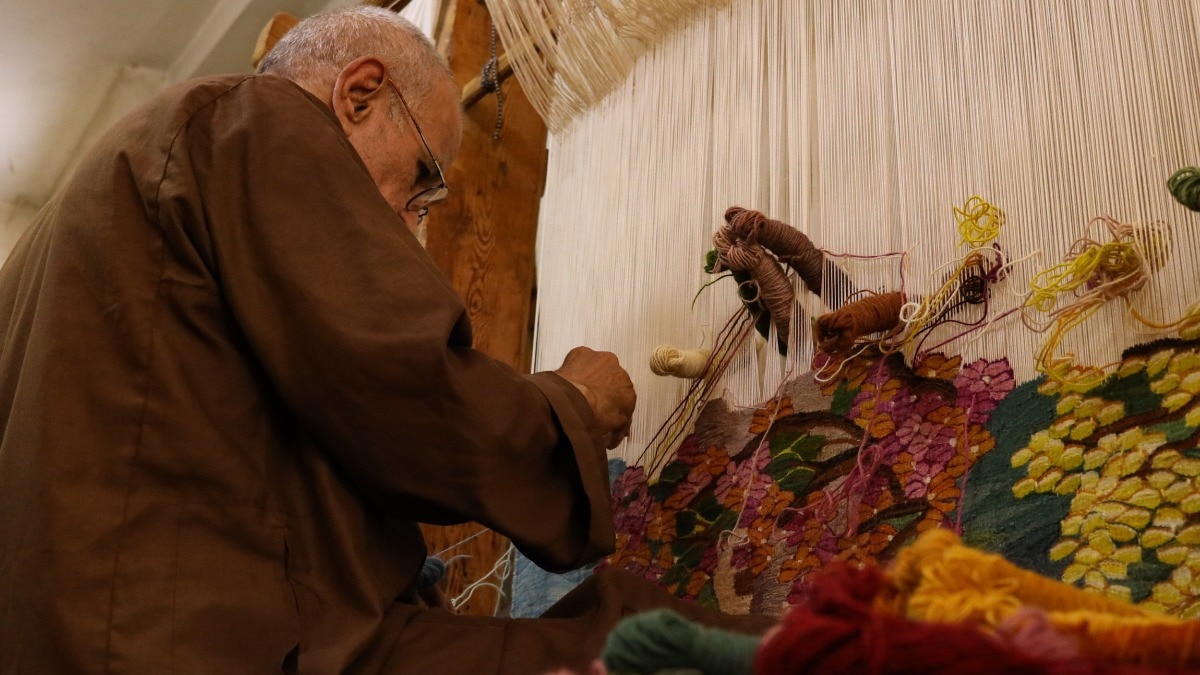
To view the loom as a primitive tool is a fundamental misunderstanding of fashion’s technical history. The logic of the Jacquard loom is the direct ancestor of binary computing; the "up-and-down" of the warp is the original 0 and 1. Today’s high-tech fashion is merely returning to these roots, albeit at a different frequency.
"In textiles, time is not just a cost, it is a material," notes the team at Tilfi Banaras. "The hours embedded in a handwoven Banarasi are what give it density and reflect its heritage lineage." For Tilfi, the loom’s rhythm is a carrier of cultural memory, a "language of the hand and the heart" that refuses the premise that speed equals progress. The risk of the digital sprint is the homogenization of this language, where the nuances of regional identity are flattened into a digital-first aesthetic that prioritises how a fabric looks on a screen over how it feels on the skin.
If the loom is the processor, then the challenge becomes finding a way to upgrade the operating system around it without corrupting the original code.
Digital Scaffolding: The Hybrid Frontier
What’s shifting isn’t just how fashion is produced, but where it begins. Design, once rooted in fabric swatches, drapes, and hand-rendered sketches, is now unfolding on screens, mapped through software, and simulated before it ever meets material. The act of making has been pulled upstream, into a digital space where garments are tested, refined, and resolved long before they are physically realised.
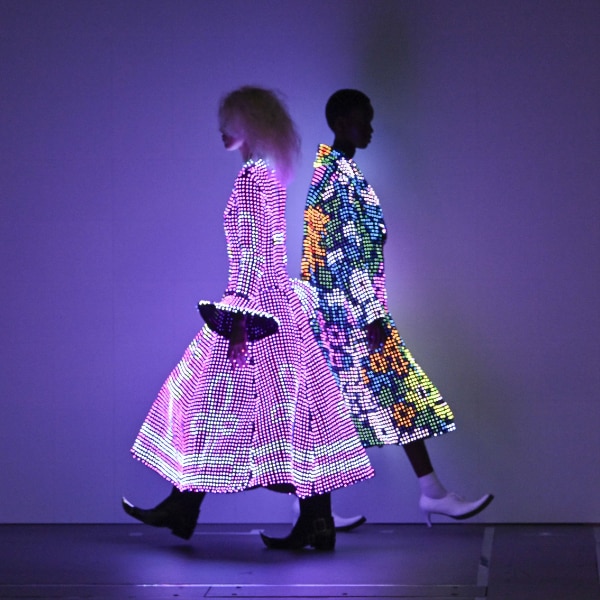
This transformation is most evident on the runway. At Paris Fashion Week, Kunihiko Morinaga’s Autumn/Winter 2026–2027 collection for Anrealage presented garments that responded to light in real time, illuminated surfaces shifting as the body moved through space. These were not just clothes, but coded objects, designed with an understanding that fabric could behave like an interface. The starting point was no longer textile alone, but technology embedded into the very idea of what a garment could be.
Saurabh Gupta, Founder and CEO of KALKI, views technology as a strategic ally rather than a replacement. "Technology is not competing with craft; it is helping frame it more meaningfully," he says. Tools like 3D sampling and virtual prototyping allow collections to be developed, edited, and finalised without the need for excessive physical trials, creating a system where handwoven textiles enter the process later, but with far greater intention.
What this does is reposition craft within the design hierarchy. Instead of being consumed by iterative production, it is preserved for moments that demand depth, texture, and human nuance. The textile is no longer the starting point, but it becomes the point of arrival, where digital precision gives way to material presence.
From Aesthetic Appreciation to Economic Dignity
There is no denying that handwoven textiles are experiencing renewed visibility. Social media has reintroduced craft to a younger audience, reframing it through storytelling, identity, and pride. But visibility is a double-edged sword. "Awareness doesn’t automatically translate to consumption," warns Tilfi Banaras. The challenge for the industry is to turn this "digital curiosity into custodianship."
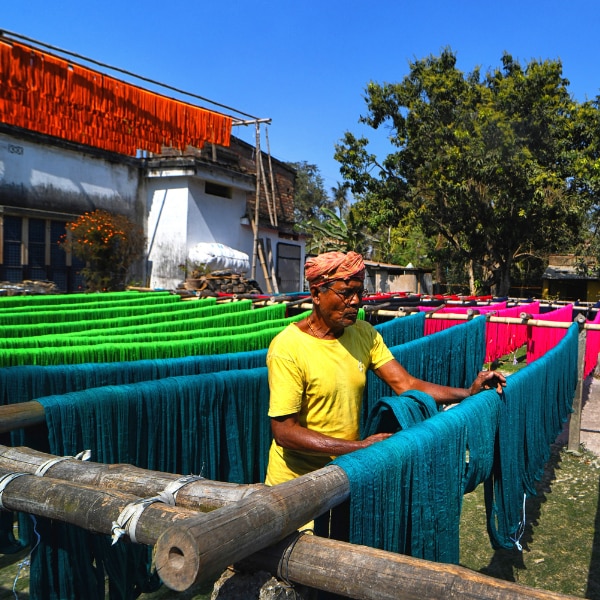
For Dongre, the shift must be structural. "For craft to truly survive, it cannot exist as charity but as a viable livelihood," she asserts. This requires design houses to move away from "occasional craft associations" toward long-term, consistent partnerships. Financial sustainability emerges only when the artisan is positioned as a creative collaborator in the value chain, rather than a mere vendor. When consumers understand that a textile may take weeks to manifest, they begin to accept a 'slow luxury' price point that reflects the true cost of human mastery.
The 2036 Forecast: A Bilingual Heritage
If fashion continues on its current trajectory, speed will only intensify. But that does not signal the end of handwoven textiles. If anything, it sharpens their relevance.
What begins to take shape over the next decade is not a replacement, but a recalibration. A hybrid system where technology handles efficiency, scalability, and access, while handwoven textiles hold their ground as carriers of meaning, identity, and distinction. They may never return to the mainstream in a mass sense, and that is precisely where their strength lies. Their future is closer to couture than commodity, anchoring a more mindful fashion economy that values depth over volume.
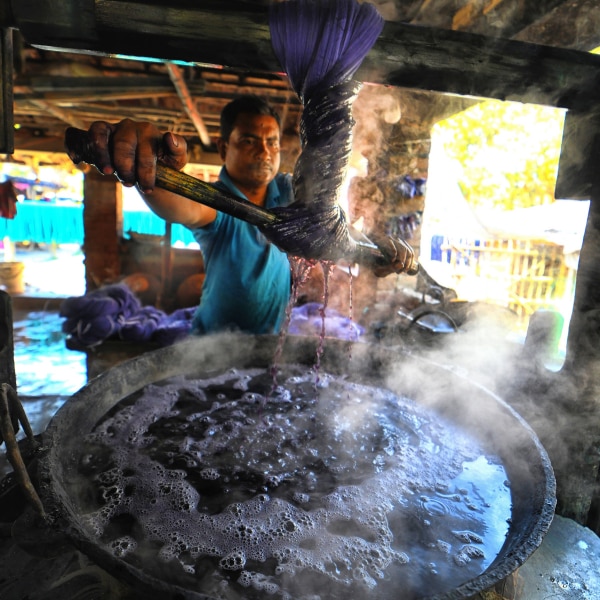
In this evolving landscape, handwoven textiles have become bilingual. They continue to speak the language of tradition, preserving their soul through inherited technique and human touch, while also engaging with the language of data to remain visible and viable in a modern market. As Anita Dongre suggests, the future lies in building systems where craft and modern fashion coexist without losing authenticity.
Because in an increasingly automated industry, the handmade textile stands apart as one of the few objects capable of holding a true narrative, not just in how it looks, but in how it came to be. The time it carries. The hands it remembers.
So while fashion accelerates into its digital future, the rhythmic thrum of the loom does not fade into nostalgia. It persists, steady and deliberate, less as a relic and more as a counterpoint. A reminder that in a world where anything can be generated instantly, the rarest luxury is still time.
All images: Getty
Also read: The era of the 'investment bag' is here and it might outperform your portfolio
Also read: Indian beadwork is finding new life in everyday fashion
ADVERTISEMENT
Must Read
ADVERTISEMENT