




ADVERTISEMENT
The things no one tells you about before your first scuba dive
Yes, it’s a life-changing experience, so prep your mindset.

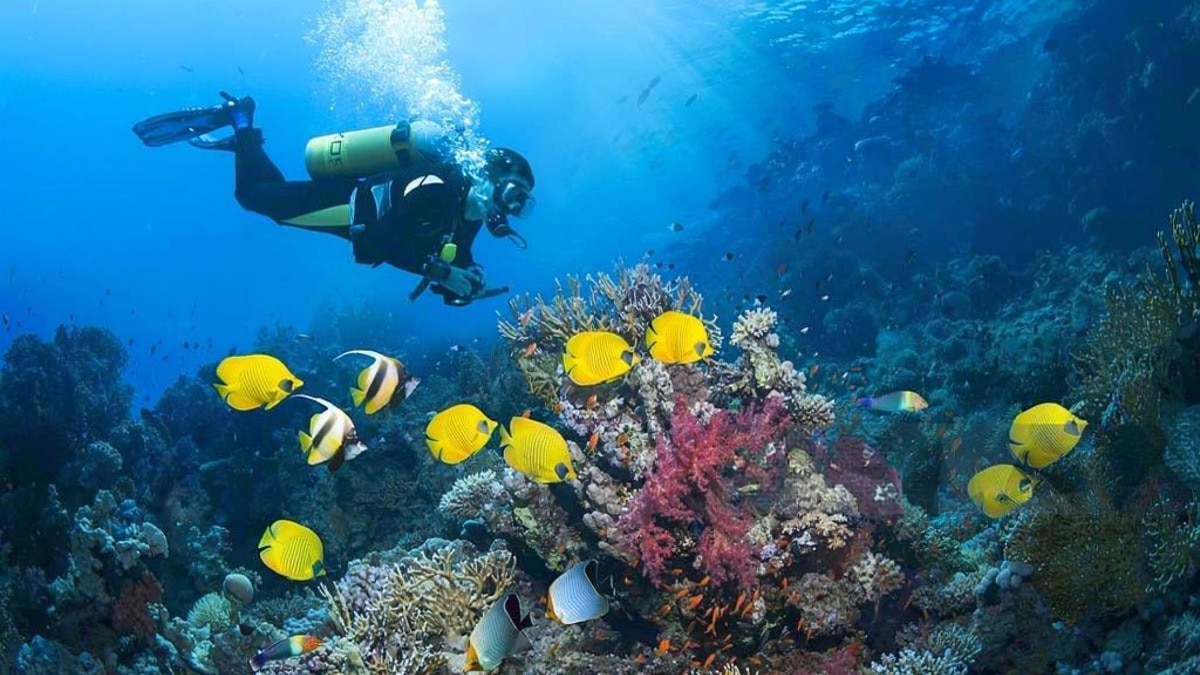
Scuba diving is often described as a life-changing experience, and there really isn’t another activity that comes close to offering so many new sensations all at once. You breathe through your mouth instead of your nose. You're in an environment where gravity doesn’t quite work the way you're used to, and your sense of balance feels completely different. Your hearing becomes muffled underwater, and you communicate using hand signals.
"The hustle and bustle of life on the coral reef, surrounded by endless blue hues, is a feast for your eyes. All of this makes you feel like a bewildered human exploring an alien world," says Mia Raghavi, a PADI IDC Staff Instructor.
Your first scuba dive will naturally be unforgettable, but it can also be full of surprises. Here are seven things no one tells you before your first dive.
If you think you know what to expect, you're probably wrong
Everyone's first diving experience is unique and personal. Some people get excited about observing fascinating marine life, while others feel relaxed and liberated by moving freely through the serene blue world.
When you take a beginner scuba certification, you'll learn a great deal about scuba diving and the underwater world. The theory lessons cover key principles, terminology, and what to expect from the marine environment. During your shallow-water skills sessions, your instructor will teach you how to use your equipment, master essential diving techniques, and build the confidence you need before your open-water dives.
Even with all this preparation, however, your first open-water dive will be unlike anything you imagined. "No words or visuals can truly prepare you for what you'll see, feel, and experience underwater," says Raghavi. "Scuba diving is something you simply have to experience for yourself, and what you take away from it will be unique to you."
Leave your perfect swimming strokes behind and learn to move efficiently as a scuba diver
It's a myth that you need to be a great swimmer to be a good scuba diver. In fact, your flaunt-worthy swim stroke might be of little use once you're wearing scuba equipment.
Scuba divers rely on the Buoyancy Control Device (BCD) and fins to move efficiently through the water. Your arms are usually folded or held in a streamlined position to reduce drag while your fins do the work. Most divers use either a flutter kick or a frog kick to propel themselves forward rather than their arms. With proper buoyancy and finning techniques, scuba diving feels surprisingly effortless and very different from swimming.
"A lot of first-timers think swimming skills are what matter most, but diving is really about buoyancy, breathing, and moving efficiently," says Raghavi. "Once you stop trying to swim and let the equipment do its job, everything feels much easier."
However, during a scuba certification course, you must demonstrate the ability to float or tread water without aids for 10 minutes and swim 200 metres on the surface without equipment, using any stroke at your own pace, or snorkel 300 metres using only a mask, snorkel and fins. These prerequisites simply ensure that you're comfortable and confident in open water and can look after yourself as a certified diver. For beginners who want to experience scuba diving, this is not a requirement.
Slow down to get closer to marine life
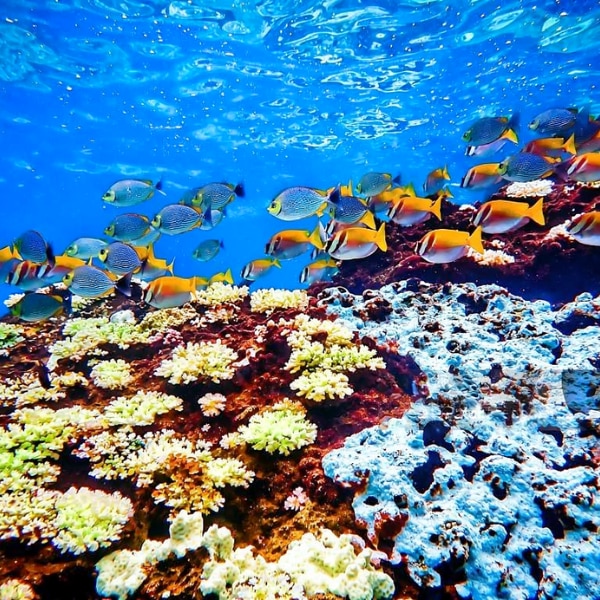
Your first dive is exciting, and you might feel the urge to swim around quickly to see everything. However, moving too fast underwater can leave you feeling exhausted and cause you to consume more air from your tank, shortening your dive time. Marine animals may also feel threatened if you approach them at lightning speed.
Scuba diving is best enjoyed when you slow down and relax. One of the most magical moments is staying still and allowing curious marine animals to approach you, rather than chasing after them. "The more relaxed and still you are, the more the reef comes alive around you," says Raghavi. "Some of the best encounters happen when you simply wait."
The underwater world slows you down
During the briefing and skill practice session, new divers learn how adding or releasing small amounts of air from the BCD controls their movement in the water. What you may not fully appreciate until your first few dives is that there's a slight delay between making an adjustment and feeling its effect.
As you consciously slow your breathing and movements, you also discover that certain things simply can't be rushed underwater. Everything happens at its own pace, including your thinking and reactions, as your mind adapts to a completely new environment. "The ocean teaches patience very quickly," says Raghavi.
It's quiet, and not quite quiet at the same time
When you imagine scuba diving, you probably picture a calm, peaceful world where the only sound is your own breathing through the regulator. While much of the surface noise disappears the moment you descend, the reef itself is anything but silent. If you listen carefully, you'll hear the sounds of marine life all around you.
Snapping shrimp produce a constant crackling sound by snapping their claws. Anemonefish, among the chattiest residents of the reef, communicate with pops and chirps to warn their family of potential threats. Parrotfish and sea turtles can be surprisingly noisy as they graze on coral, while other fish grunt and scrape against the reef. If you're lucky, you may even hear the clicks of a dolphin pod or the mystical song of a whale.
“People expect total silence underwater, but reefs produce subtle sounds that you can hear once you start paying attention,” says Raghavi.
No two dives are ever the same
The underwater world is vast and unpredictable. Every dive feels like a new experience because you never know what the ocean will reveal that day.
Even if you return to the same dive site multiple times, your experience can be completely different. You may encounter marine life you didn't see before, notice changes in visibility or water temperature, or simply view the reef from a different perspective. Diving is a form of exploration, even at familiar locations.
"That's what keeps divers coming back," says Raghavi. "Even at the same dive site, you never know what you're going to find. Every dive tells a different story."
One dive is never enough
Many people assume scuba diving is something they'll try once and tick off their bucket list. But after that first dive, they often realise that one is nowhere near enough.
Moving effortlessly underwater and observing marine life up close leaves a lasting impression. Even the simple act of breathing underwater is so mesmerising that it quickly becomes something you want to experience again.
"Most people think they'll do it once and move on," says Raghavi. "But after that first dive, they usually start planning the next one."
Image credits: Getty Images
Also read: Wellness retreats are exploring the art of longevity
Also read: Discover the quieter side of the Riviera at Hôtel de Paris Saint-Tropez
ADVERTISEMENT
Must Read










ADVERTISEMENT