From Anne Hathaway to Deepika Padukone, who gives people the right to comment on a woman's baby bump?
Deepika Padukone, Rihanna, Margot Robbie, and now Anne Hathaway have all faced scrutiny over how they look while pregnant. Pregnancy is personal, but somehow the pregnant body continues to be treated like public property.

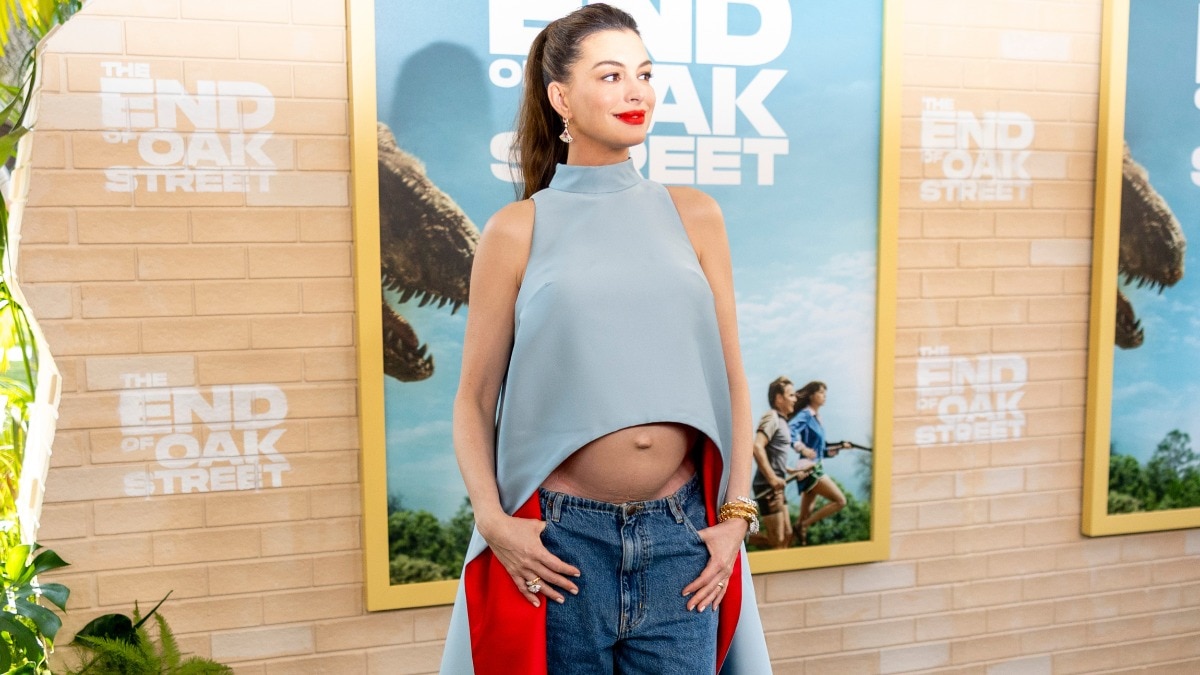
It’s 2026, and I can’t believe we still need to tell people to stop talking about and shaming women’s bodies. Yet here we are. Among the endless and frankly disgraceful commentary that continues to appal me is the reaction to Anne Hathaway’s recent red carpet appearance for The End of Oak Street, where she showed off her beautiful baby bump. She was glowing, more so than usual; her skin, flawless, her outfit, absolutely stunning. Yet all people could focus on was her baby bump and whether it looked real, with some even questioning why they had to see it at all.
Here’s the thing, and we’ve preached this time and time again: You don’t like something on social media? Continue scrolling. Unless the content is harmful to your well-being, society, or threatening in any way, you do not need to criticise it or call it out. It does not concern you. Especially when it is another woman’s body.
Women have already spent years dealing with judgement on their bodies and the way they look. They’re always too fat, too thin, too dressed up, too casual, too made-up, too unkempt. There is always something to scrutinise, some impossible standard we’re expected to meet. But doing this to a pregnant woman? That’s a whole new level of low. For some reason, women are expected to glow through it, stay active, dress well, and somehow remain effortlessly beautiful while growing an entire human being.
The scrutiny starts with the bump
If this commentary feels familiar, it’s because this isn’t the first time a celebrity’s pregnancy has been scrutinised by strangers on the internet. Deepika Padukone went through a similar ordeal during her pregnancy, when people questioned the authenticity of her baby bump during the promotions of Kalki 2898 AD. Part of the discourse was that she apparently didn’t look tired enough for a pregnant woman. She was also seen walking in heels, which is something people decided pregnant women cannot do, because apparently there’s a rulebook for how pregnant women are supposed to move, dress, and behave. And the absurdity does not end there. People even went so far as to zoom into photos of Padukone’s outfit, scrutinising the way her stomach appeared to bend or fold, which, according to them, is unusual for a pregnant belly.
But it’s not just about “fake” pregnancies. The scrutiny can also be much more direct: how a woman looks, how much weight she has gained, and whether she still resembles the woman she was before pregnancy.
Margot Robbie was deemed one of the most beautiful women during the Barbie press tour in 2023. But all of that changed in a matter of one year, when the actor got pregnant in 2024. Suddenly, people were commenting on how “unattractive” she looked, how pregnancy had “ruined” her body, and how she wasn’t taking care of herself. And all of this commentary came from pictures of Robbie spending some private time at the beach with her husband.
What appals me the most is the irony of it all. We spend years telling women that pregnancy is beautiful, natural, and something to be celebrated, only to immediately start policing women who do not look and act like a goddess while doing it. The truth is, there is a very specific version of pregnancy that most people are comfortable celebrating, and it extends to how a woman dresses, too.
When pregnancy fashion has rules
People have come to love talking about pregnancy fashion, but only a seemingly polished version of it. One that is elegant, beautifully made up, and, preferably, modest. Take Barbara Palvin, for instance. She looked ethereal showing off her baby bump in the baby blue Miu Miu gown at the 2026 Cannes Film Festival. She had that lit-from-within pregnancy glow, and her style choices for that particular event made her look like a dream. There’s absolutely nothing wrong with that, of course. The problem is when that becomes the only version of pregnancy we know how to celebrate and accept, while dissing women who choose to present their pregnant bodies differently. That is exactly what people did to Rihanna for her pregnancy fashion too.
Rihanna deliberately chose to show off her bump rather than hide it, wearing crop tops, sheer dresses, low-rise trousers, and outfits that treated her changing body as something to celebrate rather than conceal. Predictably, people had a lot to say, mostly questioning why a pregnant woman would choose to dress in such revealing clothes. Much like Hathaway, she was made to feel like baring her pregnant stomach was a bad thing or something they shouldn’t have to look at.
Where visibility ends, and entitlement begins
Before you blurt out, “But she’s a celebrity,” try to remember that she’s also a person. Her experiences are simply happening on a much bigger, more visible stage. Yes, celebrities choose to reveal parts of their lives in public, but that doesn’t mean every photograph is an invitation to dissect how they look or whether their pregnancy looks convincing enough.
And this isn’t something that only pregnant celebrities deal with. Pregnant women everywhere have been dealing with the same commentary for a long time, whether it’s a colleague commenting on how big their bump is, a relative asking why they haven’t gained more weight or scrutinising them for gaining too much, or someone they barely know trying to offer unsolicited advice. The celebrity examples just make the pattern harder to ignore.
We’ve become so accustomed to commenting on women’s bodies that the impulse barely registers anymore. A bump becomes something to measure, a dress something to approve or disapprove of, and a woman’s changing body something for strangers to pick apart. But who, exactly, gave anyone that right?
Being able to see a woman’s body doesn’t make it ours to analyse, and being curious about someone’s pregnancy doesn’t make their body public property. Perhaps that’s the boundary we’ve forgotten exists.
Lead image: Getty Images
Also read: Why the body positivity movement needs a plus-size male model
Also read: Bijayini Satpathy on strength, stillness, and the power of an evolving body