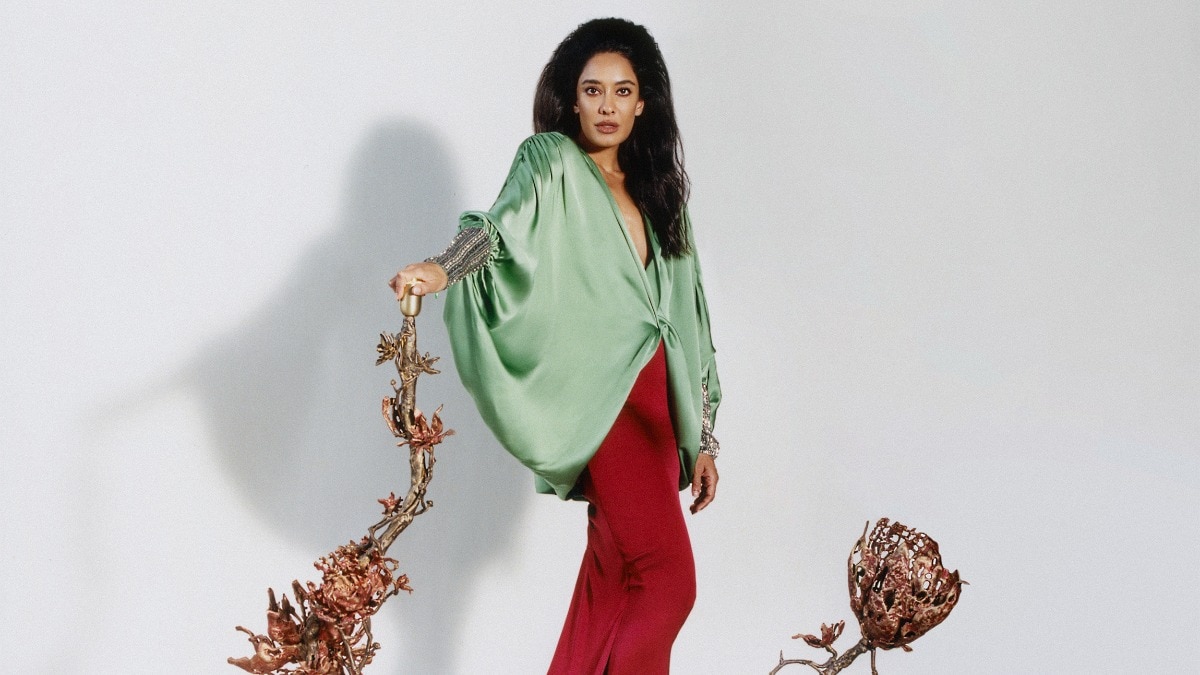
Sreeleela on curiosity, craft, and the dualities that define her
The actor's quiet ascent attributes to authenticity and intention.

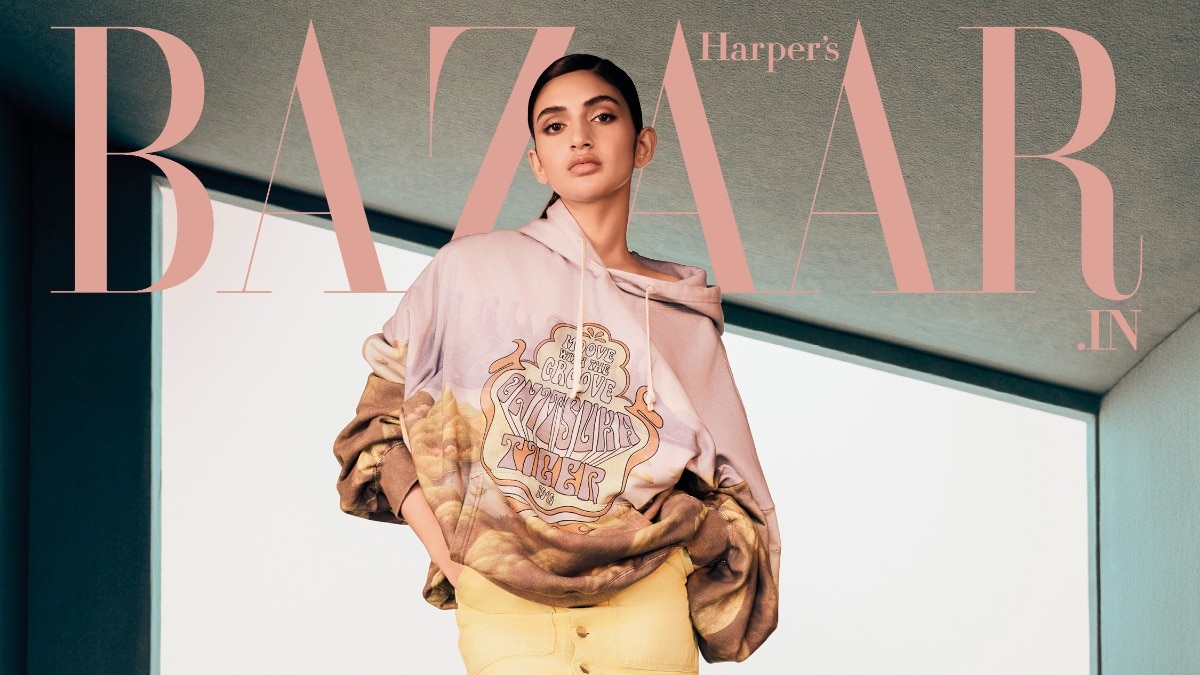
When I was told that our next digital cover star was also a medical student, my first instinct was intrigue and disbelief at the sheer duality of it. And yet, Sreeleela stands right at that intersection, navigating both with a composure that mirrors her approach to fame itself: measured and grounded, even as she steps into a wider national spotlight today. Lauded for becoming one of the most recognisable faces to emerge from Kannada cinema, Sreeleela represents a new kind of stardom—one that values authenticity over spectacle, and presence over perfection—something that a generation that is constantly visible struggles to master.
From her magnetic performance in Pushpa 2 (2024), a pivotal role in Guntur Kaaram (2024), to her much-anticipated Bollywood debut alongside Kartik Aaryan under Anurag Basu’s direction this year, the actor has had her fair share of blockbusters right at the onset of her cinematic career. But she’s quick to reframe what the world perceives as a meteoric ascent, for her, it’s been less a rise and more a series of “small, quiet steps” that gradually came into view—an approach that reflects the way she continues to navigate both fame and selfhood. At a moment when regional boundaries are blurring, Sreeleela stands at the forefront of a new cinematic order. As she tells Bazaar India, it is this very curiosity, the chance to “live different lives” and see through shifting lenses, that continues to guide her journey.
Harper’s Bazaar: Your rise has been swift and widely watched—what has that journey felt like from within?
Sreeleela: It felt a lot less like a rise and more like a series of steps—small, quiet ones that suddenly became visible. It's a journey where you're constantly learning, unlearning, and relearning. And what I try to do is to be centered through this process because the key is always to hold a sense of normalcy, and remind myself why I started in the first place.
HB: You’re constantly switching between vastly different roles—how do you emotionally reset between characters?
S: I've realised that detaching is just as important as immersing. So I try to build tiny rituals, whether it's music or time alone or sometimes video call with family, conversations with friends. And that's how I keep myself aware. I try not to take it back home. But if I do, these things help me. But sometimes I just think you just cope with it and deal with it.
HB: You’ve worked with actors across generations—what’s one habit or trait you’ve picked up that’s stayed with you?
S: Well, definitely it has to be discipline. I think across generations, the one thing that truly stands out is how seriously they take the craft. Being prepared, being present, and respecting the process.
HB: Do you think language still plays a barrier in storytelling today, or is performance transcending that?
S: I think language, yes, it used to be a barrier, but now it's more a texture than a limitation. Audiences are far more open and performance is taking center stage. Emotion is a universal language.
HB: You’re balancing two very different worlds—what draws you equally to both medicine and cinema?
S: At their core, both are related to people. Medicine deals with human vulnerabilities while movies display them or explore emotional creativity. One grounds me while the other expands. And I think for me, it's both together that completes me.
HB: Indian cinema is reaching wider audiences than ever—what do you think will define its next phase globally, and in your opinion, what stories from India still need to be told on a global platform?
S: I think authenticity will define the next phase. And the more specific and rooted our stories are, the more universal they become. There's so many narratives—stories from smaller towns, diverse cultures, complex identities within India that deserve a global platform without being simplified.
HB: If you strip away the fame and the expectations—what is it that keeps you coming back to the camera?
S: It's curiosity, the chance to live different lives, understand different perspectives, and discover something new about myself each time. The camera, in a way, becomes a mirror, but one that constantly changes. That's what just keeps getting me back.
HB: You belong to a generation that is constantly visible—how do you define beauty for yourself within that gaze?
S: I think beauty eventually becomes less about appearance and more about presence. It's about how comfortable you are in your own skin, and how authentically you show up in a world that's always watching. For me, real beauty really lies in not performing all the time. We have a very intelligent audience and they can see through. So, I feel like the more raw, real you are, the more organic it is.
HB: How has your relationship with fashion evolved as your public image has grown? Do you think fashion today still reflects individuality, or is it becoming increasingly trend-driven?
S: I feel earlier fashion felt like something external, like something to get right. It has to be all put together, everything perfect. But now I feel like it's just an extension of who I am. It's something that makes me feel really confident. Firstly, it depends on my mood, and if it really enhances what I'm feeling at that point of time. While trends are definitely louder today, I think individuality still comes through in how you interpret them. So, wearing something that adds to your personality, makes you comfortable, and confident, is what fashion is all about. For instance, this shoot is very different from what I am used to doing. It's fun to explore different ideas. I would say it's a budding relationship with fashion for me—an exciting and blooming one, indeed.
HB: How do you imagine yourself evolving over the next five years—both as a person and a performer?
S: I hope to become more fearless both in my choices and in how I see myself. As a performer, I do want to take up roles that actually challenge me. Push me out of my comfort zone and help me break these barriers that I probably have in my head. As a person, it's about growing quieter, a little more grounded, and more certain to what truly matters. In the next couple of years, I want to let my actions speak.
Editor: Rasna Bhasin (@rasnabhasin)
Photographer: Akula Madhu (@madetart)
Stylist: Gopalika Virmani (@gopalikavirmani)
Interview: Jhanvi Duggal (@jhanvii.23)
Make-up Artist: Riddhima Sharma (@makeupbyriddhima), at Entourage Talents (@entouragetalents)
Hair Artist: Umang Thapa (@umang.artist), at Anima Creatives (@animacreatives)
Editorial Coordinator: Shalini Kanojia (@shalinikanojia)
Set Design: Nikita Rao (@nikita_315)
Style Assistant: Grace Soni (@grace__soni_)
Sreeleela is wearing an oversized graphic hoodie, a yellow denim button-down skirt, and Plabala shoes in a cotton candy colour, all from the Onitsuka Tiger Denivita Collection (@OnitsukaTigerOfficial) (@OnitsukaTigerIndia)
Also read: From 'Mirzapur' to 'Delhi Crime': Rasika Dugal on craft, perception, and power
Also read: Doing fewer movie promotions might be the smartest move celebrities can make